
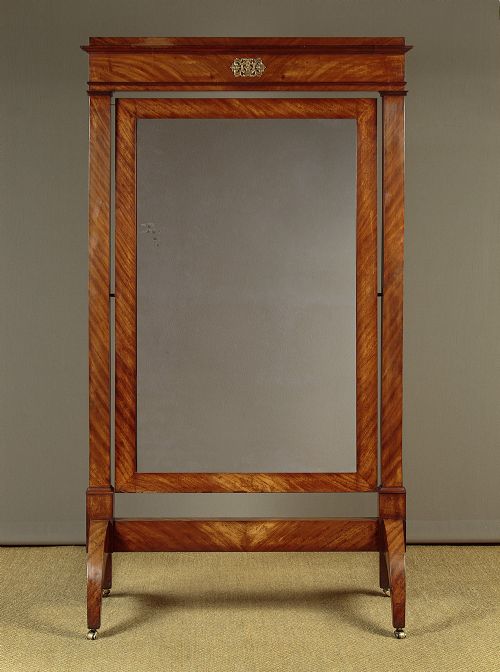
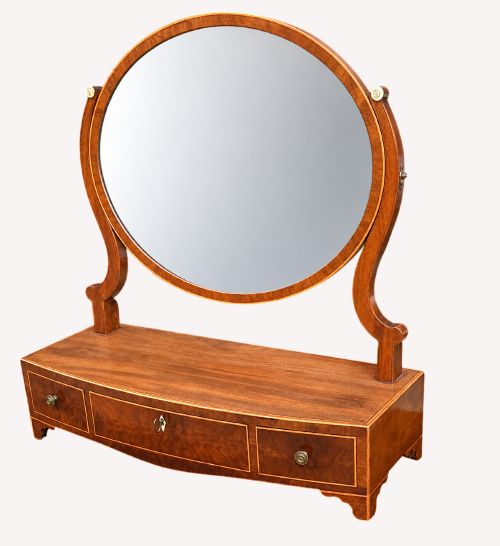
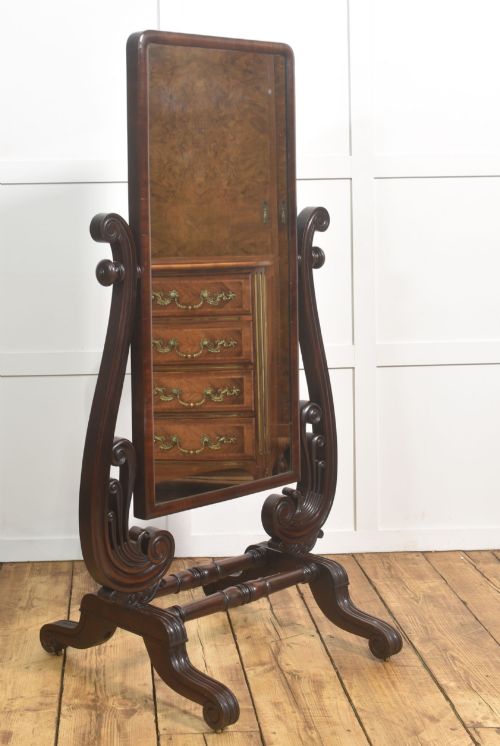
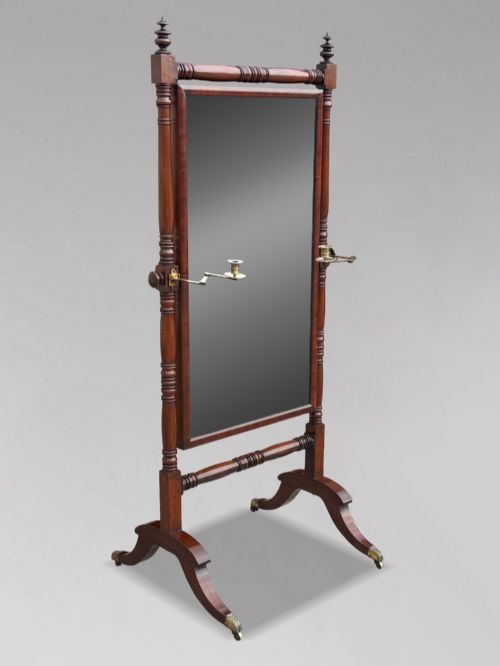


Regency Cheval Glass
A Regency cheval glass is a freestanding mirror designed for the dressing room, offering a full-length reflection.
What a Regency cheval glass is
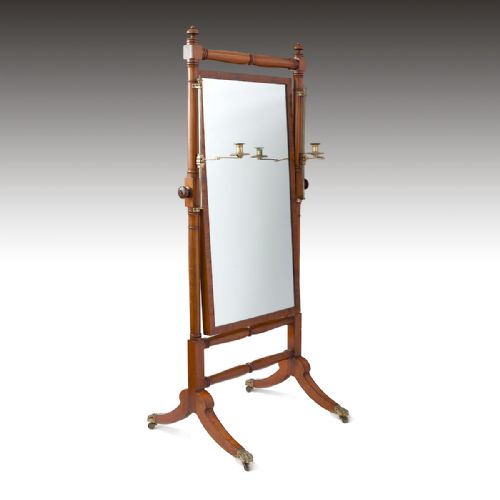
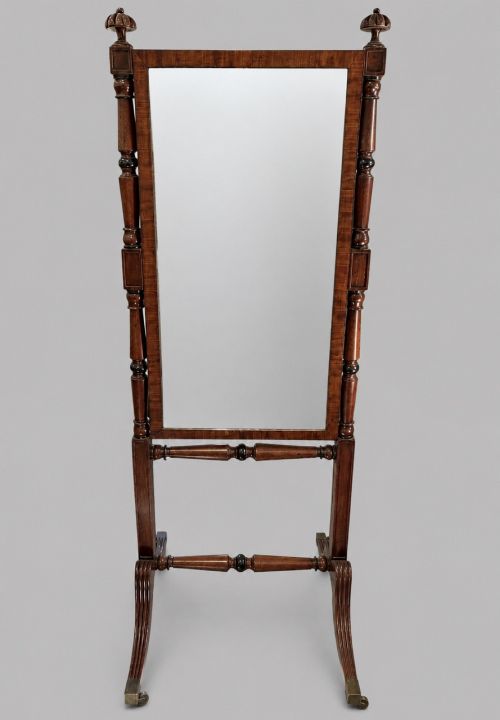
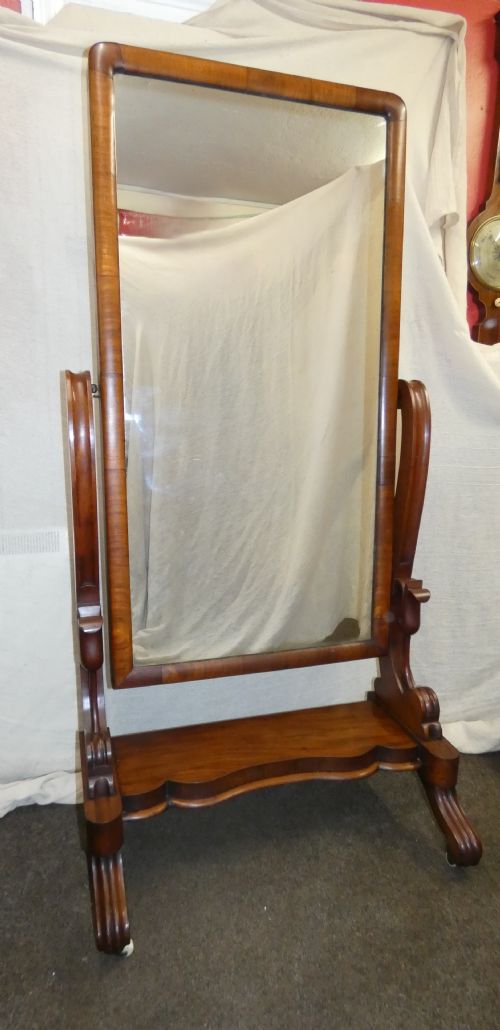
A Regency cheval glass stands on a frame supported by four legs, allowing the user to tilt the mirror plate to various angles.
These pieces appear on this page in forms originating from the Regency and Victorian periods, including the nineteenth century and the year eighteen fifty.
Makers shaped these mirrors primarily as cheval mirrors and cheval dressing mirrors, constructed to stand independently in a chamber.
How they were made
Craftsmen utilised mahogany for the timber frames, incorporating brass fittings such as articulated candle holders and mirror hardware.
The construction includes a mirror glass plate mounted to swing within a wooden frame, sometimes enhanced with marquetry inlay.
Retail Price Guide 2026
Typical UK retail prices for regency cheval glass, calculated from the Sellingantiques database of over a million retail prices indexed since 2003. This retail price guide relies exclusively on Sellingantiques data; no external sources or auction records are used, so the figures do not describe the wider market.
Some mirrors include articulated candle holders, letting you check your reflection by candlelight before the sun has even come up.
What varies in quality
Quality rests in the precision of the timber selection, where dense mahogany and sophisticated marquetry inlay elevate the piece beyond plain frames.
The refinement of the brass mounts and the inclusion of working articulated candle holders distinguish standard mirrors from finer examples.
The Regency Cheval Glass Glossary
- Cheval glass
- A large freestanding mirror that swings vertically within a wooden frame, designed for full-length viewing in a dressing room.
- Regency
- A stylistic period of the early nineteenth century defined by classical restraint and elegant proportions.
- Marquetry
- Decorative veneer work arranged in intricate patterns on the wooden surface of the frame.
- Articulated
- Jointed or pivoted to allow movement, such as candle arms that swing outward from the mirror frame.
Frequently Asked Questions
What is a cheval glass?
A cheval glass is a tall, freestanding mirror supported by a frame with legs, designed to swing so the user can adjust the angle for dressing.
The word cheval derives from the French for horse, likely referring to the four-legged frame that supports the swinging plate.
How do I place one in a room?
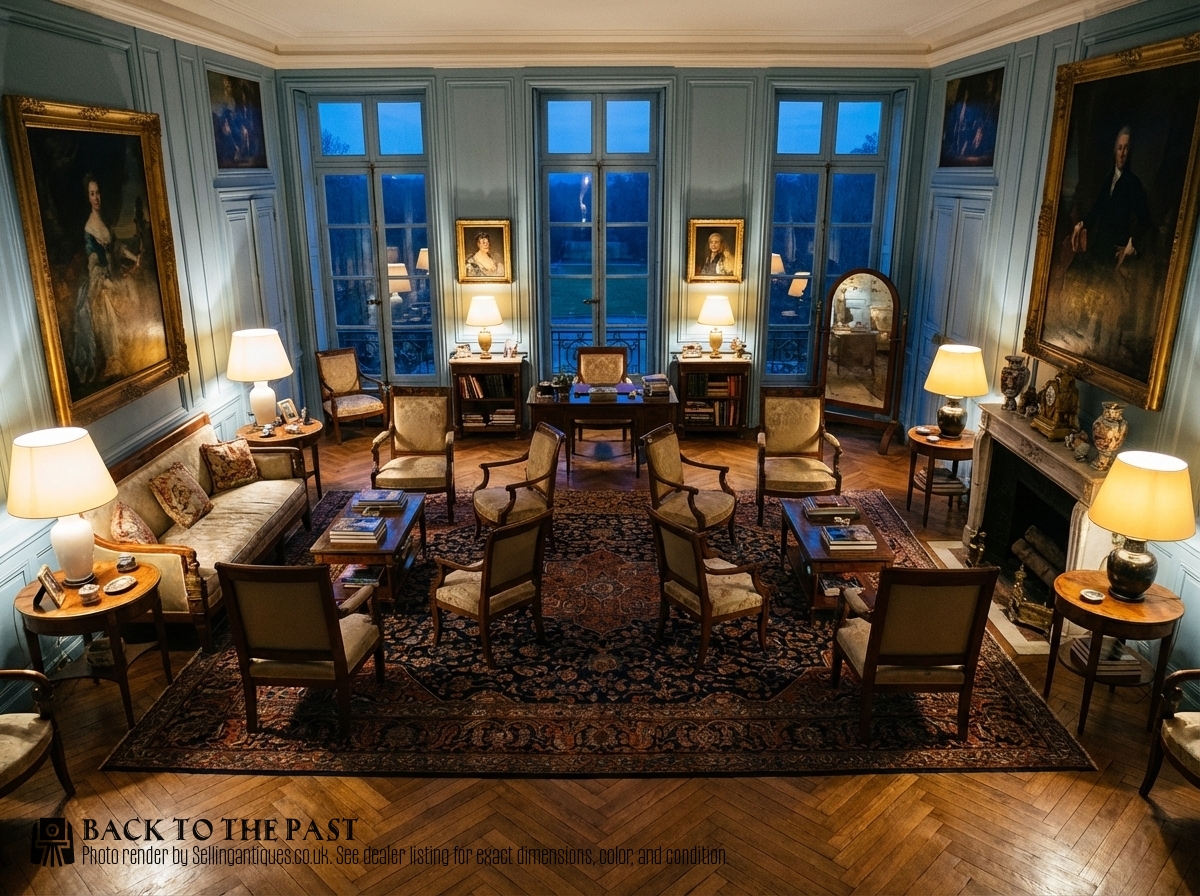
These mirrors require sufficient floor space to stand independently away from the wall, typically in a bedroom or dressing room.
Position the piece near a light source to make best use of the tilting mirror plate and any attached candle holders.
How do I date these mirrors?
Dating relies on observing the timber, brass hardware, and stylistic details associated with the nineteenth century and the Regency era.
Evidence on this page shows examples attributed to the Regency period, eighteen fifty, and the broader nineteenth century.
What materials were used?
Makers constructed these mirrors using solid mahogany and veneers, fitted with mirror glass and brass hardware.
Some examples include brass articulated candle holders and detailed marquetry inlay across the wooden frame.