
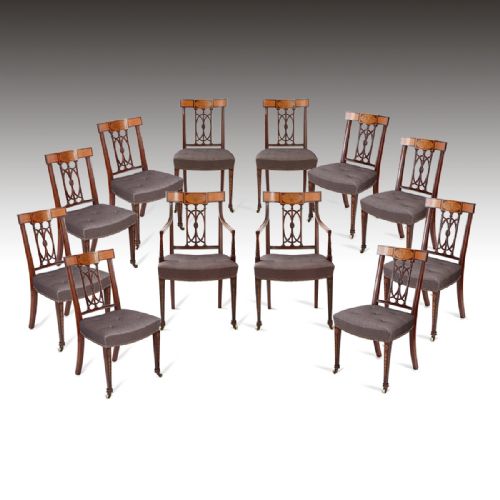
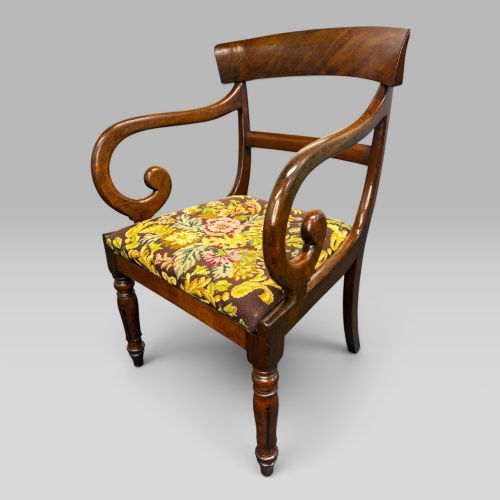
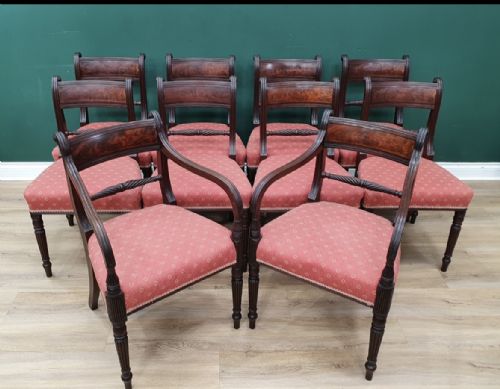
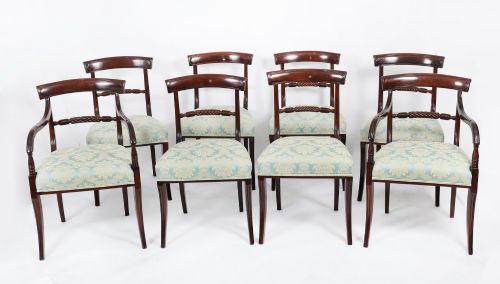
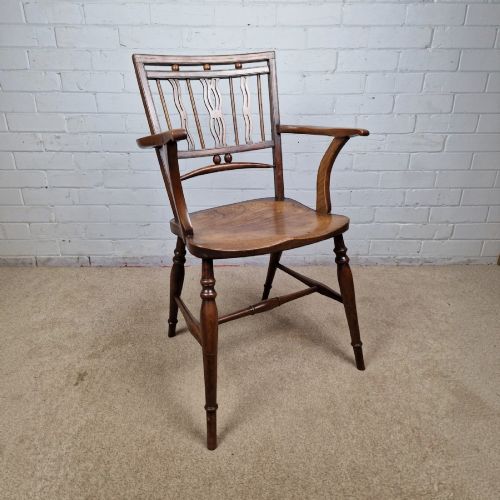
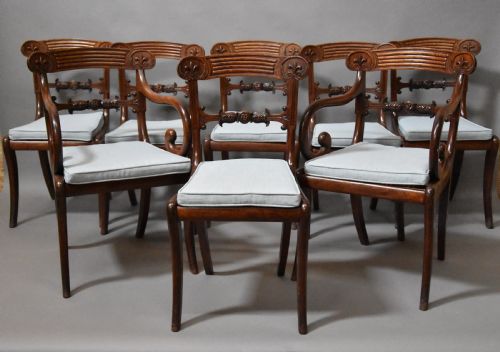
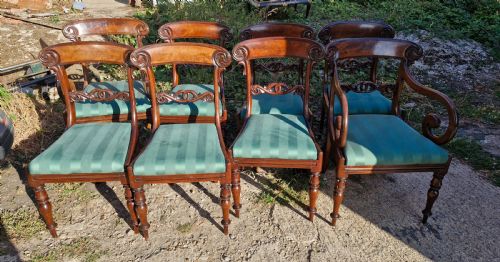
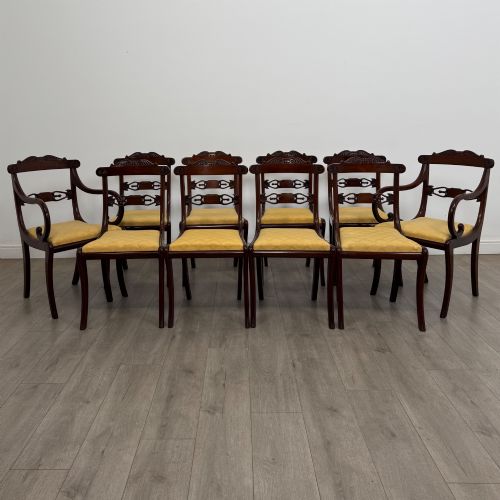
Regency Carver Seats
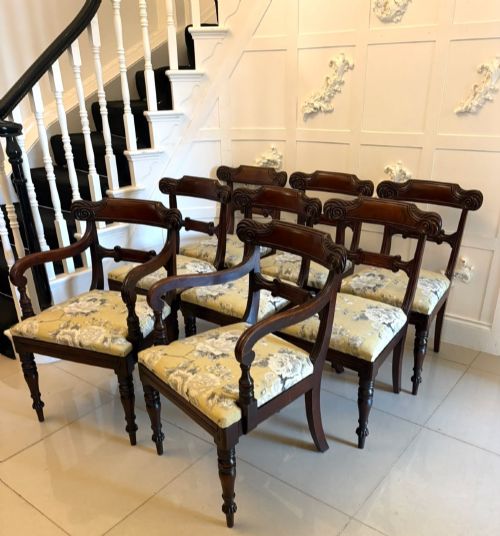
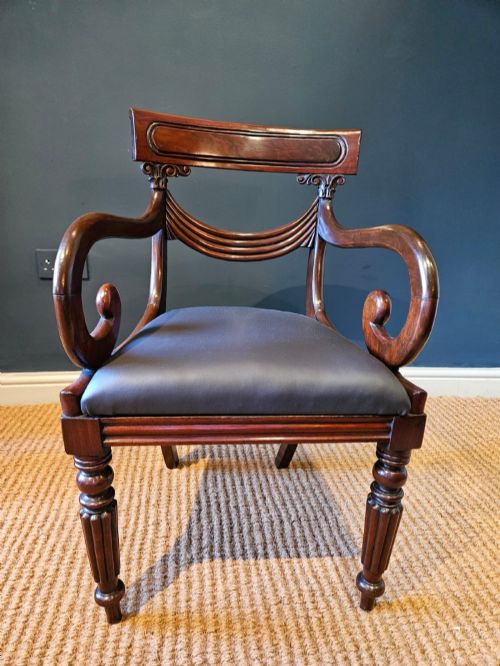
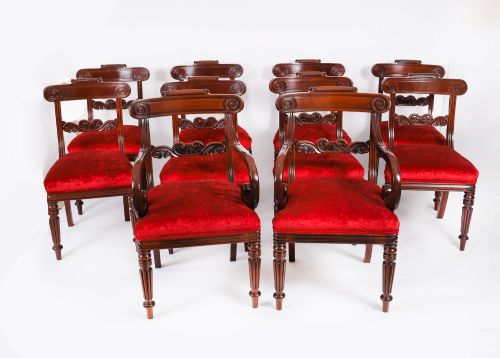
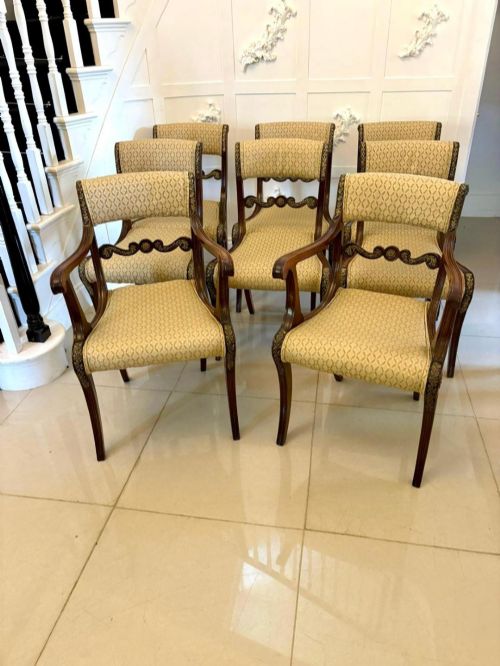
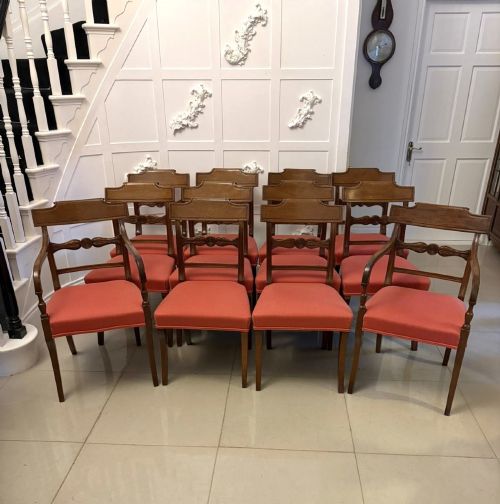
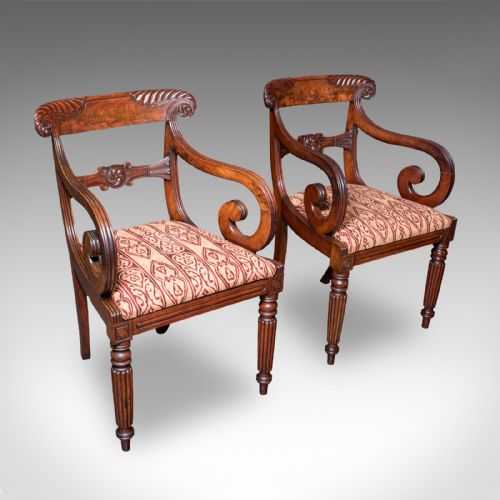
Regency carver seats bring architectural line and generous arm support to the dining table, sourced mainly in rich mahogany from the early nineteenth century.
Materials and Construction Methods
Makers relied heavily on dense mahogany timber, selected for its deep grain and structural strength when forming curved top rails and slender arm supports. Joinery depended on precise mortise and tenon joints to withstand the daily stresses placed on open armchairs.
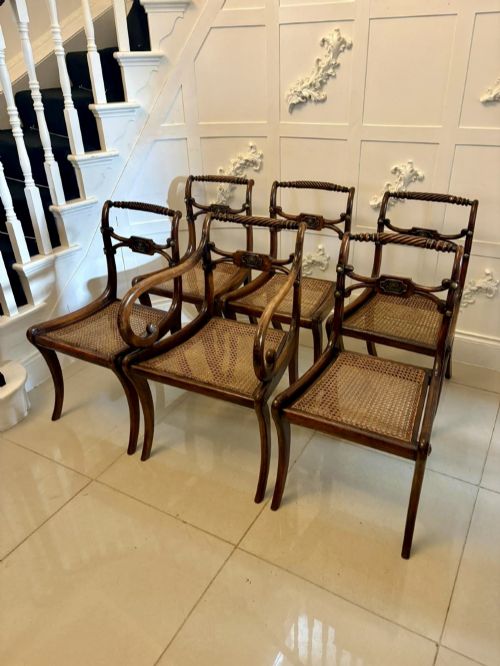
Secondary materials such as cane, velvet, and brass wire inlay appeared frequently to provide texture and decorative contrast against polished wood surfaces. Upholstery techniques involved traditional webbing and stuffing secured beneath fabric or leather covers.
Factors Defining Quality
The distinction between standard utility seating and exceptional examples lies in the crispness of the carving and the selection of timber figures. Superior items display well-defined reeding, sharp brass inlay, and harmonious proportions across both carvers and single chairs.
Originality of surface finish and the retention of structural integrity dictate the standing of a piece. Altered arm supports or replaced structural members diminish historical value compared to examples retaining their initial assembly.
Listings feature mahogany predominantly, complemented by fabric, cane, and brass details across nineteenth-century periods.
The Regency Carver Seats Glossary
- Carver
- An armchair designed to match a set of single dining chairs, typically positioned at the table ends. This term denotes the presence of arms intended for comfort during meals.
- Mahogany
- A durable tropical hardwood prized for its rich reddish-brown colour and stable grain. Furniture makers utilised this material extensively throughout the Regency period.
- Cane
- Woven split rattan used to form resilient seats and back panels. This technique offers lightness and flexibility within a rigid wooden frame.
- Bar Back
- A chair design featuring a horizontal wooden slat across the upper backrest, often resembling the shape of an architectural lintel. This style recurs frequently in nineteenth-century seating.
- Drop-In Seat
- A removable upholstered wooden frame that fits tightly into the seat rails of a chair. This construction method allows for straightforward re-covering without dismantling the primary structure.
Regency Carver Seats: Frequently Asked Questions
How do I spot a true Regency carver?
Examine the proportions and joinery of the arm supports, which integrate directly into the seat rail or back uprights in a continuous line. Genuine period examples display period-appropriate tool marks and dense mahogany construction beneath any later finish.
Look for classical design cues such as sabre legs, reeded framing, and brass inlay. These details distinguish authentic nineteenth-century production from later revival pieces.
Can I mix carvers with single chairs?
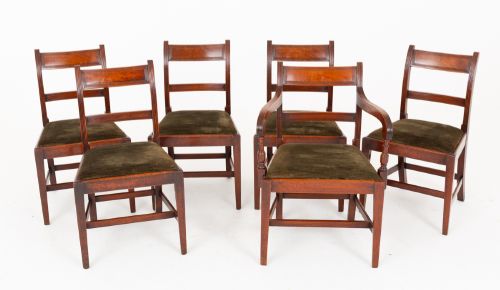
Mixing carvers with single chairs is standard practice, as these armchairs traditionally served as the head seats at a dining table. Many period sets include a pair of carvers alongside matching single chairs.
When combining disparate pieces, pay close attention to timber tone, leg height, and backrest style to maintain visual balance around the dining room.
Are caned seats durable for daily use?
Caned seats offer surprising resilience and flexibility, provided the rattan material remains hydrated and free from excessive local pressure. Regular maintenance prevents the natural fibres from becoming brittle over time.
For heavy daily dining use, many owners add loose squab cushions to distribute weight evenly across the woven surface and protect the historic weave.
What is the difference between Regency and William IV?
Regency design typically emphasises refined classical elegance, featuring slender proportions, delicate brass accents, and restrained curves. The aesthetic draws direct inspiration from ancient Greek and Roman forms.
William IV furniture, emerging slightly later in the nineteenth century, tends toward heavier, more robust proportions with bolder scrolls and substantial mahogany turnings.