

Regency Style Seating
Regency style seating brings classical grace and refined timber forms into domestic rooms.
Regency Style Seating
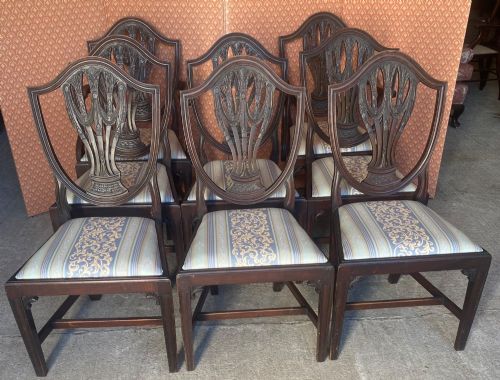
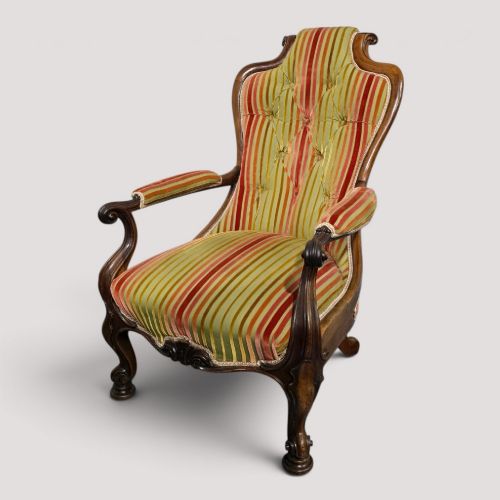
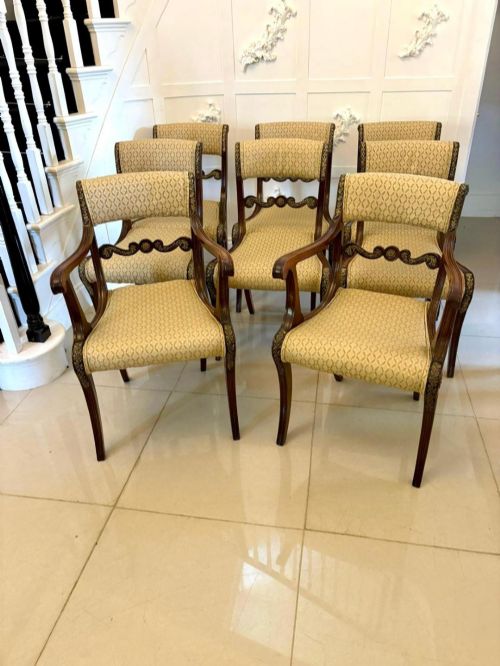
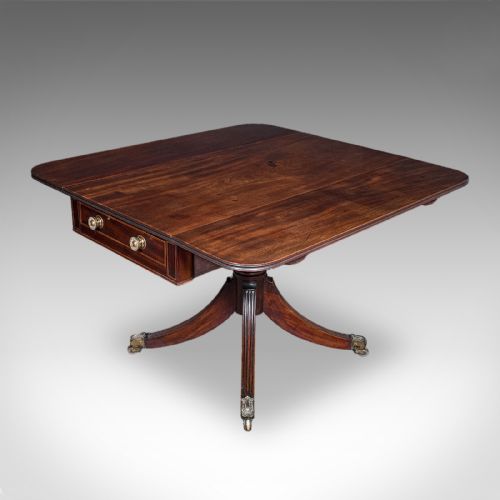
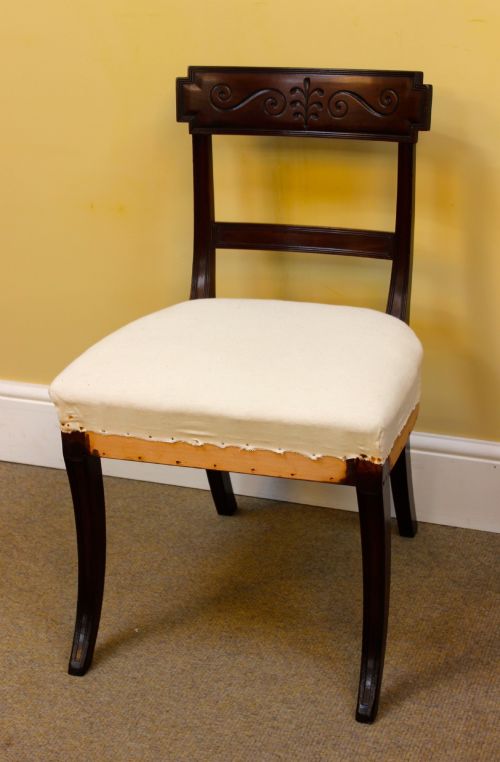
Regency style seating encompasses dining chairs, armchairs, benches, and footstools produced across the nineteenth and twentieth centuries. These pieces draw upon classical forms, featuring distinct lines and proportions suited to both formal dining and quiet study.
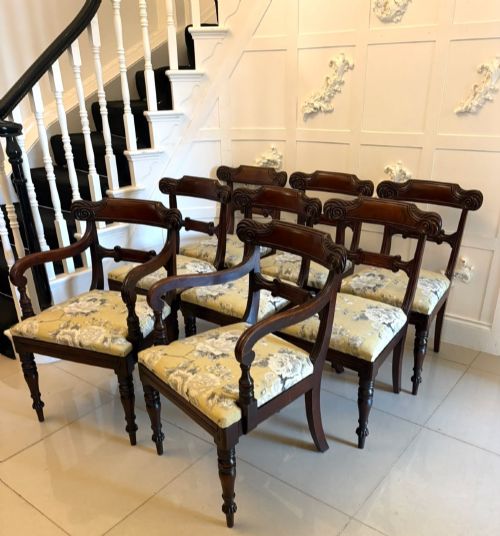
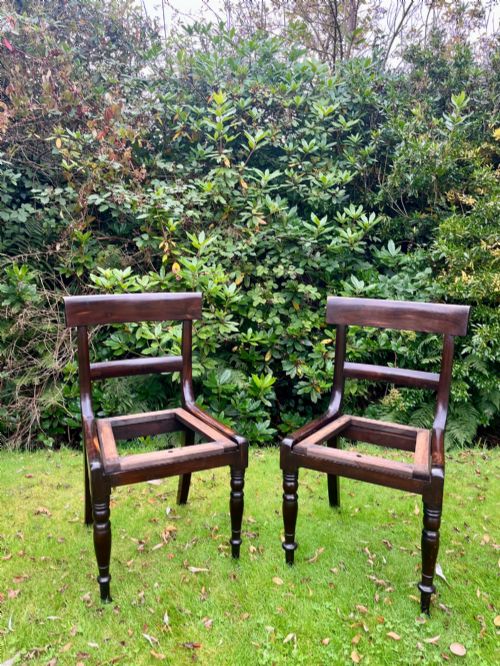
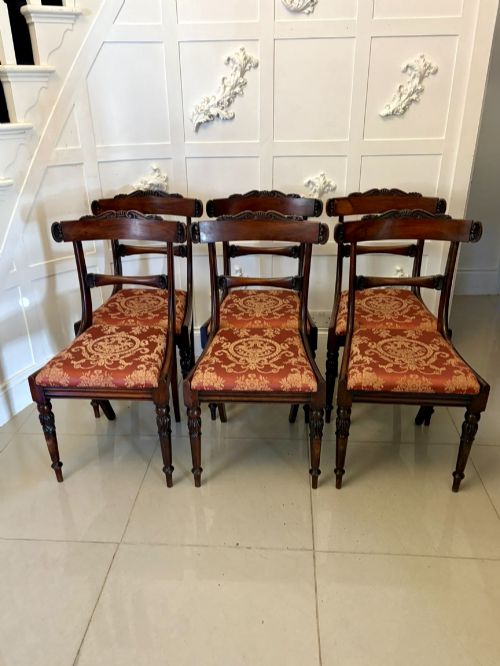
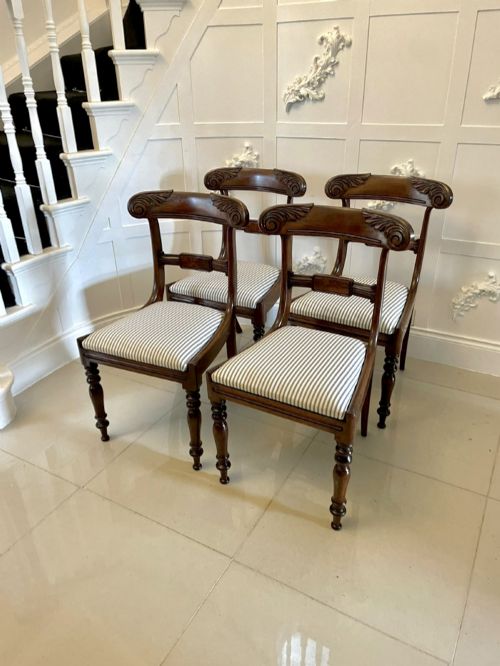
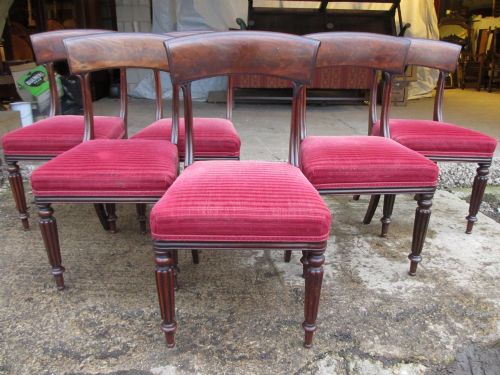
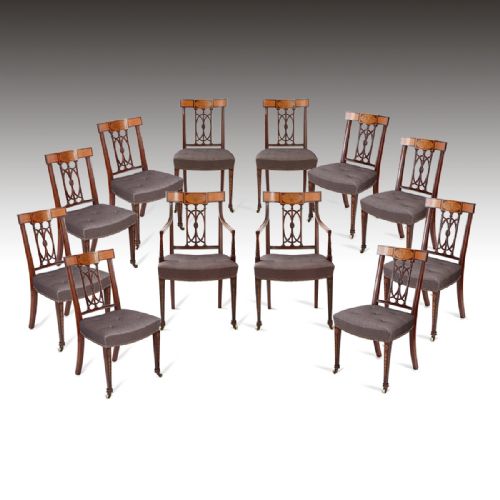
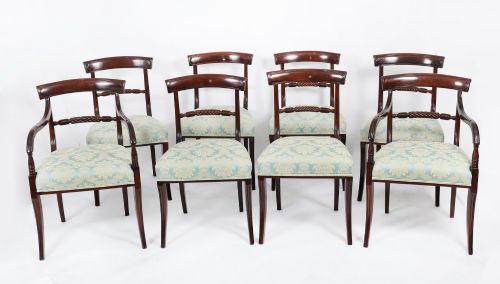
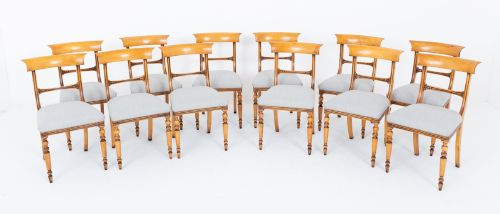
Buyers frequently encounter mahogany dining chairs offered in sets, alongside individual armchairs and window seats. The selection spans genuine nineteenth-century pieces and later twentieth-century revivals sharing the same classical vocabulary.
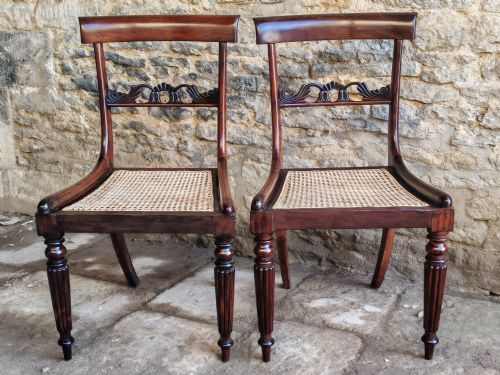
Forms range from simple bar back dining chairs to caned library bergères and upholstered footstools. Each object reflects the enduring appeal of architectural shapes translated into domestic furniture.
Materials and construction
Makers relied primarily on mahogany, supplemented by decorative timbers like satin birch, padouk, and faux bird's-eye maple. Structural stability was achieved through traditional joinery, often enhanced by carved details and applied brass elements.
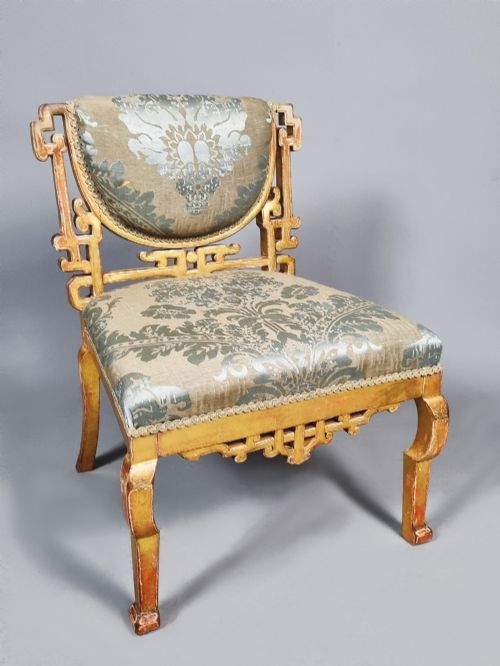
Surfaces frequently incorporate cane panels, leather upholstery, fabric coverings, and painted finishes or giltwood accents. These materials work together to create the characteristic contrast between polished wood and tactile seating surfaces.
Several dining chairs on offer disguise themselves as exotic birds through decorated faux bird's-eye maple surfaces.
Distinctions in craftsmanship
Quality rests in the precision of the timber selection and the crispness of carved details like strapwork and lyre backs. Uniformity across large sets of dining chairs indicates careful workshop production.
The integration of secondary materials, such as finely woven cane and fitted brass mounts, separates standard production from exhibition pieces. Structural integrity and thoughtful proportions remain central to superior examples.
Waugh & Son·Miles & Edwards
The Regency Style Seating Glossary
- Bergère
- An enclosed upholstered armchair with wooden framing and typically caned sides and back. This form offers generous comfort while maintaining a formal silhouette.
- Bar back
- A chair design featuring a horizontal top rail resembling the shape of a classical architectural frieze. It is commonly found on nineteenth-century dining chairs.
- Curule
- An X-shaped form derived from ancient Roman magistrate seats, utilised for stools and window seats. This X-frame construction provides both strength and visual lightness.
- Lyre back
- A chair back featuring an open splat shaped like the classical musical instrument. It appears frequently in nineteenth-century seating designs.
- Strapwork
- Ornamentation composed of interlaced ribbon or band patterns, applied to garden benches and chair rails. This decorative technique creates geometric surface rhythm.
Regency Style Seating: Frequently Asked Questions
What defines regency style seating?
Regency style seating is characterised by classical proportions, scroll elements, and architectural influences drawn from ancient Greece and Rome. Timbers like mahogany predominate, often paired with cane or leather.
The style bridges the Georgian era and later nineteenth-century revivals, offering balanced forms suitable for dining rooms and libraries.
How do I arrange dining chairs?
Dining chairs are typically set around a matching dining table, with carvers placed at the head and foot if available. Matching sets create visual unity in formal dining spaces.
Mixing smaller side chairs allows flexibility around larger tables while maintaining consistent period character.
Where were library bergères used?
Library bergères were placed in studies, drawing rooms, and private libraries for reading and writing. Their enclosed upholstered sides provided shelter from draughts.
Desk chairs and open armchairs served similar functions in nineteenth-century domestic interiors.
How do I distinguish nineteenth century pieces?
Nineteenth-century pieces display dense mahogany patination, hand-cut joinery, and wear patterns consistent with age. Construction methods rely on traditional pegged joints rather than modern fasteners.
Later revivals from the twentieth century often utilise similar forms but exhibit distinct timber finishes and manufacturing techniques.