
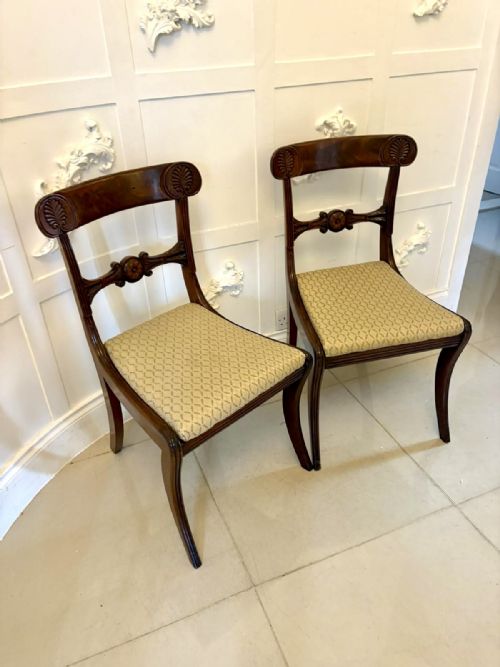
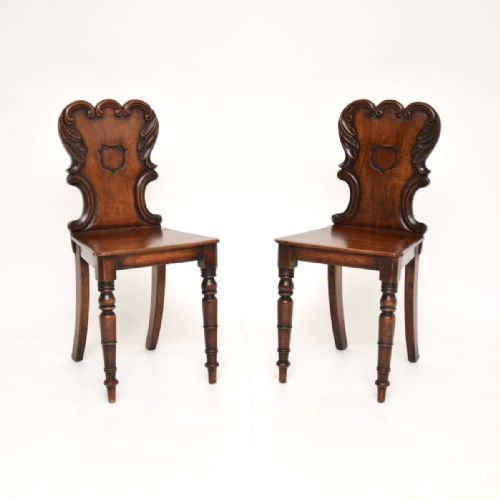

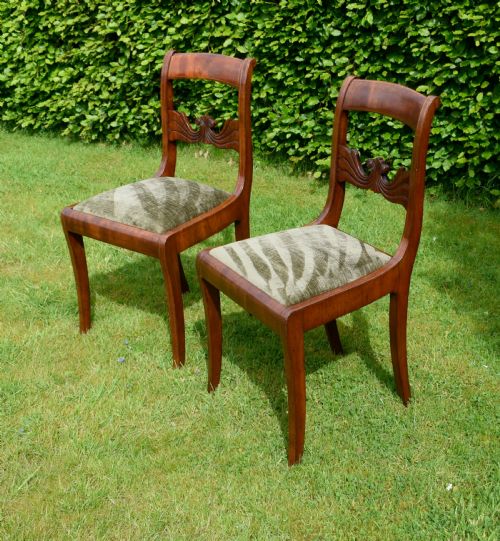


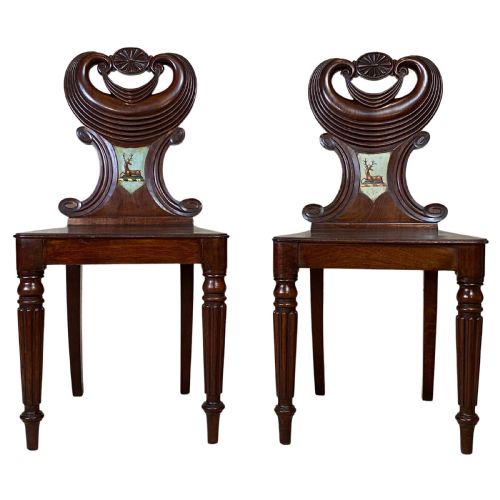
Regency Carved Hall Chairs
Regency carved hall chairs are striking reception seating designed to make an impression in entranceways, drawing from classical forms.
Regency Carved Hall Chairs
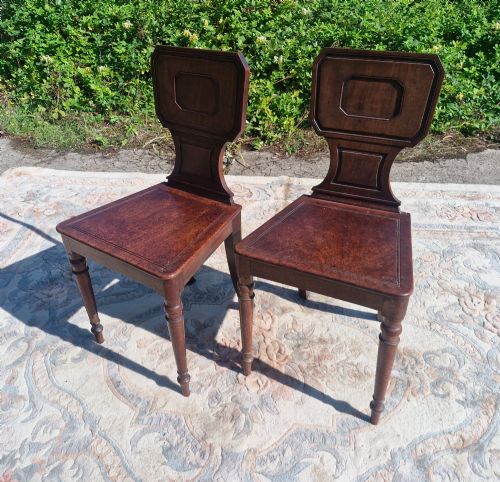
When you search for regency carved hall chairs, you encounter formal reception seating primarily originating from the Regency, Georgian, and William IV periods. These pieces were historically positioned in grand entrance halls rather than used for long periods of sitting.
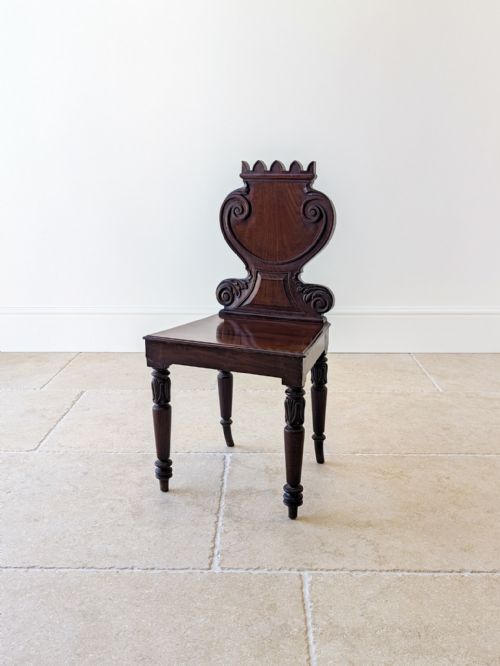
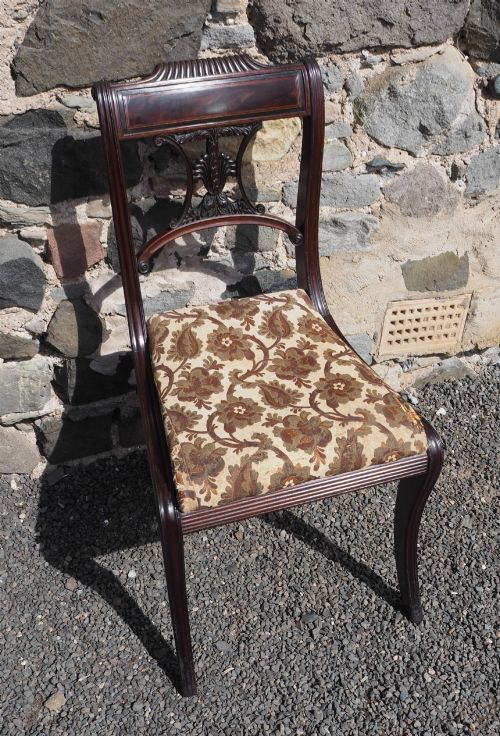
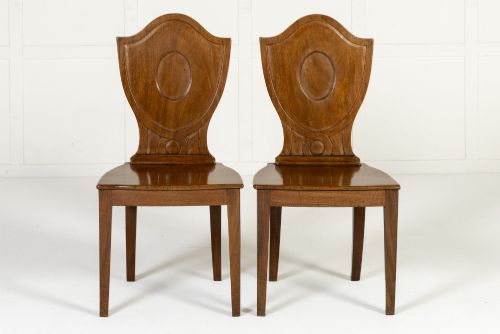
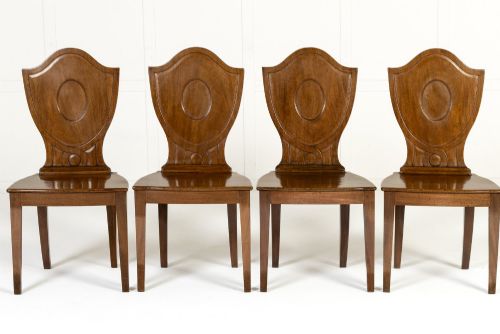
The version you are most likely to meet on this page is constructed from mahogany, often appearing as pairs or sets. Their distinctive backs frequently display carved armorial bearings, shells, or pelta shapes above solid wooden seats.
Materials and Construction
Makers relied heavily on solid timber, with figured and Cuban mahogany dominating the construction alongside occasional examples in oak, walnut, and beech. Timber selection dictated the weight and rigidity of the frame, supporting elaborate carved details on the backsplats.
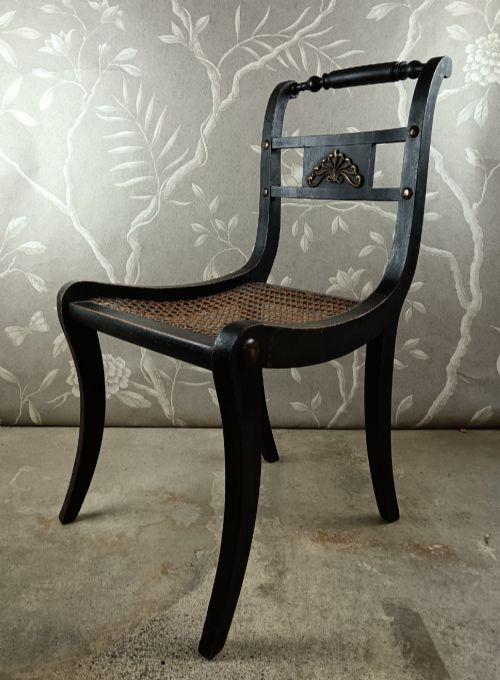
Joinery techniques combined traditional framing with robust turning and sabre leg supports. Selected models incorporate brass inlay or cane seating panels, while others maintain a plain wooden seat designed to withstand heavy everyday use.
Some hall chairs feature carved hand motifs on the timber, inviting visitors to shake hands with the furniture.
Assessing Quality and Execution
The distinction between ordinary examples and the finest pieces lies in the crispness and depth of the wood carving. Superior items display meticulously rendered shell or shield motifs carved directly into the solid mahogany back rather than applied separately.
Proportion and structural integrity also separate the tiers. Top-tier examples exhibit balanced framing, sturdy sabre or turned legs, and timber with rich natural figuring that has aged evenly over the centuries.
Gillows
The Regency Carved Hall Chairs Glossary
- Armorial
- Bearing a heraldic coat of arms or family crest. These are typically painted or carved directly into the centre of the chair back.
- Pelta
- A shield shape resembling a crescent with curved ends. This classical motif frequently appears as an openwork design on chair splats.
- Sabre leg
- A concave, outwardly curving leg shape popular during the Regency period. It provides a graceful profile while maintaining structural support.
- Shell back
- A carved chair back resembling a scallop shell. This decorative choice reflects the classical revival influences of the era.
- Side chair
- A rigid, armless chair intended for occasional use around the perimeter of a room or in a hallway.
Regency Carved Hall Chairs: Frequently Asked Questions
Where were regency carved hall chairs placed?
These chairs stood in entrance halls and reception spaces to greet visitors. They served as formal architectural furniture rather than comfortable lounge seating.
Because they were meant for brief use while waiting, the seats were traditionally left as solid wood rather than upholstered.
How do I distinguish regency from william iv pieces?
Regency designs lean towards slender, classical proportions with refined carving like sabre legs. William IV pieces often display heavier, sturdier frames with bolder scrollwork.
Examining the turning and the weight of the mahogany helps clarify the transition between these overlapping stylistic periods.
Can these chairs be used daily?
Solid mahogany construction makes them remarkably durable for modern seating use. Their rigid wooden seats mean people often add loose squabs for comfort.
Placing them in hallways or as occasional accent seating preserves their historical structure while keeping them functional.
Why do many hall chairs feature crests?
Carved armorials or painted crests identified the noble household or country estate where the furniture originated. Guests would immediately recognise the family lineage upon entering.
This heraldic custom turned standard hallway seating into a personal statement of status and heritage.