


Regency Wooden Seating
Regency wooden seating brings together mahogany, rosewood, and painted pine forms designed for dining rooms and hallways during the early nineteenth century.
Regency Wooden Seating
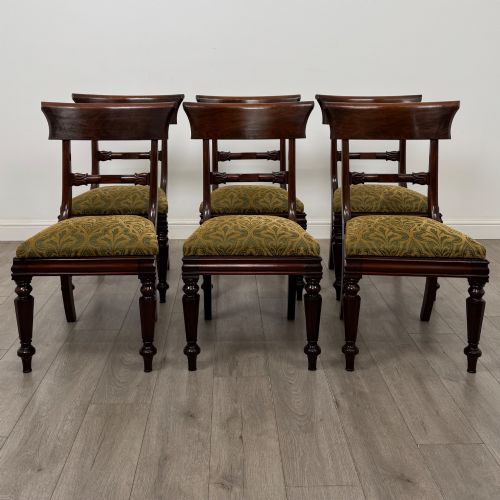
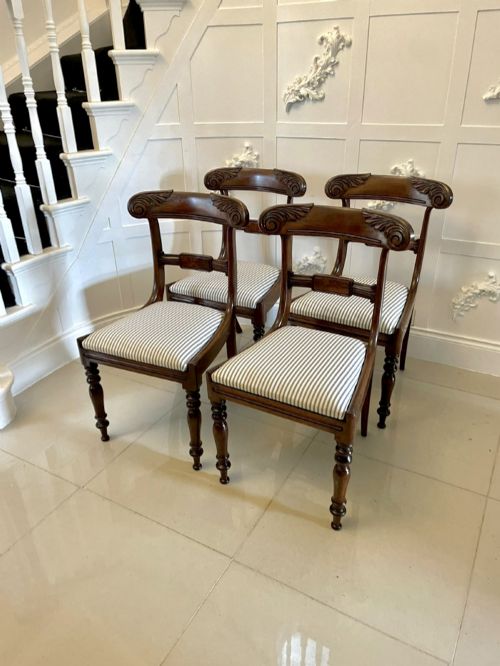
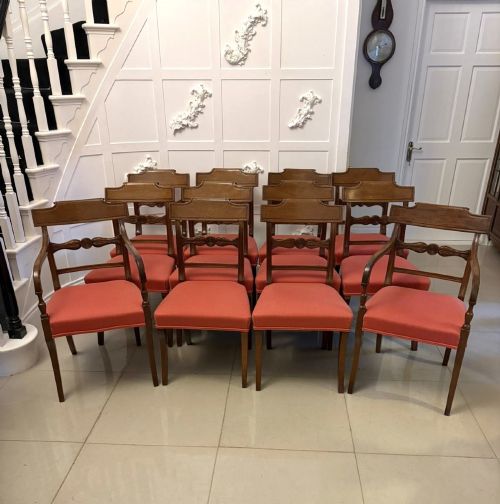
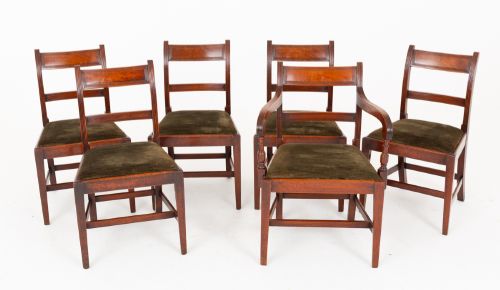
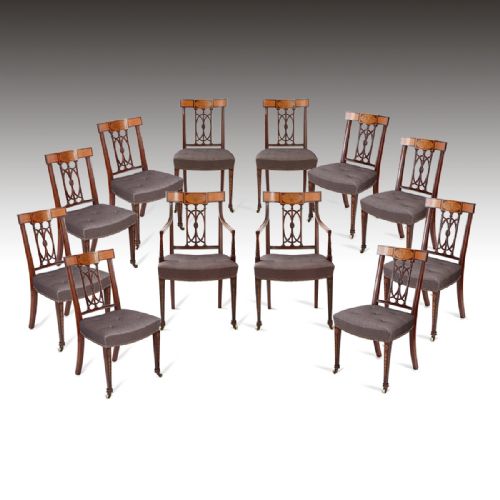
Regency wooden seating comprises dining chairs, hall chairs, side chairs, armchairs, benches, and window seats originating mainly from the nineteenth century and the Georgian period. Buyers seeking these pieces will encounter everything from single hall chairs to large sets of twelve dining chairs.
The forms frequently span stylistic crossovers including William IV and Grand Regency, alongside variations labelled as Regency style or English Country. Mahogany is the dominant timber, though fruitwood, rosewood, and painted pine also appear across benches and seats.
Materials and construction
Makers utilised solid timbers such as mahogany and rosewood, often pairing them with cane, fabric, or textile for the seats. Brass inlay provides metallic contrast on select dining chairs, while paint decorates specific pine and ebonised frames.
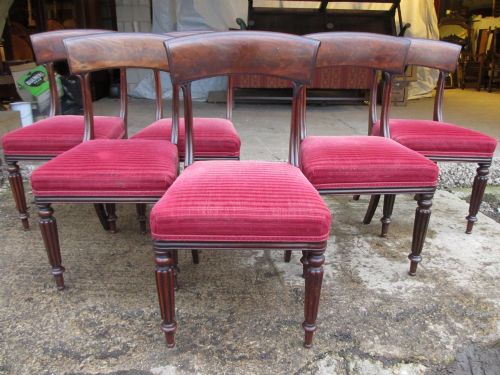
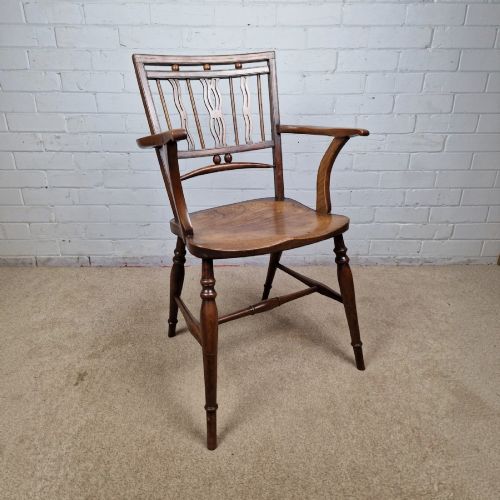
Structural methods involve turned and sabre legs, bar backs, and shield backs. Upholstered elements rely on traditional stuffing and textile covers, while specific seating incorporates cane panels set directly into the wooden frame.
The listings feature dining chairs, hall chairs, armchairs, and benches spanning the nineteenth century in mahogany, rosewood, fruitwood, and painted pine.
Assessing the pieces
Quality rests upon the selection of timber and the crispness of carved or inlaid details on the frame. Sets that remain unified in number and design command attention, particularly when original cane or surface paint survives intact.
Proportion and structural integrity distinguish standard examples from finer commissions. Pieces featuring specific decorative treatments like brass inlay or ebonised finishes show greater ambition in design.
Miles & Edwards
The Regency Wooden Seating Glossary
- Carver
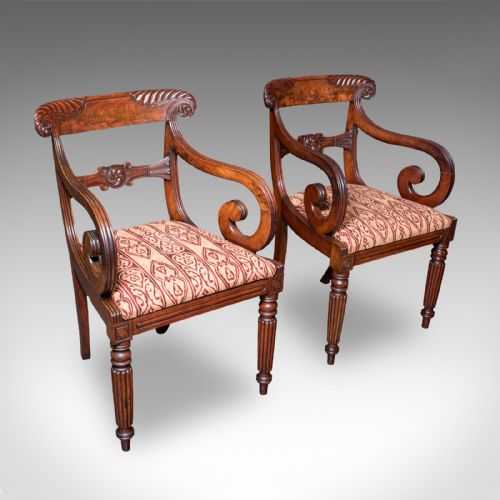
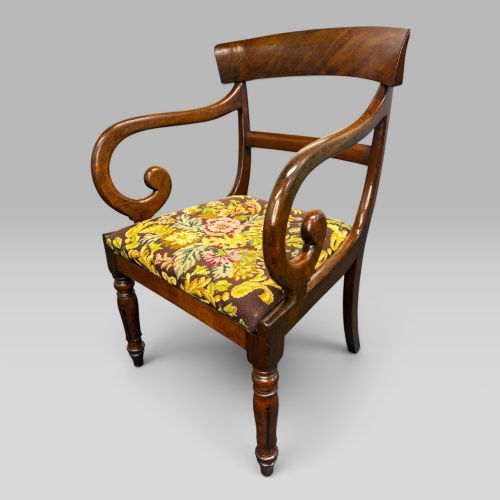
- An armchair, often larger and designed for the head of a dining table. These frequently match a larger set of smaller dining chairs.
- Bar back
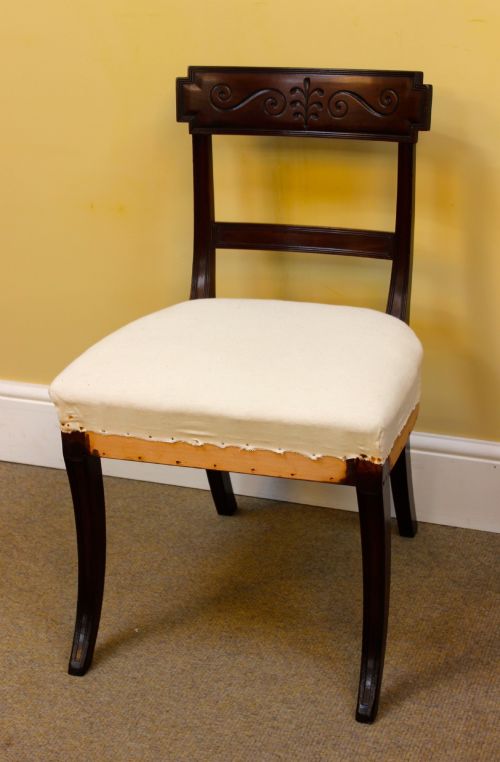
- A horizontal wooden slat across the upper back of a chair, often curved to fit the spine. This form is common in nineteenth-century dining chairs.
- Sabre leg
- A concave, outward-curving leg that tapers toward the foot, frequently seen on Regency side chairs. The shape evokes classical antiquity.
- Hall chair
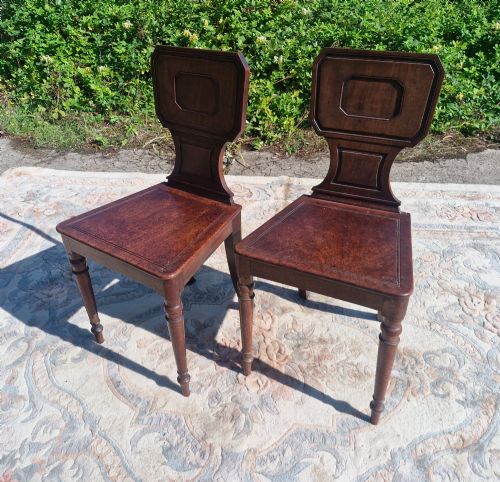
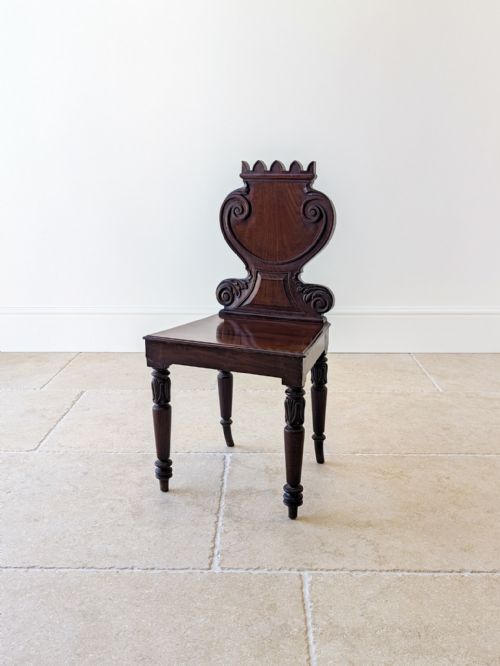
- A rigid wooden seat intended for an entrance hall rather than daily dining. These often feature solid wooden seats and carved heraldic backs.
- Window seat
- An elongated bench designed to fit beneath a window, sometimes featuring scrolled arms at one or both ends.
Regency Wooden Seating: Frequently Asked Questions
What defines regency wooden seating?
These pieces comprise chairs, benches, and stools produced during the early nineteenth century. They draw upon classical revival designs with an emphasis on carved mahogany and distinct leg forms.
Craftsmen utilised native and imported timbers, sometimes incorporating brass inlay, cane panels, or painted finishes to suit formal rooms and hallways.
How were hall chairs used?
Hall chairs served as functional seating in entrance halls and reception spaces rather than comfortable lounging chairs. Guests and callers used them briefly while waiting.
Because they were meant for transit areas, their wooden seats lacked upholstery and their backs often displayed carved crests or painted family motifs.
Are large sets difficult to find?
Finding uniform sets of six, eight, or twelve matching chairs requires patience as most surviving examples were originally made in large batches. Over decades, sets often became separated or depleted.
Complete sets that retain matching timber grain and uniform wear across all pieces represent more deliberate survivals from the period.
How do william iv and regency styles differ?
William IV pieces tend to show heavier proportions and bolder carved details than earlier Regency designs. The legs and frames are often thicker and more robust.
While both fall broadly under nineteenth-century furniture production, the later William IV items lean toward sturdier architectural forms while retaining mahogany as a primary material.
How should I care for antique wooden seats?
Maintain these pieces in stable indoor environments away from direct heat sources and extreme humidity fluctuations. Consistent conditions protect the underlying timber and any applied veneer.
Clean surfaces gently with a soft dry cloth and avoid harsh chemical polishes. Cane and fabric elements require careful dusting to preserve the original materials.