
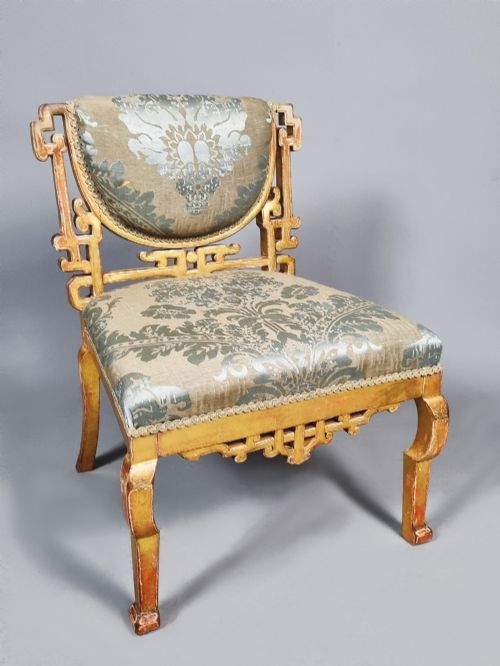
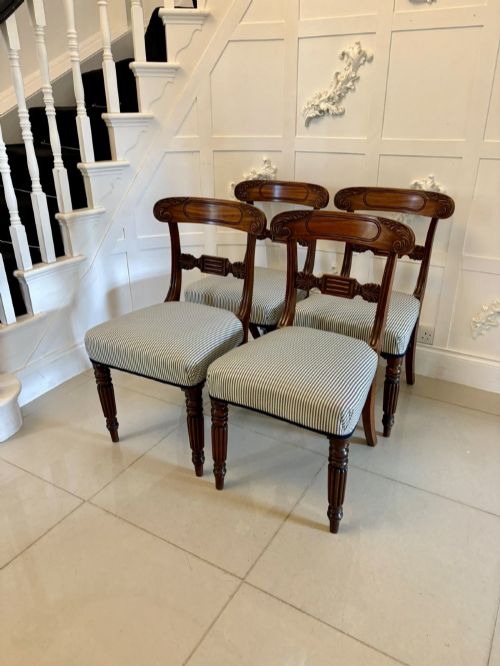
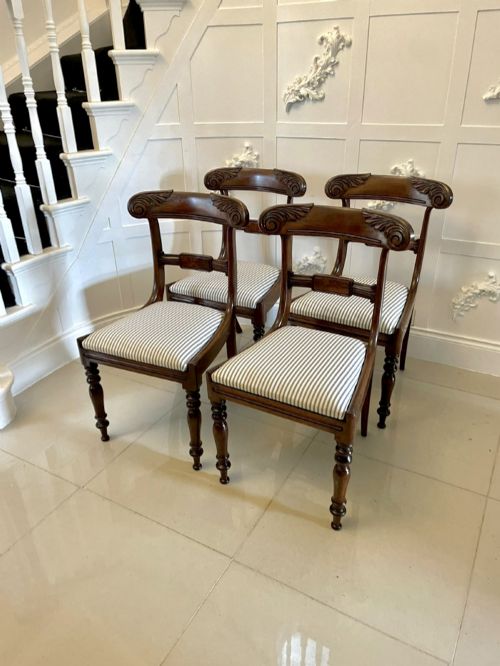
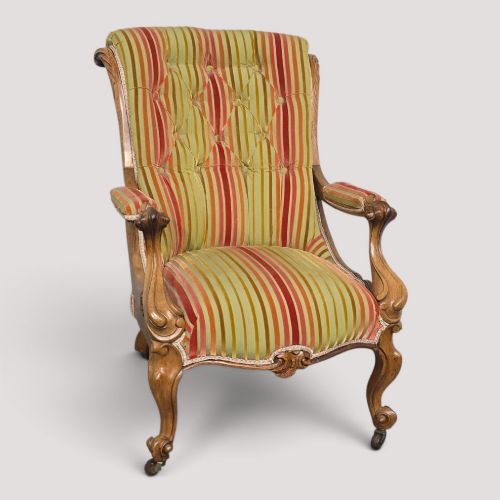


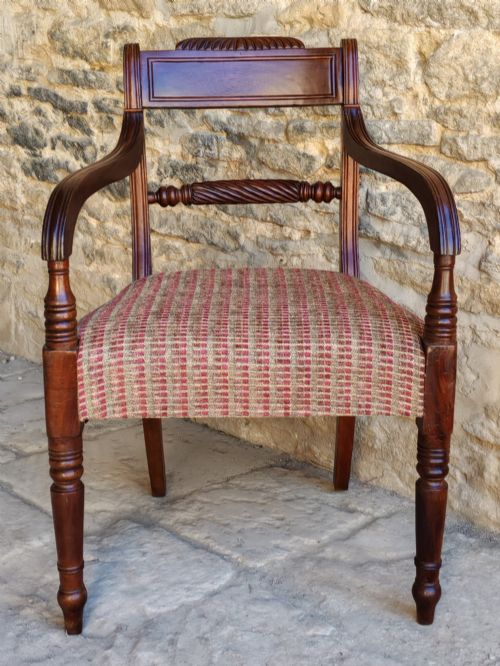
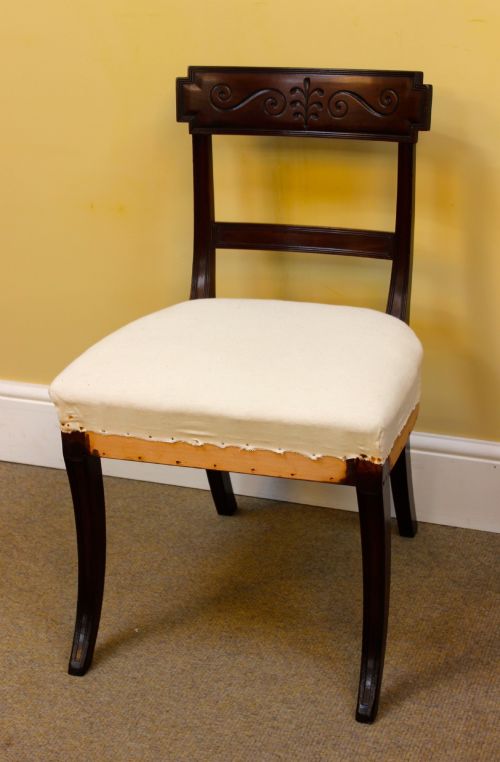
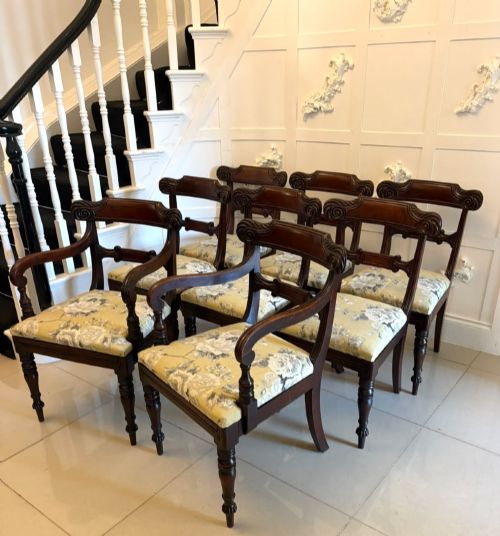
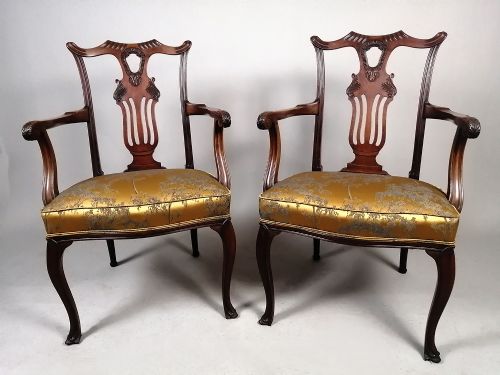
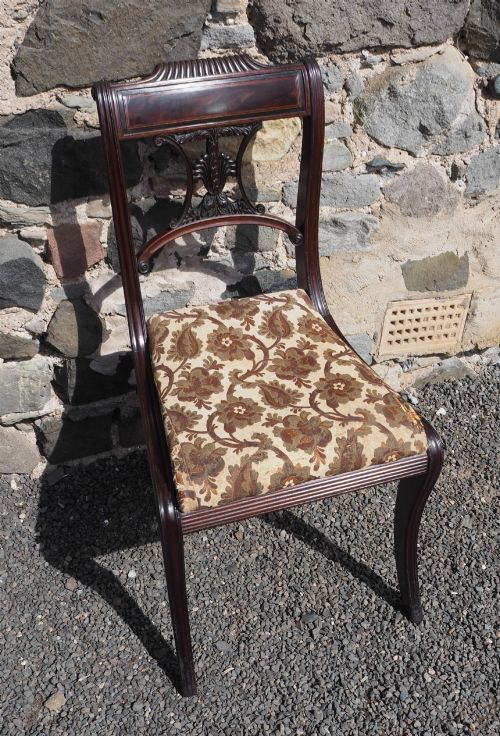
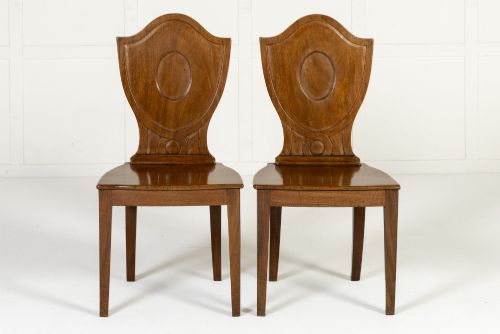
Regency Carved Back Chairs
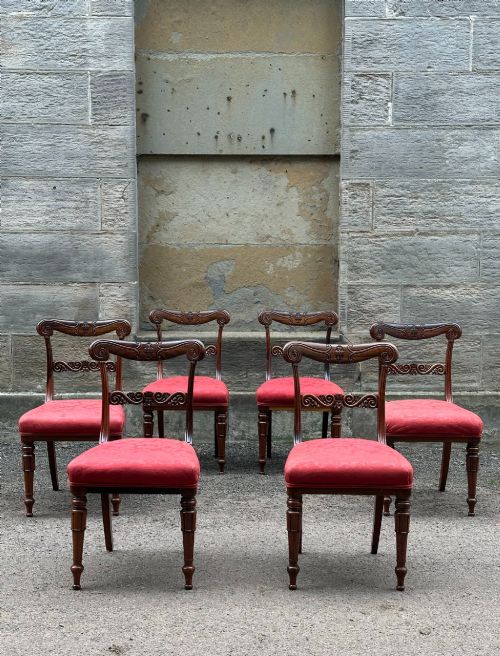
Regency carved back chairs are seating pieces defined by sculpted upper rails and rhythmic woodwork, bringing formal elegance to period interiors.
Regency Carved Back Chairs
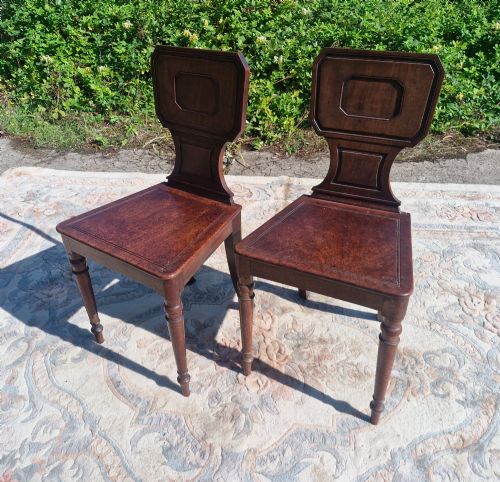
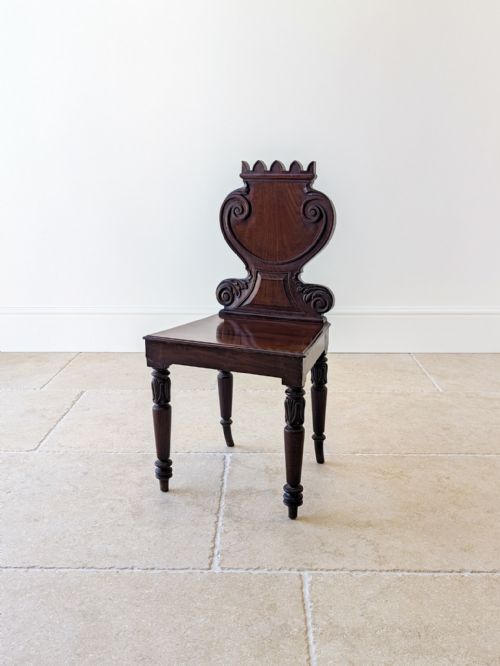
Regency carved back chairs are seating forms produced across the nineteenth century, encompassing dining chairs, carvers, library armchairs, and hall chairs. Buyers seeking regency carved back chairs most frequently encounter mahogany examples styled in the Regency, William IV, and Georgian traditions.
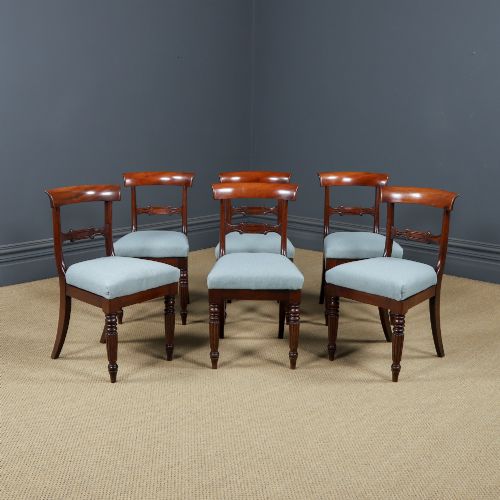
The inventory includes matched sets of four, six, eight, and ten chairs, alongside individual armchairs and pairs of hall chairs. These pieces span production periods from around eighteen hundred through the Victorian revival, utilising timber frames designed for domestic reception rooms and dining spaces.
What varies in quality
The density and figuring of the mahogany or rosewood timber establish the baseline standard of a chair, alongside the crispness of the carved back details. Deeply sculpted rails and solid construction differentiate standard utilitarian seating from pieces designed for principal dining rooms.
The completeness of matching sets alters the standing of the furniture, as large groups of eight or ten matching chairs require uniform timber selection. Original surfaces and retained brass elements maintain the integrity of the piece more effectively than later restorations.
Dining chairs and hall chairs form the majority of available seating, supplemented by library armchairs, chaise longues, and dressing table chairs.
Gillows
The Regency Carved Back Chairs Glossary
- Carver
- An armchair designed with elbow supports, usually produced to match a set of smaller dining chairs. These pieces sat at the heads of the dining table.
- Bar back
- A horizontal wooden rail forming the upper portion of a chair back, often carved with central tablets or reeded decoration. This design identifies many nineteenth-century dining forms.
- Sabre leg
- A chair leg that curves outwards in a concave sweep resembling a cavalry sword. This profile appears frequently on furniture produced during the early nineteenth century.
- Lyre back
- A chair splat shaped in the symmetrical outline of a stringed musical instrument. Cabinetmakers utilised this classical motif during the Regency period.
- Hall chair
- A rigid wooden seat intended for entrance spaces rather than prolonged sitting, usually featuring a solid carved back and no upholstery. These items often display painted or carved family crests.
Regency Carved Back Chairs: Frequently Asked Questions
How do I spot a true Regency chair?
Examine the timber selection, leg shape, and back rail carving to identify characteristics from the early nineteenth century. Regency examples frequently employ Cuban mahogany or rosewood with sabre legs and classical motifs.
Compare the construction methods against later Victorian revival pieces, which often display heavier proportions and different secondary woods. Original surface patination also assists in confirming the production era.
Can I use these chairs for daily dining?
These antique chairs function well for everyday dining provided the structural joints remain tight and secure. Periodic checks of the frame stability prevent damage during regular use.
Consider the upholstery condition and seat height when selecting chairs for modern tables. Professional conservation can reinforce historical glue blocks without altering the original timber.
What is the difference between a carver and a side chair?
Carver chairs include integrated armrests designed to support the elbows, whereas side chairs omit arms entirely to allow compact placement around dining tables. Sets typically combined a pair of carvers with several side chairs.
Dining configurations placed carvers at the table ends while side chairs lined the flanks. Both types shared identical carved back designs and leg profiles within a matched set.
How do William IV chairs differ from Regency ones?
William IV furniture generally exhibits heavier proportions, broader scrollwork, and denser mahogany stock than earlier Regency pieces. The legs on William IV examples often feature heavier turning or bold fluting.
Regency designs tend toward lighter classical lines, incorporating delicate brass inlay and slender sabre supports. Both styles overlap in the nineteenth-century timeline but maintain distinct aesthetic weights.