


Regency Canterbury Stand
A regency canterbury stand is a versatile British furniture piece designed for organising periodicals, sheet music, and folios with elegance.

What a regency canterbury stand is
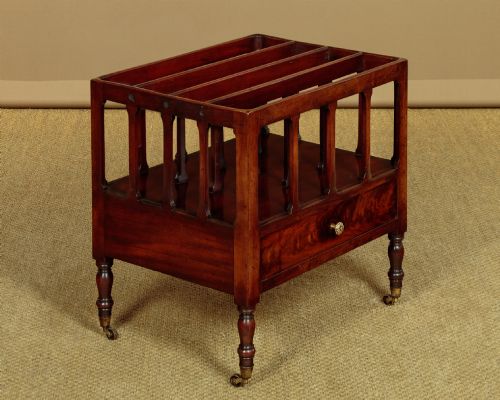
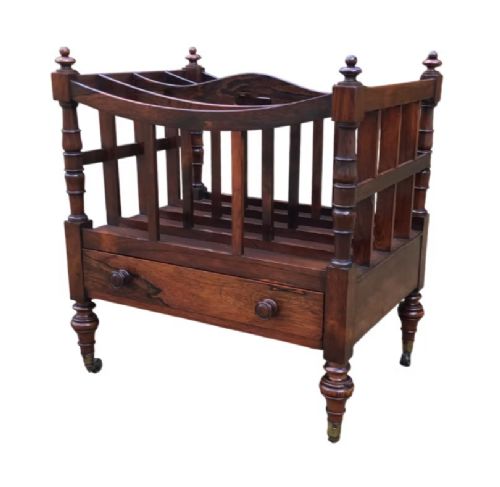
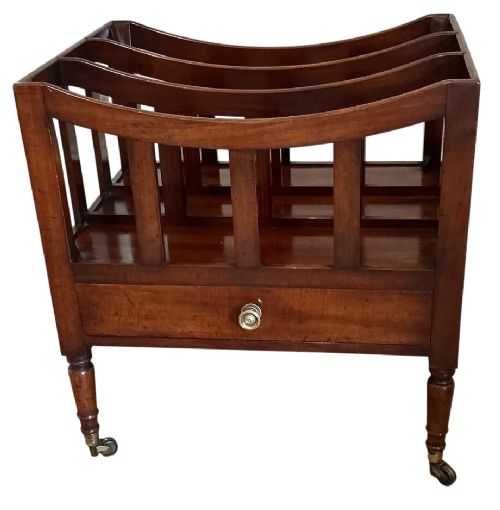
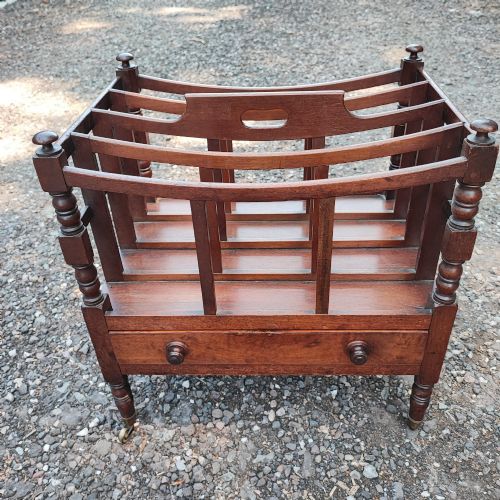
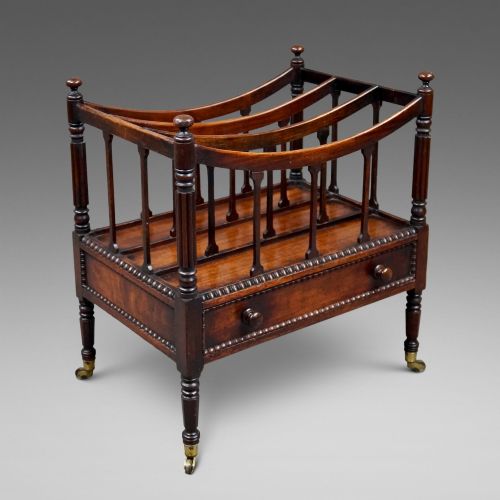
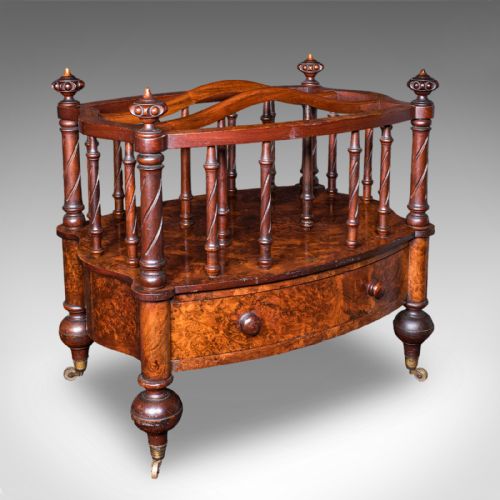
A regency canterbury stand is a dedicated receptacle designed to hold newspapers, magazines, and music sheets in a domestic interior. These pieces originate predominantly from the Regency period and the wider nineteenth century, capturing a distinct period aesthetic.
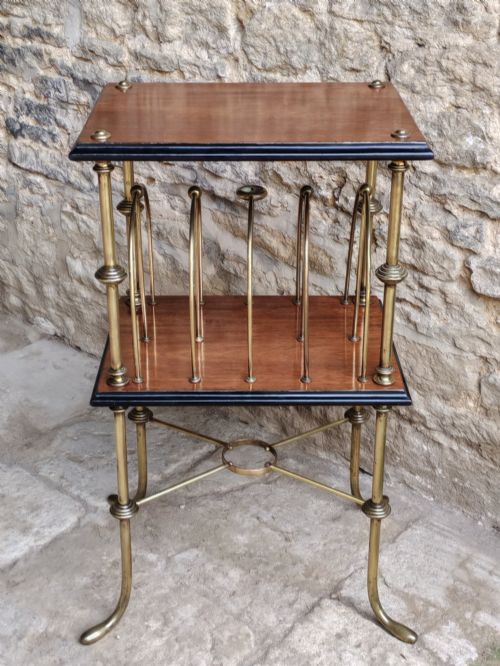
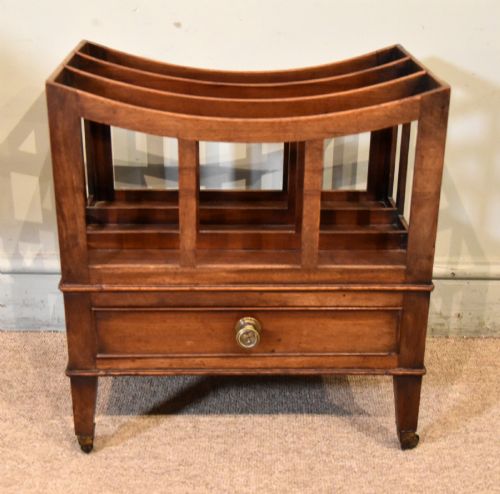
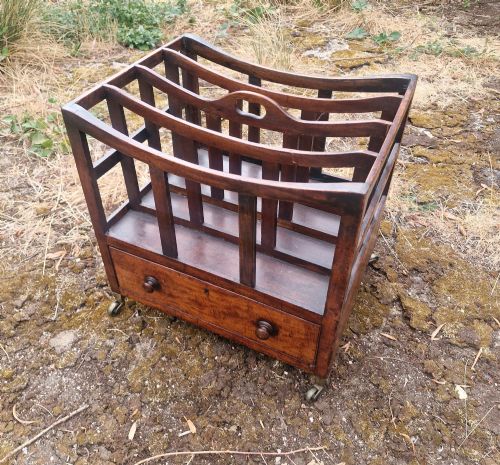
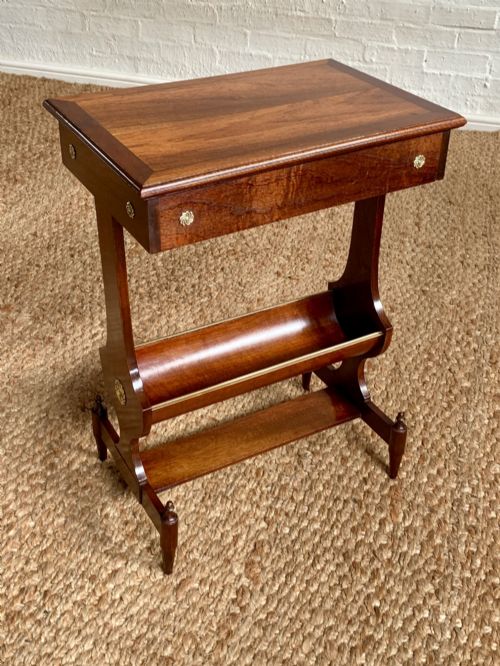
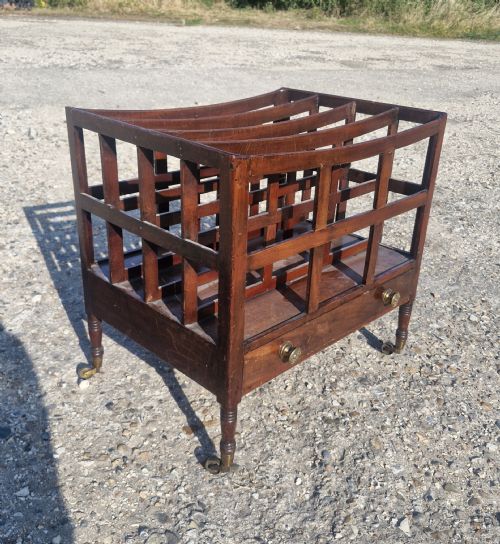
Most examples encountered on this page take the form of freestanding compartmentalised racks or stands, occasionally featuring a base drawer or tiered shelves. They serve equally well in a lounge or a conservatory as practical tidies for contemporary reading materials.
The primary object types recorded in our records include magazine racks, canterburys, and music stands, sometimes incorporating etagere or bookcase elements. The four division layout and low profile formats appear frequently among these English furnishings.
How they were made
These items are constructed primarily from richly figured timbers such as mahogany and rosewood, selected for their deep natural grain and warmth. Cabinetmakers utilised these dense hardwoods to shape upright slatted divisions and sturdy structural frames.
Metal components such as brass often feature in the hardware, including castors fitted to the base of turned legs for ease of movement. Joinery techniques from the period ensured both rigid support for heavy folios and refined decorative finishes.
Retail Price Guide 2026
Typical UK retail prices for regency canterbury stand, calculated from the Sellingantiques database of over a million retail prices indexed since 2003. This retail price guide relies exclusively on Sellingantiques data; no external sources or auction records are used, so the figures do not describe the wider market.
Recorded listings exclusively feature mahogany and rosewood items from the Regency era and the broader nineteenth century.
What varies in quality
Distinctions in quality often rest upon the choice of timber veneer and the sophistication of the joinery, particularly in the shaping of individual rack divisions and turned legs. Finer iterations display superior grain selection in rosewood or mahogany and cleaner proportions.
J. C. Loudon
The Regency Canterbury Stand Glossary
- Canterbury
- A low stand with upright divisions used originally for holding music sheets and newspapers. The form dates back to the late eighteenth century and flourished throughout the Regency era.
- Folio stand
- A piece of furniture designed to store large loose sheets of paper, prints, or maps. Some unusual Regency examples combine this function with traditional canterbury divisions.
- Castor
- A small wheel fitted to the legs of furniture to allow easy rolling across carpets and floors. Brass castors are frequently seen on mahogany and rosewood stands from this period.
- Etagere
- A set of open shelves for displaying small objects or books. Certain nineteenth century designs merge this tiered format with a lower canterbury section.
Frequently Asked Questions
What is a regency canterbury stand used for?
These stands were originally built to hold sheet music, newspapers, and literary folios near a piano or seating area. Today, they serve a similar purpose for contemporary magazines and periodicals in a living room or study.
Their compartmentalised design keeps reading materials upright and organised while adding period character to an interior space.
How do I identify a Regency period piece?
Look for characteristic timber choices such as rich mahogany or rosewood, combined with classical furniture proportions and turned leg supports. Details like brass castors and structural joinery help confirm the nineteenth century date of manufacture.
Many genuine examples also feature distinctive partition slats and low profile frames typical of English cabinet making from around eighteen twenty.
Where should I place a canterbury stand?
A canterbury stand sits well beside a sofa, armchair, or desk where reading material is frequently accessed. Their compact footprint also makes them suitable for placement in a hallway, library, or conservatory.
Because they are often fitted with castors, they can be moved easily across the room as needed for convenience.