



Regency Bronzed Urn
These pieces for regency bronzed urn bring classical gravity to a room through dark patinated metal and refined antique forms.
Regency Bronzed Urn
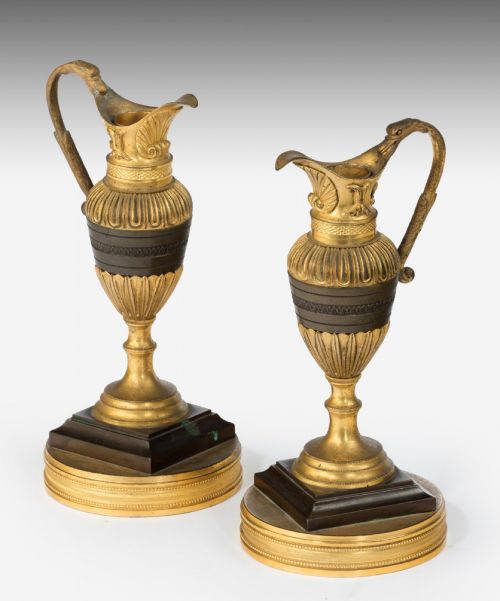
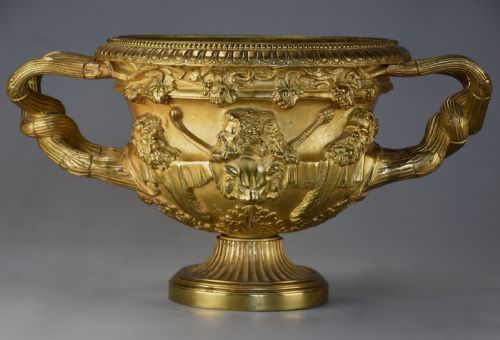
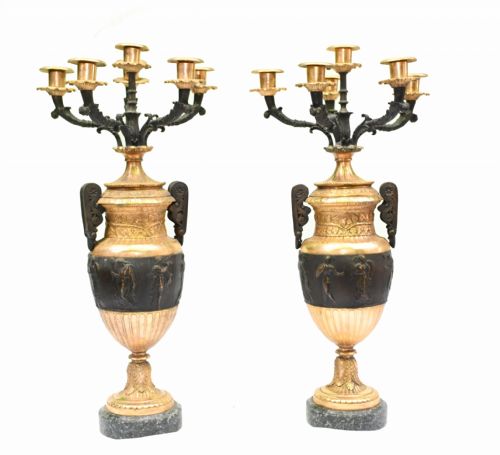
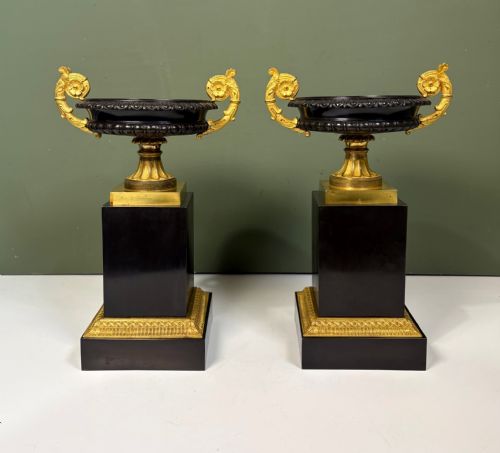
Buyers seeking a regency bronzed urn encounter classical forms drawn from ancient models, including campana-shaped vessels, tazzas, and samovars executed in patinated bronze, gilt bronze, and ormolu. These decorative objects date primarily from the nineteenth century, encompassing both the Regency period itself and later revivals spanning the Victorian era.
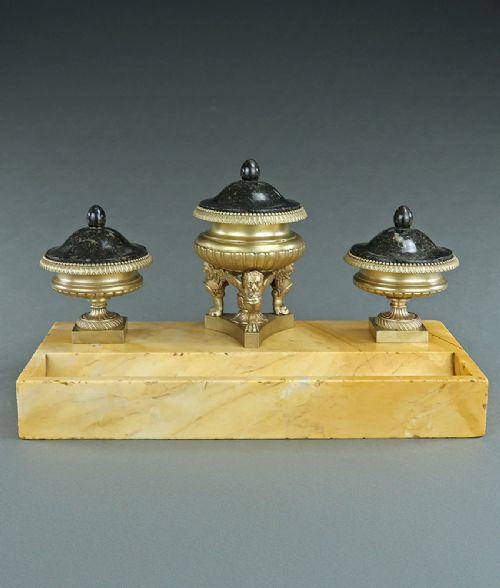
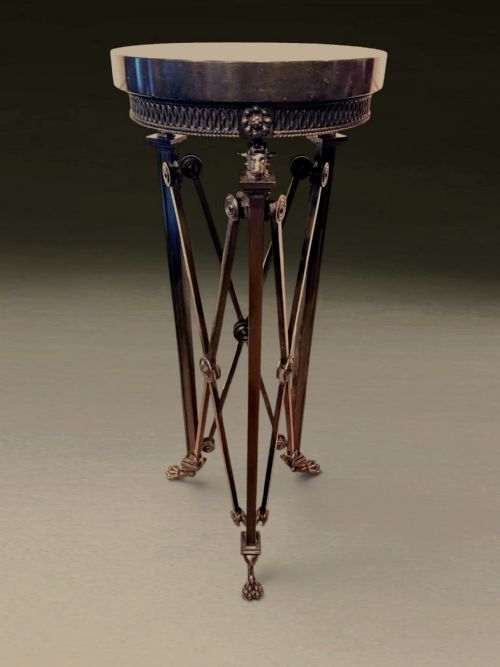
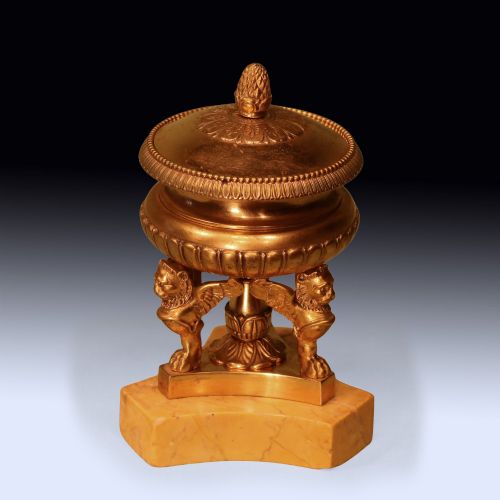
The objects take diverse functional and decorative shapes, appearing as table lamps, inkstands, cassolettes, and monumental plant stands alongside traditional display urns. Many examples incorporate contrasting bases of Sienna marble or alabaster, reflecting the Grand Tour aesthetic that shaped interiors of the period.
Materials and construction methods
The construction relies heavily on cast bronze and patinated copper, often enhanced with fire-gilded ormolu mounts to create sharp contrasts between dark metallic surfaces and bright golden details. Artisans mounted these metal bodies upon architectural plinths of carved Sienna marble, white alabaster, or faux marble.
Casting methods produced crisp neoclassical motifs such as rams' heads, classical foliage, and figural reliefs. Metalwork was combined with turned stone bases using threaded rods and brass nuts, uniting heavy mineral and metallic elements into cohesive display pieces.
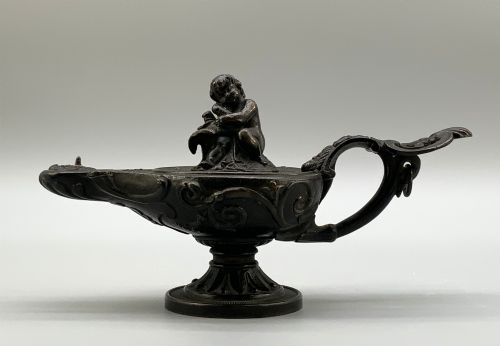
The evidence shows functional forms ranging from decorative campana urns and tazzas to fitted inkstands, table lamps, and copper samovars.
Distinctions in manufacture and design
Quality reveals itself in the crispness of the metal chasing and the depth of the dark patination applied to the bronze surfaces. Superior examples display sharply defined classical ornamentation rather than soft, blurred casting marks.
The selection and treatment of supporting materials further separate tiers of production, seen in the rich veining of genuine Sienna marble versus plain or lesser stones. The integration of fire-gilt ormolu mounts with secure, precise joints marks the higher standard of nineteenth-century workshop output.
Pons de Paul
The Regency Bronzed Urn Glossary
- Ormolu
- Finely ground high-carat gold amalgam applied to bronze through a mercury-gilding process. This technique creates a durable, warm golden surface characteristic of fine neoclassical metalwork.
- Campana
- An inverted bell-shaped vessel derived from ancient Roman pottery and stone garden vases. These classical profiles form the silhouette for many nineteenth-century bronze and marble urns.
- Cassolette
- A decorative dual-purpose vase with a reversible lid that functions either as a closed urn or a candleholder. They frequently appear in matched pairs upon marble plinths.
- Tazza
- A shallow bowl or cup raised on a high stem and foot, designed for display. These low vessels mirror ancient metalwork recovered from classical excavation sites.
- Grand Tour
- The cultural journey undertaken by wealthy young Europeans through France and Italy to collect antiquities and classical art. This travel inspired the creation of miniature bronzes and architectural lamps.
Regency Bronzed Urn: Frequently Asked Questions
What is a regency bronzed urn used for?
These vessels served primarily as neoclassical decorative ornaments, table lamps, or functional items such as inkwells and samovars within nineteenth-century interiors. They brought classical antiquity into the home through sculptural silhouettes.
Today, collectors place them upon side tables, consoles, or mantelpieces as focal points. Wired examples also function as atmospheric table lighting.
How do I identify a Regency period piece?
Regency metalwork relies heavily on strict neoclassical design principles, featuring motifs such as campana shapes, rams' heads, and architectural marble plinths. The use of patinated bronze combined with fire-gilded ormolu defines the aesthetic.
Comparison with dated examples helps distinguish the core Regency era from later nineteenth-century revivals. Construction methods like hand-cut screws and dense stone bases also guide dating.
Are these pieces made of solid bronze?
Most items combine cast bronze bodies with mounts of gilt bronze or ormolu, frequently mounted upon heavy stone plinths of Sienna marble or alabaster. Some variations utilise patinated copper over iron or mixed metallic alloys.
The inclusion of contrasting materials is an intentional design choice rather than a compromise, echoing ancient Roman construction techniques.
How do I care for antique bronze and marble?
Dust patinated bronze and ormolu gently with a soft, dry cloth to protect the historic surface layer and gilt details. Avoid modern chemical polishes that can strip the patination.
Marble bases require simple wiping with a damp cloth followed by immediate drying. Keep the objects away from direct moisture and extreme temperature fluctuations.