





Regency Bronze Lamp
A regency bronze lamp brings classical antiquity and heavy metalwork into a room, offering warm illumination through patinated surfaces and ormolu mounts.
Regency Bronze Lamp
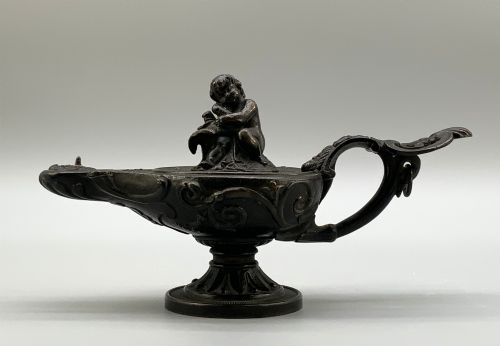
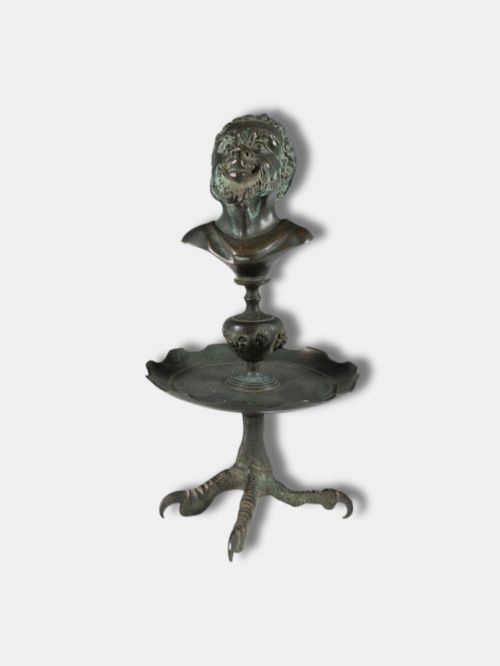
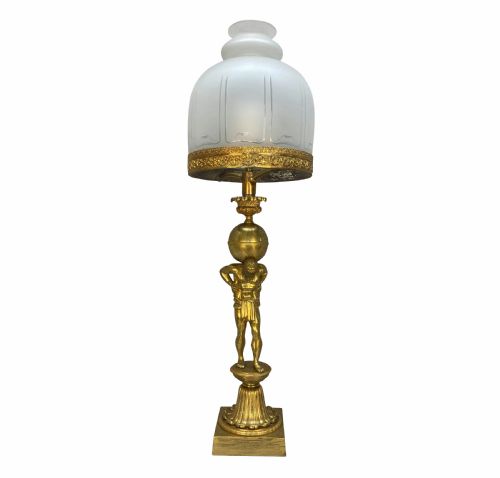
A regency bronze lamp encompasses heavy cast metal lighting fixtures drawing on classical antiquity, French Empire taste, and the Grand Tour. Buyers searching for a regency bronze lamp frequently encounter candlestick conversions, figural supports depicting Atlas or mermen, and urn-shaped table lamps dating across the nineteenth century.
The forms span table lights, standard lamps, and oil lamps, often paired with contrasting ormolu mounts or patinated finishes. Many examples reflect Neoclassical design principles, featuring rams heads, eagles, and classical busts executed in heavy bronze.
While the core inventory centres on genuine nineteenth-century pieces from the Regency and William IV periods, related lighting spans from Georgian torchers to later twentieth-century interpretations in the same classical idiom.
How they were made
These lamps rely on foundational metalworking techniques, primarily sand casting or lost-wax casting for the heavy bronze and brass components. Artisans then chased the cooled metal surfaces by hand to sharpen details on figures, foliage, and drapery.
Contrasting finishes were achieved through chemical patination to darken the bronze alongside mercury gilding or ormolu application to highlight raised details. Many functional pieces integrate secondary materials like cut glass drops, fabric shades, or faux lapis lazuli columns.
Atlas bears the weight of the electrical wiring just as well as he supposedly held up the celestial spheres.
What varies in quality
The integration of materials also dictates standard, where thick fire-gilt ormolu retains its golden lustre and sits flush against heavy patinated bronze bases. Lesser pieces rely on softer metal alloys with superficial plating and simplified casting that lacks sculptural depth.
Humphrey Hopper
The Regency Bronze Lamp Glossary
- Ormolu
- Finely chopped gold leaf amalgamated with mercury and applied to bronze through heat, creating a durable golden surface. This technique was widely utilised during the Regency period.
- Patinated bronze
- Bronze treated with chemical solutions to produce a darkened, weathered surface tone. This contrast accentuates bright ormolu mounts.
- Grand Tour
- Eighteenth and nineteenth-century travels through Europe undertaken by young gentry to collect classical antiquities and bronzes. Many lamp bases derive from these souvenir sculptures.
- Torchere
- A tall stand or floor lamp designed to hold a light source high above the floor. Early examples frequently take the form of classical columns or figural pillars.
Regency Bronze Lamp: Frequently Asked Questions
How do I identify a true Regency bronze lamp?
Look for heavy sand-cast bronze construction paired with hand-chased surface details and genuine mercury-gilt ormolu mounts. Genuine period pieces often show patination consistent with nineteenth-century handling rather than modern chemical distressing.
Examine the construction methods beneath the base, where threaded rods and hand-cut screws typically secure the stacked components together. Later reproductions usually employ modern machine-threaded fixings and lighter metal alloys.
Were these lamps originally made for electricity?
Almost none of these pieces started life with electrical wiring, as they originated during the era of oil lamps, candles, and gas lighting. Many surviving examples began as candlesticks, oil lamps, or decorative urns before undergoing later conversion for modern domestic use.
Conversion usually involves running a cord through the central column or oil reservoir without compromising the outer bronze structure. Collectors generally accept these alterations because they allow antique lighting to function safely in contemporary interiors.
How do I care for patinated bronze and ormolu?
Maintain the surfaces by dusting gently with a dry, soft microfiber cloth to prevent grit accumulation in the chased recesses. Avoid all commercial metal polishes, abrasive pads, and chemical cleaners, which strip away historical patination and thin gold leaf layers.
Keep bronze lighting away from direct moisture and extreme temperature fluctuations to protect both the metal and any applied gilding. Gentle handling preserves the natural oxidation layer that develops over centuries of exposure.
What is the difference between bronze and spelter?
Bronze is a heavy, durable alloy of copper and tin that accepts fine chasing and holds sharp sculptural details during casting. Spelter is a much softer, zinc-based white metal alloy that feels lighter in the hand and appears more frequently in later decorative pieces.
When tapped, bronze produces a resonant ring, whereas spelter yields a duller thud. Antique lighting from the Regency period relies almost exclusively on bronze and brass rather than the cheaper zinc alternatives.