


Empire Column Lamp
An empire column lamp brings classical proportion and rich metalwork into a room, offering a dignified vertical presence.
Empire Column Lamp
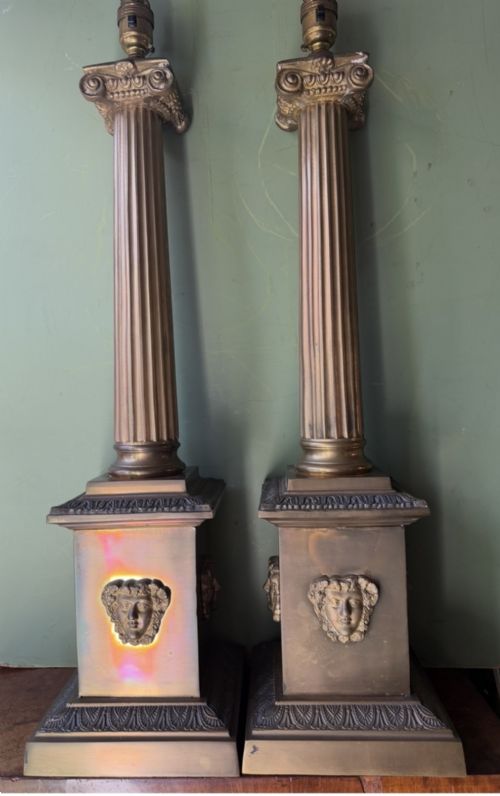
An empire column lamp takes its design cues from ancient architectural orders, bringing classical dignity to interior lighting. When you search for an empire column lamp, you will encounter pieces rooted in French Empire, Regency, and Neoclassical styles. Table lamps and standard lamps dominate this category, often standing on substantial square or circular bases.
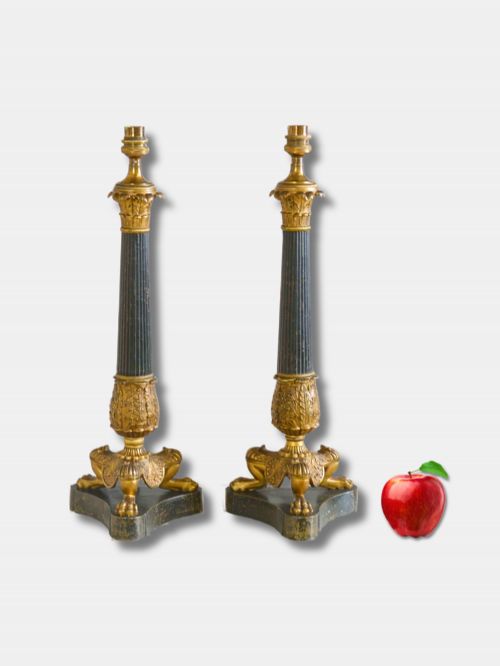
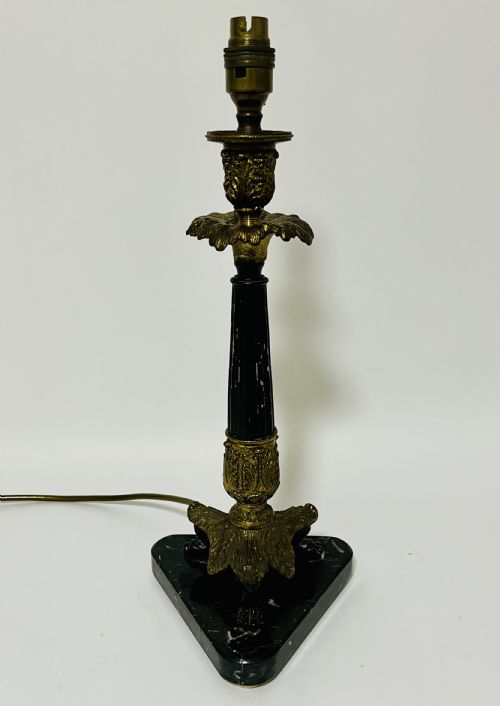
The materials reflect a high-status decorative tradition, combining cast bronze and gilt ormolu with polished marble. Many examples adapt earlier candlesticks or oil lamps for electricity, retaining their original proportions and heavy metal construction. You are most likely to find pairs alongside single larger statement bases dating across the nineteenth and early twentieth centuries.
How they were made
Makers constructed these pieces using heavy cast metals such as bronze, brass, and patinated or gilt ormolu, often mounting the columns on marble bases. Surface enrichment relied on fire gilding and patination to create a sharp contrast between bright gold highlights and dark metallic bodies. Crystal elements and fabric shades in silk or toleware completed the assembly.
The vertical shaft typically takes the form of a smooth or reeded column, sometimes topped with classical capitals in the Corinthian or Doric style. Detail work included applied brass ornaments such as lions' paws, laurel wreaths, and classical motifs fixed securely to the main body.
Listings span the nineteenth century through the 1930s, featuring bronze, marble, and silk materials in French Empire and Regency styles.
What varies in quality
The distinction between ordinary and exceptional pieces rests upon the crispness of the metal chasing and the depth of the gilding. Superior examples display sharply defined acanthus leaves on their capitals and heavy, well-cast bronze rather than thin sheet metal. The selection of solid marble for the base and the integrity of the original patination also elevate a piece.
Proportion and scale dictate the visual success of the column, with finer items maintaining balanced architectural lines from base to capital. The integration of high-grade materials like ormolu and fire-gilded bronze separates standard decorative lighting from museum-quality objects.
The Empire Column Lamp Glossary
- Ormolu
- A gold-coloured alloy of copper and zinc used to gild bronze mounts and decorative details. It provides a rich, warm metallic finish common in French neoclassical design.
- Guéridon
- A small round occasional table or stand, sometimes sharing the classical column vocabulary found in these lamps.
- Toleware
- Painted or enamelled sheet metal used for lamp shades and bodies, often finished in black with gilt accents.
- Patinated bronze
- Bronze treated with chemicals or heat to produce a dark, uniform surface finish that contrasts with bright ormolu mountings.
- Corinthian capital
- The ornate, bell-shaped top of a column decorated with rows of carved acanthus leaves.
Empire Column Lamp: Frequently Asked Questions
Are these lamps wired for modern use?
Most pieces listed have been adapted for modern electrical standards while preserving their antique bodies and historical fittings.
Buyers should inspect the specific wiring details with individual dealers to confirm compatibility with their local electrical supply.
How do I clean bronze and ormolu?
Dusting gently with a soft dry cloth is the safest way to maintain the surface without damaging the historical patina or losing the gilt layer.
Harsh chemical polishes must be avoided entirely because they strip away the original ormolu and permanent surface finishes.
What is the difference between Regency and Empire styles?
Regency design reflects British interpretations of classical antiquity during the early nineteenth century, drawing heavy inspiration from contemporaneous French Empire taste.
Both styles share a vocabulary of columns, gilt bronze mounts, and architectural symmetry, though French pieces often display more exuberant use of ormolu.
Where should I place a standard lamp?
Tall standard lamps work well beside seating areas or in corners where their vertical column can anchor an empty space.
Their substantial marble and bronze bases require a sturdy floor and a secure position away from heavy household traffic.