
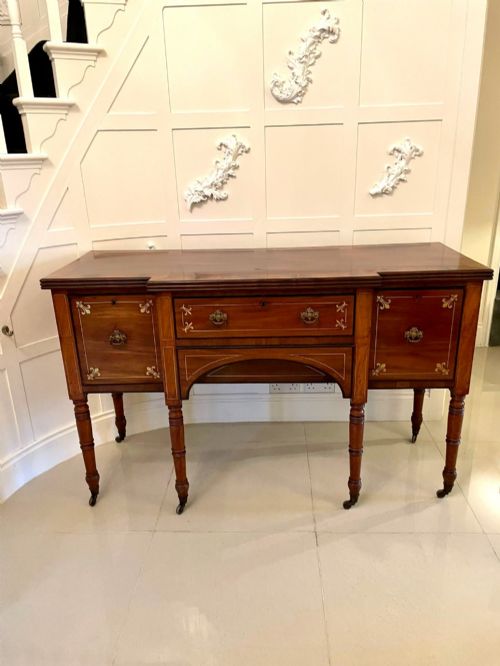
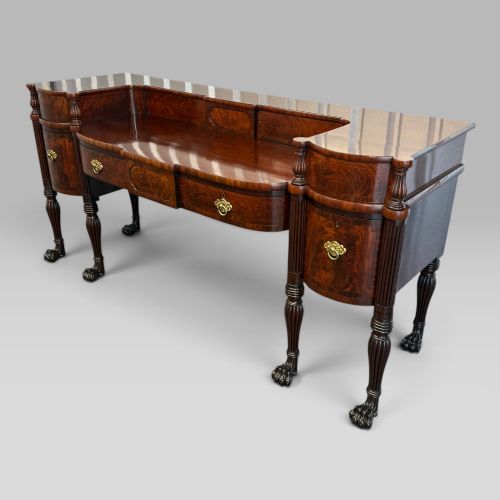
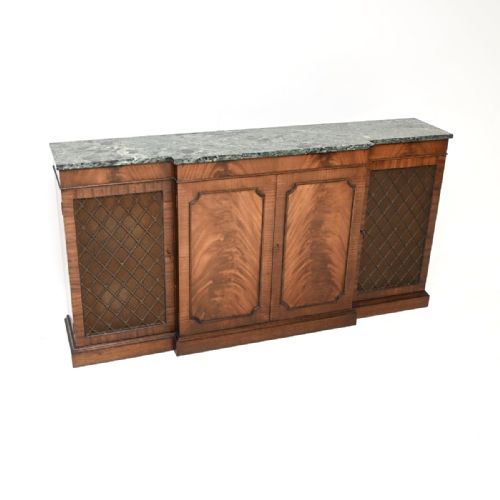
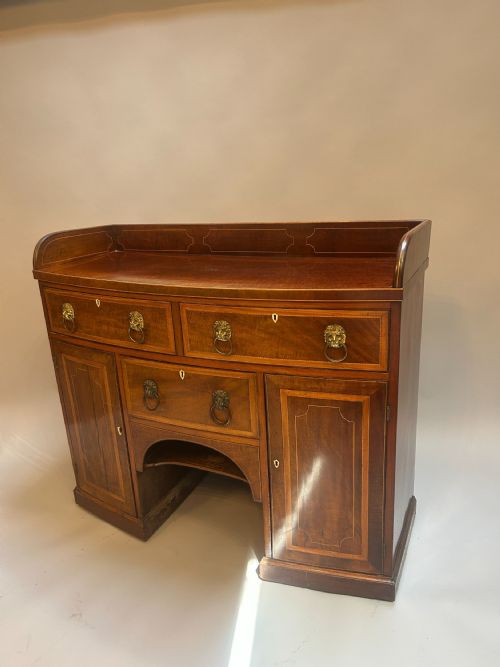


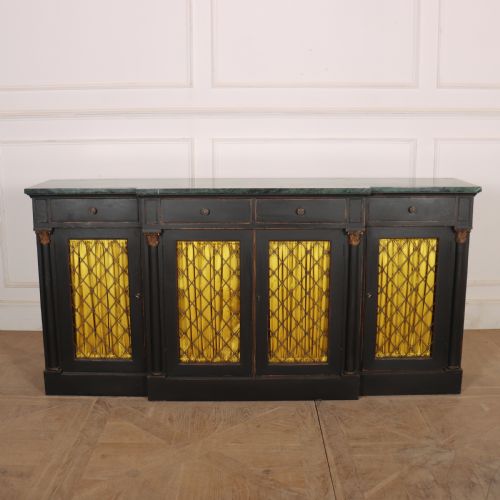


Regency Breakfront Buffet
These regency breakfront buffet pieces combine architectural presence with disciplined timber work, offering serious storage and strong period character for the formal room.

Regency Breakfront Buffet
A regency breakfront buffet encompasses substantial timber sideboards, side cabinets, and credenzas spanning periods from the true Regency era through to later revivals in the nineteenth and twentieth centuries. You will frequently encounter forms described as sideboards or side cabinets featuring the characteristic central projection flanked by recessed wings. These items serve primarily as grand storage furniture for dining rooms and principal reception spaces.
The pieces listed on this page range from genuine Regency and George IV items down to later twentieth-century Regency style interpretations and Victorian pieces. Original period examples date from around eighteen hundred through to the mid nineteenth century, alongside later nineteenth and twentieth-century cabinet work. The selection reflects both formal breakfront configurations and related sideboard forms executed in rich cabinet woods.
Materials and Construction
Makers relied heavily on figured hardwoods, notably flame mahogany and rosewood, often applied as fine veneers over stable secondary timbers to create striking symmetrical grain patterns. Solid mahogany and pollard oak also appear, providing heavy structural carcases for larger sideboards and credenzas.
Surface enrichment frequently includes contrasting inlay, ebony stringing, and detailed brass work such as brass inlays or mounts. Marble tops appear on specific cabinet variations, while carved elements like lion paw feet and classical details demonstrate the joiner's hand.
Cabinet forms on this page include both traditional sideboards and breakfront side cabinets fitted with brass inlay or marble tops.
Distinguishing Quality in Cabinet Work
Quality rests upon the selection and matching of timber veneers, where superior pieces display continuous, highly figured flame mahogany or rich rosewood across the breakfront facade. The precision of the cabinet maker's joinery, particularly around curved doors and recessed sections, determines the structural integrity and visual harmony of the piece.
Refinement in secondary details such as crisp brass inlay, well-defined carved lion paw feet, and intact original marble tops elevate certain examples above standard production. The depth of the colour and the integrity of the polished finish further separate master cabinet work from simpler vernacular pieces.
The Regency Breakfront Buffet Glossary
- Breakfront
- A cabinet design where the central section projects forward from the flanking side sections. This architectural arrangement creates depth and shadow play across the facade.
- Flame mahogany
- A distinct timber veneer cut from timber fork where branches meet the main trunk, showing a flamed, feather-like pattern. Cabinet makers prized this figure for principal display surfaces.
- Credenza
- A grand formal cabinet or sideboard used for storage and serving, often standing low to the floor. Victorian and Regency examples frequently incorporate panelled doors and rich timbers.
- Stringing
- Thin lines of contrasting wood or light-coloured inlay used to outline drawers, doors, and borders. This linear decoration accentuates the geometric lines of the furniture.
- Chiffonier
- A compact sideboard or low cabinet typically fitted with shelves or doors below. The form developed during the Regency period for smaller drawing room storage.
Regency Breakfront Buffet: Frequently Asked Questions
How do I date a Regency cabinet?
Dating relies on timber selection, construction methods, and hardware styles, with genuine Regency pieces showing hand-cut dovetails and native or exotic veneers.
Later nineteenth and twentieth-century revivals often utilise standardised fixings and different secondary woods beneath the primary mahogany or rosewood surface.
Where should I place a large credenza?
These substantial pieces demand a generous wall space in a dining room, hallway, or principal drawing room where their linear proportions can be appreciated.
Ensure adequate floor clearance so the projecting central breakfront and opening doors function without obstruction.
Are marble top sideboards original?
Marble tops appear on specific nineteenth-century and later cabinet variations to provide a durable, cooling surface for serving food and displaying objects.
The presence of stone requires careful weight distribution and stable placement to prevent stress on the supporting timber carcase.