
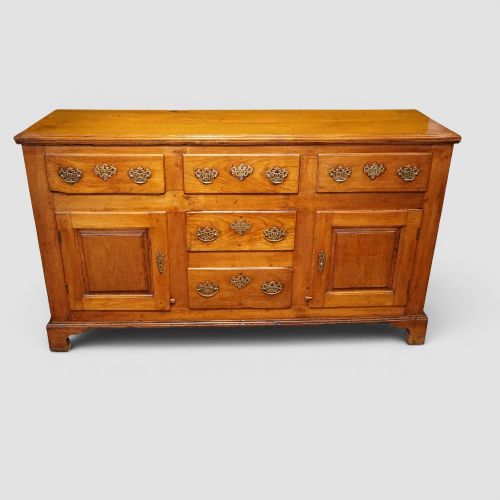
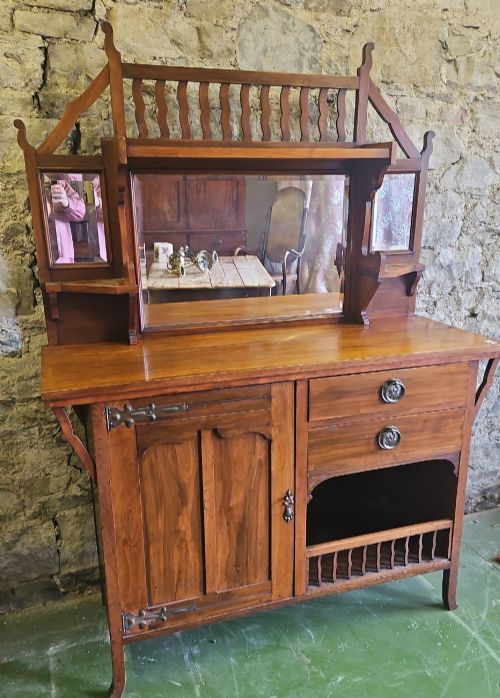
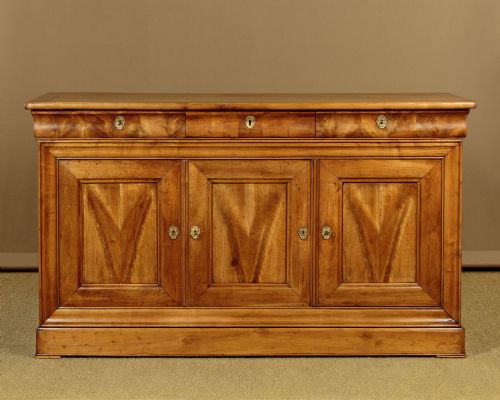
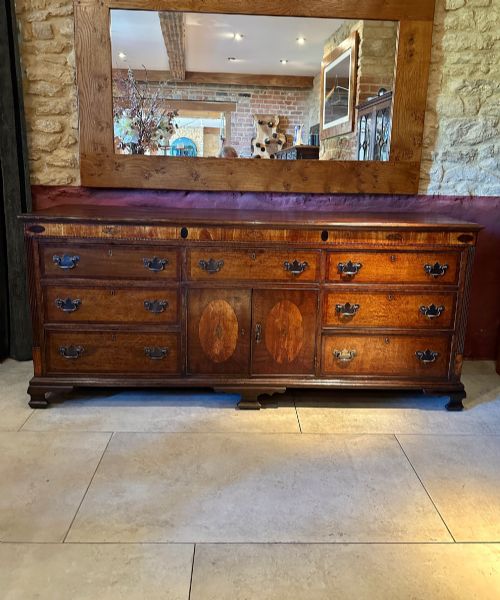


Warm Brown Credenza Cabinet
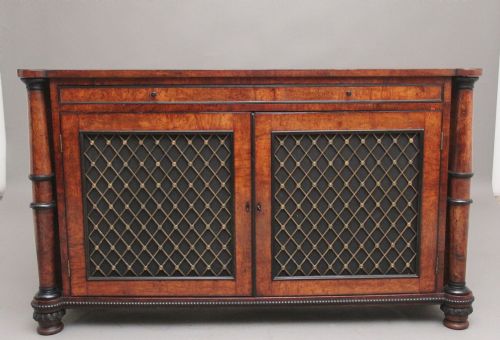
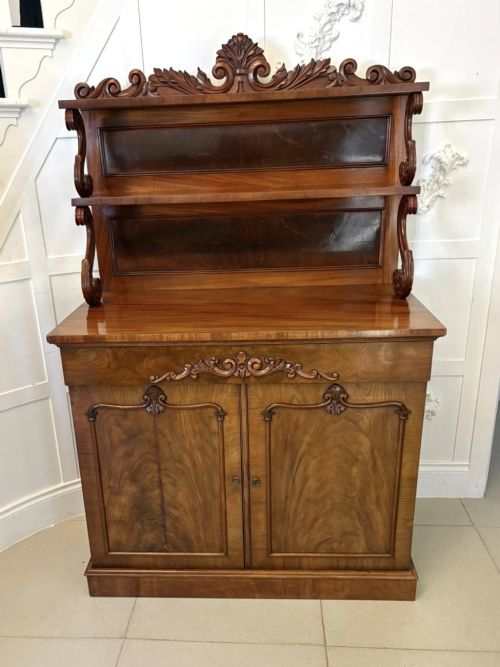
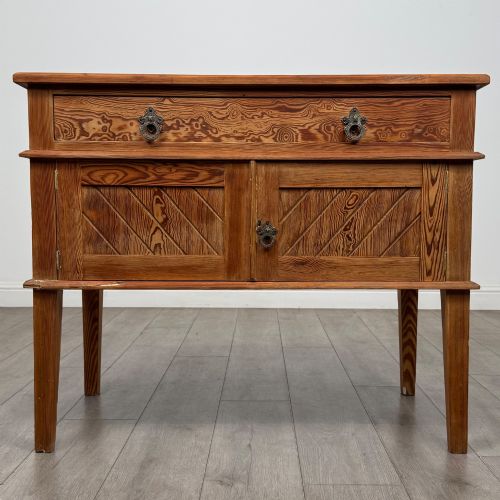
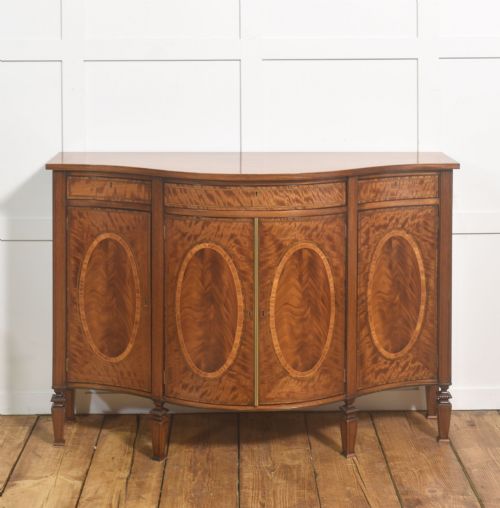
A warm brown credenza cabinet brings rich timber tones and generous storage to a dining room or hallway, anchoring the space with period presence.

Warm Brown Credenza Cabinet
A warm brown credenza cabinet encompasses a diverse group of large storage furniture, including sideboards, side cabinets, enfilades, and chiffoniers. These pieces emerge primarily from the Georgian, Victorian, and Edwardian eras, alongside regional French and Italian workshops.
Buyers searching for this phrase most frequently encounter mahogany, walnut, and oak examples featuring two or three doors, internal shelving, and low profiles designed for formal dining rooms or living spaces. The form bridges the gap between utilitarian storage and display furniture.
How they were made
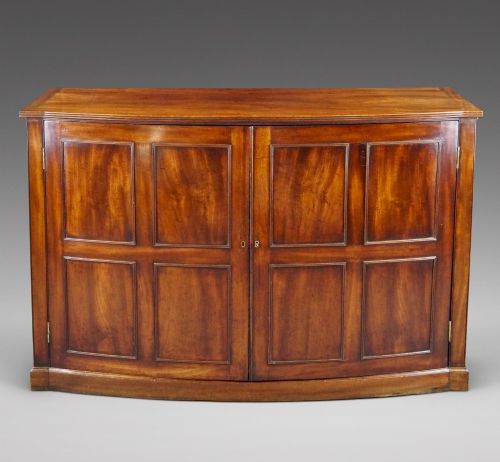
Cabinet makers utilised dense hardwoods such as mahogany, oak, walnut, and cherry wood, often applying burr walnut or satinwood veneers to create complex grain patterns on door fronts and panels. Solid timbers formed the structural carcases, supporting heavy use and substantial internal loads.
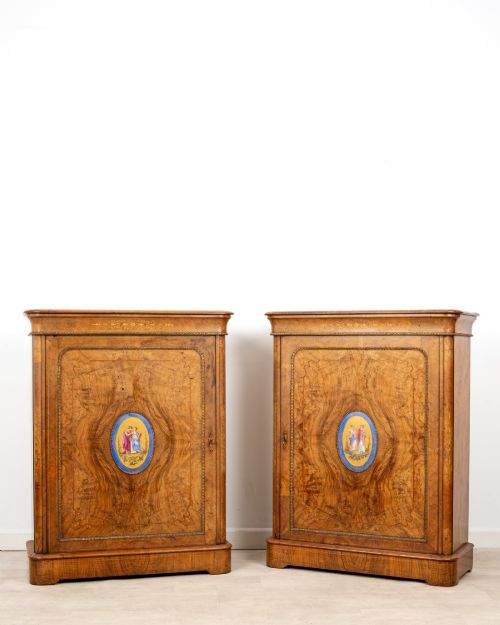
Construction techniques combined traditional joinery with decorative metalwork, incorporating brass handles, ormolu mounts, and occasionally porcelain plaques. Carved details, marquetry inlays, and polished finishes defined the surface treatment across both British workshops and continental enfilades.
Some provincial house maid cupboards still carry the faint, pleasant aroma of stored dried lavender and centuries of polished beeswax inside their deep oak drawers.
What varies in quality
Quality rests upon the selection of timber figures, where matched burr walnut or figured mahogany veneers demonstrate superior cabinet work compared to plain, uniform boards. The crispness of hand-carved ornamentation and the integration of secondary woods inside drawers reveal the level of care invested by the maker.
Structural integrity separates standard utilitarian pieces from exhibition grade examples signed by prominent firms. The thickness of the timber, the symmetry of inlaid marquetry, and the precision with which doors and drawers close define the upper tier of the range.
Hamptons of Pall Mall London·Pietro Ferrario·Maple and Co·T Simpson and Son
The Warm Brown Credenza Cabinet Glossary
- Credenza
- A low dining room cabinet or sideboard, frequently fitted with doors and central shelving for serving food or storing porcelain. Victorian iterations often feature curved glass ends and intricate marquetry.
- Enfilade
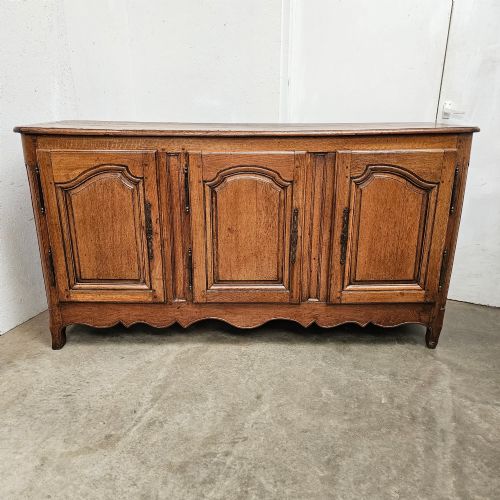
- A long low buffet or sideboard originating from France, typically constructed from oak or cherry wood and featuring multiple doors in a linear sequence. These pieces served practical storage roles in provincial settings.
- Chiffonier
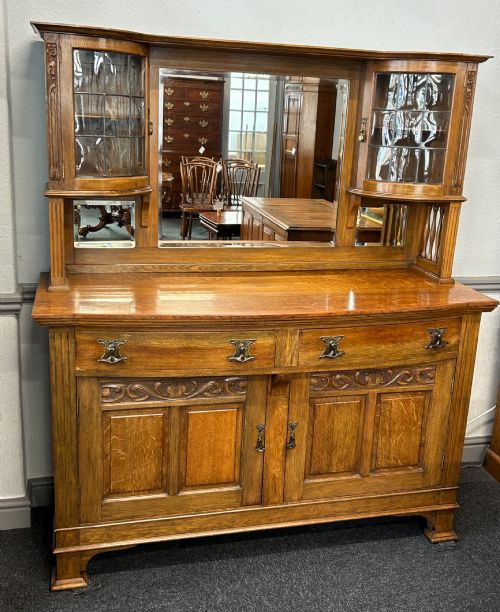
- A compact sideboard or cabinet developed in the Victorian era, usually featuring a two-tiered superstructure or raised shelf back above enclosed lower cupboards. They offer practical surface space in smaller rooms.
- Marquetry
- The art of applying pieces of veneer to a structural panel to form decorative patterns, pictures, or floral designs. Cabinet makers employed contrasting timbers like satinwood and walnut to achieve tonal depth.
Warm Brown Credenza Cabinet: Frequently Asked Questions
Where should I place a warm brown credenza cabinet?
These cabinets suit dining rooms, large hallways, or living spaces where they function as surface display areas and substantial storage units. Their low profiles allow artwork or mirrors to hang comfortably above them.
Ensure adequate floor clearance for doors to swing fully open, particularly on three-door models or pieces with curved side compartments.
How do I care for mahogany and walnut surfaces?
Maintain timber surfaces by dusting regularly with a soft, dry cloth and applying natural beeswax periodically to nourish the grain. Avoid placing furniture in direct sunlight or near heat sources to prevent timber splitting and veneer lifting.
Keep humidity levels stable in the room to preserve the polish and prevent structural movement in the solid carcase.
What is the difference between a sideboard and a credenza?
Sideboards traditionally served dining rooms for food preparation and tableware storage, often standing on taller legs or featuring backboards. Credenzas typically present a lower, more enclosed profile with doors extending across the entire base.
Continental examples such as French enfilades share similarities with both forms, prioritising linear storage capacity along a wall.
How can I date a wooden cabinet?
Examine construction methods, timber choices, and hardware styles to determine the era of manufacture. Georgian pieces often display hand-cut dovetails and simpler internal framing, while Victorian and Edwardian examples utilise machine assistance and incorporate more diverse veneers like burr walnut.
Maker stamps, stamps on drawer linings, or brass lock plates can provide specific workshop attributions or patent dates.