


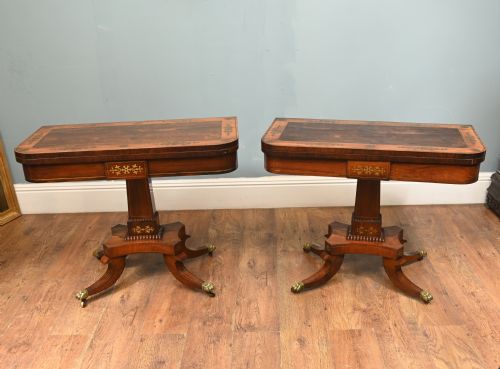

Regency Brass Inlay Furniture
Regency brass inlay furniture unites rich rosewood and mahogany with precise cut brass, offering refined surfaces built for formal interiors.
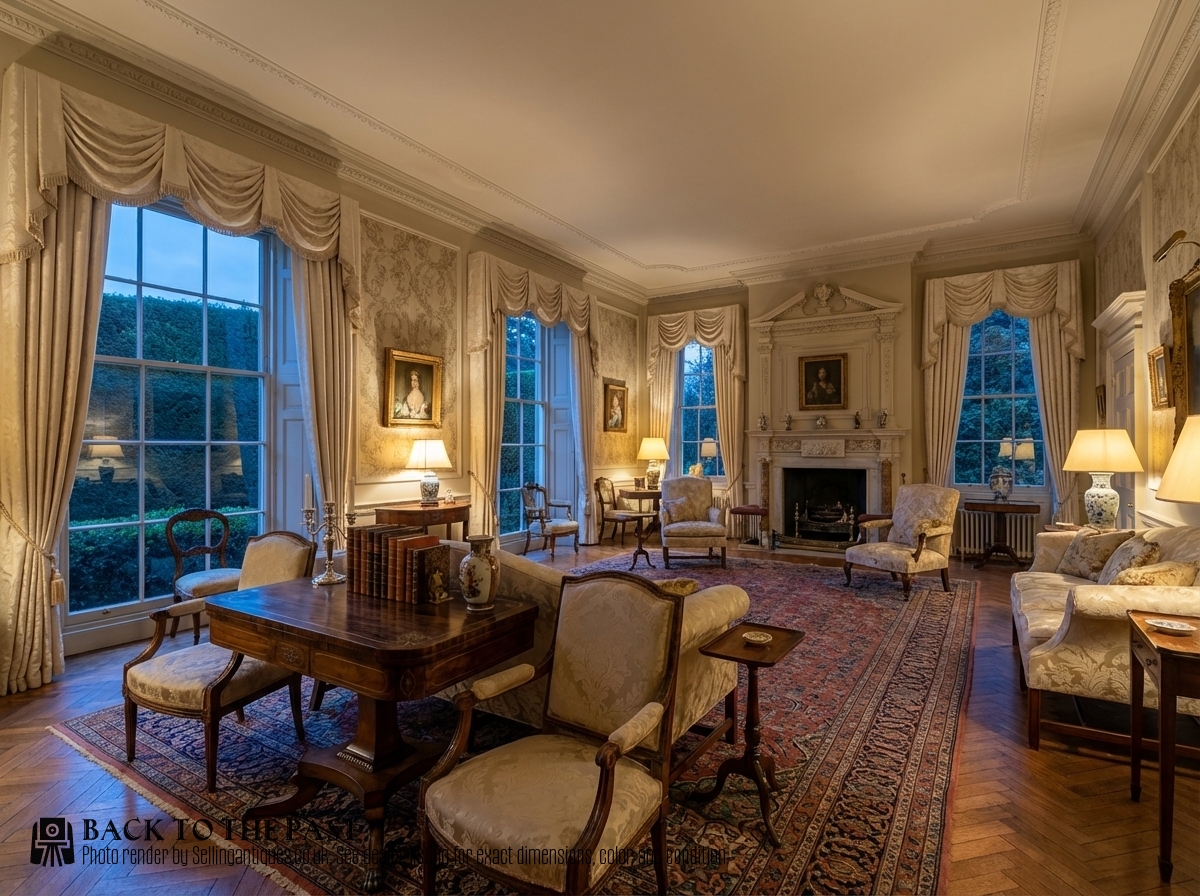
Regency Brass Inlay Furniture
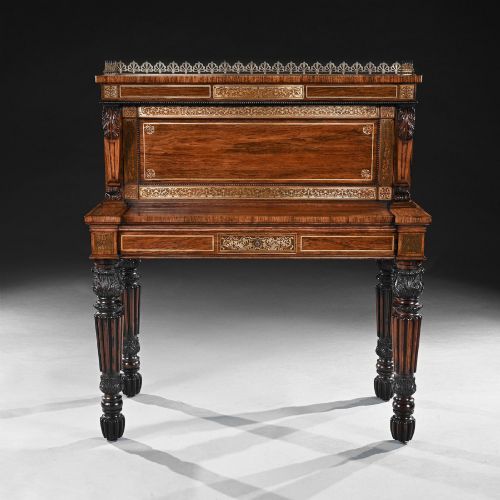
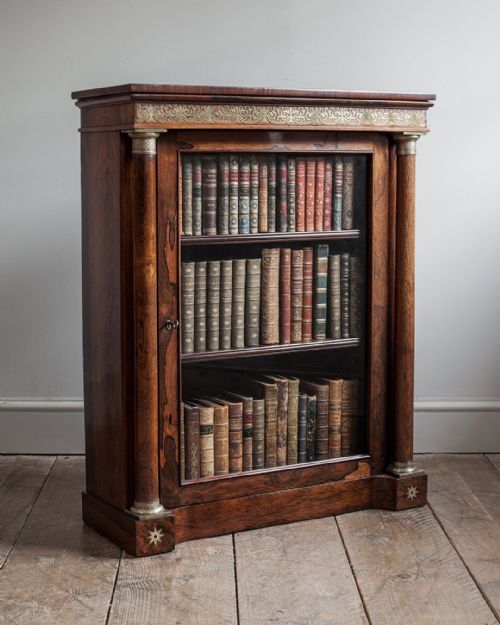
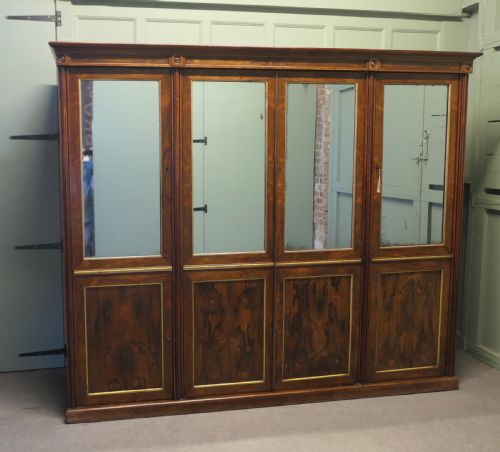
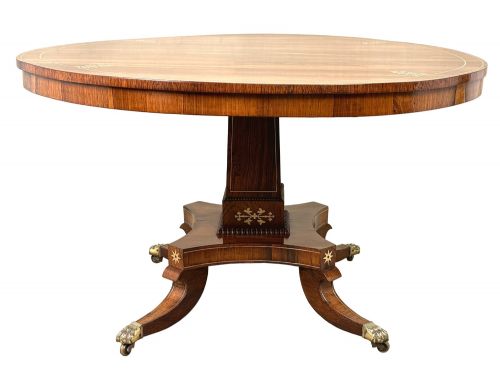
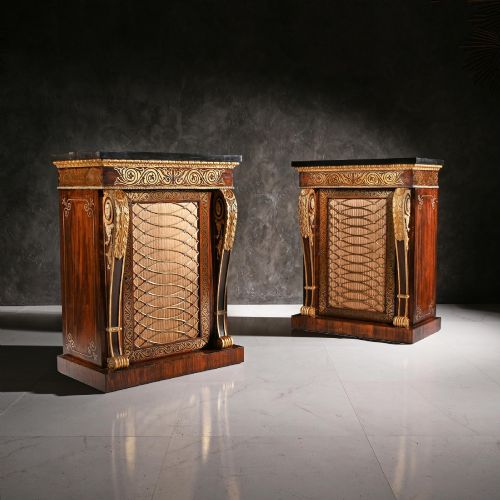
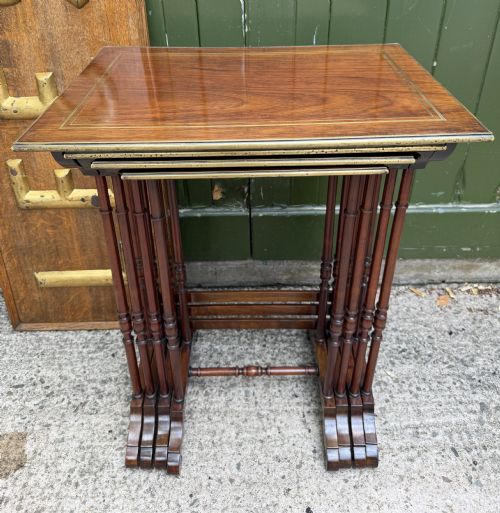
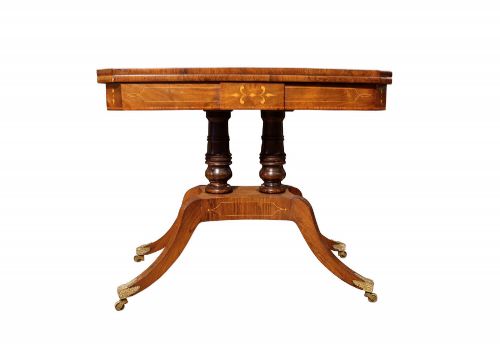
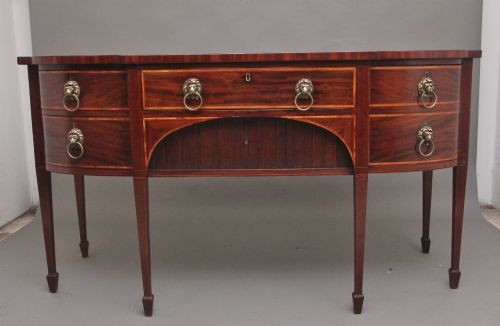
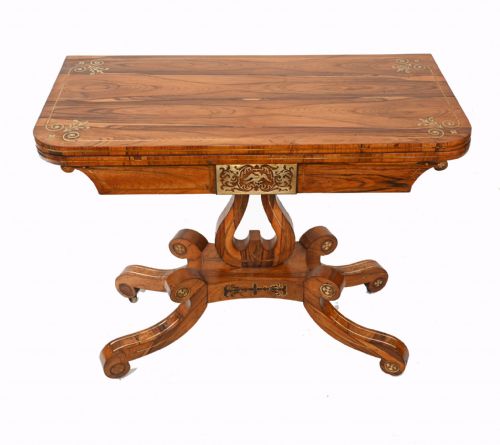
When buyers search for regency brass inlay furniture, they encounter formal drawing room and dining pieces created during the early nineteenth century. The selection on this page centres predominantly upon rosewood and mahogany card tables, side cabinets, dining chairs, and centre tables originating from the Regency, George III, and George IV periods. Makers utilised contrasting timbers to frame intricate metalwork across surface tops, friezes, and cabinet doors.
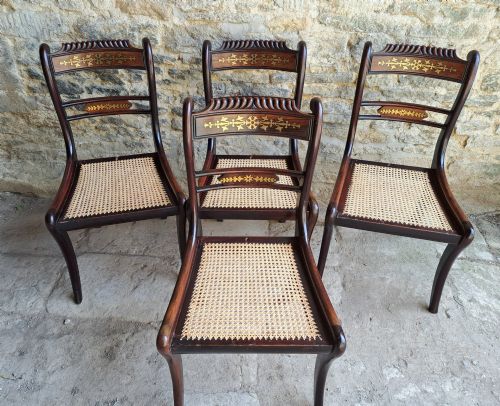
Card tables, sofa tables, and pier cabinets dominate the forms, reflecting the domestic habits of the era when social gatherings required versatile display and game surfaces. Dining chairs appear in matched sets, showing brass decoration integrated into the top rails or splats. These items bridge Georgian architectural proportion with the lighter, classical lines associated with Regency taste.
Materials and Techniques
Cabinet makers constructed carcass frames from solid mahogany or applied dense rosewood veneers over secondary timbers to provide a stable ground for decoration. Craftsmen then channelled the timber surface to receive cut brass sheets, embedding the metal flush with the surrounding wood. Boxwood stringing and satinwood inlay frequently accompanied the brass work, adding tonal depth to borders and geometric panels.
Metal components extended beyond flat inlay to functional details such as brass sabots, castors, and gallery rails that protected vulnerable edges. Cut brass required meticulous hand-sawing to achieve fine floral scrolls, arabesques, and classical motifs before securing them with animal glue. Subsequent finishing involved French polishing to seal the rosewood grain while leaving the polished brass exposed to catch the light.
One exceptional games table listed originates from Ceylonese workshops, proving that Regency taste travelled far beyond London drawing rooms.
Markers of Distinction
The standard of regency brass inlay furniture depends heavily upon the precision of the metal cutter and the choice of timber figure. Superior examples display tightly figured rosewood grain paired with razor-thin brass lines that remain entirely flush with the polished wood. Lesser pieces reveal wider grout lines around the metal or rely on simpler mahogany without the rich contrast of exotic veneers.
Attribution to documented workshops elevates certain items, as seen in pieces linked to Gillows, George Bullock, or Louis Constantin Le Gaigneur. The complexity of the brass engraving and the retention of original matching castors and sabots further distinguish high-ranking works from standard cabinet production.
Gillows Oxford Street Workshop·George Bullock·Louis Constantin Le Gaigneur
The Regency Brass Inlay Furniture Glossary
- Brass Inlay
- The technique of embedding thin sheets of cut brass into routed channels within a wood surface. This ornamentation defines the visual character of Regency cabinet work.
- Rosewood
- A dense, heavily figured dark timber utilised for high-status tables and cabinets throughout the nineteenth century. Its rich grain provides strong contrast against polished brass.
- Card Table
- A folding table designed for evening games, featuring a hinged top that opens to reveal a baize-lined playing surface. Many surviving examples incorporate extensive brass decoration along the frieze.
- Sabot
- A protective brass foot fitted to the base of furniture legs. They frequently appear on Regency card tables alongside matching brass castors.
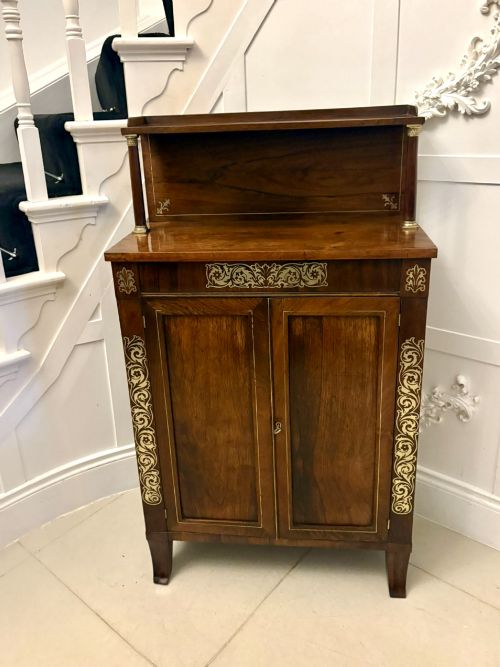
- Chiffonier
- A low side cabinet equipped with doors enclosing shelves, often topped by a gallery or a raised tier. These pieces served as storage and display units in formal parlours.
Regency Brass Inlay Furniture: Frequently Asked Questions
What periods do these pieces date from?
The inventory spans the Regency, George III, and George IV periods of the late eighteenth and early nineteenth centuries. Occasional revival pieces from later decades also appear.
Buyers should examine construction methods and secondary timbers to confirm whether an item dates to the original Regency era or a later nineteenth-century revival.
How do I care for rosewood and brass?
Maintain stable room humidity to prevent rosewood veneer from lifting away from the underlying carcass timber. Dust regularly with a dry cloth and avoid harsh chemical polishes that can discolour the exposed brass inlay.
Applying a traditional beeswax feed periodically helps preserve the lustre of the French polished wood surface without harming the metal.
Were these tables used for dining?
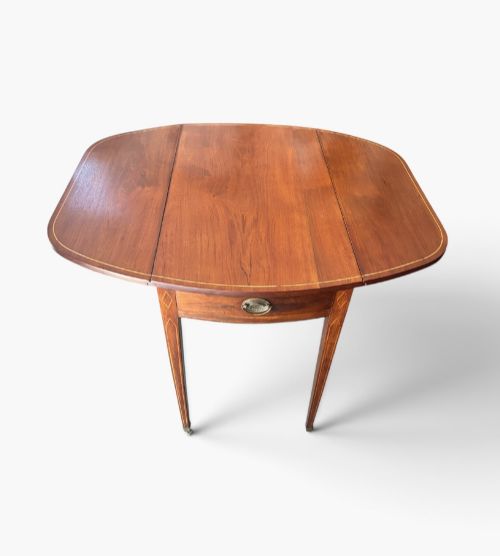
Centre tables and Pembroke tables served multi-purpose roles in drawing rooms and parlours for reading, writing, and displaying decorative objects. Dedicated dining chairs survive in sets, but the larger tables generally accommodated social gatherings rather than formal meals.
Card and games tables specifically catered to evening entertainment, featuring folding leaves supported on pillar pedestals.
How do I spot original brass inlay?
Original nineteenth-century brass inlay shows natural oxidation and sits completely flush with the surrounding timber grain. Close inspection reveals hand-cut edges rather than the uniform machine stamping found on later reproductions.
Minor shrinkage lines in the surrounding rosewood often indicate authentic age and natural timber movement over the decades.