
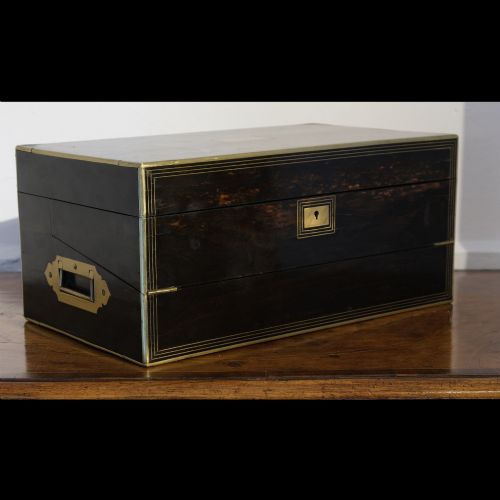
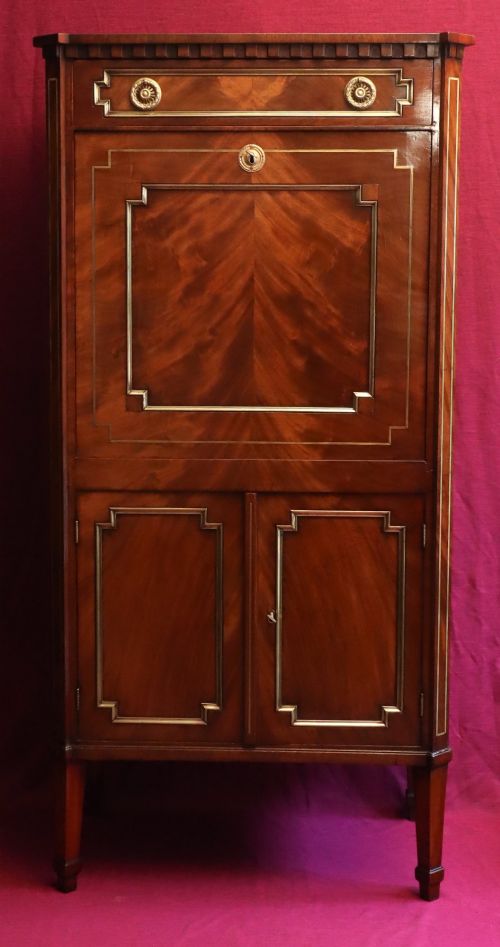
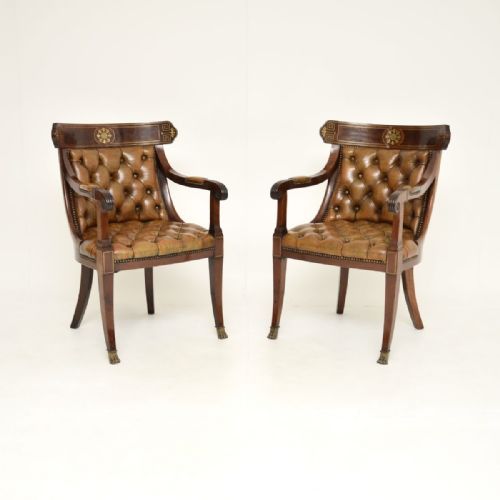


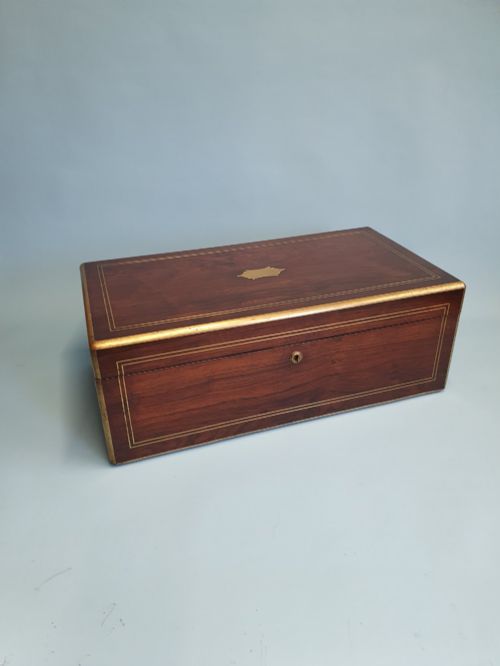


Regency Brass Inlay Desk
Regency brass inlay desk pieces unite warm timber with precise metal work, offering a sophisticated surface for correspondence and study.
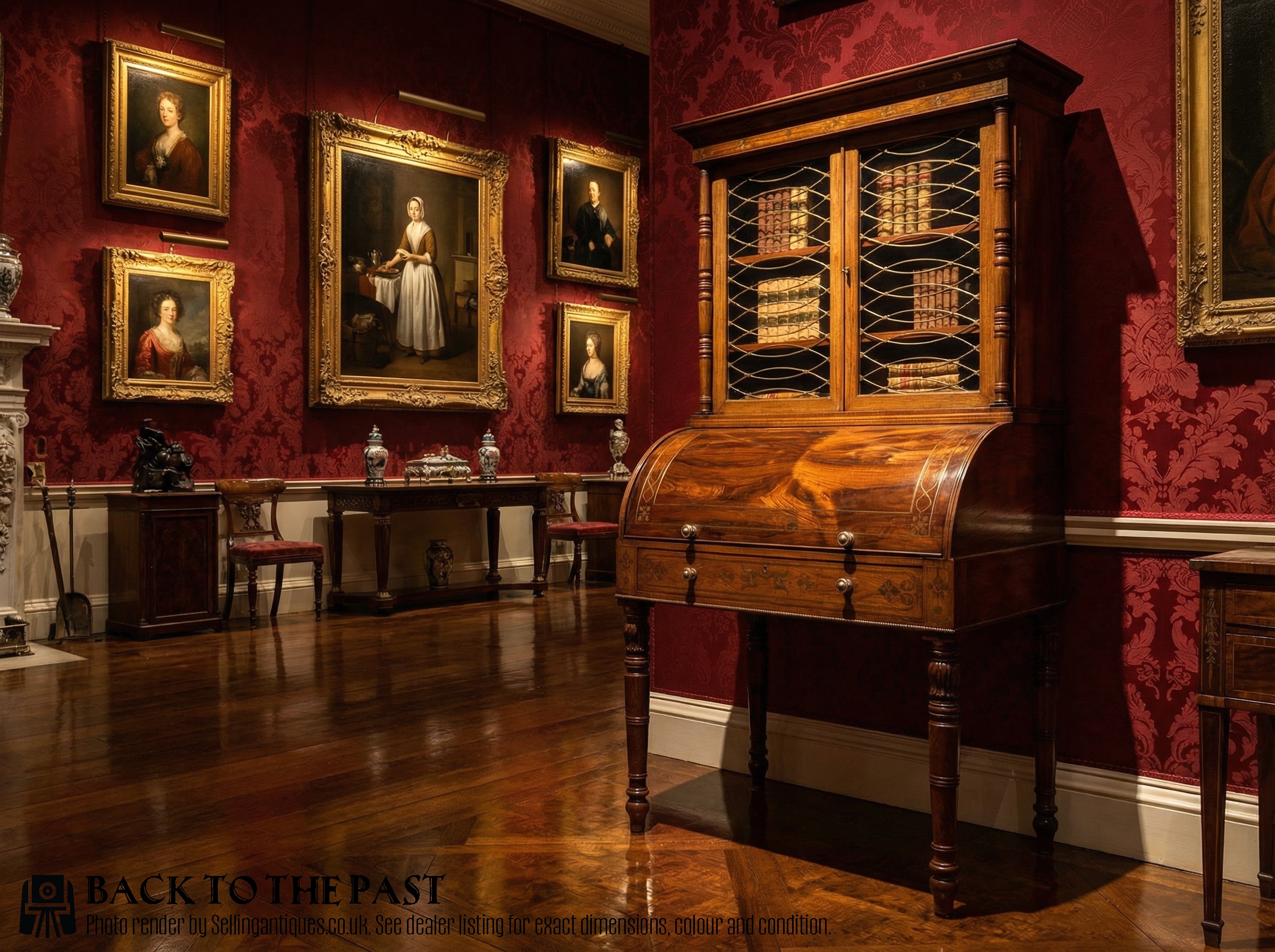
Regency Brass Inlay Desk
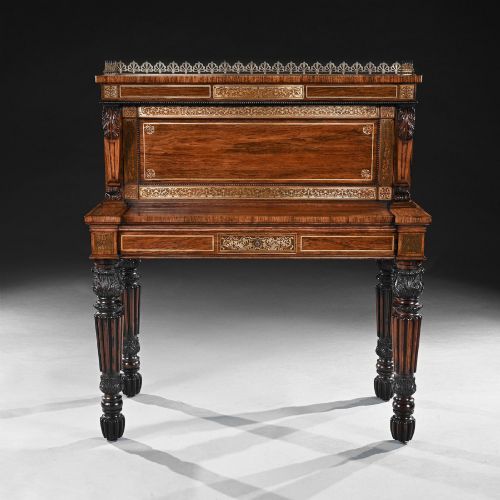
A regency brass inlay desk brings together polished hardwoods and fine metal detailing created during the early nineteenth century and later revival periods. Buyers searching this phrase encounter writing tables, cylinder desks, and portable slopes finished with precise brass decoration.
The pieces appearing on this page span several decades of British furniture making, encompassing both formal Regency design and later nineteenth century interpretations. Rosewood and mahogany provide the primary timber foundations for these writing surfaces.
Writing furniture from this era includes large library writing tables, compact portable campaign boxes, and fitted slope desks designed for desktop use. Each form showcases the characteristic dark woods and luminous metal accents defining the style.
Materials and construction methods
Cabinet makers utilised dense exotic timbers such as rosewood, mahogany, and coromandel as the dark base material for these writing surfaces. These woods were chosen for their rich grain patterns and deep natural tones, which provided a strong contrast against metallic ornamentation.
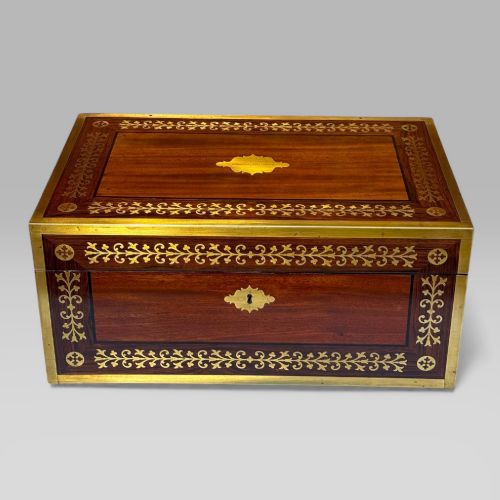
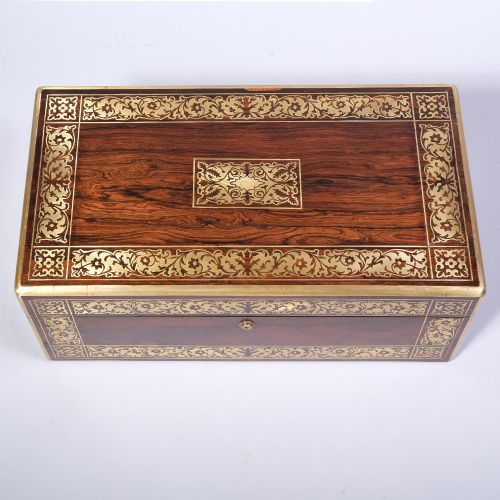
Brass was precisely cut into geometric lines, scrolls, and floral motifs before being inlaid flush into channels carved within the wooden surface. Finer examples combine this metal work with leather writing inserts and hidden internal compartments.
Listings feature rosewood, mahogany, and coromandel timbers paired with brass inlay across desks, tables, and portable boxes.
Distinctions in craftsmanship
The refinement of the brass inlay separates standard production from exceptional examples, with superior pieces displaying tightly fitted metal lines without visible gaps. The complexity and crispness of the engraved or cut brass motifs indicate the skill level of the original workshop.
Timber selection and grain matching across the top and sides heavily influence the overall presence of a writing piece. Superior cabinet work ensures the secondary woods, secret drawers, and internal fittings match the quality of the exterior surfaces.
Gillows Oxford Street Workshop·Bush of London·S Simpson Southampton·Wilkinson Leicester
The Regency Brass Inlay Desk Glossary
- Brass inlay
- Metal strips or cut motifs set flush into the wooden surface of a piece to form decorative patterns. This technique requires precise hand cutting and channel carving.
- Writing slope
- A portable box with a hinged sloping lid that opens to reveal a slanted writing surface and internal storage compartments for stationery. These often feature leather inserts and secret drawers.
- Rosewood
- A heavy, dark tropical timber featuring prominent grain variations and rich purple-brown hues. It served as a favoured material for high status Regency cabinet work.
- Cylinder desk
- A form of writing furniture featuring a curved, rotating wooden cylinder that rolls back to uncover a pull out writing slide and pigeonholes. These items often incorporate fine wood veneers and metal mounts.
- Campaign box
- A portable desk or storage chest constructed for travel use, typically reinforced with brass corners and binding straps. These items were built for durability during military or colonial service.
Regency Brass Inlay Desk: Frequently Asked Questions
How do I identify a genuine period piece?
Examine the timber construction, dovetailing on internal drawers, and the method used to embed the metal into the wood. Period items display hand cut joinery and patination consistent with early nineteenth century workshop practices.
Check for consistency in the materials used for secondary surfaces and linings. Original brass work often shows minor signs of age and integration with the surrounding timber grain.
What is the difference between a writing slope and a desk?
A writing slope is a portable box placed upon a table or stand, featuring a hinged lid that opens at an angle for correspondence. These typically house inkwells, pen trays, and flat storage areas beneath the writing leaves.
Desks are stationary furniture pieces built with permanent legs or pedestals, offering built-in drawers and an integrated writing surface. Both forms frequently incorporate the decorative metal work associated with this style.
How should I care for rosewood and brass furniture?
Maintain stable indoor humidity levels and keep wooden surfaces away from direct sunlight to prevent timber shrinkage or fading. Clean the brass elements gently with a soft cloth to preserve the natural metallic lustre without abrading the surrounding wood.
Avoid using harsh chemical polishes or excessive moisture on antique finishes. Regular dusting and occasional application of appropriate conservation wax help protect both the timber grain and the inlaid metal.
Are portable writing boxes functional today?
These boxes provide practical storage for modern stationery, letters, or small collectables while serving as striking decorative objects on tables or desks. The internal compartments and secret drawers remain useful for organising personal items.
Many slope interiors retain their original leather surfaces and inkwell holders, offering a tangible connection to nineteenth century writing habits. Their compact proportions allow them to fit easily into contemporary room layouts.