
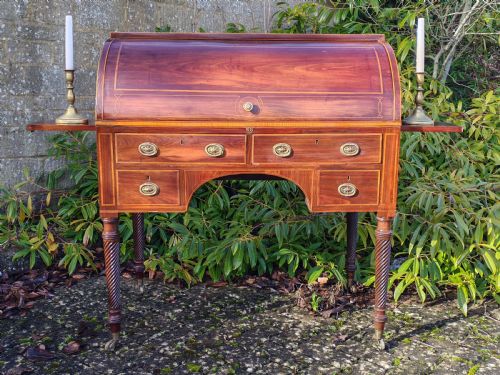
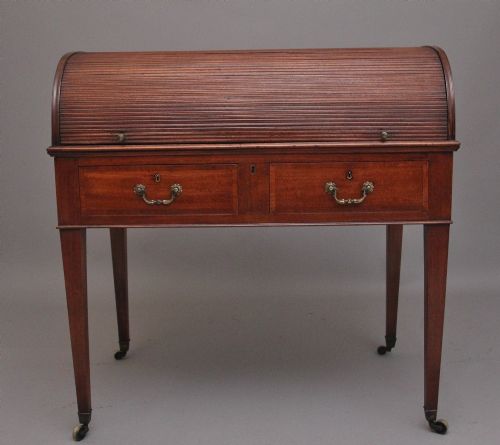


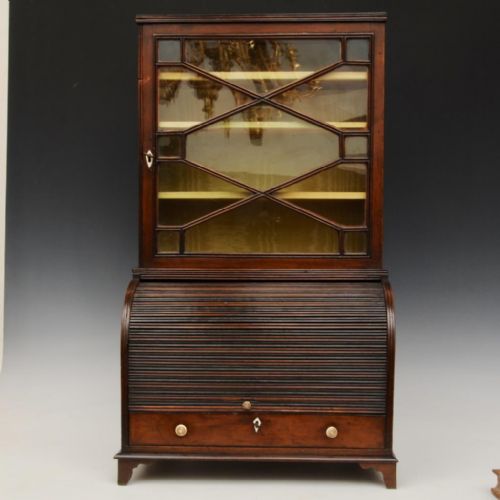
Regency Cylinder Bureau
A regency cylinder bureau brings together clever rolling timber covers and hidden writing compartments from the early nineteenth century.
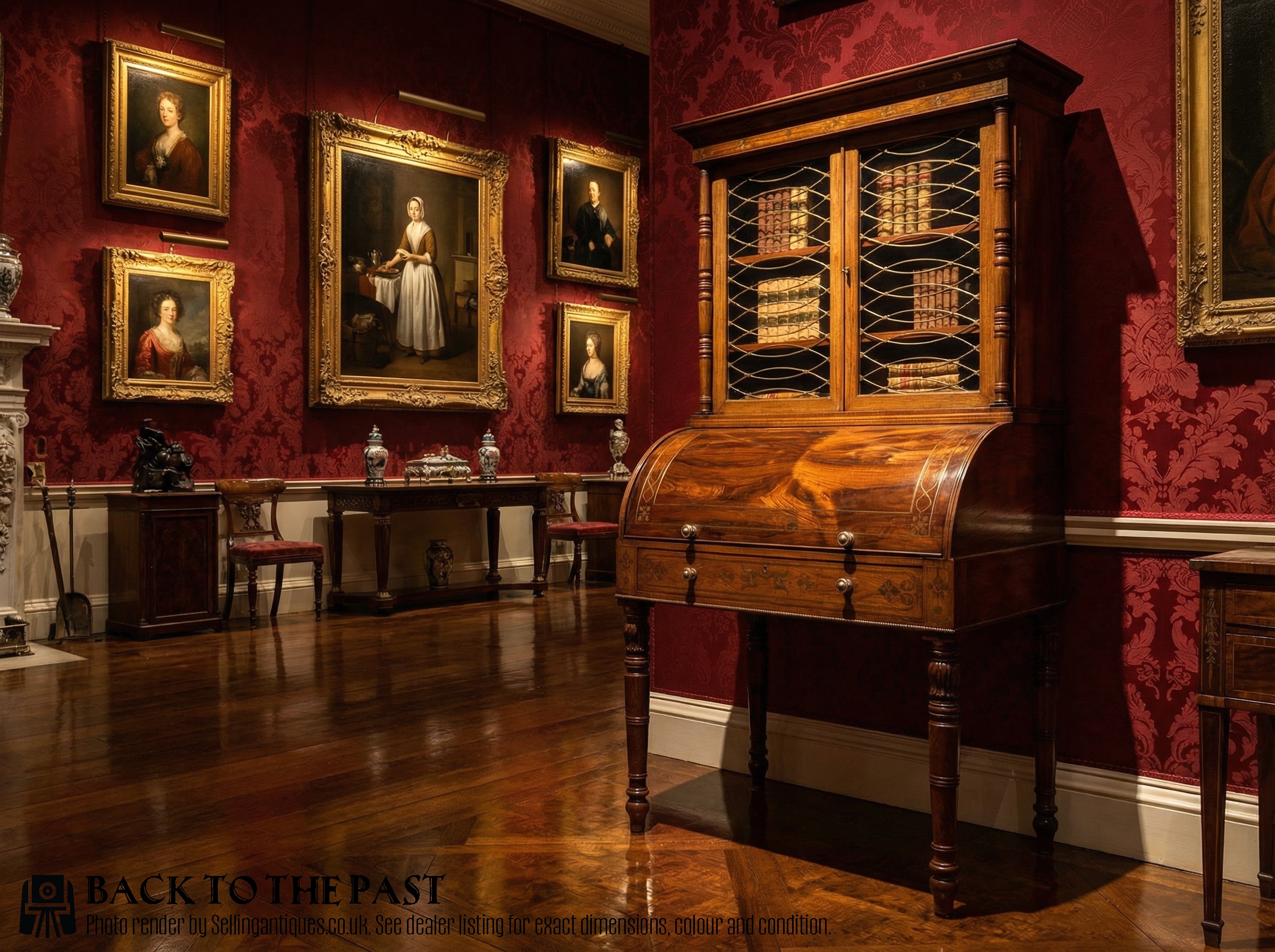
Regency Cylinder Bureau
When you search for a regency cylinder bureau, you are looking at sophisticated writing furniture defined by a curved wooden shutter that rolls back to reveal fitted drawers and pigeonholes. These desks belong primarily to the nineteenth century, with distinct examples emerging around eighteen hundred and the subsequent Regency period.
The versions you are most likely to meet on this page include mahogany cylinder desks and larger bureau bookcases. You will also encounter rosewood variants alongside occasional miniature furniture pieces and tambour desks.
Makers of the period designed these items to conceal correspondence and writing materials elegantly. The primary forms range from compact library desks to towering cabinets incorporating glazed bookcase sections above the cylinder mechanism.
How they were made
Cabinet makers constructed these pieces principally using solid mahogany and rosewood, frequently selecting plum pudding mahogany or figured veneers for the exterior surfaces. They mounted these timbers upon robust secondary woods.
Craftsmen integrated satinwood inlay, ebony details, and brass ring handles to accentuate the architectural lines of the desks. Certain luxury interpretations also incorporated marble tops and bone escutcheons.
The cylinder shutter itself required precise joinery to glide smoothly within hidden tracks. Makers aligned narrow wooden slats on a flexible backing cloth to form the rolling curve.
Makers occasionally hid secret compartments behind dummy drawer fronts within the cylinder interior for private valuables.
What varies in quality
The distinction between ordinary and exceptional pieces lies in the choice of timber and the precision of the veneer work. Cabinets displaying highly figured rosewood or plum pudding mahogany command greater attention than plain surfaces.
Interior architecture significantly alters the character of a desk. Superior examples feature intricate satinwood inlay within the pigeonholes and secret compartments that operate with smooth mechanical ingenuity.
Hardware and secondary materials also dictate value. Original brass ring handles, delicate stringing, and integrated marble elements elevate the piece above standard production.
The Regency Cylinder Bureau Glossary
- Cylinder bureau
- A writing desk featuring a curved, quarter-circle wooden shutter that rolls backwards to uncover the writing surface and internal drawers. This mechanism conceals the desk contents when closed.
- Tambour desk
- A writing table using narrow vertical strips of wood glued to canvas, allowing the flexible shutter to slide around a tight radius. It serves a similar concealing function to the solid cylinder.
- Secretaire cabinet
- A tall storage piece containing a dedicated drop-down or roll-top writing drawer amidst cupboard doors or shelving. These cabinets combine a bookcase or wardrobe with a compact writing space.
- Satinwood inlay
- Ornamental wood contrasting light yellow grain against darker mahogany or rosewood surfaces. Craftsmen used thin strips to form geometric borders and floral motifs.
Regency Cylinder Bureau: Frequently Asked Questions
What is a cylinder bureau?
A cylinder bureau is a writing desk with a curved wooden shutter that rolls back to reveal drawers and pigeonholes. It keeps writing materials tidy and secure.
The design emerged strongly during the Regency period, combining the practicality of a bureau with smooth mechanical action.
How do you date these desks?
You date them by examining the timber species, construction methods, and hardware styles. Pieces from the early nineteenth century often feature mahogany or rosewood with delicate brass handles.
Secondary woods and dovetailing techniques inside the drawers provide further clues to their manufacturing decade.
Where were they used?
These desks belonged in the private studies, libraries, and drawing rooms of grand homes. They provided a private space for writing letters and managing household accounts.
The lockable cylinder shutter ensured that confidential documents remained hidden from view.
How do I live with one?
Place the bureau away from direct sunlight and radiators to protect the antique rosewood or mahogany veneers from drying out. Maintain a stable room temperature to prevent timber movement.
Keep the sliding cylinder mechanism clean and lightly waxed so the rolling action remains smooth.
What is a bureau bookcase?
A bureau bookcase combines a lower cylinder desk with an upper shelving cabinet enclosed by glass doors. It offers both writing space and storage for a library.
These taller pieces represent some of the most ambitious furniture forms from the Regency era.