


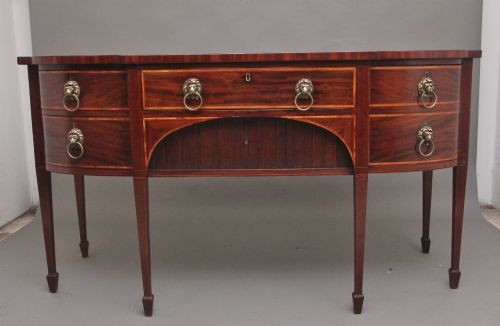


Regency Bowfront Table
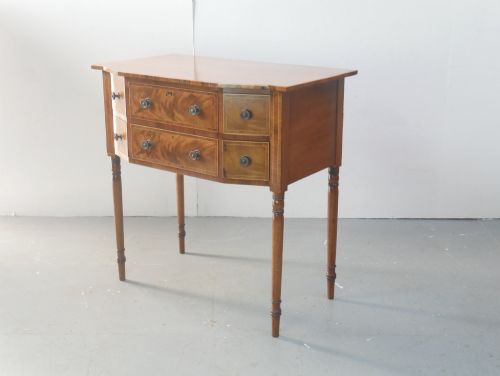
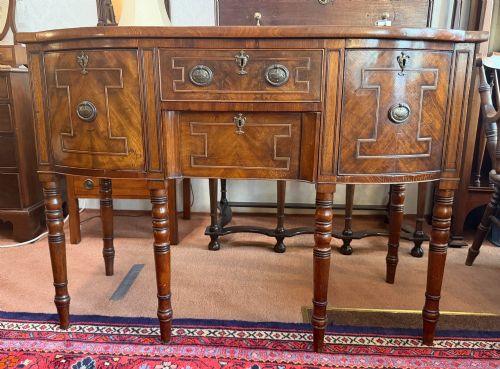
A regency bowfront table brings the curved line of the early nineteenth century into a room with practical surface space and warmth.
Regency Bowfront Table
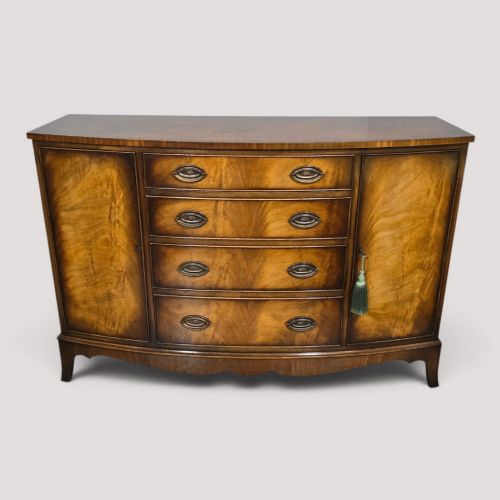
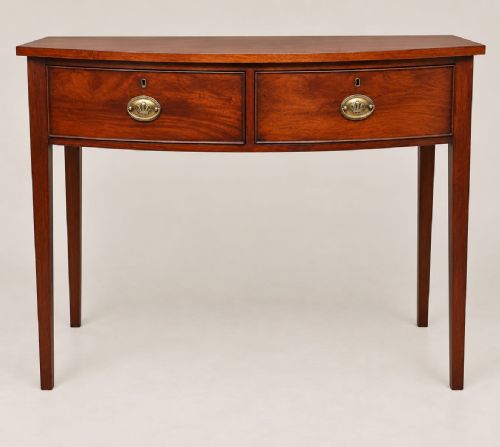
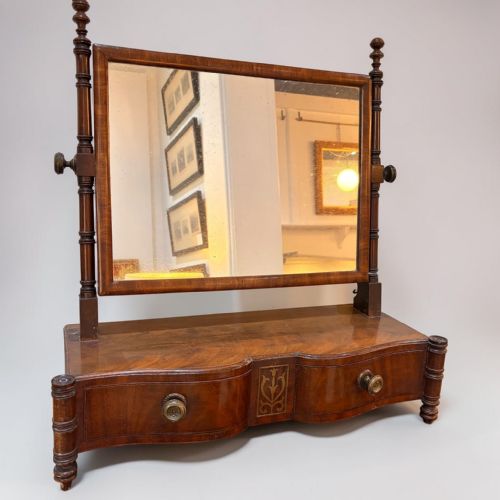
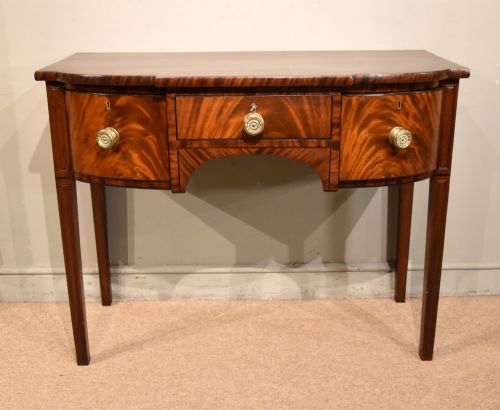
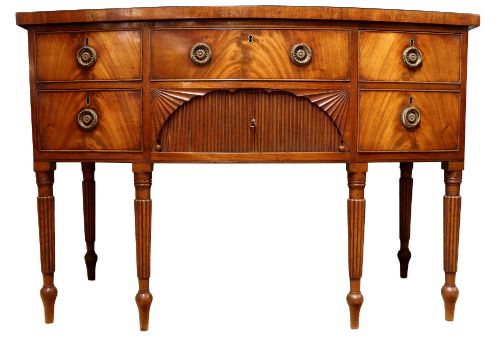
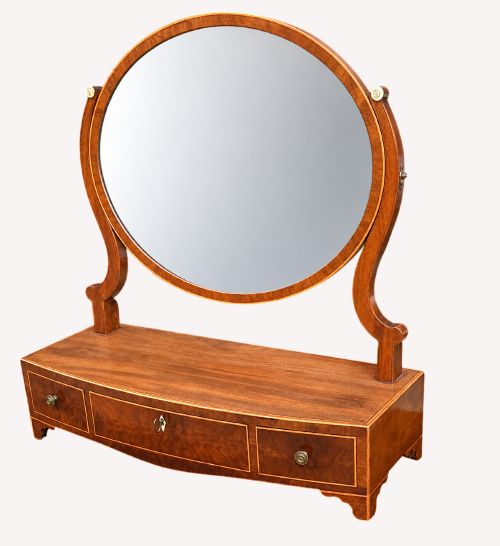
A regency bowfront table offers a distinct convex curve to the front elevation, softening the geometry of a room while providing useful proportions for serving, writing or dressing. When you search this phrase, you encounter forms ranging from low side tables and writing desks to dressing tables and larger serving pieces.
The pieces appearing on this page span the foundational periods of the early nineteenth century alongside later revival interpretations from the twentieth century. Mahogany remains the dominant timber across these examples, often combined with inlaid details and occasional secondary woods like oak.
How they were made
Cabinet makers constructed these curved fronts using solid timbers and fine veneers applied over stable core boards, bending mahogany and flame mahogany to achieve the characteristic convex sweep. Boxwood stringing and ebony inlay frequently define the edges and drawer outlines.
Internal elements such as drawer linings often utilise oak or secondary softwoods, while hardware relies on cast brass handles and occasional bone escutcheons. Leather inserts appear on writing surfaces, paired with hand-finished polishing oils.
Regency Bowfront Table Retail Price Guide 2026
Typical asking prices for regency bowfront table among the pieces listed under this phrase on Sellingantiques today, from the lower quarter to the upper quarter. They describe what is for sale here now, not the wider market.
Some dressing table mirrors include secret compartments hidden behind small swing drawers for storing morning notes.
What varies in quality
The standard of a regency bowfront table rests upon the selection of timber, particularly the choice of figured flame mahogany for the primary facade and the precision of the boxwood inlay. Cabinet work of higher ambition demonstrates careful grain matching across the curved drawers and seamless joins along the bowed frame.
Proportion and structural integrity dictate the standing of individual pieces, where smaller scale and restrained stringing indicate thoughtful design. Original brasses and clean interior linings complete the distinction between everyday utility and finer workshop production.
Gillows·George Oakley
The Regency Bowfront Table Glossary
- Bowfront
- A convex curved front elevation that projects outward from the centre. This shape gained popularity during the Georgian and Regency periods to soften room corners and maximise internal drawer space.
- Stringing
- Thin inlaid lines of contrasting wood, such as boxwood or ebony, used to outline drawers and borders. It provides delicate linear definition against darker primary timbers.
- Flame mahogany
- A veneer cut from timber where the branch meets the trunk, producing a rippled, flame-like pattern. Makers selected this figure for prominent surfaces like drawer fronts.
- Escutcheon
- A protective plate surrounding a keyhole, often made from brass or bone. It prevents wear to the surrounding wood around the lock.
- Sideboard
- A long serving table or cabinet used in dining rooms for storing and presenting food and tableware. Many examples incorporate the bowed front to ease movement in compact spaces.
Regency Bowfront Table: Frequently Asked Questions
What rooms suit a regency bowfront table?
These tables adapt easily to hallways, bedrooms and reception spaces due to their shallower profile at the sides. The curved front reduces sharp corners in busy areas.
Smaller side tables function well as lamp stands or writing desks, while larger sideboard versions anchor a dining room wall.
How do I spot a later revival piece?
Twentieth-century pieces often display uniform machine-cut veneers and standard modern hardware inside the drawers. Timber finishes tend to feel more consistent without the natural variation of early nineteenth-century surfaces.
Construction methods inside the carcase, such as machine-cut dovetails, point toward later manufacture compared to hand-cut equivalents.
Were these tables used for writing?
Certain forms specifically served as writing or dressing tables, equipped with fitted top drawers and leather writing inserts. Other versions functioned primarily as side tables or serving surfaces in halls and dining rooms.
Kneehole configurations allowed a person to sit comfortably while writing or grooming.
How should I care for mahogany surfaces?
Maintain the finish by dusting with a dry lint-free cloth and avoiding silicone-based polishes that build up over time. Natural wax applied sparingly preserves the moisture and depth of the timber.
Keep the wood away from direct heat sources and strong sunlight to prevent the mahogany from fading or drying out.