

Mahogany Three Drawer Table
A mahogany three drawer table organises domestic space with quiet function, spanning the Georgian, Regency, and Victorian eras.
Mahogany Three Drawer Table
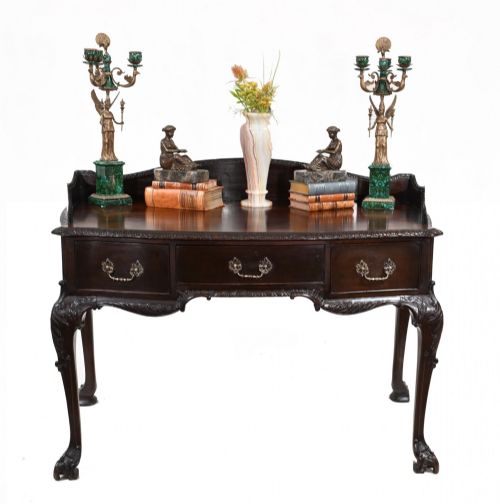
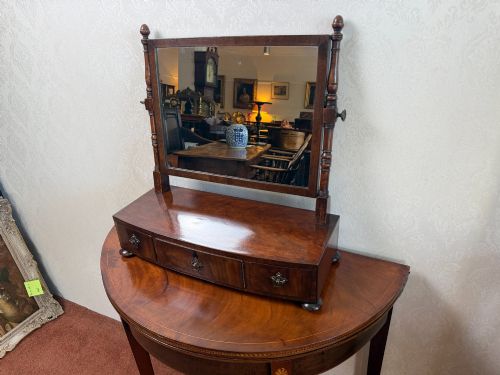
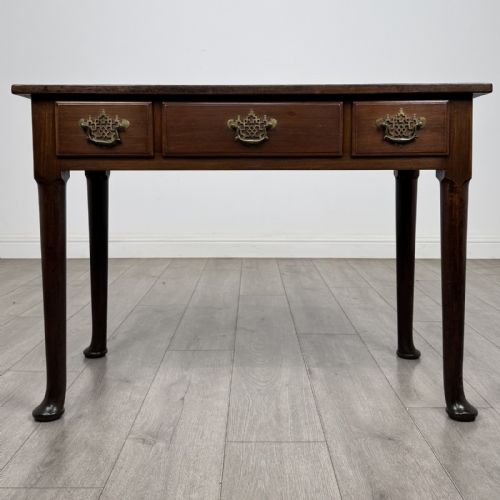
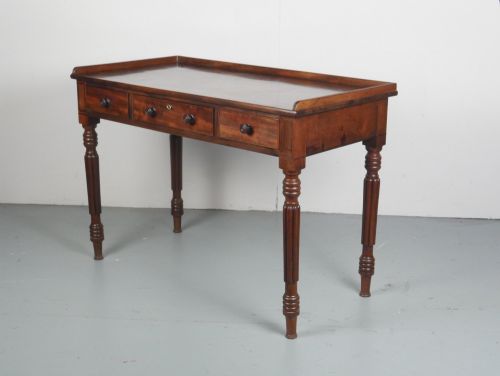
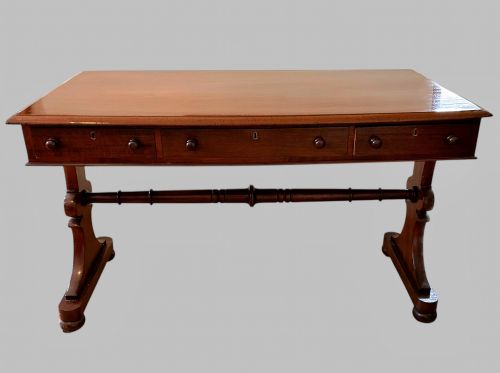
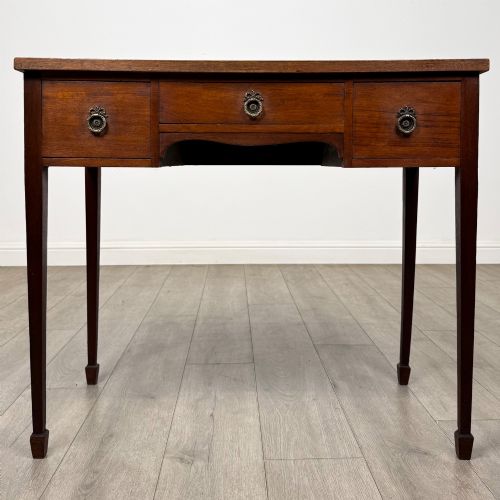
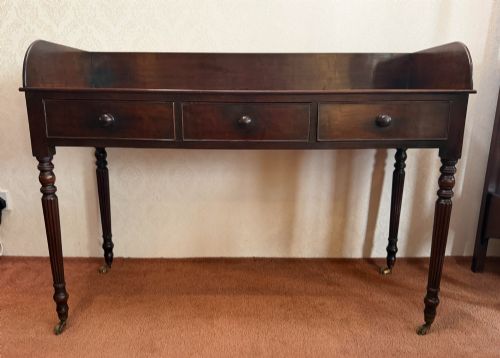
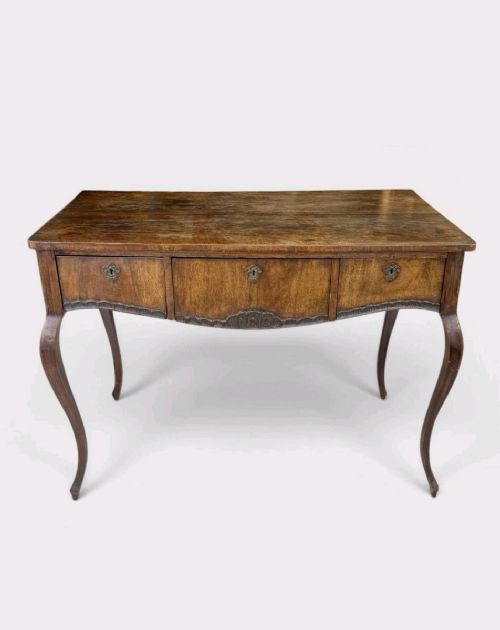
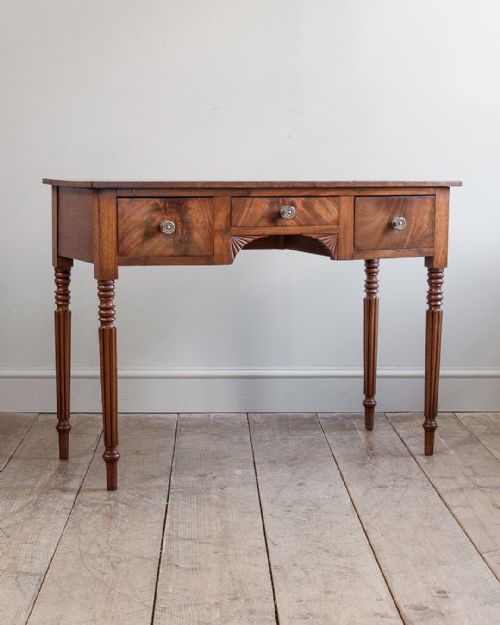
A mahogany three drawer table serves multiple domestic roles across the periods, appearing most frequently as writing tables, lowboys, side tables, and dressing table mirrors. These pieces provide compact storage through a trio of drawers arranged beneath a timber top.
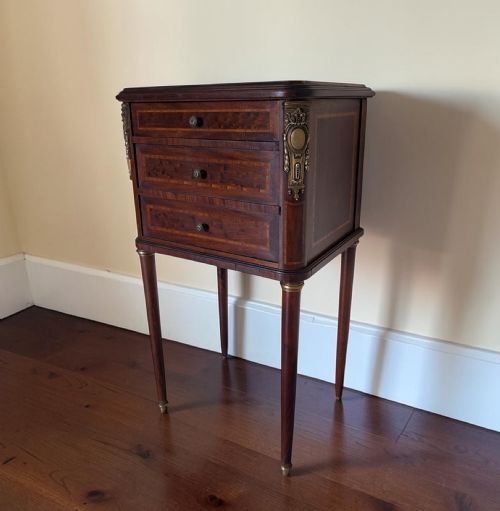
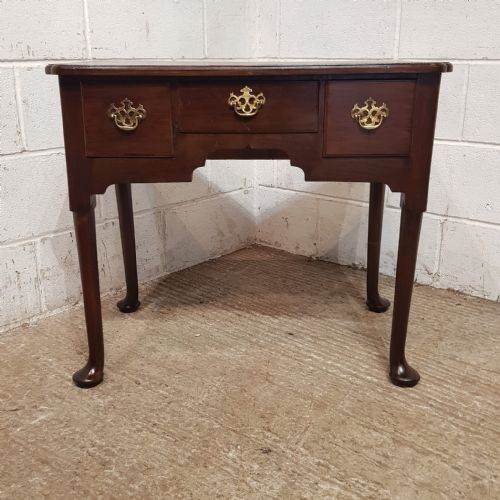
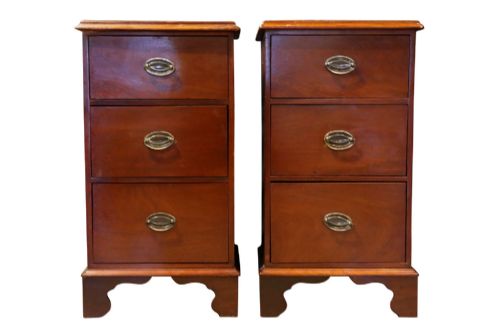
The versions most commonly met on this page date from the Georgian and Victorian eras, alongside Regency and Edwardian examples. They cross several object types, including bedside chests, serving tables, and lowboys.
Makers adapted the three-drawer format for specific rooms, creating lowboys for halls, writing tables for studies, and small chests for bedrooms. The presence of three drawers provides a consistent layout while the overall form adapts to changing domestic uses.
What Varies in Quality
Quality rests on the selection of timber figures and the precision of the cabinetmaking, visible in the snug fit of the drawer sides and the integrity of the joints. Finer examples display carefully matched mahogany grains across the drawer fronts and well-turned or tapered legs.
Later adaptations or heavily restored surfaces alter the original character of a piece. The crispness of carved details, where present, distinguishes standard utility pieces from workshop productions intended for formal rooms.
Mahogany Three Drawer Table Retail Price Guide 2026
Typical asking prices for mahogany three drawer table among the pieces listed under this phrase on Sellingantiques today, from the lower quarter to the upper quarter. They describe what is for sale here now, not the wider market.
Several bedside chests arrive in pairs, offering symmetrical storage for historical sleepers who insisted on matching sides of the bed.
The Mahogany Three Drawer Table Glossary
- Lowboy
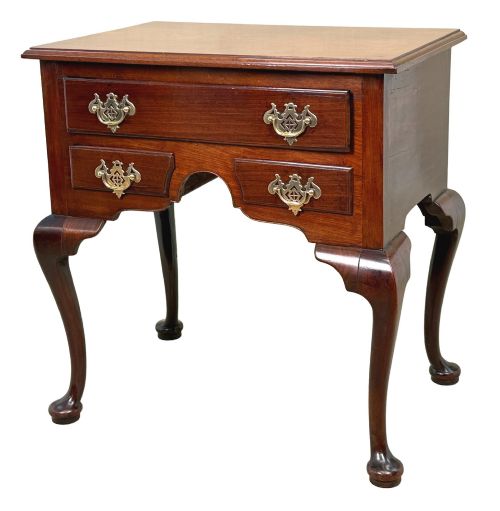
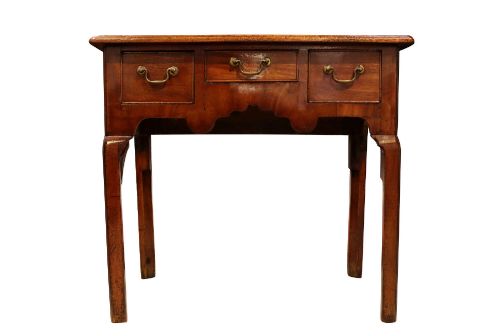
- A small side table or dressing table featuring one or more rows of drawers, standing on relatively tall legs. This form originated in the late seventeenth century and remained popular through the Georgian period.
- Stringing
- Thin inlay lines of a contrasting wood, such as boxwood, set into the surface of the mahogany to outline panels and drawer edges. This technique adds subtle linear definition to the piece.
- Serpentine
- A gently curved front edge shaped in a concave-convex-concave wave pattern. Cabinetmakers employed this contour to create visual movement on side tables and dressing mirrors.
- Gallery
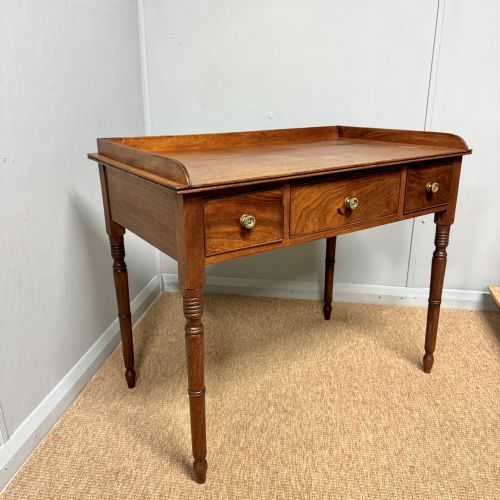
- A raised wooden or brass rail running along the edge of a table top to prevent items from rolling off. These fixtures appear frequently on writing tables and serving surfaces.
- Whatnot
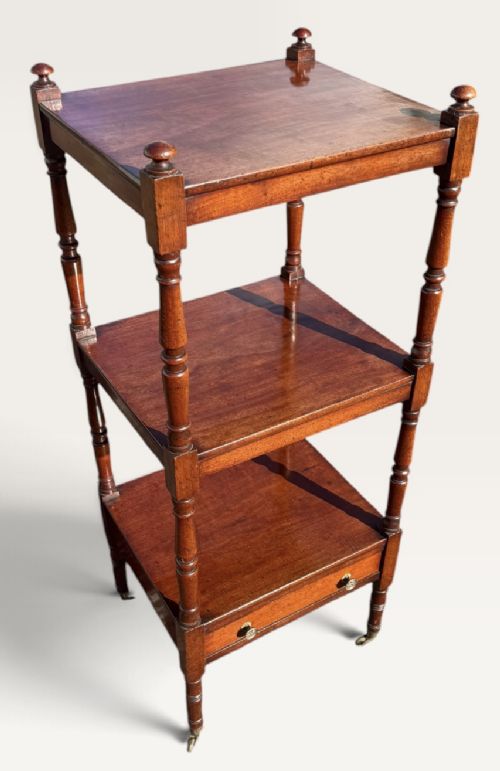
- An open set of tiered shelves used for display, supported by slender corner uprights. Pieces from the Georgian and Victorian periods often combine this open shelving with drawer storage below.
Mahogany Three Drawer Table: Frequently Asked Questions
What is a lowboy used for?
A lowboy functions as a small side table, dressing table, or hall table with integrated drawer storage. The compact surface and manageable height suited chambers and reception rooms alike.
Historically, owners placed these tables against walls to hold grooming items, writing materials, or decorative objects. The drawers kept smaller personal items enclosed while leaving the top clear.
How do I date a mahogany table?
Dating relies on examining the timber density, construction methods, hardware, and overall stylistic details. Earlier pieces from the eighteenth century often feature solid mahogany with hand-cut dovetails, while later nineteenth-century examples may incorporate machine-sawn elements.
Secondary woods inside the drawers and the style of the legs provide further clues to the decade of manufacture. Comparing the piece to documented examples from the same period helps narrow the timeline.
Where should I place a three drawer table?
These tables adapt easily to various rooms due to their modest proportions and functional drawer space. A hall or landing benefits from a lowboy or narrow side table, while bedrooms accommodate bedside chests.
Writing tables and desk variants fit neatly into home offices or living spaces against a wall. The finished backboards on many examples allow them to sit away from walls when necessary.
Are these tables solid mahogany?
Many pieces feature solid mahogany throughout, particularly those originating from the Georgian period. Cabinetmakers also utilised mahogany veneers applied over secondary timbers like pine or fruitwood, especially on flat surfaces and drawer fronts.
Examining the drawer linings and interior carcases reveals the combination of primary and secondary woods used in construction. Both solid construction and veneering represent standard historical workshop practices.