



Regency Blue White Transferware
Regency blue white transferware brings printed English earthenware from the Georgian and Victorian eras into daily use through scenic plates, platters and serving vessels.
Regency Blue White Transferware
Regency blue white transferware comprises domestic ceramics produced in England during the late Georgian and early Victorian periods. Buyers search for this phrase to acquire utilitarian and decorative forms such as serving platters, tea plates, chargers, footbaths and specialised dishes.
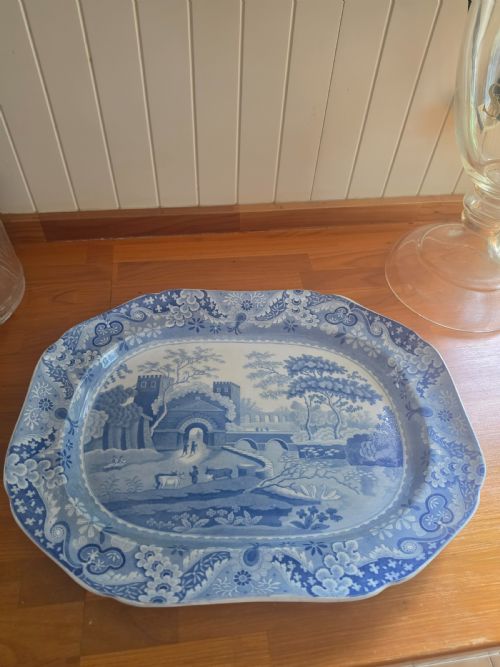
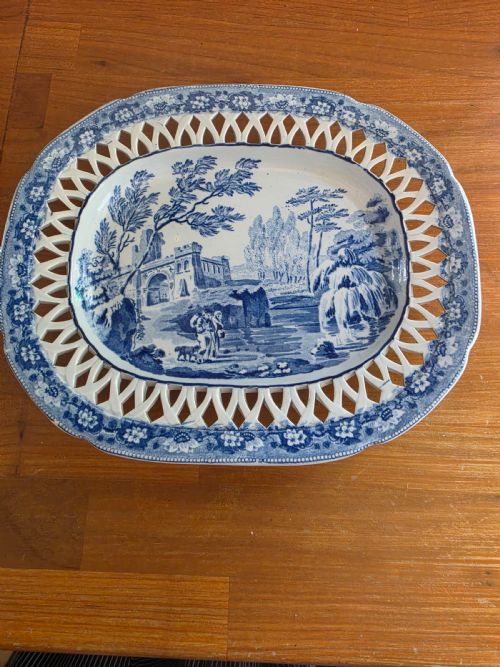
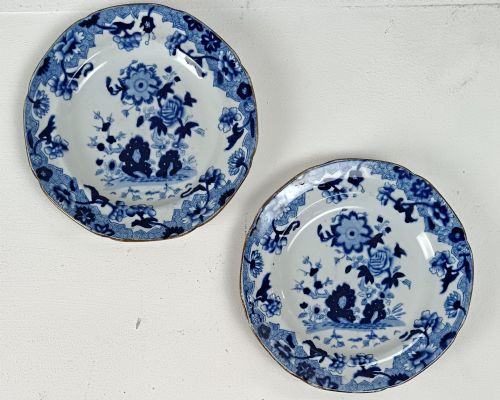
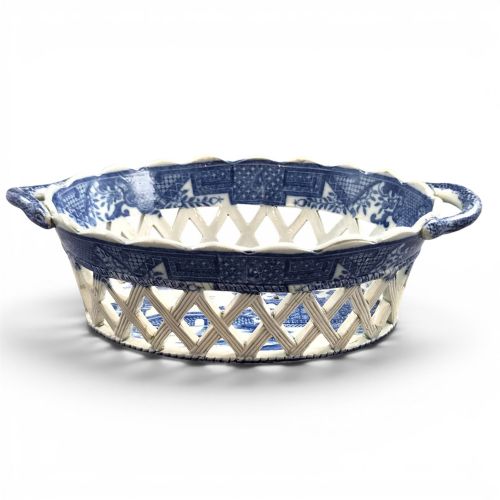
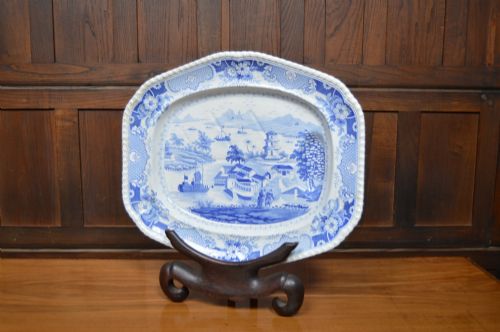
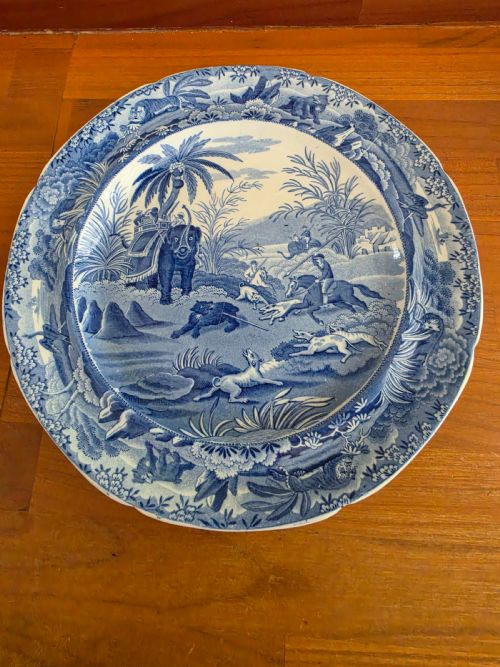
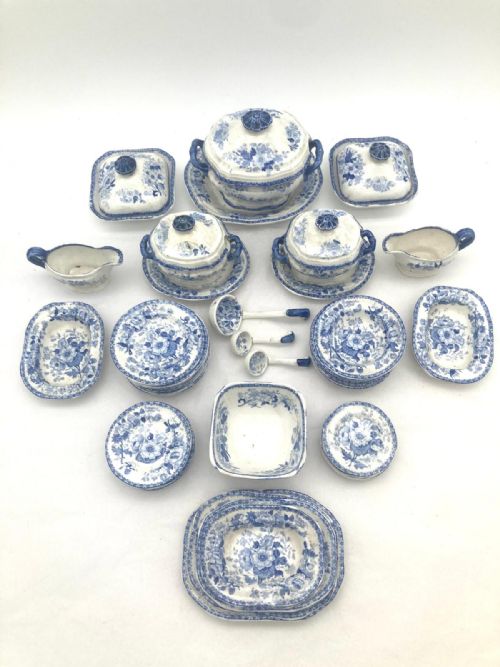
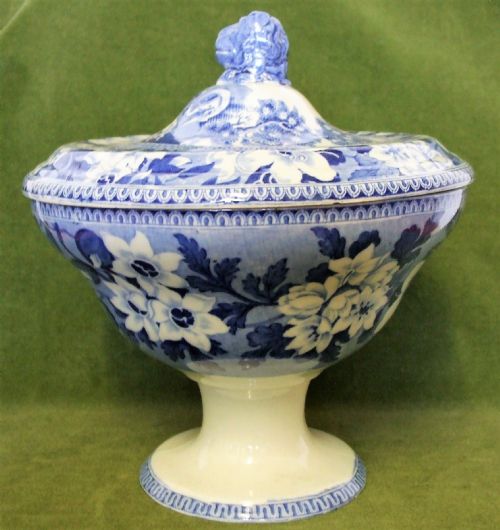
The pieces appearing on this page span several decades of production from the early nineteenth century. Serving platters and decorative plates dominate the selections, alongside less common domestic items like chestnut baskets, children's services and tureens.
Makers rooted these designs in earthenware, pearlware and ironstone bodies, often incorporating transfer-printed scenes depicting British views, classical architecture, animals and Chinoiserie motifs. The resulting wares range from modest tea plates to massive meat platters with integrated drainers.
Materials and Techniques
Potters formed these items using English earthenware, pearlware or ironstone, applying a clear lead or ceramic glaze over the clay body. Pearlware bodies contain a small amount of cobalt to counteract the natural yellow tint of the fired clay, producing a lighter background for the blue transfer.
Designers created the decoration by engraving copper plates, applying cobalt blue pigment and transferring the inked pattern onto tissue paper. Workers then pressed this paper onto the biscuited ceramic surface before glazing and firing the piece in a kiln to fuse the print permanently.
The inventory includes serving platters, tea plates, footbaths, chestnut baskets and tureens decorated with blue transfer prints.
Assessing the Pieces
Quality in these ceramics rests upon the crispness of the transfer print and the clarity of the underlying glaze. Strong pulls from engraved copper plates reveal fine lines without blurring or smudging, whereas weaker examples show muddy transfers and pooling glaze.
Form and scale also dictate distinction, separating standard domestic plates from monumental meat platters, compotes or specialised items like footbaths. Pieces bearing distinct factory marks or complex pictorial series command greater attention from collectors.
Spode·Davenport·Minton·John Rogers and Son·Ridgway·Copeland and Garrett·Wedgwood
The Regency Blue White Transferware Glossary
- Transferware
- Ceramic pieces decorated by printing a design from an engraved copper plate onto paper and transferring it to the unglazed clay body. This technique allowed factories to produce intricate pictorial patterns consistently across large services.
- Pearlware
- A refined earthenware developed in the late eighteenth century featuring a subtle blue-tinted glaze over a whitish body. It served as the primary canvas for early nineteenth-century blue and white domestic wares.
- Ironstone
- A dense, durable type of heavy earthenware patented in the early nineteenth century to rival porcelain. It resists chipping and provides a stable surface for large platters and service pieces.
- Chinoiserie
- European decorative style reflecting imaginative interpretations of Chinese artistic traditions. The aesthetic appears frequently in Regency transfer prints featuring pagodas, bridges and figures.
- Reticulated
- Having an openwork lattice or basketweave pattern formed by cutting away sections of the clay before firing. This decorative technique appears on specialised serving vessels like chestnut baskets and fruit stands.
Regency Blue White Transferware: Frequently Asked Questions
How were these dishes used originally?
Households utilised these ceramics for dining, serving meals and displaying food during formal or everyday domestic occasions. Large platters held roasted meats, while specialised vessels managed side dishes, tea service and drainage.
Smaller plates served individual courses, and larger basins functioned as footbaths or decorative centrepieces. The durable earthenware body allowed these items to withstand regular household employment.
Collectors today appreciate how these functional objects reflect nineteenth-century dining habits and interior decoration. Displaying them on walls or open shelving brings historic domestic artistry into modern spaces.
Can I use them for daily dining?
Using these antique pieces for everyday meals requires careful handling due to their age and material composition. Hand washing prevents damage from modern detergent formulations and thermal shock.
Avoid placing these ceramics in microwaves or dishwashers, as the historic glaze and earthenware body remain vulnerable to harsh conditions. Gentle care preserves the transfer print and prevents surface crazing.
Many collectors prefer to reserve these items for special occasions or purely decorative display. Proper maintenance ensures the printed patterns and glazes survive intact for future generations.
How do I distinguish pearlware from standard earthenware?
Pearlware typically exhibits a faint blue pooling of the glaze around foot rims and crevices, reflecting the cobalt additive used to achieve a whiter appearance. Standard earthenware shows a warmer, creamier tone without this bluish cast.
Examining the body weight and surface texture also helps identify the ceramic type during an inspection. Pearlware generally dates to the earlier decades of nineteenth-century production.
Matching these visual clues with known period styles helps date individual pieces accurately. Consulting reference literature provides further confirmation for specific factory bodies.
What do pattern names tell us?
Pattern names often reference contemporary topographical views, literary themes, exotic locations or narrative scenes popular during the Regency era. Identifying a specific title links the item to known factory output and design series.
Series names like Byron Views or botanical titles help researchers attribute unmarked or partially marked items to specific potteries. These subjects mirror the cultural interests and travel trends of nineteenth-century buyers.
Knowing the pattern context deepens the appreciation of a piece beyond its decorative appeal. It places the ceramic within the broader history of English transfer-printing commerce.