



Regency Blue White Platter
A regency blue white platter brings transfer-printed narrative and robust earthenware to the dining table, offering a bold visual centrepiece for the home.
Regency Blue White Platter
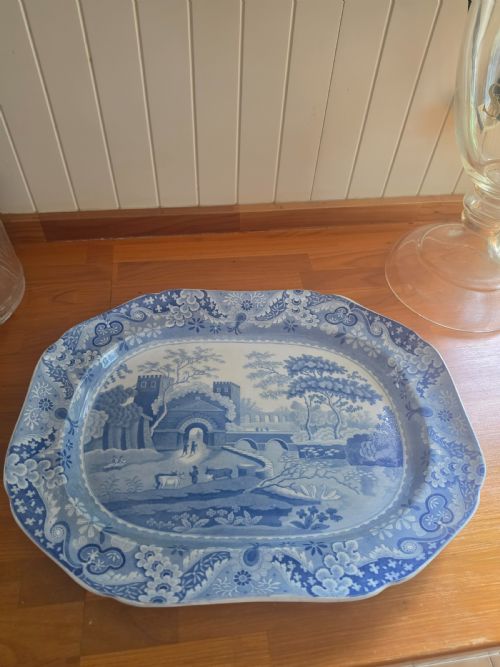
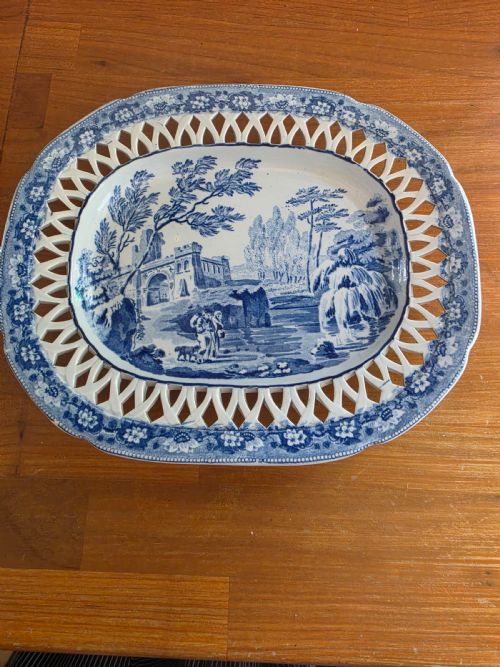
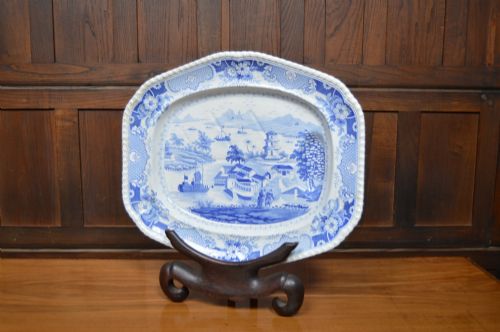
A regency blue white platter is a large serving dish designed for meat or festive food, appearing across the Georgian and Regency periods. These substantial ceramic pieces range from oval meat dishes with gravy wells to large chargers and fitted drainers.
The selections on this page span earthenware, ironstone, and pearlware, carrying transfer-printed scenes that capture British tastes of the early nineteenth century. Makers applied intricate blue designs depicting landscapes, architectural views, and oriental patterns onto a white ceramic base.
How they were made
Potters shaped earthenware, pearlware, and ironstone into large platters before applying detailed transfer prints from engraved copper plates. This technique allowed factories to produce complex pictorial designs with striking consistency across large serving dishes.
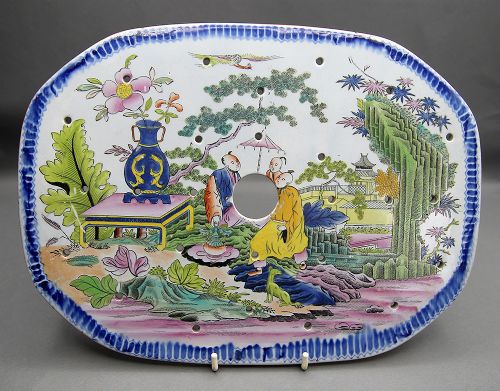
A clear glaze was applied over the cobalt blue transfer print before the ceramic body underwent high-temperature firing in the kiln. Some pieces incorporated specialised additions such as integrated drainers or drainage wells to assist with serving roast meats.
Listings on this site feature earthenware, ironstone, and pearlware bodies decorated with transfer-printed blue designs spanning the Georgian and Victorian periods.
What varies in quality
Quality rests in the crispness of the transfer print and the complexity of the chosen pattern, whether depicting an Italianate landscape or an architectural view. Finer examples display deep, uniform cobalt blue tones without blurring or smudging across the glazed surface.
The physical weight and durability of the ceramic body also distinguish standard serving dishes from robust ironstone platters intended for heavy country house dining. Complete sets featuring matching drainers or gravy wells command greater interest from collectors.
Spode·Davenport·Mason’s·Copeland and Garrett·Minton
The Regency Blue White Platter Glossary
- Transferware
- A pottery decorated by applying a design from an engraved copper plate onto tissue paper and then pressing it onto the unglazed or biscuited ceramic body. This method defined nineteenth-century mass production of blue and white ceramics.
- Ironstone
- A heavy, durable type of earthenware patented in the early nineteenth century by manufacturers seeking a robust alternative to porcelain. It resists chipping and forms the sturdy body of many large meat platters.
- Pearlware
- A refined form of earthenware developed in the late eighteenth century featuring a subtle bluish glaze that pooled in recesses to create a whiter appearance. It served as a primary canvas for early transfer-printed patterns.
- Platter drainer
- A perforated ceramic insert placed inside a meat dish to elevate joints of meat and allow juices to drain away during carving. These fitted components are frequently found accompanying large serving platters.
Regency Blue White Platter: Frequently Asked Questions
What is a regency blue white platter used for?
These large ceramic platters served as the central vessels for presenting heavy roasted meats and celebratory meals in nineteenth-century dining rooms.
Today, they function effectively as dramatic wall displays or substantial serving pieces for modern table settings.
How do I care for antique transferware?
Wash these ceramic pieces gently by hand using warm water and mild soap to protect the historic glaze and ironstone body.
Avoid dishwashers and harsh scouring pads, which can dull the cobalt blue transfer print over time.
How do I date a blue and white platter?
Examine the ceramic material, glaze characteristics, and maker marks stamped or printed on the underside of the dish.
Stylistic cues such as Chinoiserie motifs, classical ruins, or specific transfer series also help narrow the production era.
What makes ironstone different from earthenware?
Ironstone is a denser, harder earthenware formula designed to withstand heavy daily use without sustaining easy damage.
This material gave nineteenth-century meat platters exceptional weight and structural resilience.