
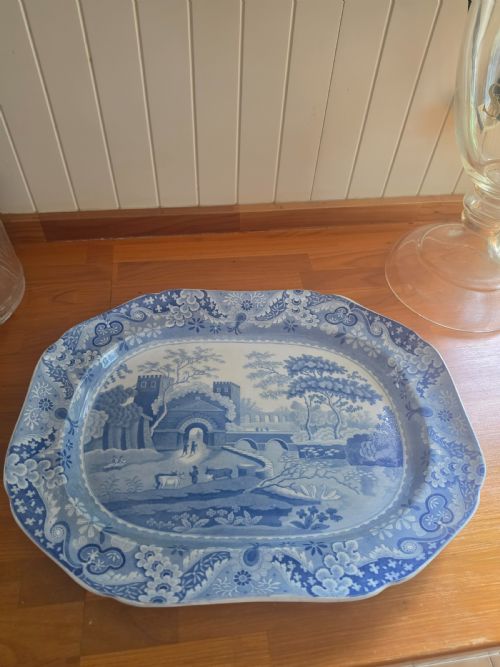
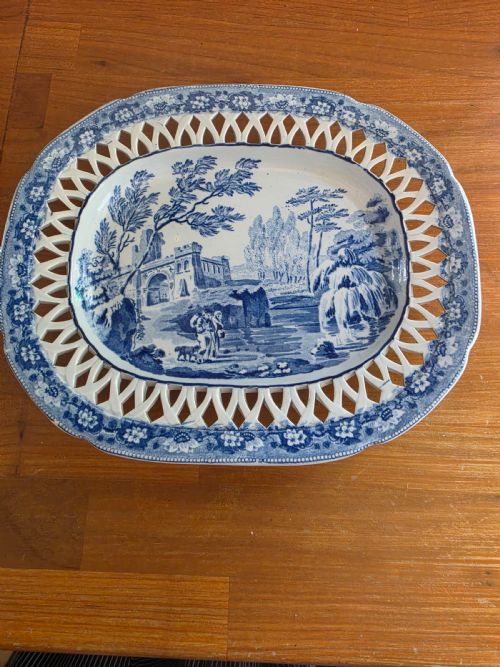
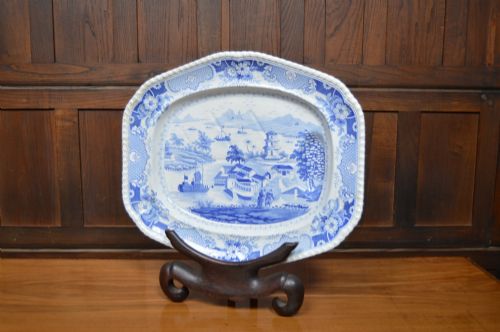


Regency Blue Transferware Platter
A regency blue transferware platter brings robust early nineteenth-century British serving vessels to the table with deep cobalt scenes.
Regency Blue Transferware Platter
When you search for a regency blue transferware platter, you encounter large earthenware and ironstone serving dishes created to hold meat at grand dining tables. These utilitarian centrepieces display printed cobalt scenes ranging from pastoral landscapes and classical ruins to intricate oriental motifs.
The versions most frequently seen on this page date from the Georgian and Regency eras, particularly around eighteen hundred to eighteen thirty. Makers applied copperplate transfer printing to porous ceramic bodies before glazing and firing, producing durable vessels designed for heavy domestic use.
Forms include massive meat platters, chargers, serving dishes with gravy wells, and fitted drainer inserts. These pieces reflect the nineteenth-century appetite for narrative tableware, bringing topographical views and exotic subjects into everyday dining.
Materials and manufacture
Potters shaped these large serving vessels from refined earthenware, pearlware, and dense ironstone bodies before coating them in a smooth glaze. The ceramic base provided the necessary strength to support heavy joints of meat during carving at the table.
Decoration relied on copperplate transfer printing, a technique where an engraved metal design received cobalt blue pigment and transfer paper. Workers applied this paper by hand to the biscuity ceramic surface to imprint intricate patterns prior to the final glaze firing.
Water dogs gaze out from domestic meat dishes alongside bustling naval battles and peaceful oriental rivers.
Assessing quality and finish
Quality in a regency blue transferware platter rests upon the crispness of the cobalt transfer print and the complexity of the subject matter. Finer examples display deep, uniform blues with sharp outlines where the copperplate engraving registered cleanly against the ceramic body.
The overall condition of the white glaze and the weight of the ironstone or earthenware body dictate the piece's standing. Superior items retain a bright surface finish and structural integrity across wide serving surfaces without heavy warping from the kiln.
Spode·Davenport·Mason's·Copeland and Garrett·Minton
The Regency Blue Transferware Platter Glossary
- Transferware
- Earthenware or ironstone decorated by applying a printed paper design from an engraved copperplate onto the ceramic surface before glazing.
- Pearlware
- A refined fine earthenware developed by Josiah Wedgwood that featured a subtle bluish tinge in the glaze to mimic Chinese porcelain.
- Ironstone
- A heavy, durable type of feldspathic stoneware patented in the early nineteenth century to resist chipping and thermal shock during dining.
- Gravy well
- A sunken channel or reservoir moulded into the base of a serving platter to collect meat juices during carving.
- Platter drainer
- A pierced ceramic insert that sits inside a meat dish to lift joints above accumulated juices.
Regency Blue Transferware Platter: Frequently Asked Questions
What were these large platters used for?
These platters served as the primary vessels for presenting roasted meats and joints at the centre of nineteenth-century dining tables. Their generous proportions accommodated large portions for communal family meals and formal dinners.
Many examples included integrated wells and drainage inserts to catch juices during carving. This practical design kept meat elevated above liquids before service.
How do I date a transferware platter?
Dating relies on identifying the pottery mark stamped on the reverse, the style of the cobalt pattern, and the ceramic body itself. Early pieces often utilise lighter pearlware bodies, while later nineteenth-century examples lean towards heavier ironstone.
Stylistic cues such as Chinoiserie motifs, classical architectural views, and topographical series help narrow the decade of production. Examining the depth of the blue print and the glaze characteristics provides further temporal context.
Can I use these antique platters for serving food?
These ceramic platters remain structurally sound for serving dry foods, bread, or fruit at modern gatherings. Their hard earthenware and ironstone bodies were built for heavy domestic use.
Hand washing is essential to preserve the nineteenth-century glaze and prevent crazing. Avoid sudden temperature changes to protect the historic ceramic fabric.
What is a gravy well on a meat dish?
A gravy well is a small recessed basin or channel moulded into one end of the platter surface. It pools natural juices released from meat during carving.
Platters featuring these wells often accommodated removable ceramic drainer plates. This combination kept food separated from liquids throughout the meal.