


Antique Earthenware Serving Tray
An antique earthenware serving tray brings tactile depth to a table, combining utilitarian pottery forms with transfer-printed blue and white design.
Antique Earthenware Serving Tray
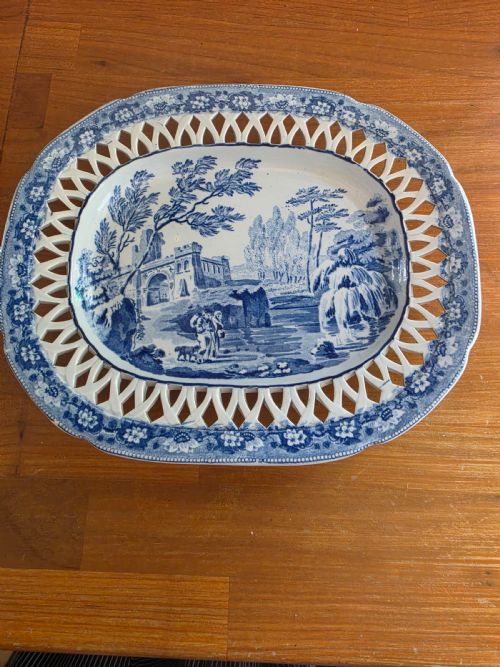
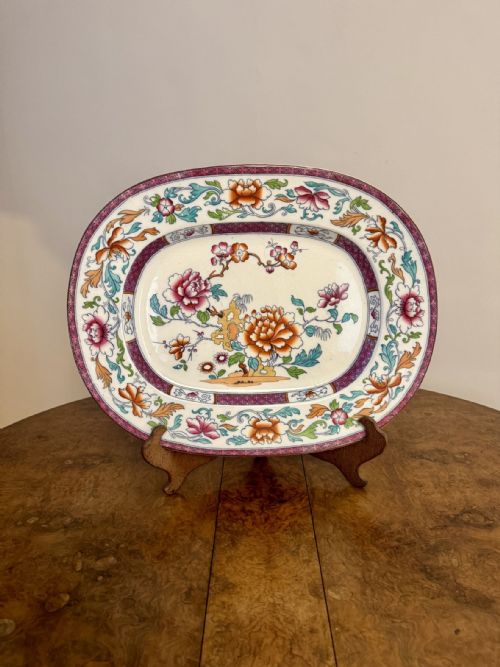
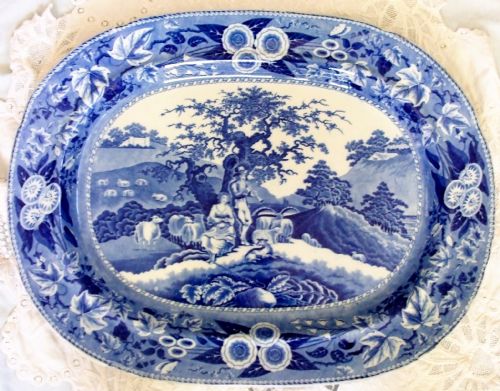
When you search for an antique earthenware serving tray, you encounter large meat platters, rectangular dishes, well and tree platters, and bread stands. These pieces originate primarily from Georgian and Victorian periods, spanning the nineteenth century.
English potteries dominate the selection, offering transfer-printed patterns such as classical ruins, Chinoiserie landscapes, and pastoral scenes. You also meet French provincial faience dishes alongside standard earthenware and pearlware bodies.
The most common formats on this page are generous meat platters and serving dishes designed for carving and presentation. They range from simple blue and white plates to pierced trays and specialised well and tree drainage designs.
Materials and production techniques
Potters shaped earthenware and pearlware bodies, applying cobalt pigment under a transparent glaze before kiln firing. This created the durable blue and white transfer-printed surfaces seen across the selection.
Some items incorporate enamel decoration or pierced borders, requiring careful hand-cutting of the clay before glazing. Well and tree designs feature carved channels and wells to collect juices during carving.
Listings span the nineteenth century, featuring Georgian and Victorian earthenware, pearlware, and glazed ceramic bodies decorated in cobalt blue.
Distinctions in quality
Quality rests on the crispness of the transfer print and the clarity of the cobalt pigment against the white ceramic body. Faint, blurred lines indicate a worn copper plate or uneven kiln temperature.
The sophistication of the moulded form separates standard meat plates from superior serving pieces. Pierced fretwork rims, wells with drainage reservoirs, and complex multi-figure Chinoiserie scenes indicate higher workshop standards.
Davenport·Spode·Copeland and Garrett·Thomas Lakin·Don Pottery·John Rogers and Son·J and R Clews·Elkin Knight and Bridgwood·Minton
The Antique Earthenware Serving Tray Glossary
- Earthenware
- A porous pottery fired at lower temperatures than stoneware or porcelain. It requires a complete glaze to hold liquids.
- Pearlware
- A refined earthenware developed in the late eighteenth century with a bluish-tinted glaze that made the ceramic body appear whiter.
- Transfer printing
- A method of applying engraved paper designs onto pottery using metallic oxides before glazing. This technique allowed intricate pictorial scenes to be produced consistently.
- Well and tree
- A serving platter featuring a carved well and channels that direct meat juices away from the carving area. It is typically found on large nineteenth-century meat dishes.
Antique Earthenware Serving Tray: Frequently Asked Questions
How were these platters used?
These ceramic trays served large joints of meat, poultry, and bread at formal dining tables. The larger platters held roasts while smaller stands accommodated sauce tureens and side dishes.
Well and tree variants managed carving juices during meals, keeping meat elevated above the collected liquid.
Can I use them for serving food today?
Most of these antique earthenware and pearlware dishes remain sturdy enough for modern serving use. Hand washing is recommended to protect the nineteenth-century glaze and ceramic body from thermal shock.
Avoid dishwashers and harsh detergents to preserve the delicate cobalt pigment and enamel details.
How do I date a blue and white platter?
Dating relies on identifying maker marks, transfer pattern titles, and ceramic body types such as pearlware versus standard earthenware. Stylistic clues like Regency shapes or Victorian floral borders also narrow the production decade.
Registry marks and impressed factory stamps on the reverse provide the most precise chronological indicators.
What is the difference between pearlware and earthenware?
Pearlware is a refined subtype of earthenware developed to mimic Chinese porcelain more closely. It uses a slightly blued glaze that pools blue in crevices, whereas standard earthenware has a warmer or whiter tone.
Pearlware pieces predominantly date from the Georgian era into the early nineteenth century.