


Regency Bedroom Seat
A regency bedroom seat brings classical proportion and refined seating to a private dressing room or chamber.
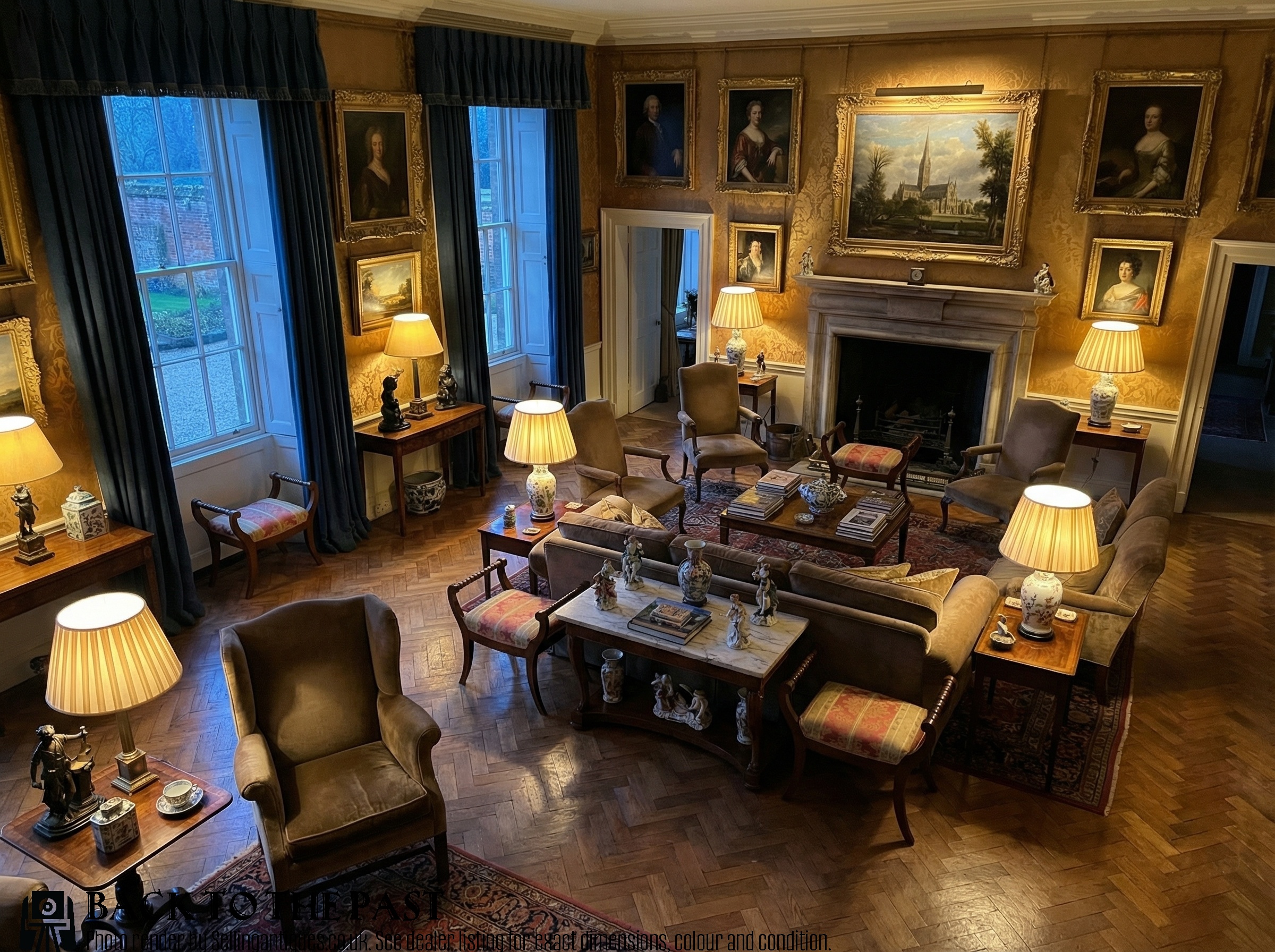
Regency Bedroom Seat
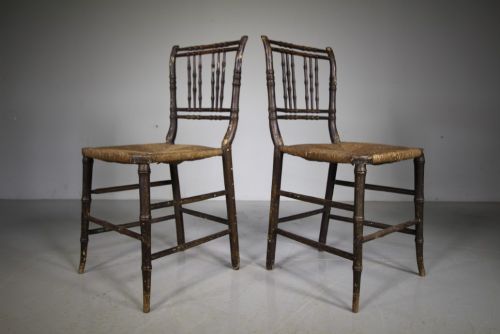
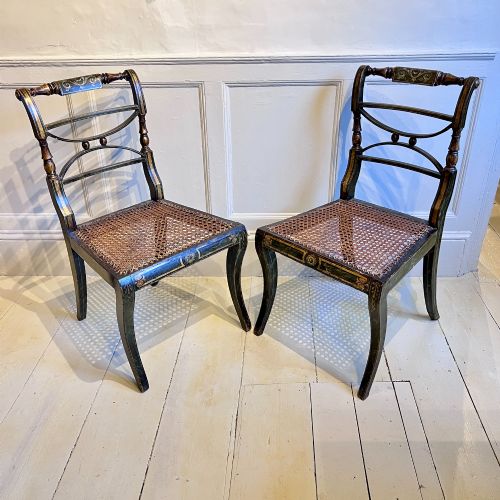
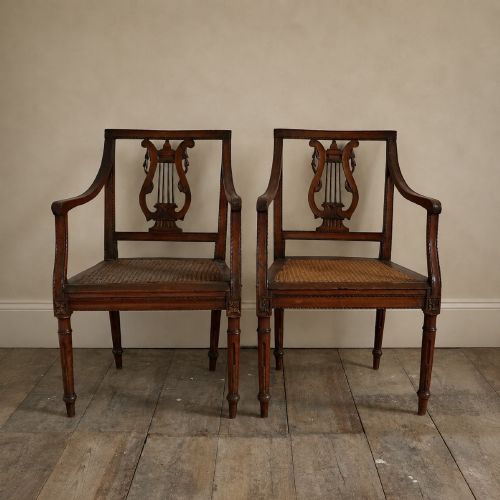
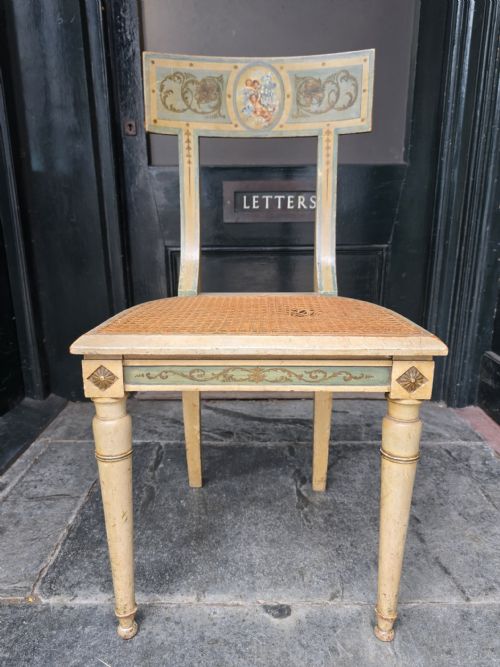
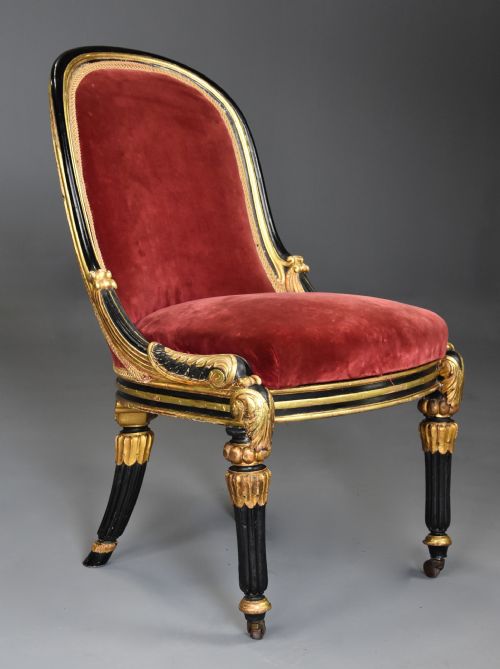
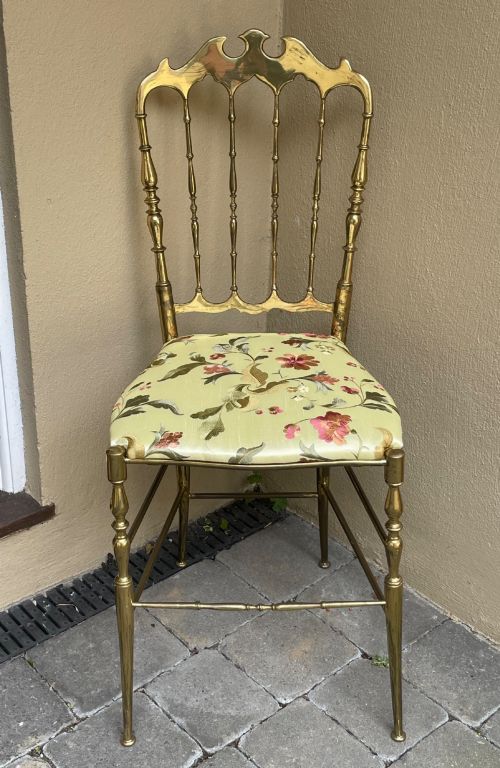
A regency bedroom seat covers a variety of compact forms designed for private chambers, including side chairs, armchairs, window seats, stools, and slipper chairs. These pieces originate predominantly from the Regency and nineteenth-century periods, with occasional later interpretations appearing in the selection.
Markers of Quality and Execution
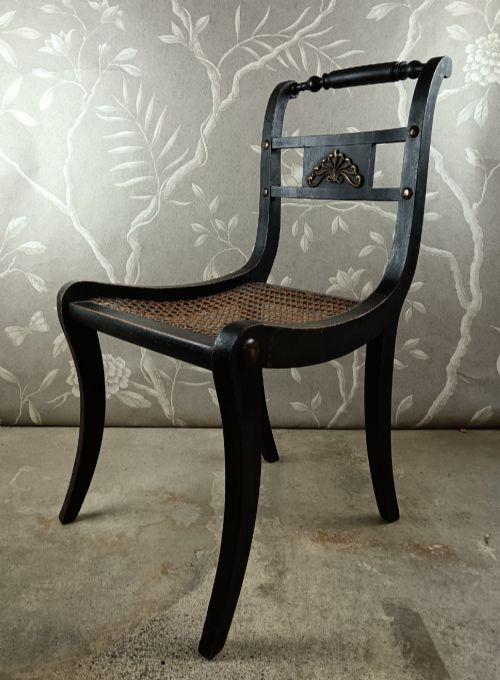
Quality rests in the crispness of carved details, the integrity of the timber frame, and the survival of original decorative surfaces such as paint, gilt, or ebonisation. Superior examples retain their structural firmness and genuine period components without excessive rebuilding.
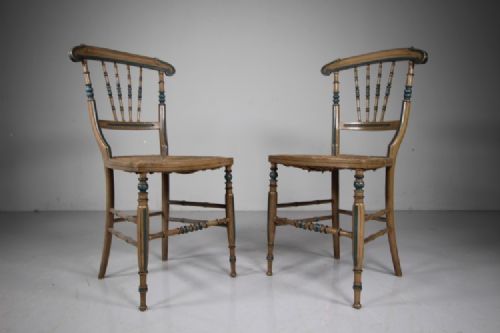
The refinement of leg profiles, such as finely shaped sabre legs or well-turned faux bamboo, distinguishes standard vernacular pieces from masterworks. The condition of original woven cane or early upholstery work further elevates the standing of an individual seat.
Listings feature mahogany, rosewood, and pine timbers alongside woven cane and velvet upholstery across the Regency and nineteenth-century periods.
Miles & Edward·Gillows
The Regency Bedroom Seat Glossary
- Sabre leg
- A concave curving leg that tapers towards the foot, characteristic of Regency furniture design. This form borrows from ancient Greek klismos chairs.
- Bergere
- An enclosed upholstered armchair with wooden framing exposed around the sides and back. These seats often feature cane panels beneath the upholstery.
- Ebonised
- Wood treated with a dark finish to imitate expensive ebony. This technique was widely favoured during the Regency period for dramatic visual effect.
- Window seat
- A long, narrow bench designed to fit within the recess of a bay or sash window. They typically feature scrolled ends and polished wooden frames.
- Faux bamboo
- Wood turned and carved to resemble natural bamboo stalks. This whimsical style gained popularity during the Regency period under Asian design influences.
Regency Bedroom Seat: Frequently Asked Questions
What defines a regency bedroom seat?
A regency bedroom seat is a compact chair, stool, or bench produced during the early nineteenth century or styled in that classical manner. These pieces were made for private rooms rather than public reception spaces.
They are characterised by clean architectural lines, classical motifs, and timber frames finished in mahogany, paint, or ebonised wood. Their smaller scale allows them to fit easily into modern dressing rooms and bedrooms.
How do I use a window seat today?
Window seats work effectively at the foot of a bed, beneath a window, or along an empty hallway wall. Their low profile provides convenient surface space or seating without blocking natural light.
Pairing a antique window seat with complementary side tables creates a functional reading nook. They also serve well as dressing stools in compact spaces.
Are cane seats comfortable for daily use?
Original cane seating offers a firm, resilient surface that provides surprising support when seated. Many period examples were designed for light chamber use rather than long hours of lounging.
Adding a loose squab cushion allows users to increase comfort while preserving the visible cane work. Most surviving cane panels demonstrate remarkable durability across two centuries.
How do I distinguish Regency from Victorian pieces?
Regency seating tends to feature restrained classical proportions, sharp lines, and restrained decoration inspired by ancient Greece and Rome. Elements like sabre legs and brass inlay are typical of this era.
Victorian pieces often display heavier proportions, more exuberant carving, and bulkier upholstery styles. Examining the timber grain and turning details helps clarify the period of manufacture.