



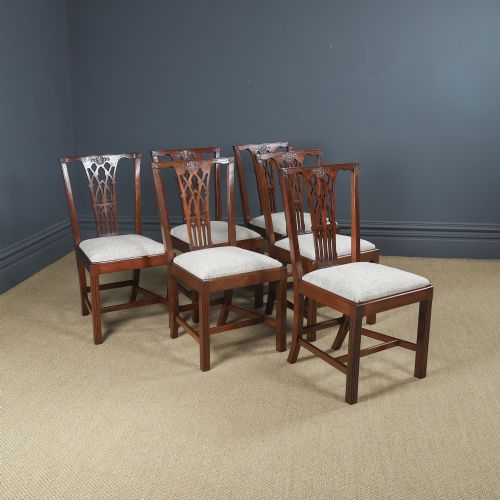


Reeded Leg Side Chairs
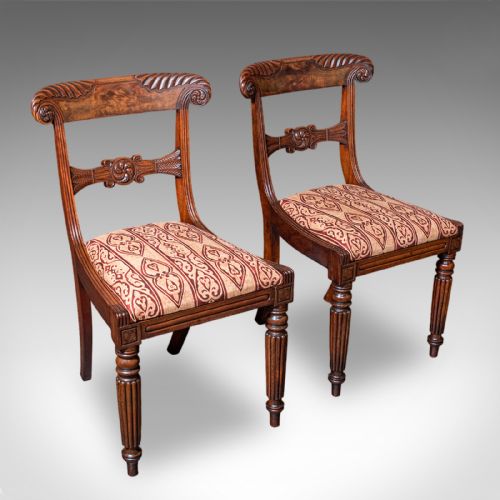
Reeded leg side chairs bring linear elegance to a room, offering sturdy timber framing paired with slender, fluted uprights.
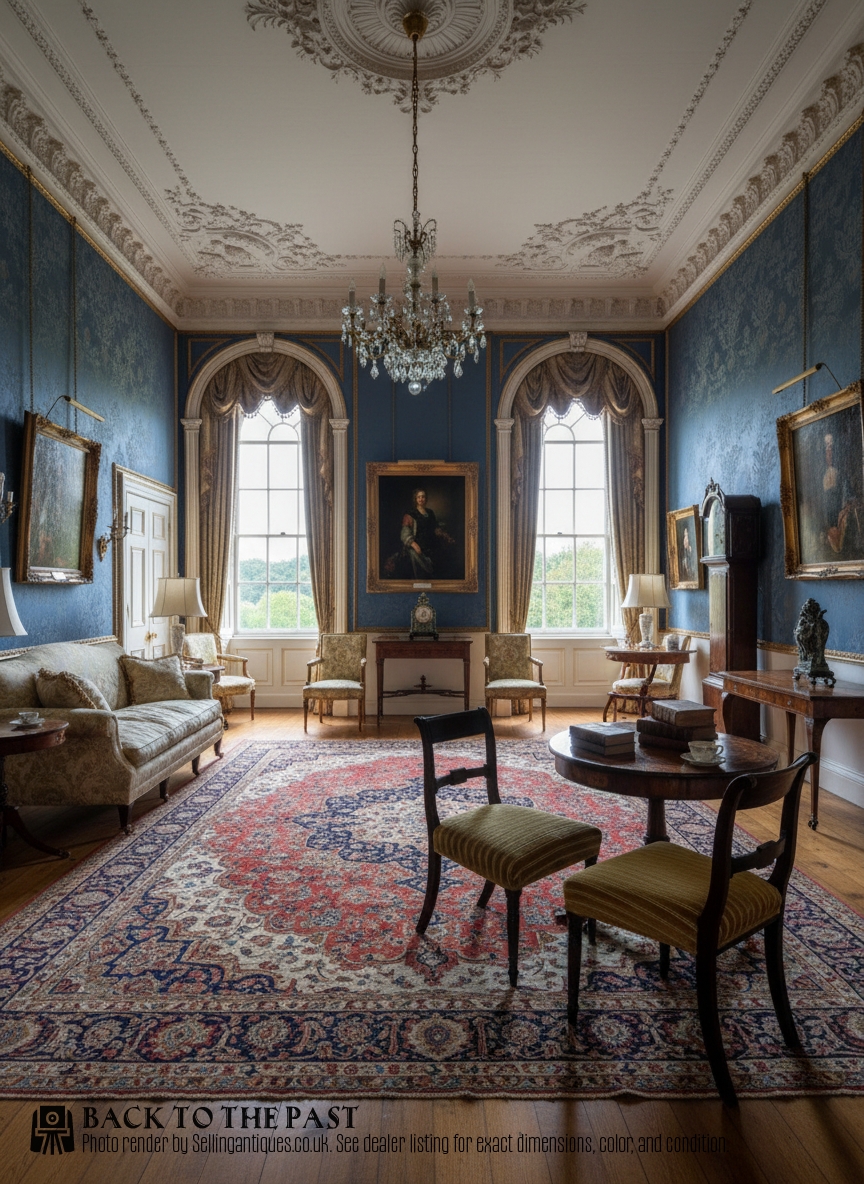
Reeded Leg Side Chairs
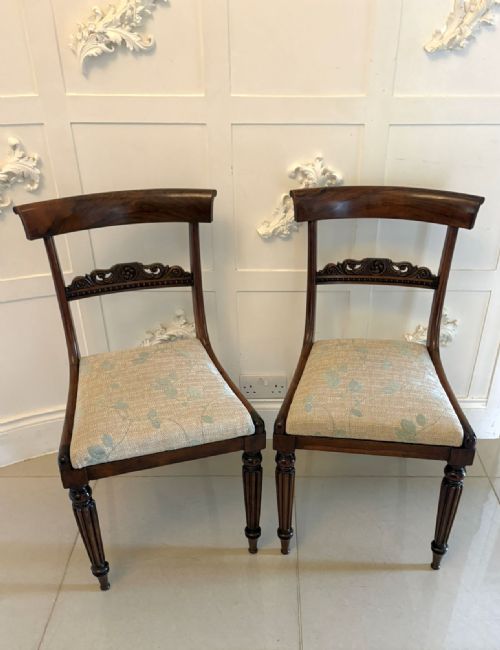
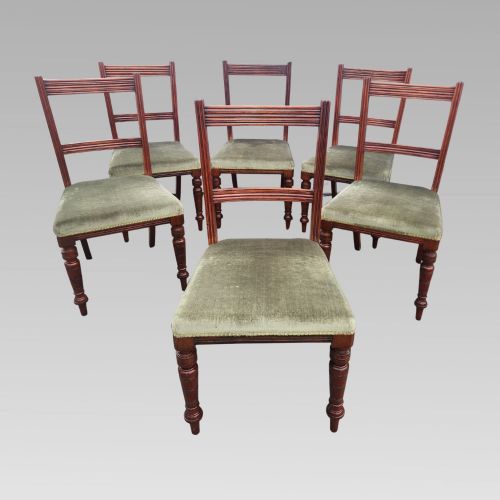
When you search for reeded leg side chairs, you are looking at timber seating primarily originating from the Georgian, Regency, and Victorian eras. These chairs frequently appear as matched sets of dining chairs or in pairs intended for halls and reception rooms.
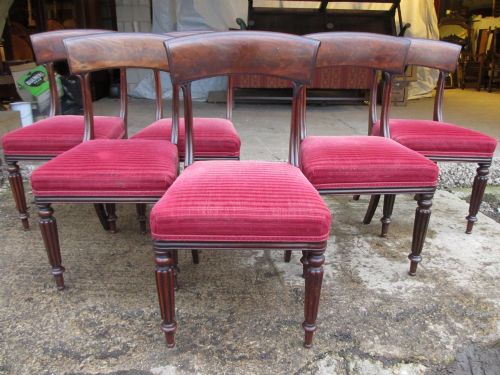
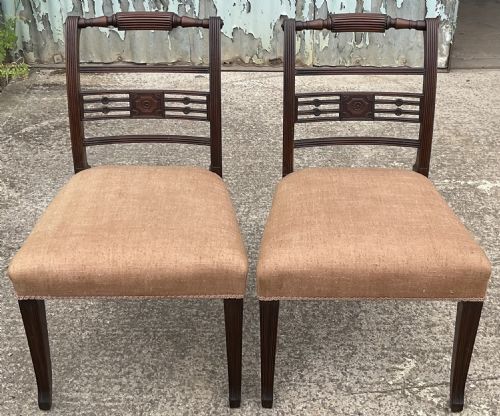
The versions most commonly met on this page are mahogany dining chairs from the early nineteenth century, displaying the characteristic parallel grooves carved directly into the front legs. Alongside mahogany, examples in rosewood, oak, and beech also emerge within the listings.
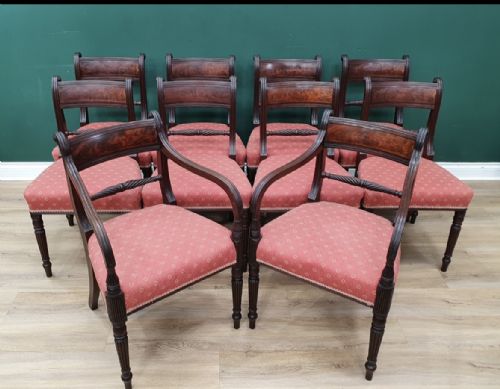
Makers such as Gillows and W W Peirce produced notable iterations of these forms, whilst many other pieces survive as unbranded vernacular cabinetwork from the same periods. Buyers will find both single chairs and large sets numbering up to ten or fifteen pieces.
Materials and construction methods
Cabinetmakers constructed these frames predominantly from dense hardwoods like mahogany and rosewood, occasionally utilising oak, beech, or walnut for regional or later pieces. Timber selection dictated the crispness of the carved fluting on the upright supports.
The distinct linear pattern on the legs was shaped using specialised scratch stocks or gouges to cut parallel channels into the solid wood before assembly. Seat frames were typically joined with mortise and tenon joints, then webbing and stuffing were applied beneath top covers of leather, fabric, or cane.
Listings feature mahogany, rosewood, oak, and beech frames upholstered in leather, velvet, cane, and standard fabric.
Factors determining quality
The distinction between standard commercial production and superior cabinetwork lies in the depth and precision of the timber carving, particularly where the reeding meets the upper block. Finer sets exhibit sharper lines, heavier and better-figured mahogany stock, and more robust frame construction.
Originality of the timber surfaces and the integrity of the structural joints dictate long-term value, as heavily restored or altered frames command less regard from collectors. Chairs bearing attribution to known makers like Gillows also demonstrate elevated joinery standards.
Gillows·W W Peirce
The Reeded Leg Side Chairs Glossary
- Reeding
- Parallel convex moulding carved into wood, resembling a bundle of rods placed side by side. This decorative technique provides slender vertical emphasis on chair legs.
- Bergère
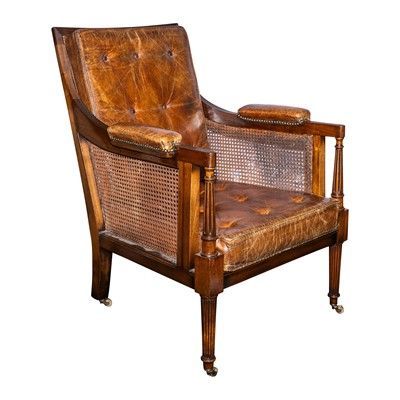
- An enclosed upholstered armchair with wooden framing and cane or upholstered sides. These seats offer deep proportions for library and drawing-room use.
- Bar back
- A chair design featuring a horizontal top rail and a curved central splat resembling the rail of a traditional tavern bench. It appears frequently on Regency dining chairs.
- Armorial
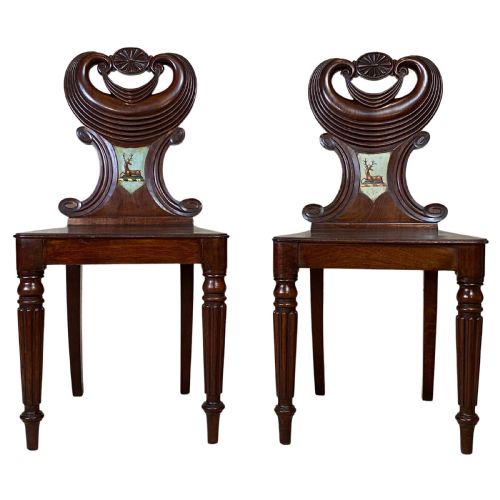
- Displaying a coat of arms or family crest, usually painted or carved onto the shield-shaped backs of hall chairs. These denote specific lineage or civic ownership.
- Splinter
- A narrow vertical piece of wood forming the centre of a chair back, supporting the upper rail. In Georgian designs, these take various openwork or solid forms.
Reeded Leg Side Chairs: Frequently Asked Questions
How do I date a reeded leg chair?
Dating relies on timber characteristics, structural joinery, and stylistic cues like tapered legs and curved top rails. Pieces from the early nineteenth century often feature dense mahogany and specific Regency proportions.
Later Victorian and Edwardian reproductions copy these shapes but utilise different secondary woods and machine-cut joinery methods. Comparing the turning and carving against documented period examples helps confirm the decade of manufacture.
Were these chairs used only for dining?
While the majority served around dining tables in sets of six or more, many examples functioned as hall chairs or reception seating. Single chairs and pairs often stood in hallways, libraries, or morning rooms rather than dining spaces.
Sturdier oak and mahogany frames with wooden or cane seats suited high-traffic entryways, whereas upholstered rosewood versions belonged in formal sitting rooms.
Are cane seats original to these chairs?
Cane work frequently appears on Regency and Georgian hall chairs and lighter side chairs, providing a resilient and breathable seating surface. Many survive with their original weaving intact, though professional re-caning is common.
Other chairs on this page feature drop-in pads upholstered in leather, velvet, or contemporary woven fabric over traditional stuffing.
How should I care for antique mahogany frames?
Maintaining antique timber requires avoiding direct sunlight and sudden temperature shifts that cause the wood to dry out and split. Gentle dusting with a dry cloth keeps the surface clean without stripping the aged polish.
Periodic application of microcrystalline wax feeds the mahogany and preserves the natural lustre of the grain without building up heavy chemical residues.