
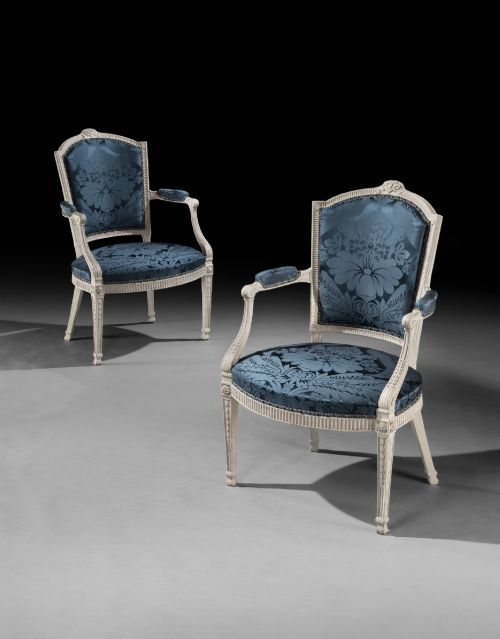


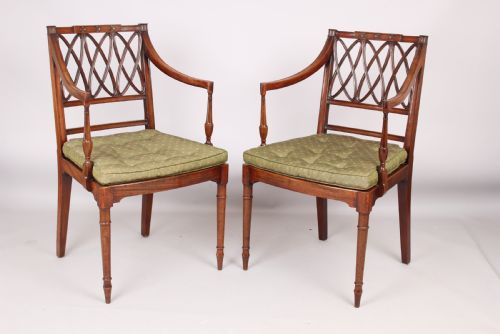


Pair George III Chairs
Pair george iii chairs offer symmetrical seating from the Georgian era, prized for their classic proportion and enduring craftsmanship.
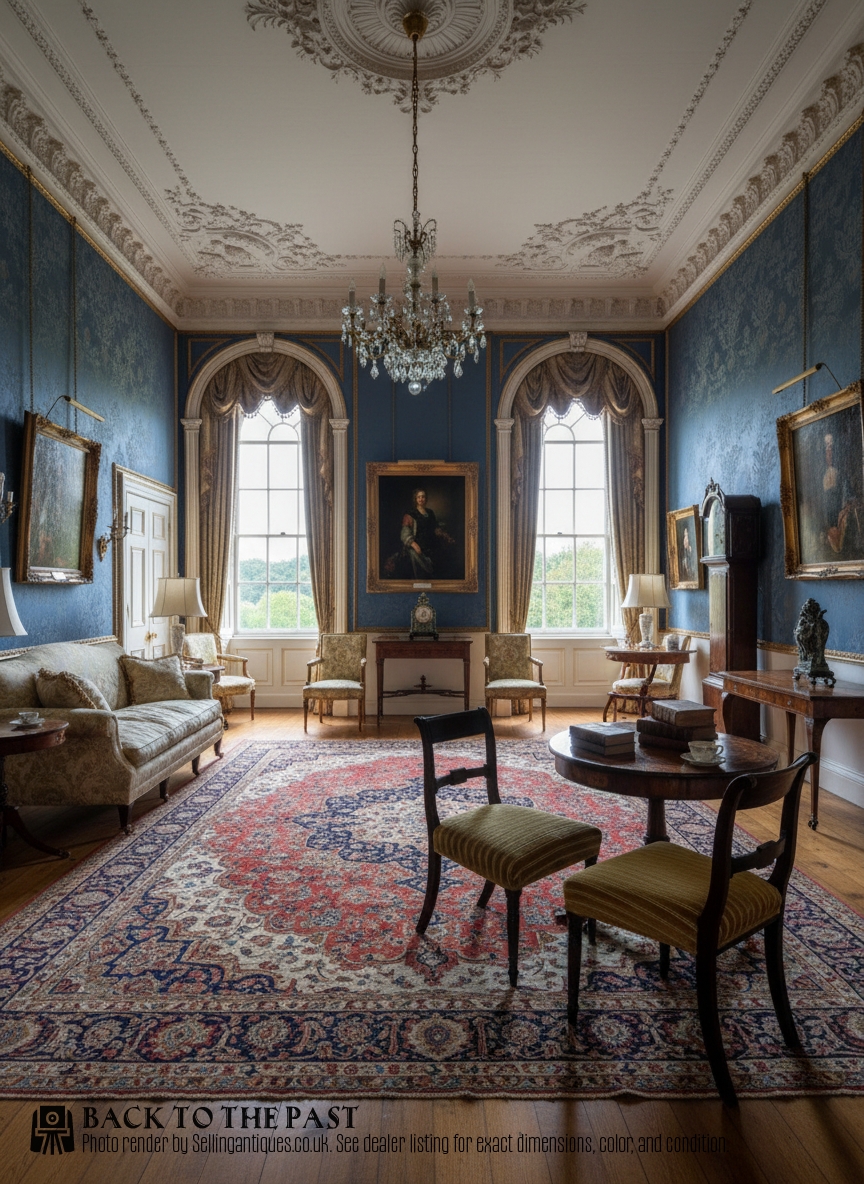
Pair George III Chairs
When you search for pair george iii chairs, you encounter seating designed during the reign of King George III, spanning the mid-to-late 18th century alongside later revivals. These pairings encompass formal dining seats, library armchairs, hall chairs, and lighter side chairs fashioned for polite company.
The versions most common on this page are mahogany side chairs and armchairs, often displaying stylistic traits associated with cabinetmakers like Chippendale and Hepplewhite. Alongside these formal pieces, country variations in oak, elm, and ash appear regularly in the record.
How They Were Made
Joinery relied primarily on solid hardwoods, with mahogany, oak, and elm providing structural integrity for frames and legs. Carvers utilised chisels to shape intricate details directly into the wood grain, whether executing ribbon backs, shield backs, or bold claw-and-ball feet.
Upholstery techniques involved webbing and horsehair stuffing secured beneath outer coverings of leather, velvet, or damask fabric. Painted and giltwood variants received layers of pigment or gold leaf over gesso grounds, adding surface ornamentation to reception and salon furniture.
Listings feature woods spanning mahogany, walnut, oak, elm, and ash, paired with brass accents and textiles including damask and leather.
What Varies in Quality
The degree of hand-carving defines the division between standard utility seating and high-style examples made for prominent residences. Crisp relief work on chair splats and arms distinguishes master carvers from routine workshop production.
Timber selection and structural cohesion dictate longevity, particularly in the joints where legs meet seat rails. Matching within the pair matters immensely, as genuine pairs share identical grain patterns and proportional turning developed side by side in the workshop.
The Pair George III Chairs Glossary
- Carver chair
- An armchair designed with open sides, typically placed at the head of a dining table or utilised as a desk chair. These seats often repeat the decorative motifs of smaller companion side chairs.
- Shield back
- A chair back shaped in the outline of a heraldic shield, popularized during the neoclassical phase of the Georgian period. This form frequently incorporates carved wheat ears, drapery, or vertical slats.
- Sgabello
- A light wooden hall chair featuring solid slab-like supports rather than conventional legs, rooted in Renaissance design and revived during the 18th century. They serve primarily as sculptural entryway seating.
- Ladderback
- A chair back constructed with horizontal slats crossing between the rear upright posts. Country iterations often turn these members on a lathe from local fruitwoods or ash.
- Giltwood
- Timber coated with thin gold leaf applied over a prepared gesso surface. This finish illuminates formal salon seating intended for candlelight.
Pair George III Chairs: Frequently Asked Questions
What defines a true pair?
A true pair consists of two chairs constructed together in the same workshop by the same hand, sharing identical dimensions, timber grain, and decorative carving.
Over the centuries, surviving singles frequently acquire companions to form matched sets, which collectors distinguish from original pairings by subtle variations in wood density or tool marks.
How were these chairs used?
These chairs served formal and domestic functions across Georgian households, from dining rooms and libraries to grand entrance halls.
Armchairs provided seating for heads of households or guests of status, while side chairs lined dining tables or stood against walls until needed for gatherings.
How do I care for antique upholstery?
Maintenance requires gentle dusting and protection from direct sunlight to preserve delicate textiles like damask, velvet, or antique leather.
Leather benefits from occasional conditioning to prevent cracking, while fabric elements are best kept clean through professional conservation methods rather than harsh chemical treatments.
How do I distinguish regional styles?
Regional attribution relies on timber choice and vernacular construction methods, such as provincial elm and ash used in country workshops compared to imported Cuban mahogany in urban centres.
Local cabinetmakers adapted metropolitan design books like those of Chippendale to suit available materials and rural preferences.