
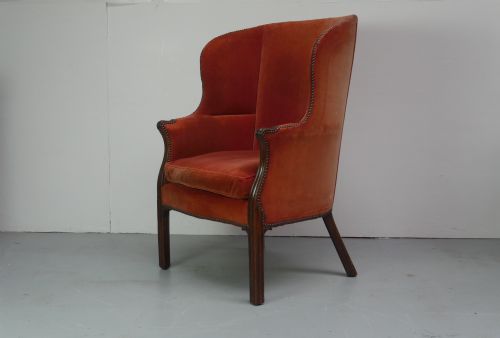

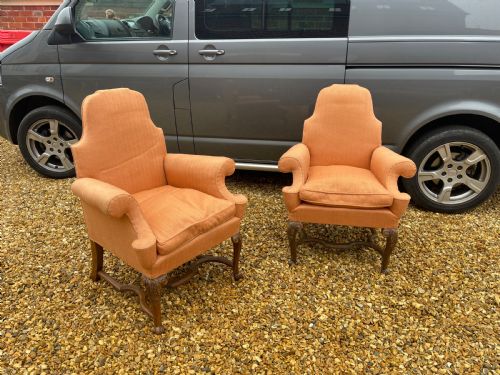


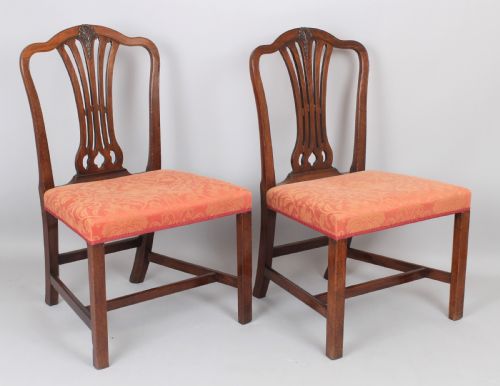

Orange Upholstered Chairs
Orange upholstered chairs bring warmth and tactile richness to a room, drawing the eye instantly through their striking colour and period timber frames.
Orange Upholstered Chairs
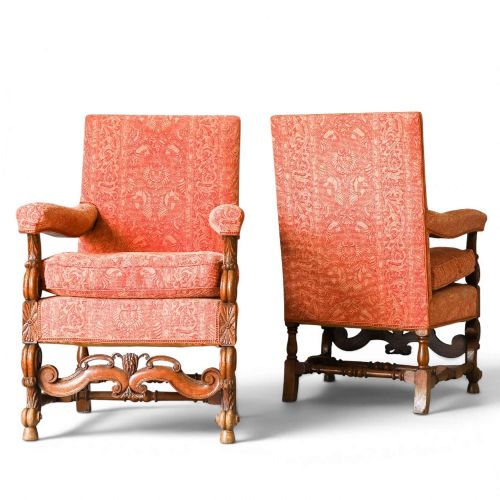
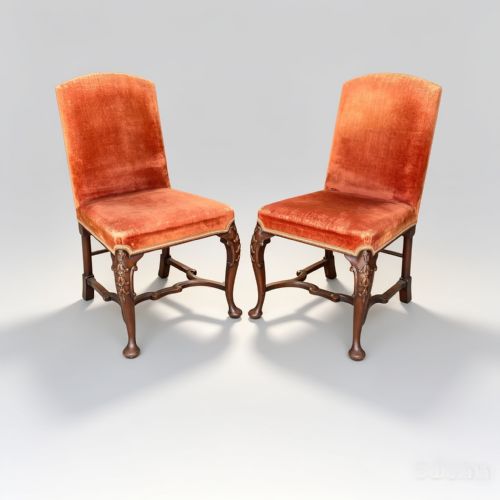
When you search for orange upholstered chairs, you encounter a diverse selection of seating spanning from the eighteenth century through to the twentieth century. These pieces encompass various forms including armchairs, dining chairs, side chairs, and nursing chairs.
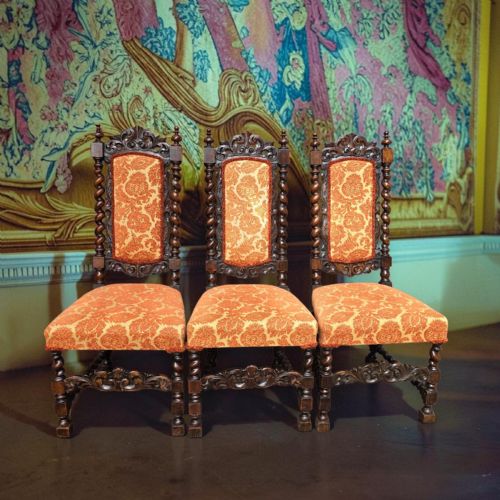
The most common versions on this page pair period wooden frames in mahogany, walnut, oak, or giltwood with coverings in velvet, chenille twill, or textile. Styles range across Georgian, Victorian, French Renaissance Revival, and later twentieth-century revivals.
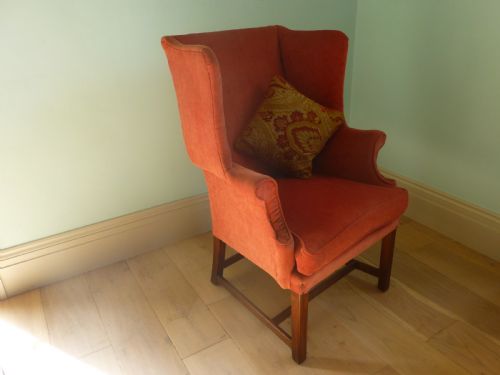
Armchairs and wing backs offer substantial proportions and deep comfort, whilst dining chairs and side chairs provide elegant seating around a table. Many pieces showcase historical revivals that imitate earlier George II, George III, and Chippendale designs.
Materials and construction
Frames are constructed from solid hardwoods such as mahogany, walnut, oak, and beech, frequently shaped with hand-carved details. Structural integrity relies on traditional joinery methods appropriate to the period of manufacture.
Upholstery techniques utilise textiles like velvet, chenille twill, and woven fabric fastened over padding and webbing. Brass elements sometimes feature as decorative tacks or structural fittings.
Listings incorporate timber frames in mahogany, walnut, oak, and wood, paired with velvet, chenille twill, and fabric.
Evaluating quality and execution
The distinction between standard examples and finer pieces lies in the crispness of the timber carving and the architectural balance of the frame. Superior seating displays careful proportion and harmonious lines that reflect high craftsmanship.
Upholstery quality depends on the weight and texture of the textile used, alongside the precision of the fitting. Period timber frames showing rich grain and patination elevate the overall character of the chair.
The Orange Upholstered Chairs Glossary
- Chenille twill
- A heavy woven textile featuring a fuzzy, caterpillar-like yarn that creates a soft, textured surface. It provides both durability and depth of colour.
- Giltwood
- Timber that has been coated with a thin layer of gold leaf. This finish appears frequently on formal decorative frames from the eighteenth century.
- Barley twist
- A carved wooden furniture leg or stretcher shaped like a spiralling rope. This decorative turning method is common in Victorian joinery.
- Wing back armchair
- A high-backed seating form featuring protective side panels designed to shield the occupant from draughts. These chairs often possess deep padded seats and substantial arms.
- Nursing chair
- A low-seated Victorian chair designed for comfort and ease of holding infants. They typically feature upholstered frames without arms.
Orange Upholstered Chairs: Frequently Asked Questions
What periods do these chairs come from?
The selection includes pieces originating from the eighteenth and nineteenth centuries, alongside twentieth-century examples.
Specific eras represented span Georgian, Victorian, and later revival styles dating from eighteen-fifty to nineteen-thirty.
Which wood types are most common?
Frames are predominantly constructed from traditional cabinet timbers such as mahogany, walnut, and oak.
Occasional pieces feature giltwood or general hardwood frameworks.
How are different chair styles distinguished?
Styles are identified by their structural framework, leg turning, and carved ornamentation. Georgian and Chippendale pieces display distinct proportions compared to Victorian or French Renaissance Revival designs.
Upholstery fabrics such as velvet and chenille twill also help define the visual era of the seating.
Where do these chairs suit best?
Armchairs and wing backs function well as statement seating in living rooms or studies. Smaller side and dining chairs integrate easily around tables or as accent pieces in bedrooms.
Are all coverings period original?
Upholstery often reflects later recovering or modern renewal using period-appropriate textiles like orange velvet and chenille.
The underlying wooden frames retain their antique construction.