
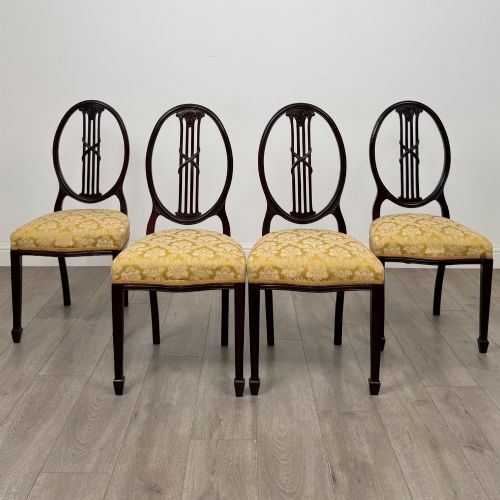
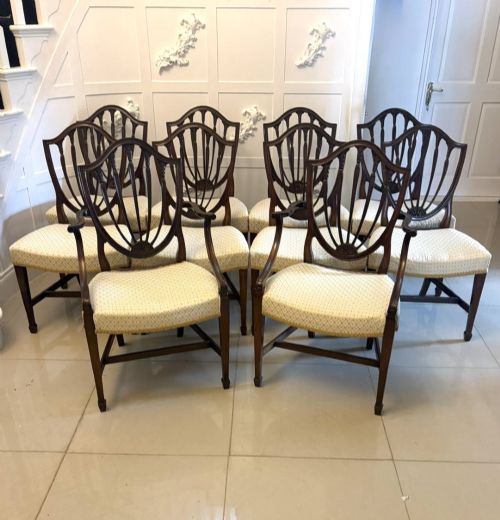
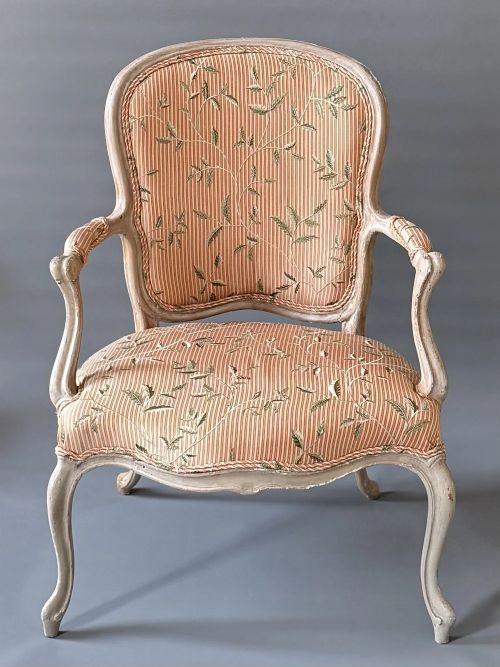
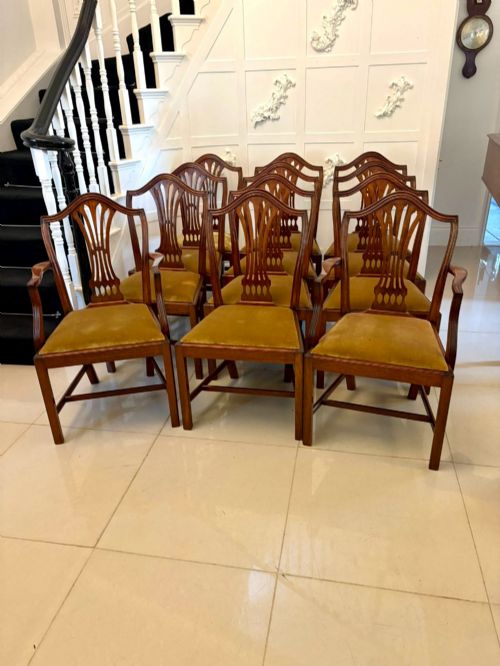
Hepplewhite Period Chairs
These hepplewhite period chairs bring eighteenth-century proportion and shield-back elegance to a modern dining room.
Hepplewhite Period Chairs
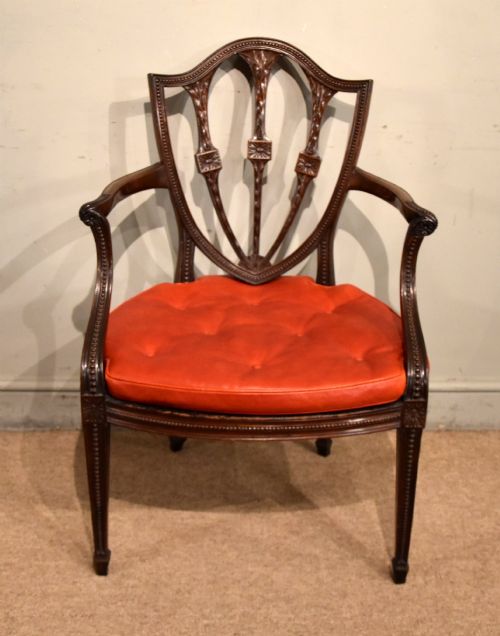
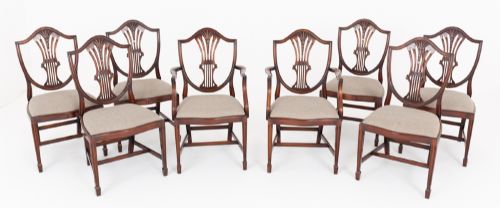
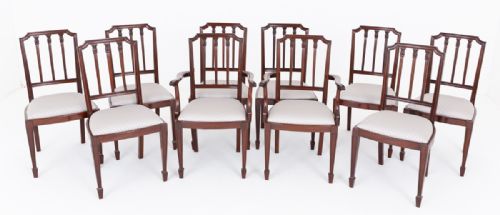
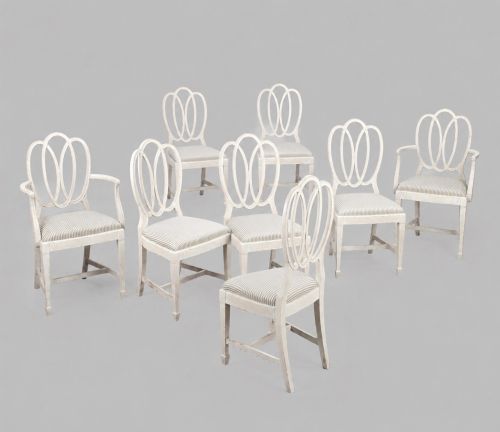
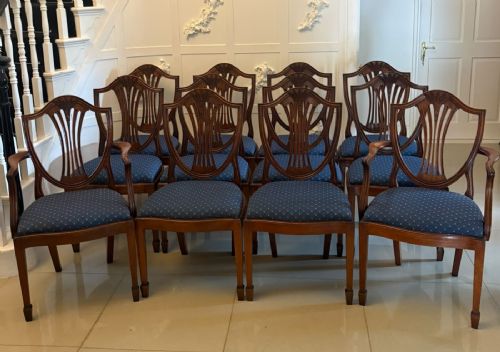
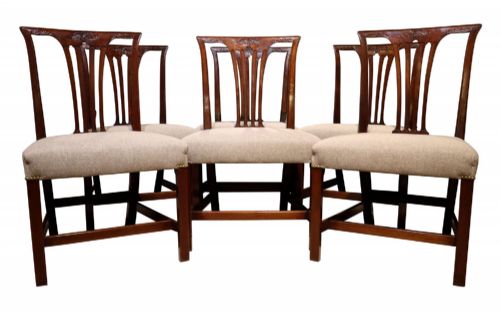
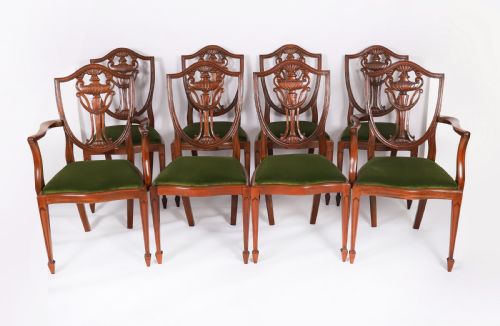
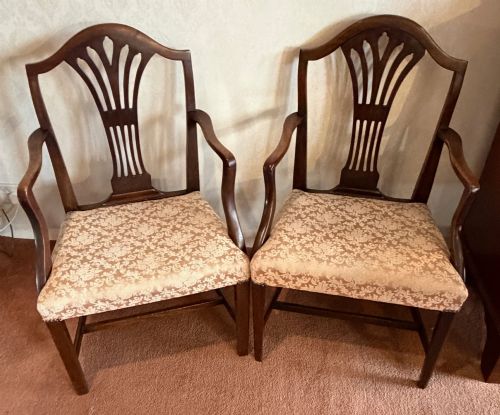
When someone searches for hepplewhite period chairs, they look at seating rooted in the eighteenth century, particularly the George III era, as well as later revivals from the Edwardian and Victorian periods. The pieces appearing here span large dining sets, pairs of elbow chairs, and individual carvers designed for the parlour or hall.
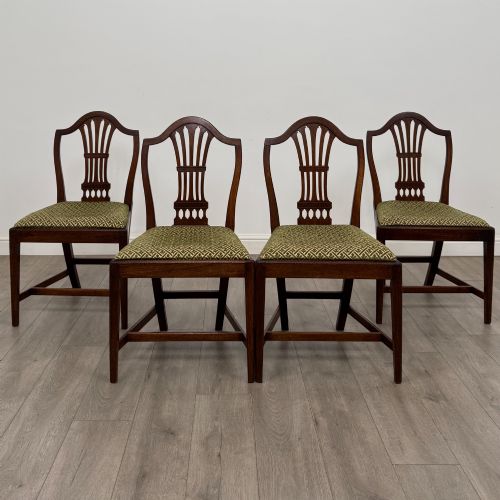
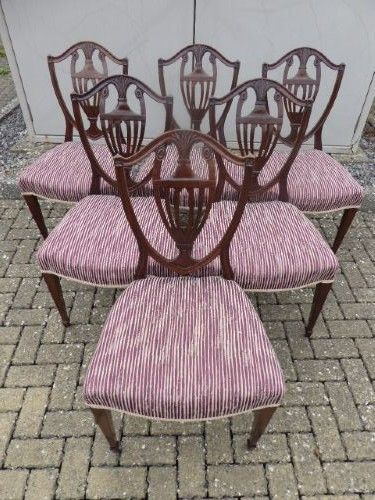
The most common form met on this page is the dining chair shaped with a characteristic shield back, frequently fashioned in mahogany or oak. Alongside original eighteenth-century items, buyers encounter Edwardian and twentieth-century revivals that echo the lighter, graceful lines first popularized during the Georgian period.
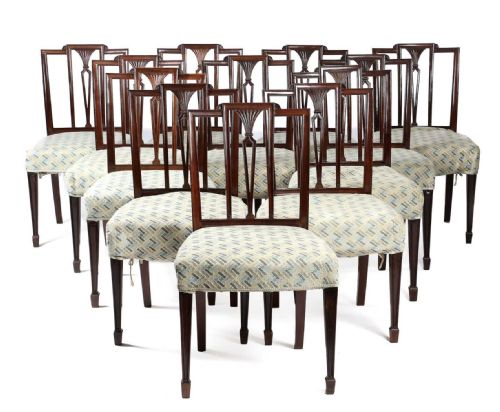
Makers and cabinet makers of the past shaped these chairs to serve practical household roles, from formal dining arrangements to library seating. The inventory moves between complete sets of twelve and smaller pairs of side chairs, offering distinct ways to integrate period seating into contemporary spaces.
How They Were Made
Cabinet makers relied primarily on mahogany, oak, and fruitwood to build these chairs, shaping sturdy timbers into slender uprights and curved top rails. Skilled hands joined the components using traditional framing methods, ensuring structural longevity without sacrificing the delicate silhouettes characteristic of the style.
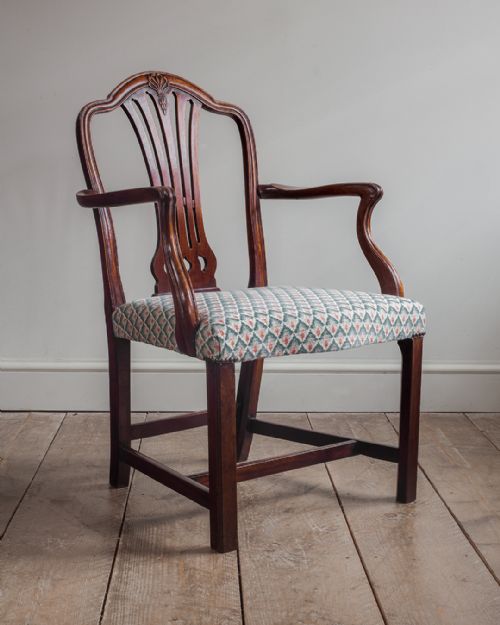
Upholstery played an integral role in finishing the seats, utilising fabrics, leather, and needlework drop-in pads secured within wooden frames. Carved details such as anthemion motifs, pierced splats, and subtle brass accents were applied manually by makers working in the English and French tastes.
The inventory records dining sets, library armchairs, hall seats, and salon pieces.
What Varies in Quality
The degree of hand-carving and the crispness of the pierced splat separate standard examples from finer commissions. Sets matched in uniform timber grain and original timber patination command higher regard among collectors than mismatched or heavily restored suites.
Structural integrity of the joints and the retention of original upholstery foundations influence how well a chair survives daily use. Pieces retaining their early finish and untouched structural pins demonstrate superior craftsmanship compared to those rebuilt during later revival periods.
Maple And Co
The Hepplewhite Period Chairs Glossary
- Shield Back
- A chair back shaped like an inverted shield, often featuring carved splats and curved woodwork typical of late eighteenth-century design. This profile defines many pieces found within Georgian and revival groups.
- Carver
- An armchair designed with elbow supports, traditionally placed at the head of a dining table or used as a desk seat. Pairs of these often accompany larger sets of dining chairs.
- Elbow Chair
- A term used interchangeably for an armchair, denoting seating fitted with supportive wooden arms. These items frequently appear as matching pairs in nineteenth and twentieth-century inventory.
- Drop-in Seat
- A removable upholstered frame that drops securely into the wooden seat rails of a chair. This technique allowed for straightforward re-covering over successive generations.
- Anthemion
- A decorative motif based on the honeysuckle flower, carved into the woodwork of top rails or splats. This classical detail appears on select eighteenth-century shield back designs.
Hepplewhite Period Chairs: Frequently Asked Questions
How do I spot an original eighteenth-century chair?
Original pieces display period joinery methods, such as hand-cut tenons and subtle timber shrinkage appropriate for age. Examining the underside reveals the tool marks and wood oxidation expected from centuries of use.
Revival pieces from the Edwardian or Victorian eras often feature cleaner machine-cut components and different finishing techniques. Comparing the timber density and the sharpness of the carved splat helps clarify the period of manufacture.
Can I use these dining chairs every day?
These chairs were built for daily dining and remain fully functional when the wooden frames and joints stay secure. Regular inspection of the structural blocks ensures they handle routine seating without strain.
Protecting the upholstery with appropriate care maintains the fabric and leather surfaces over years of service. Placing them away from direct heat sources preserves the natural moisture of the mahogany and fruitwood frames.
What is the difference between a carver and a side chair?
Carvers feature integrated armrests designed to support the elbows, making them wider and more formal in appearance. They usually sit at the ends of a dining table alongside matching tables.
How should I clean mahogany wood surfaces?
Dust the timber regularly with a soft, dry cloth to prevent the accumulation of particles on the carved details. Avoid commercial silicone sprays, opting instead for traditional beeswax applied sparingly to nourish the finish.
Buffing the wax gently brings out the natural depth and warm tone of the mahogany. Keeping the wood away from damp environments prevents the frame and any upholstered drop-in seats from deteriorating.