

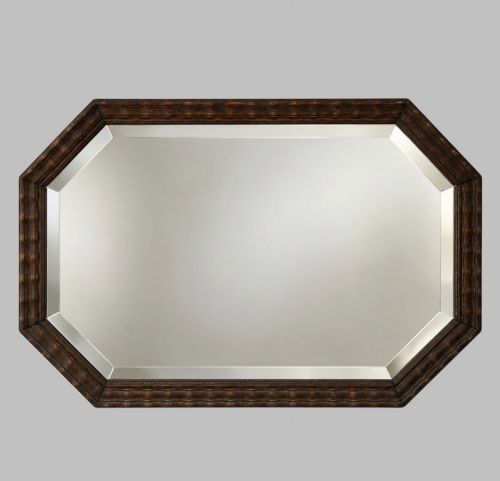
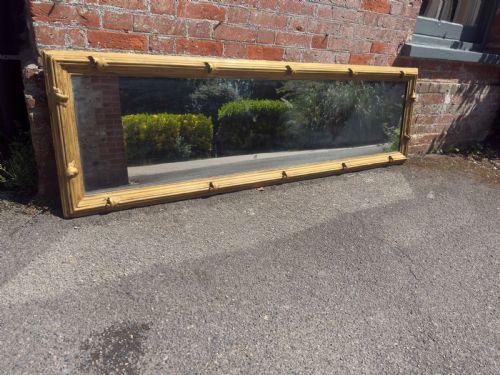
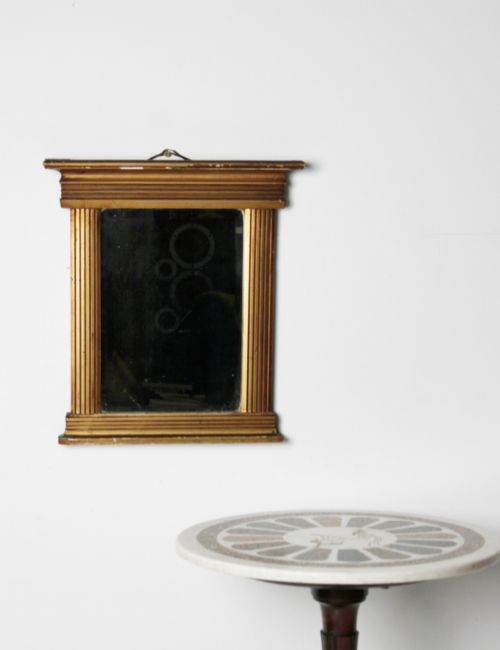
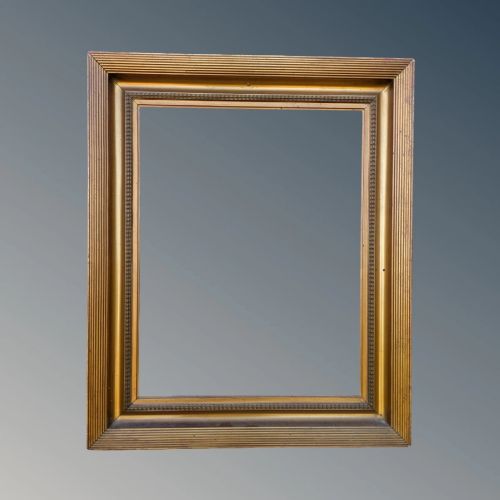


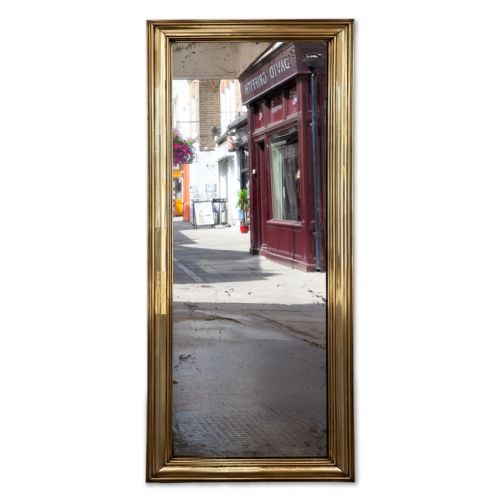
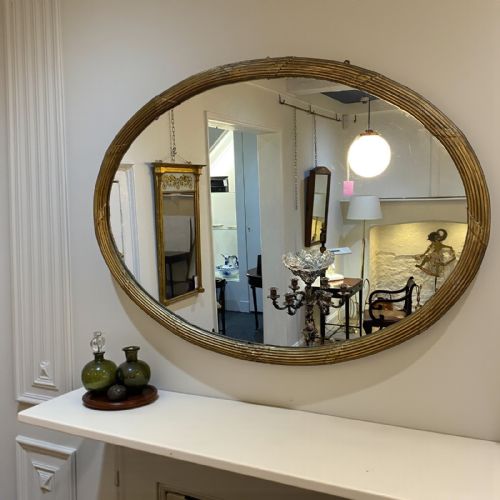


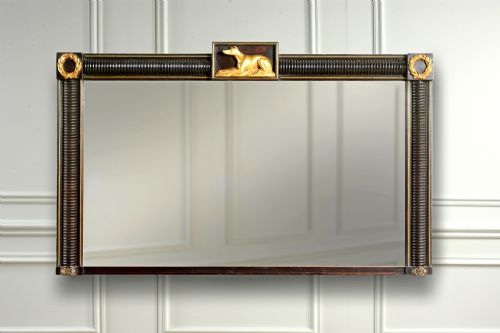
Reeded Frame Wall Mirror
A reeded frame wall mirror brings architectural line and bright reflection to a room, drawing the eye with crisp parallel moulding.
Reeded Frame Wall Mirror
A reeded frame wall mirror centres on a linear carved moulding of parallel convex rounded strips, creating a textured border that catches the light. When you search for this phrase, you find pieces ranging from compact oval wall hangings to grand overmantels designed to sit above a fireplace.
The versions most commonly met on this page span the nineteenth century and the early twentieth century, taking forms such as pier mirrors, picture frames, and overmantel mirrors. They appear in styles including Regency, Victorian, Edwardian, and Art Deco, reflecting the changing tastes of British, French, and English makers.
How they were made
The construction of these pieces relies on traditional carpentry and decorative surface preparation using wood, oak, or carved wood frameworks. Artisans often applied gesso and composition over the timber base to build up the crisp linear details of the reeding before gilding.
Finishes include gold leaf, giltwood, and ebonised surfaces, sometimes paired with bevelled glass or distressed plates. Certain examples feature decorative additions such as a gilded greyhound or inlaid oak elements to enhance the timber.
Reeded Frame Wall Mirror Retail Price Guide 2026
Typical asking prices for reeded frame wall mirror among the pieces listed under this phrase on Sellingantiques today, from the lower quarter to the upper quarter. They describe what is for sale here now, not the wider market.
The listings span from the nineteenth century through the Edwardian era, featuring materials such as gesso, giltwood, oak, and composition.
What varies in quality
The standard of a reeded frame wall mirror rests upon the crispness of the carved or moulded parallel channels and the depth of the preparation layers beneath the gilding. Finer examples display sharp, even reeding that maintains its rhythm without blurring into the surrounding frame.
Materials and finishing methods also distinguish pieces, from simple painted wood to substantial giltwood frames finished with genuine gold leaf. The preservation of the original glass plate and the integrity of the underlying gesso shape the character of each antique.
Waring & Gillow
The Reeded Frame Wall Mirror Glossary
- Reeded
- A decorative moulding formed of parallel convex strips resembling bundled plant stems. This linear carved detail defines the borders of the frame.
- Pier mirror
- A tall wall glass designed specifically to hang on the narrow wall space between windows. These tall formats often feature upright proportions.
- Gesso
- A plaster-like mixture applied to wood frames to create a smooth surface for gilding. It allows carvers to achieve fine relief detail.
- Giltwood
- Timber coated with gold leaf or metallic powder over a prepared base. It provides a bright reflective surface that ages with a warm patina.
- Overmantel mirror
- A wide glass created to hang above a mantelpiece or fireplace. These substantial pieces frequently anchor the proportions of a principal room.
Reeded Frame Wall Mirror: Frequently Asked Questions
Where should I hang a reeded frame wall mirror?
These mirrors suit placement above a mantelpiece, along a hallway, or between windows where the vertical lines can draw the eye upward. Their architectural framing works well to bounce natural light into darker corners of a room.
Matching the scale of the mirror to the surrounding furniture ensures the piece feels balanced in its setting. An overmantel format suits a wide chimney breast, while smaller oval or round shapes fit narrower wall spaces.
How do I identify the period of a reeded mirror?
Dating relies on examining the timber construction, the composition of the gesso, and the bevel or silvering of the glass plate. Regency and William IV pieces often display heavier neoclassical proportions, while Edwardian and later examples show lighter framing.
Moulding techniques and finish materials also offer clues to the era of manufacture. Giltwood surfaces from the nineteenth century age differently than later twentieth-century interpretations.
What is the difference between a pier mirror and an overmantel?
Pier mirrors are traditionally tall and narrow, built to hang on the wall space between two windows. Overmantel mirrors are wide and horizontal, designed to sit prominently above a fireplace opening.
Both forms utilise reeded framing to structure the reflective glass, but their proportions serve entirely different architectural functions within a historic interior.
How do I care for antique gilt and glass?
Dusting the reeded frame gently with a dry, soft brush prevents buildup within the parallel channels without disturbing the delicate gesso or leaf. Avoid using liquid cleaners or chemical sprays on giltwood surfaces.
Glass plates can be cleaned sparingly with a mild glass cleaner applied to a cloth rather than sprayed directly onto the mirror. This protects the historic edges of the glass and the surrounding frame rebate.