
Tall French Wall Mirror
A tall french wall mirror brings vertical presence and light to a room, drawing the eye upward with period carved frames.
Tall French Wall Mirror
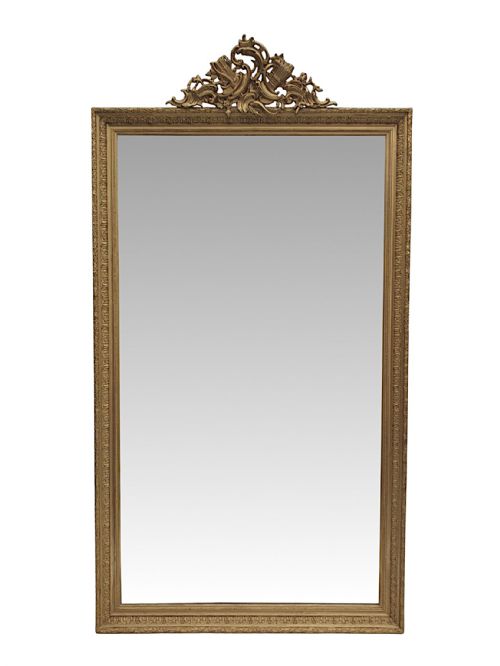
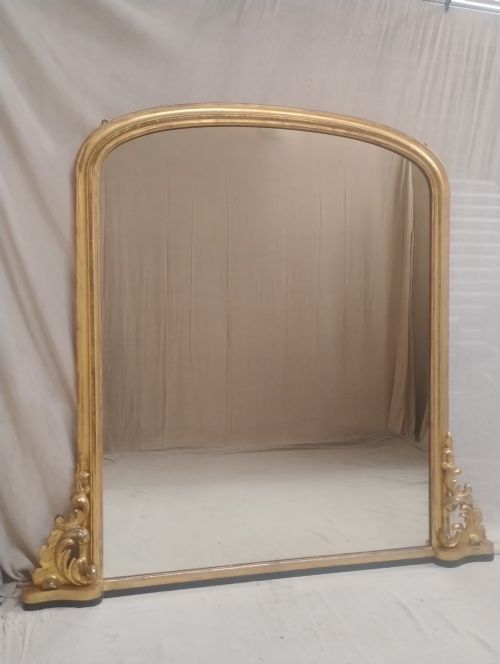
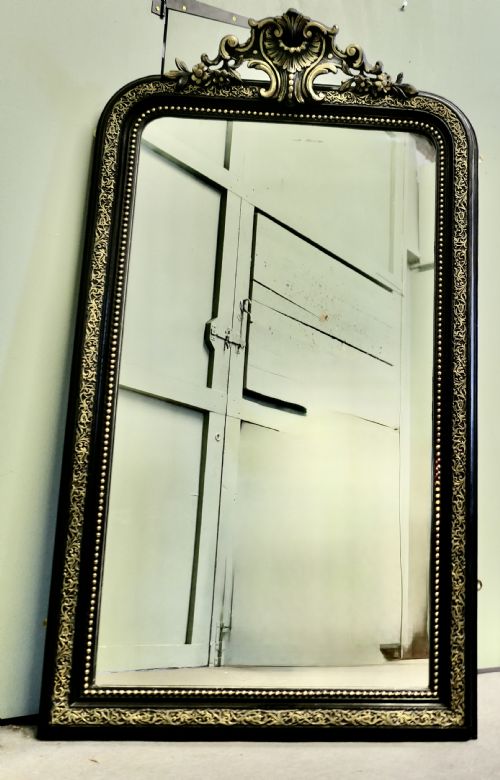
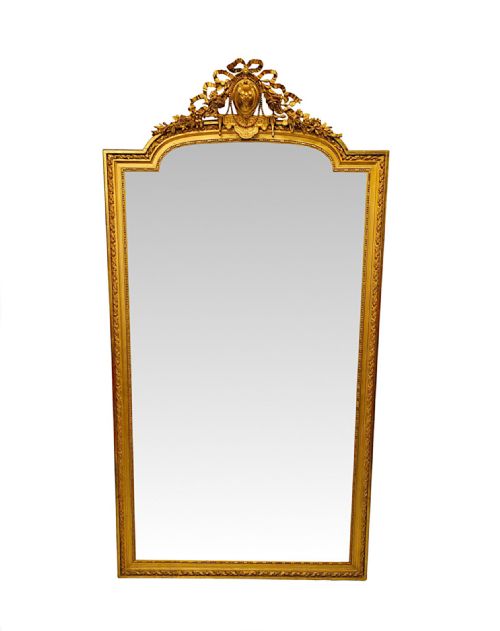
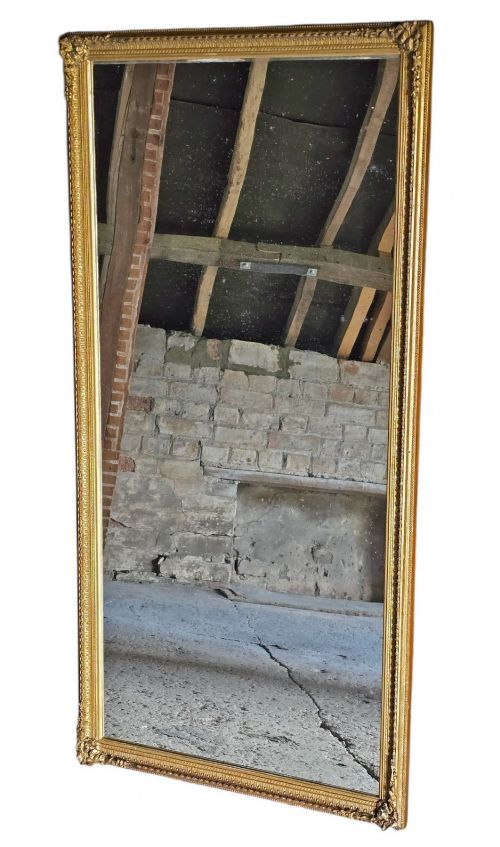
A tall french wall mirror stands vertical to command a room, appearing in forms such as pier mirrors, trumeau panels, and overmantel designs. These pieces often anchor high ceilings in drawing rooms and hallways, reflecting natural light across the floor.
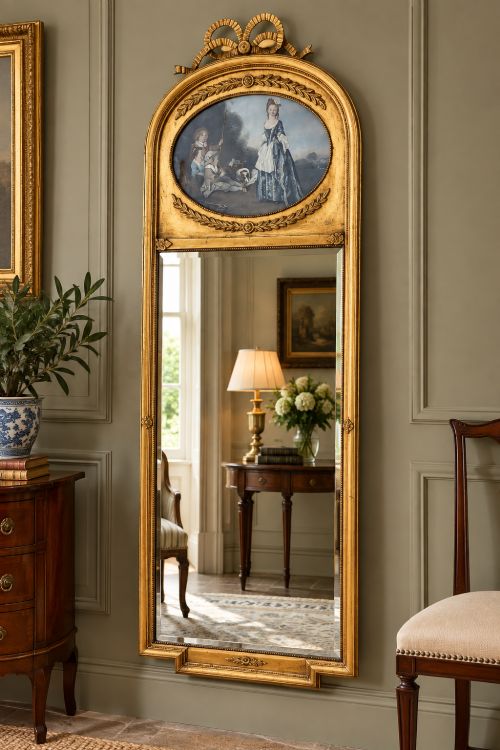
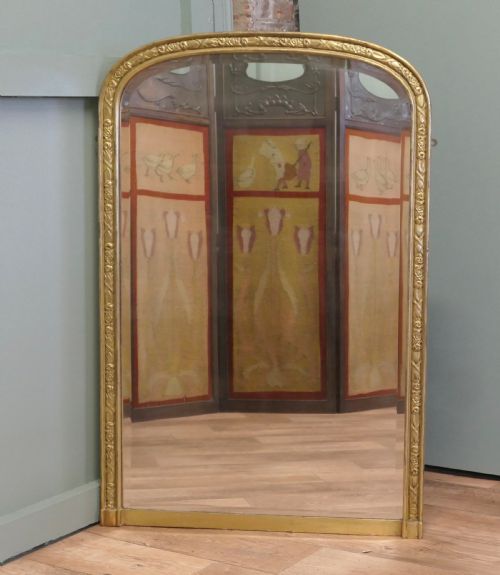
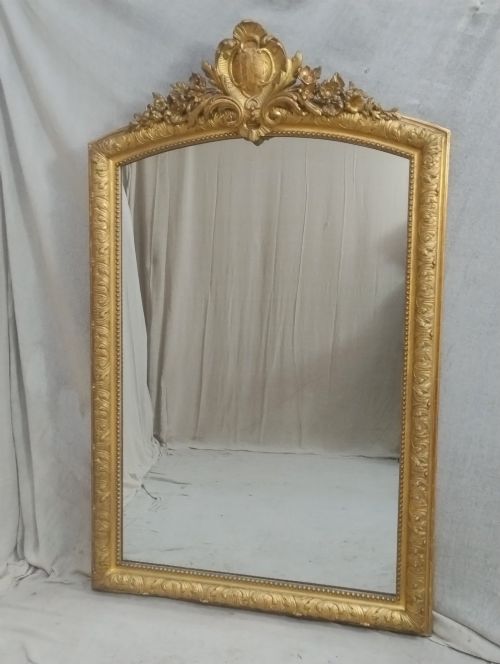
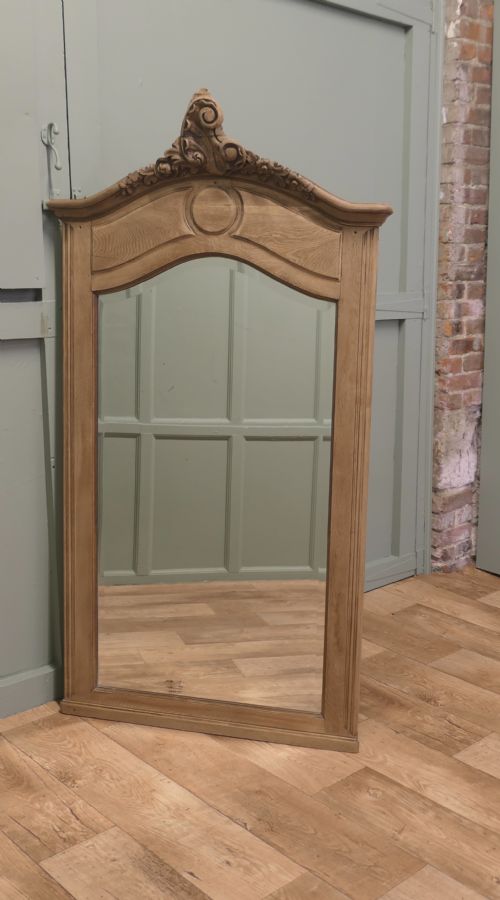
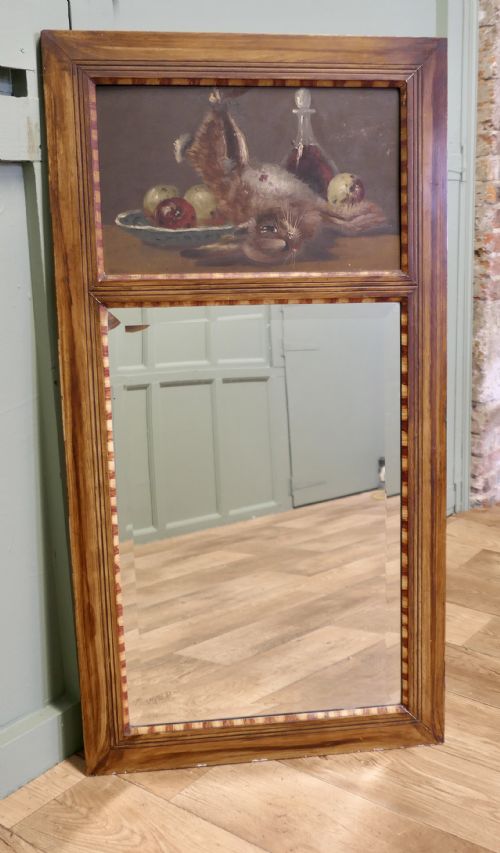
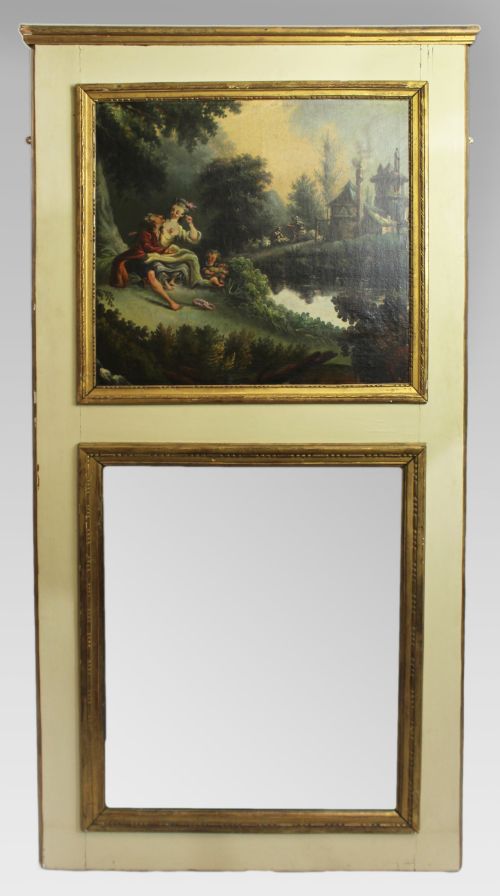
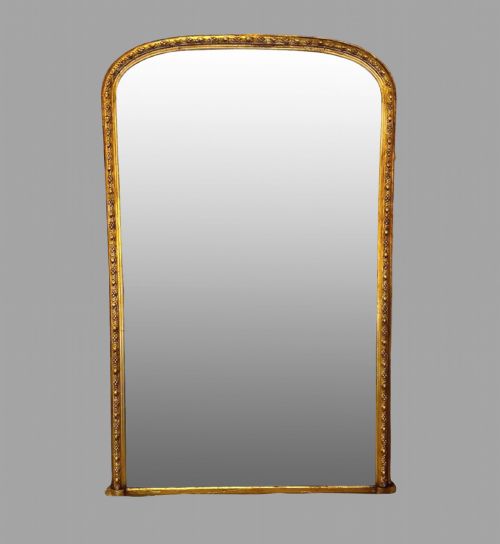
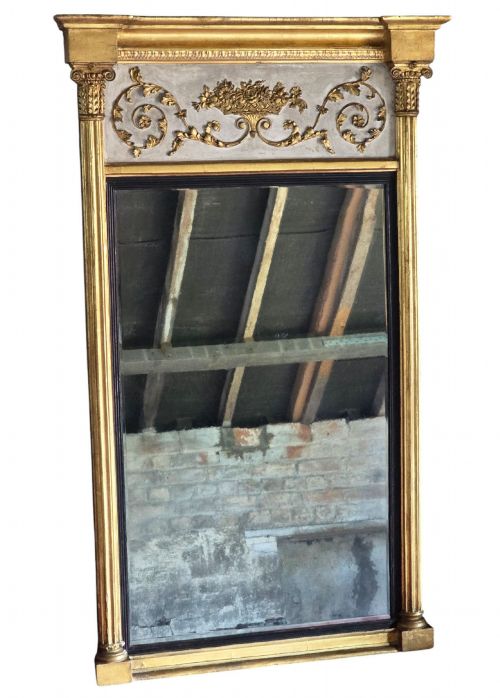
The version most commonly met on this page is the nineteenth-century Louis Philippe mirror, distinguished by its arched top and restrained framing. Alongside these, buyers find carved wooden trumeau mirrors incorporating pastoral oil paintings or decorative panels.
Origins span nineteenth-century workshops in France alongside Victorian interpretations, uniting grand scale with domestic utility. The format serves equally as a leaner mirror against a bedroom wall or a fixed focal point above a fireplace.
How they were made
Carved wooden frames form the structure, utilising oak, walnut, or softer timbers built to support heavy glass plates. Craftsmen applied gesso over the wood substrate to build up relief details before finishing the surface.
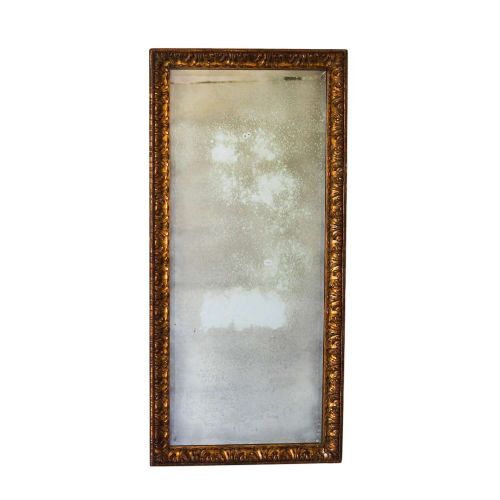
Gold leaf, silver gilt, or paint were then applied by hand to the gessoed mouldings, creating reflective metallic sheens or muted antique tones. Early examples frequently house original mercury glass plates, while later pieces employ standard bevelling techniques.
Several mirrors include hidden pastoral oil paintings above the glass, offering two antiques for the price of one wall space.
What varies in quality
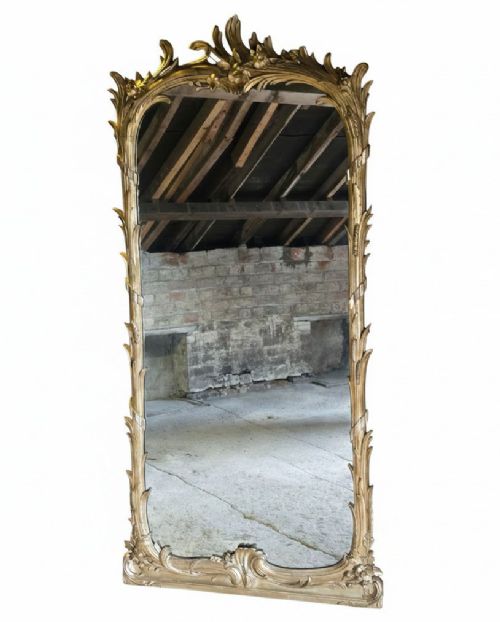
The crispness and depth of the carved gesso and woodwork dictate the visual weight of the frame. Superior examples display sharply defined acanthus scrolls, rope carving, or panel mouldings that retain their original definition beneath the gilding.
The condition and authenticity of the glass plate heavily influence the character of the piece, with original mercury plates offering a mottled, soft reflection compared to later replacements. Preservation of the original gilding and backboards also separates standard decorative items from finer examples.
The Tall French Wall Mirror Glossary
- Trumeau mirror
- A decorative wall mirror fitted into a wood-panelled wall or incorporating a painted panel above the glass plate.
- Pier mirror
- A tall, narrow mirror traditionally hung on the narrow pier of wall between two windows.
- Gesso
- A plaster-like mixture applied to wood frames as a base for carving and gilding.
- Mercury glass
- An early type of double-walled glass blown with a silvering mixture between the layers, creating a distinctive cloudy reflection.
- Overmantel mirror
- A wide or tall mirror designed specifically to hang on the wall directly above a fireplace mantelpiece.
Tall French Wall Mirror: Frequently Asked Questions
Where should I hang a tall mirror?
These pieces suit high-ceilinged reception rooms, hallways, or dining spaces where vertical proportions balance surrounding furniture. Positioning them opposite a window maximises natural light distribution.
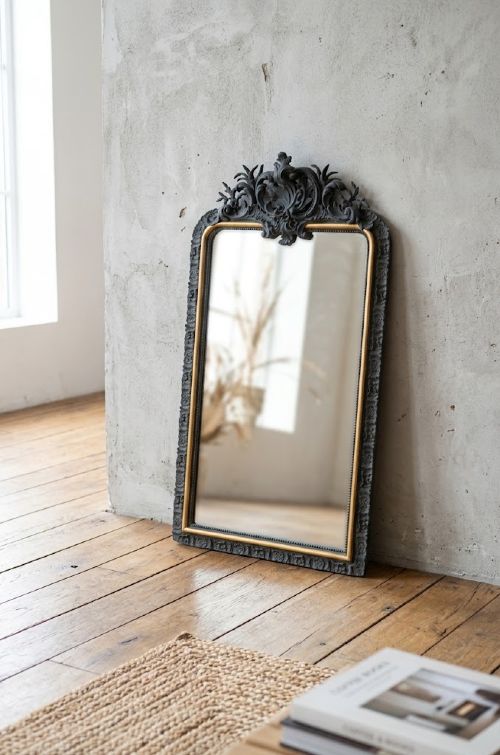
Alternatively, many buyers lean larger examples directly against a bedroom or dressing room wall without wall fixings.
What is a Louis Philippe mirror?
This style dates from the mid-nineteenth-century French monarchy and is instantly recognised by its gentle arched top and minimal ornamentation. The frames typically feature subdued beaded moulding or simple corner cartouches rather than heavy baroque carving.
They offer a versatile aesthetic that bridges traditional period rooms and contemporary interiors.
How do I identify mercury glass?
Original mercury glass displays a characteristic speckled, uneven reflection with dark patches behind the glass plate. This appearance stems from the historic silvering process rather than modern chemical manufacturing.
Such plates provide a softer, more atmospheric reflection than modern replacements.
Can these mirrors be used as leaner mirrors?
Many nineteenth-century examples function effectively as leaner mirrors when their substantial timber backboards provide adequate structural support. Buyers should verify the stability of the frame and the security of the hanging hardware before placing a heavy piece unanchored against a wall.