
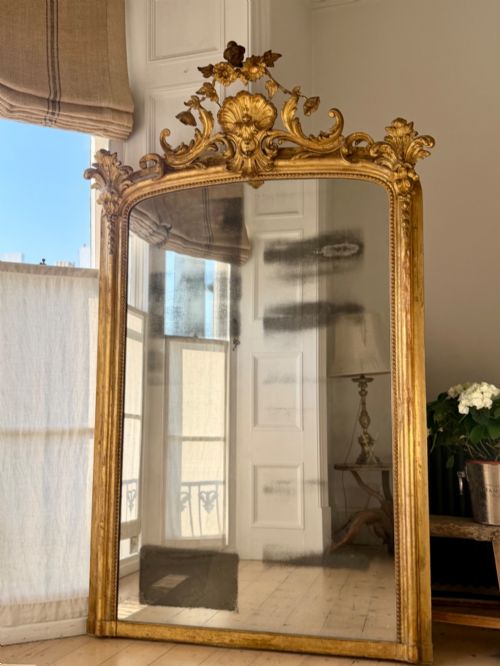
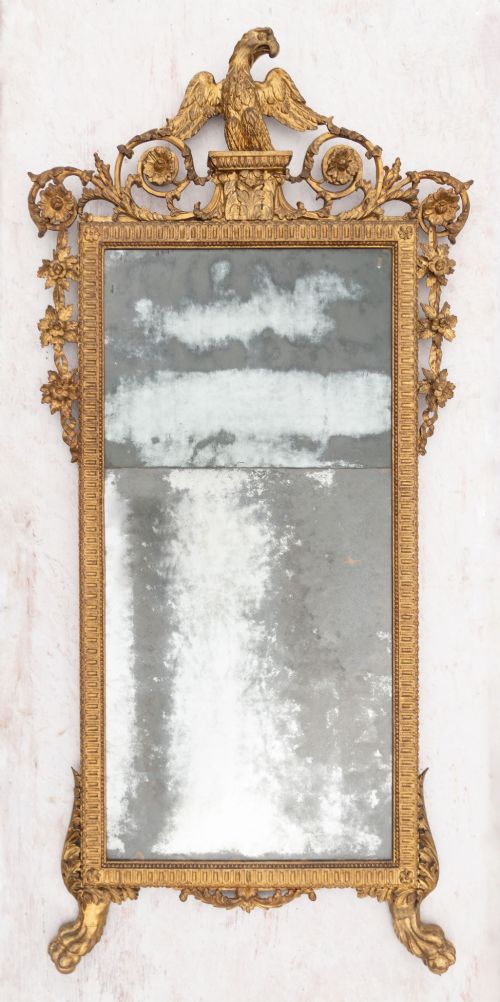
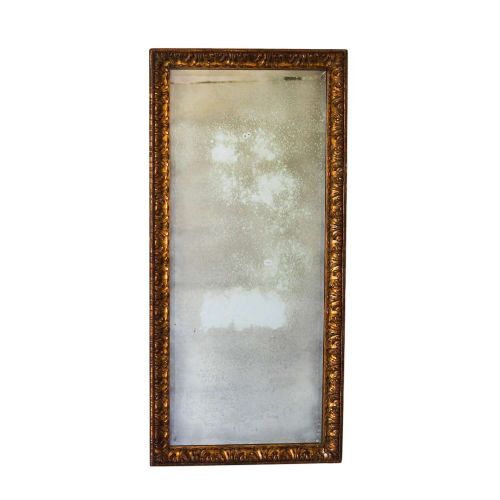


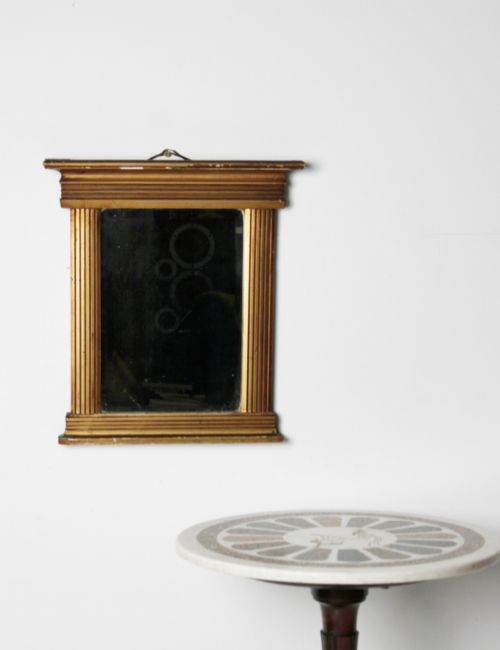


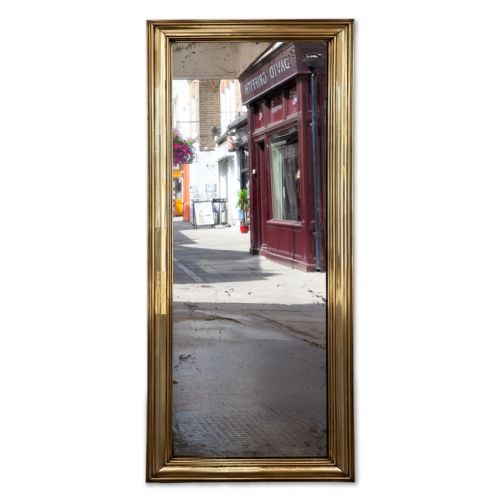
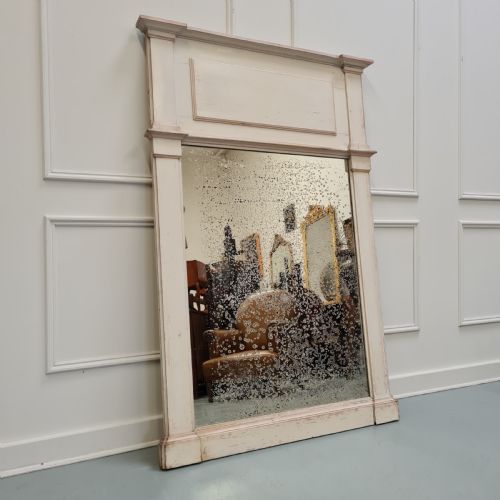


Foxed Glass Pier Mirror
A foxed glass pier mirror brings depth and atmosphere to a room, catching the light across aged mercury plates.
Foxed Glass Pier Mirror
A foxed glass pier mirror is a tall, narrow looking glass designed to hang on the narrow wall space between windows, often incorporating distressed or foxed silvering. These mirrors span the eighteenth, nineteenth, and early twentieth centuries, drawing on Georgian, Victorian, and continental European traditions.
The versions most commonly met on this page include French trumeau mirrors, nineteenth-century giltwood pieces, and early French bistro mirrors. They appear in forms ranging from carved giltwood and gesso to painted wood and walnut.
Originating largely from English, French, Italian, and Swedish workshops, these pier mirrors reflect diverse regional aesthetics such as Rococo, Regency, and Empire Revival styles. Each piece carries the distinct architectural proportions suited to high-ceilinged period rooms.
Materials and construction
Makers constructed these frames using timber such as walnut, birch, and pine as a core, often applying layers of gesso to build up intricate decorative motifs. Giltwood elements received thin applications of gold leaf over red bole, which shows through as the surface ages.
Glass plates were silvered using mercury techniques in earlier periods, creating the characteristic mottled, foxed appearance over time. Painted wood and gilded finishes were frequently combined, particularly in French trumeau and console-paired arrangements.
Listings feature periods spanning from the early eighteenth century through the Victorian era, utilising giltwood, gesso, and mercury glass.
Assessing quality
Quality rests in the crispness of the hand-carved gesso and giltwood details, where deeper relief and sharper execution separate finer workshop production from simpler output. The harmony between the original silvered plate and the proportion of the wooden frame dictates the visual success of the piece.
The integrity of the mercury glass plate matters greatly, with natural foxing adding depth rather than obscuring the reflective surface entirely. Construction methods, such as traditional joinery in the timber frame, confirm the original period manufacture.
The Foxed Glass Pier Mirror Glossary
- Pier mirror
- A tall, narrow looking glass traditionally hung on the wall space between two windows. It often sits above a pier console table.
- Mercury glass
- A double-walled blown glass filled with a silvering mixture, or early flat mirror plates silvered with a mercury amalgam. This process creates the dark spots and clouding known as foxing.
- Trumeau mirror
- A decorative wall mirror combined with a painted panel or oil painting above the glass plate. These originated in eighteenth-century interior decoration.
- Gesso
- A plaster-like mixture applied to wood frames to provide a smooth surface for gilding or painting. Carved details are often modelled directly in this material.
- Giltwood
- Timber carved and coated with gold leaf. It forms the primary decorative finish for many formal European mirrors.
Foxed Glass Pier Mirror: Frequently Asked Questions
What is a pier mirror used for?
These mirrors were originally placed on the solid pier of wall between tall windows to reflect light back into darker period rooms.
Today they function effectively in hallways, narrow entryways, or above mantelpieces where standard wide mirrors would overwhelm the wall space.
How do I identify mercury glass?
Mercury glass typically displays uneven silvering, dark speckling, and a cloudy, dreamlike reflection that differs from modern chemical mirrors.
This natural degradation, known as foxing, occurs as the original backing oxidises over many decades.
Where should I hang a tall mirror?
A tall pier mirror suits narrow wall spaces, stair landings, or living rooms with high ceilings where vertical proportions can anchor the room.
Securing them properly to wall studs is essential given the substantial weight of the timber frame and glass plate.
How do I care for antique glass?
Clean antique mirror plates gently with a soft cloth and mild, non-ammonia cleaner to avoid damaging the delicate edges of the silvering.
Keep them away from direct moisture and strong sunlight to preserve the original gilt and painted wooden surfaces.