
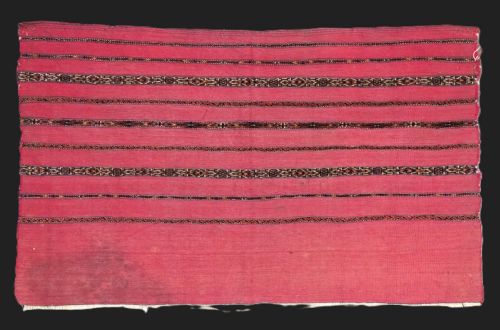


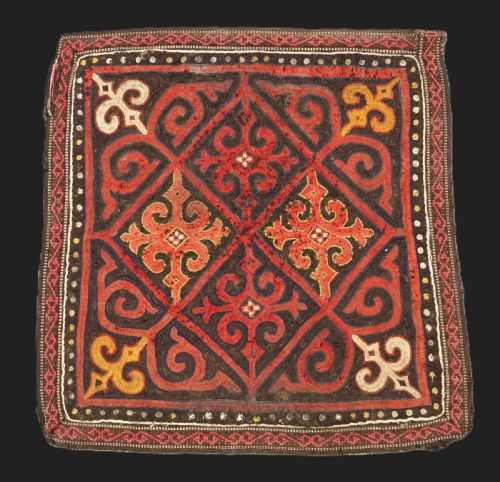


Red Wool Tapestry Hanging
A red wool tapestry hanging brings heavy texture, tribal geometry and centuries of dye work directly onto a blank wall.
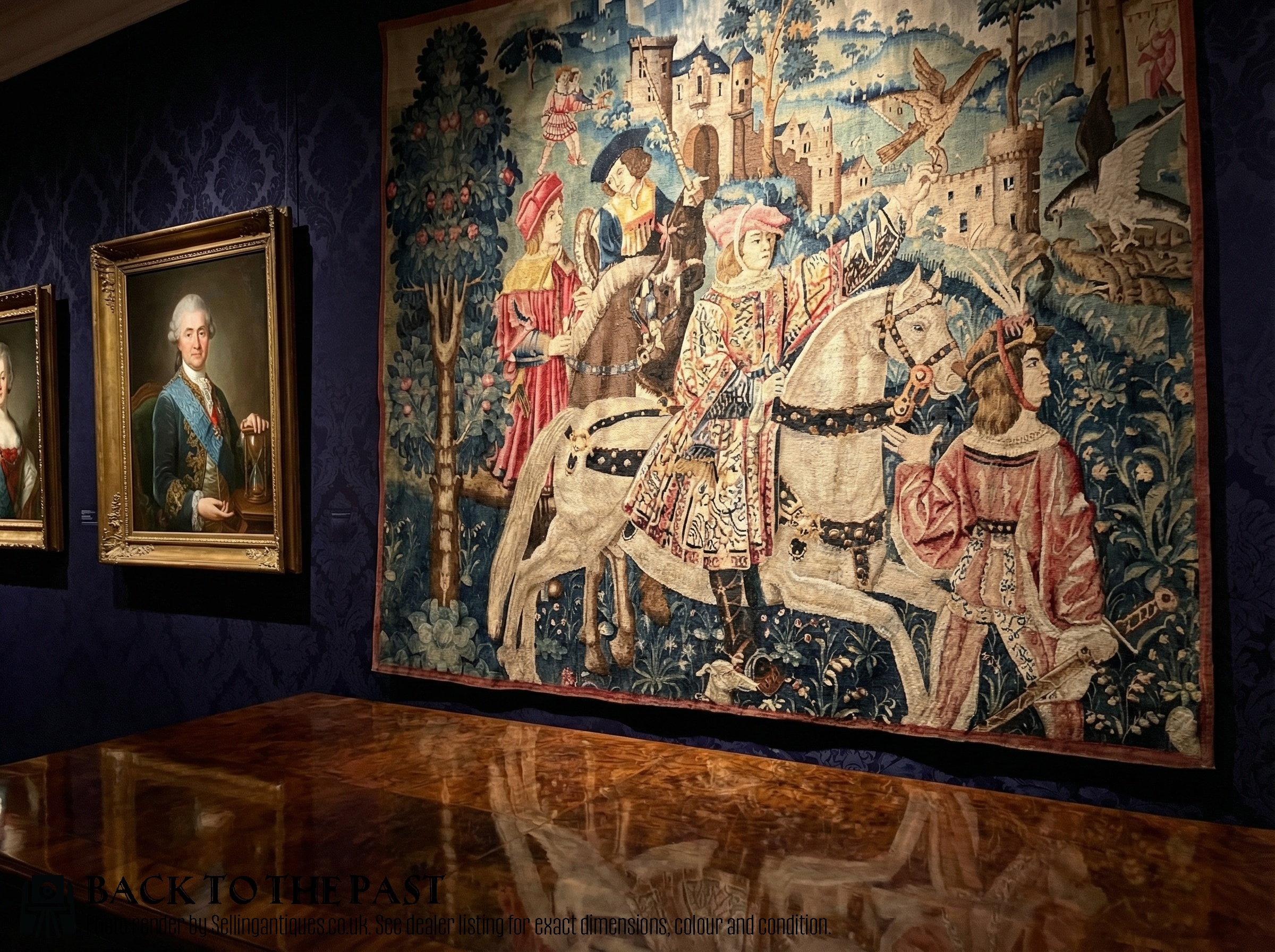
Red Wool Tapestry Hanging
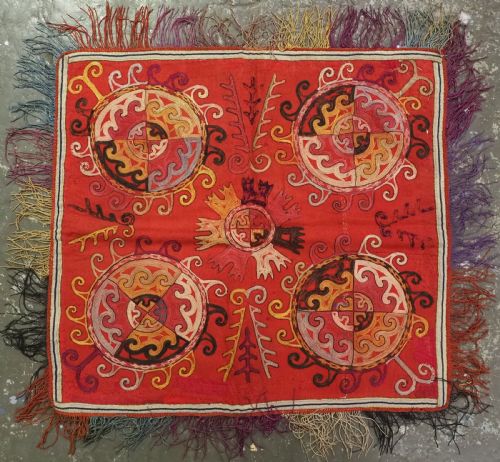
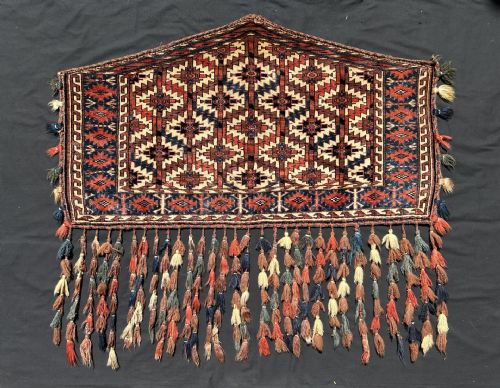
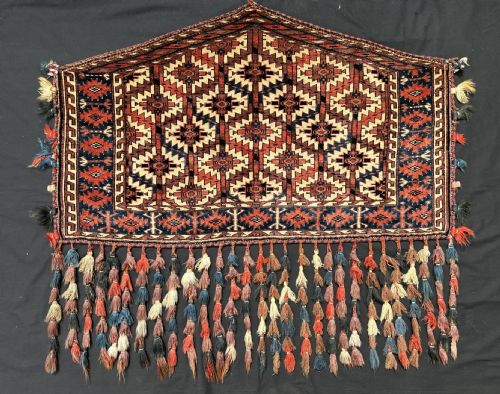
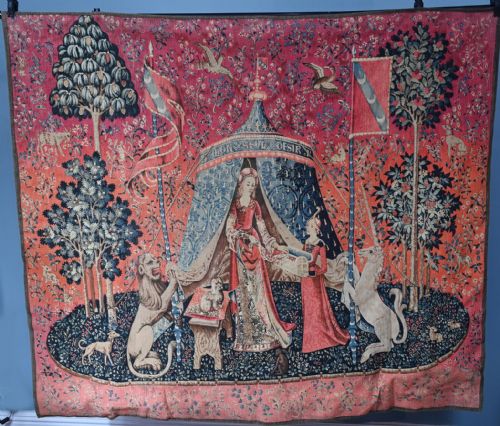
A red wool tapestry hanging covers a distinct group of woven and embroidered textiles originating primarily from Central Asian nomadic groups, Persian tribes, and European workshops. When buyers search for a red wool tapestry hanging, they often encounter tribal bag faces, dowry embroideries, and flatwoven panels dominated by rich madder red dyes.
The selections span from late nineteenth-century Turkmen chuvals and Uzbek ilgiches to eighteenth-century French needlework panels. Tribal pieces like Yomut and Tekke asmalyks or chuvals form a large portion of the available material, alongside Kyrgyz embroidered felt panels and European wall coverings.
These textiles served functional roles in nomadic tents or European estates before transitioning to decorative wall art. Their survival depends on the durability of wool, cotton, and felt substrates combined with traditional natural dyeing techniques.
Materials and construction methods
Weavers constructed these pieces predominantly using hand-spun wool and cotton foundations, often incorporating silk, felt, leather, and metal threads for decorative contrast. Natural dyes provided the deep red ground colours, derived from sources such as madder root, which yielded stable and complex tones over decades of use.
Techniques varied widely between regions, encompassing pile weaving, flatweaving, sumac wrapping, and intricate applique embroidery. Turkmen chuval faces and Shahsavan soumak panels display precise structural weaving, while Kyrgyz tush kyiz and Uzbek ilgiches rely on dense needlework applied to wool or felt bases.
Nomadic weavers occasionally stitched rogue geometric anomalies into symmetrical gul rows, quietly defying perfection.
Factors determining quality
The fineness of the weave or embroidery density separates standard utility pieces from exceptional examples. Tighter knotting in Turkmen chuvals or meticulous satin stitch in Persian Rasht embroidery indicates higher maker skill and time investment.
The integrity and depth of the natural dyes significantly influence overall merit. Pieces retaining vibrant, saturated red madder tones without excessive fading or chemical dye disruption command greater appreciation among collectors.
The Red Wool Tapestry Hanging Glossary
- Chuval
- A large Turkmen storage bag face, frequently woven in pile with repeating guls and later adapted as a wall hanging. These pieces showcase tribal iconography and dense wool construction.
- Asmalyk
- A pentagonal trapping produced by Yomut and other Turkmen tribes, historically mounted on wedding camel flanks. They display elaborate field designs intended for ceremonial display.
- Sumac
- A flatweaving technique where supplementary decorative weft threads wrap around the warp yarns in a continuous wrapping motion. This method creates a sturdy, ribbed textile structure found on Shahsavan panels.
- Gul
- A primary medallion or octagonal motif repeated across Turkmen and Central Asian carpets and bag faces. Each tribal group utilised distinct gul variations to signal lineage and origin.
- Sofreh
- A flatwoven or embroidered cloth used traditionally for sharing meals or storing bread among Persian and Afghan nomads. Their geometric compositions translate readily into modern wall displays.
Red Wool Tapestry Hanging: Frequently Asked Questions
How do I hang a textile safely?
Mounting a textile requires distributing the weight evenly across the entire upper edge to prevent stretching the wool fibres. Conservation-grade Velcro stitching or a custom fabric sleeve paired with a concealed wooden slat provides a secure hold without piercing the historic material.
Avoid using direct nails, clips, or heavy adhesives that concentrate stress on single points of the weave. Keep the hanging away from direct sunlight and heat sources to protect natural wool dyes from fading.
What is a chuval face?
A chuval face is the front panel of a large utility bag used by nomadic Turkmen tribes for household storage inside a yurt. Weavers decorated these sections with repeating tribal guls and rich red wool pile while leaving the utilitarian back panels plain.
When families migrated or reorganized their possessions, these decorative faces were often removed and preserved independently. Today, collectors mount them as compact tapestries to display their intricate tribal geometry.
How are natural red dyes identified?
Natural red dyes, primarily derived from madder root, exhibit a characteristic depth and slight tonal variation known as abrash. Under close examination, the colour shows subtle shifts where dye baths varied or wool absorbed pigment differently over time.
Synthetic aniline dyes introduced later often appear harsh or flat by comparison. Natural reds mellow gracefully with age, maintaining a warm, earthy resonance rather than sharp brightness.
Can I clean an antique wall hanging?
Routine maintenance involves gentle surface dust removal using a soft brush or low-suction vacuum applied through a protective mesh screen. Professional textile conservators should handle deep washing or structural repairs to prevent shrinkage and dye bleeding.
Water and household detergents can destabilize historic mordants and weaken brittle silk or wool foundations. Keeping the textile in a stable, dry environment minimises the need for aggressive intervention.