


Vintage French Style Tapestry
These vintage french style tapestry pieces bring centuries of woven artistry and carved seating into a room.
Vintage French Style Tapestry
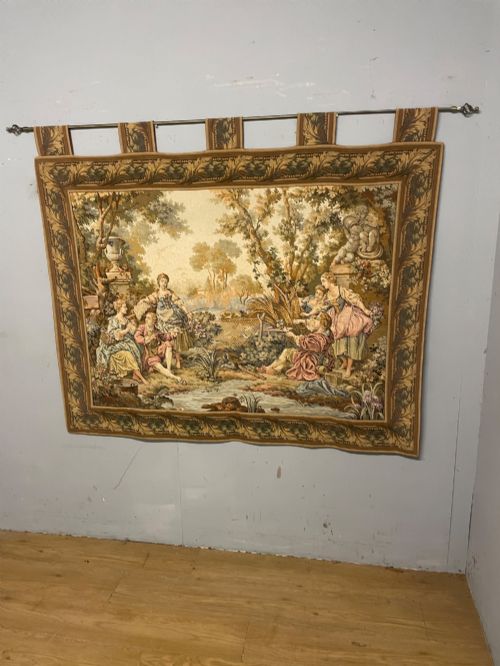
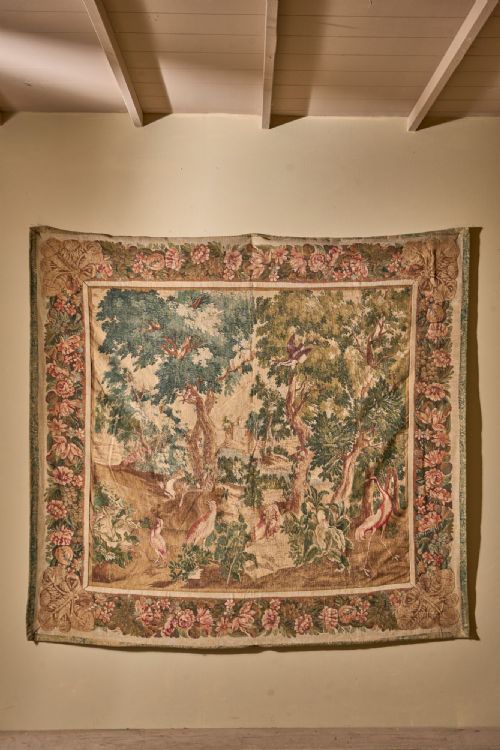
When you search for vintage french style tapestry, you encounter a distinct blend of textile art and period seating spanning from the eighteenth century through the early twentieth century. The selection ranges from large wall hangings and framed panels to armchairs, footstools, and settees upholstered in woven wool and cotton.
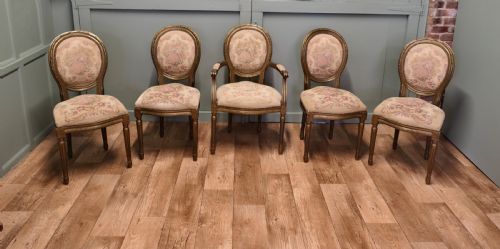
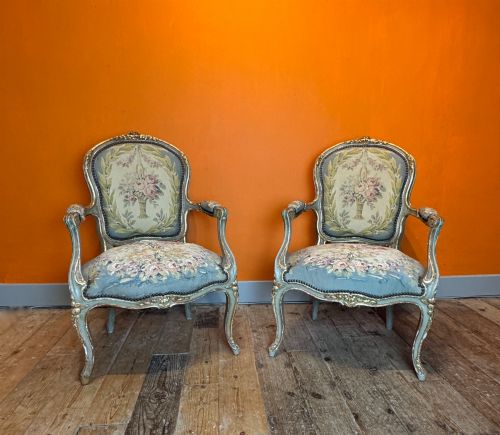
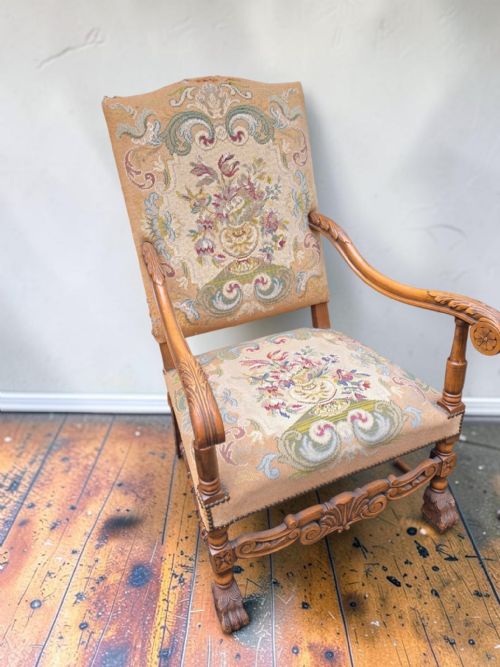
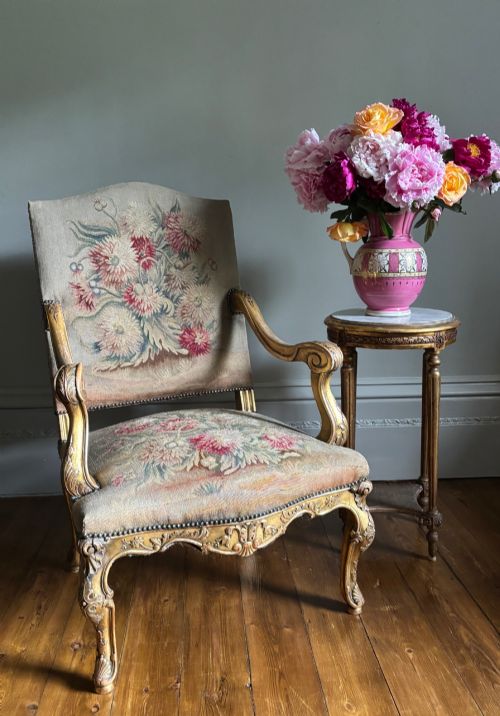
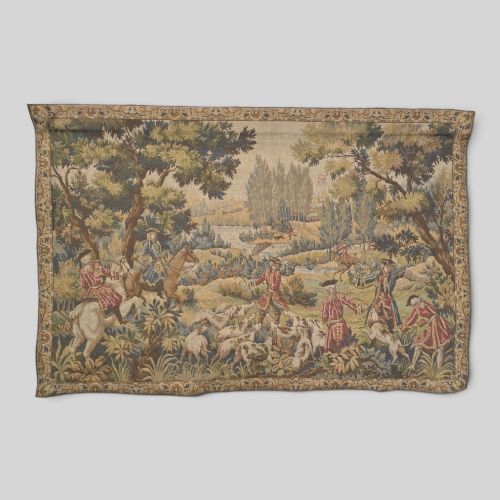
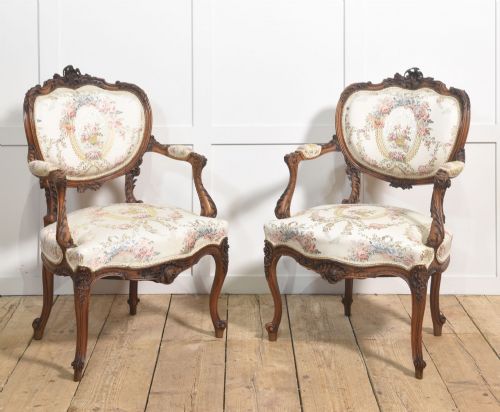
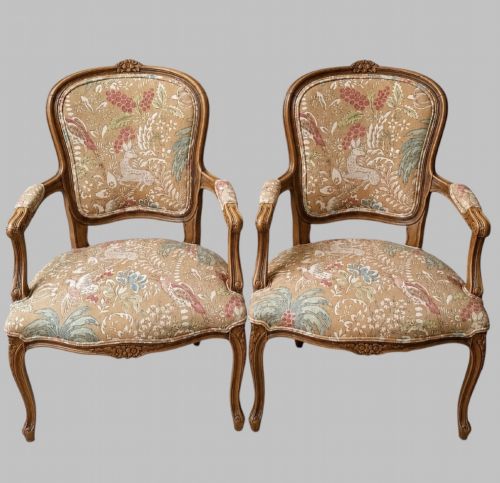
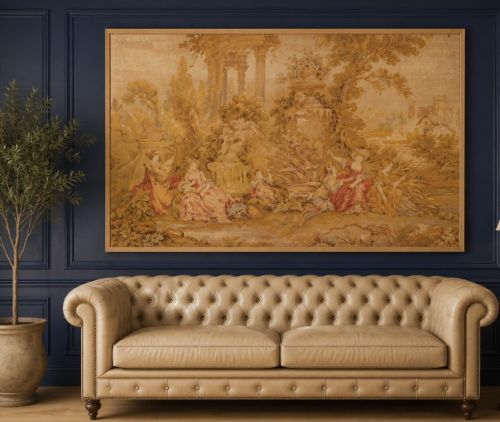
You are most likely to meet nineteenth-century walnut and painted armchairs upholstered in tapestry, alongside large wall hangings depicting pastoral or classical scenes. These items draw on historic design idioms like Louis XV Revival, Rococo, and French Baroque.
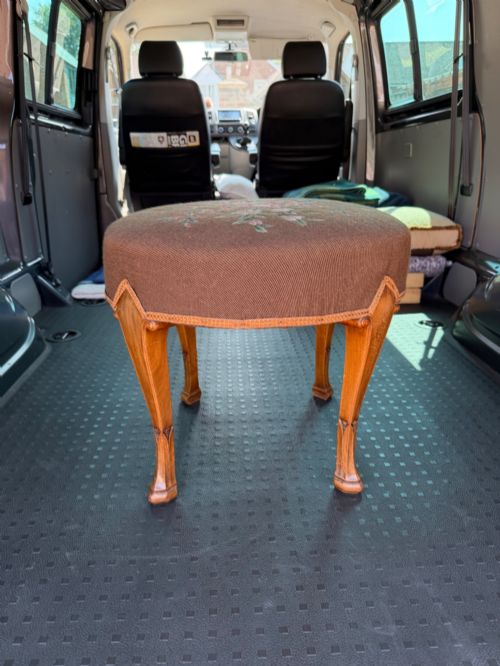
The category also encompasses smaller decorative elements such as cushions and rugs, providing versatile ways to integrate woven textiles into domestic spaces. Each piece reflects historic European interior aesthetics, whether through a grand wall hanging or a pair of carved salon chairs.
Materials and construction
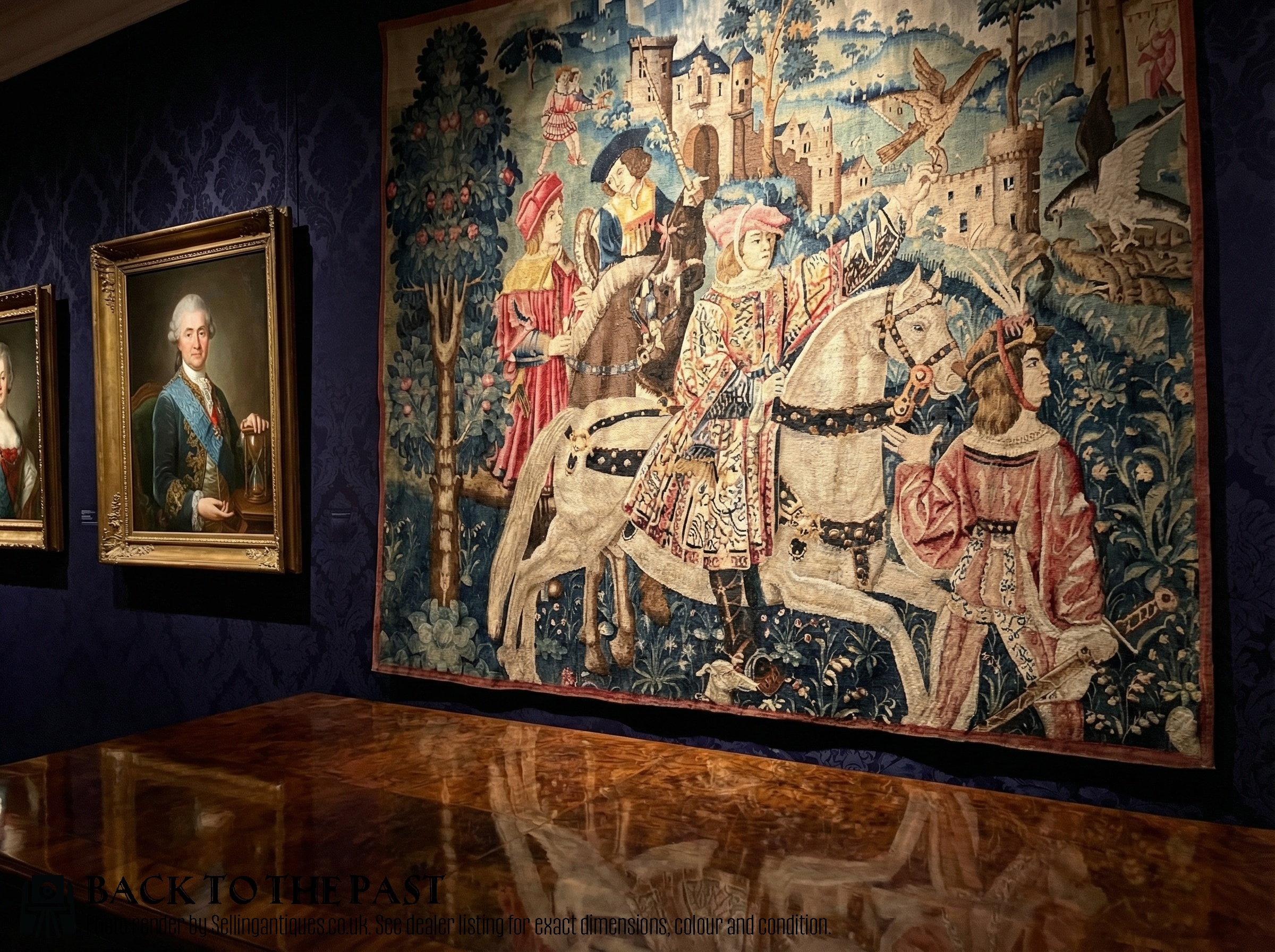
The textiles rely primarily on wool and cotton yarns, sometimes accented with silk threads, woven on looms to build complex pictorial scenes and repeating patterns. These panels were then mounted to walls, framed as artwork, or stretched over padded seat frames.
The structural supports utilise traditional timbers such as walnut, mahogany, and beech, frequently shaped with carved details, paint, or parcel gilding. Brass hardware and structural joining methods anchor the wooden frames of armchairs, sofas, and stools.
Upholstered forms combine heavy textile covers with internal padding secured to wooden bases, while wall-mounted pieces often incorporate backing boards or suspension channels for hanging.
Listings feature items spanning from the eighteenth century to the mid-twentieth century, constructed from wool, cotton, walnut, and mahogany.
Distinctions in quality
The standard of a woven panel depends on the density of the weave, the subtlety of the colour blending, and the complexity of the pictorial composition. Finer examples display intricate detail in figures and foliage, whereas simpler pieces utilise coarser yarns and broader, repetitive motifs.
On seating items, the crispness of the wood carving and the integrity of the gilded or painted surface separate standard production from superior craftsmanship. Chairs featuring balanced proportions, sturdy timber frames, and tightly fitted upholstery represent higher tiers of execution.
The harmony between the textile and its wooden mount also dictates overall excellence, as bespoke pairings or original combinations retain greater aesthetic cohesion than later adaptations.
The Vintage French Style Tapestry Glossary
- Tapestry
- A thick textile woven with coloured yarns to form pictorial designs, used historically for wall hanging or upholstery. It differs from printed fabric because the pattern is built directly into the weave.
- Fauteuil
- An open-arm armchair with upholstered back and seat, originating in France during the seventeenth century. The wooden armrests typically feature padded elbow rests.
- Parcel Gilt
- A surface decoration technique where selective areas of an object are gilded with gold leaf while other parts are painted or left as exposed wood.
- Aubusson
- A style of tapestry or rug originating from the French town of Aubusson, known for pastoral scenes and floral motifs. These woven works were traditionally produced on horizontal looms.
- Needlepoint
- A type of canvas work embroidery stitched by hand, often utilised interchangeably with woven tapestry in historical upholstery. It creates a rigid, durable surface ideal for heavy-use seating.
Vintage French Style Tapestry: Frequently Asked Questions
How do I hang a large wall tapestry safely?
Heavy wall hangings require a weight-distributing support system, such as a sturdy wooden batten or a concealed metal rod slipped through a sewn sleeve on the reverse.
Avoid hanging textiles directly in strong sunlight to prevent the wool and cotton fibres from fading over time.
Are these armchairs comfortable for daily use?
Period salon chairs and fauteuils feature firm stuffing and upright postures designed for formal sitting rather than lounging.
Their ergonomics reflect nineteenth-century standards of posture, so they suit occasional seating or reading corners best.
How do I clean tapestry upholstery?
Gentle surface dust removal using a soft brush or low-suction vacuum attachment preserves the delicate wool and cotton fibres.
Professional textile conservation cleaning is recommended for deep stains to avoid shrinking or distorting the weave.
Can I mix different revival styles together?
Combining pieces from the eighteenth, nineteenth, and early twentieth centuries works well if the shared palette of walnut, painted wood, and muted textile tones creates visual continuity.
Balancing large wall panels with smaller footstools or cushions prevents a room from feeling crowded by heavy textures.