

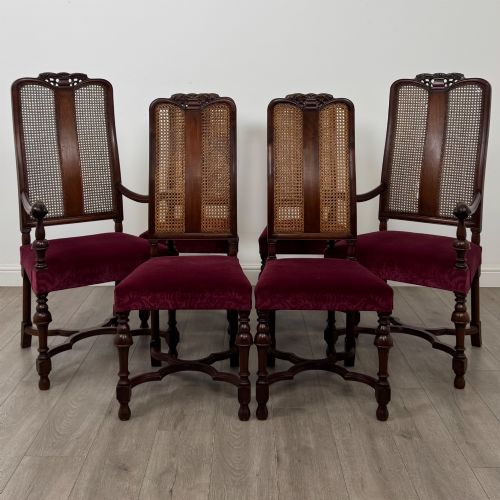
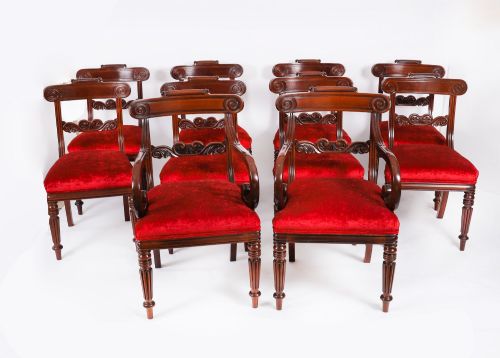
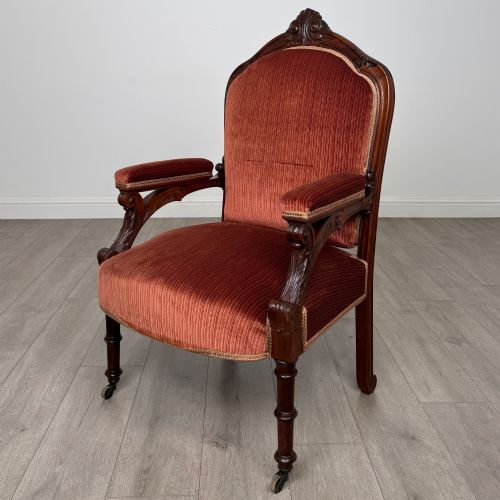
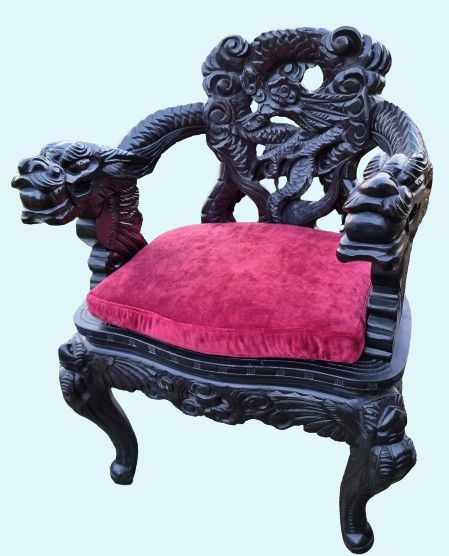
Red Velvet Carved Armchair
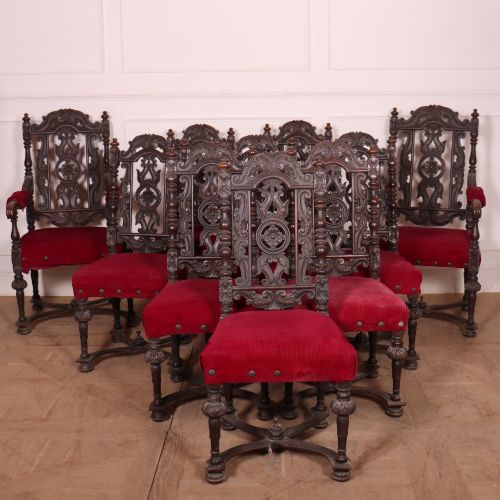
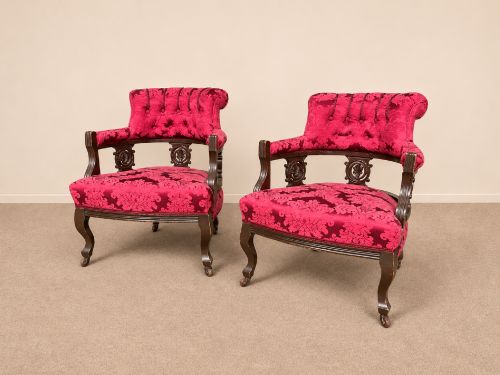
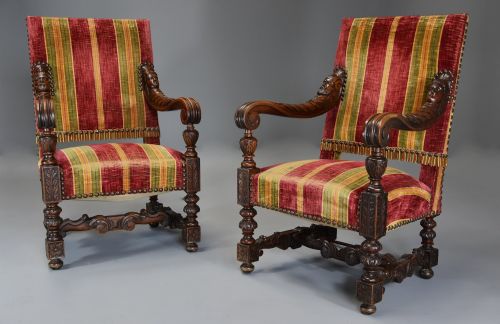
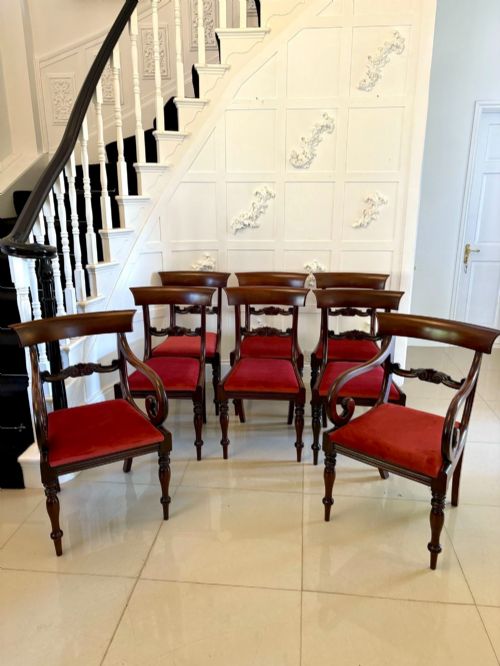
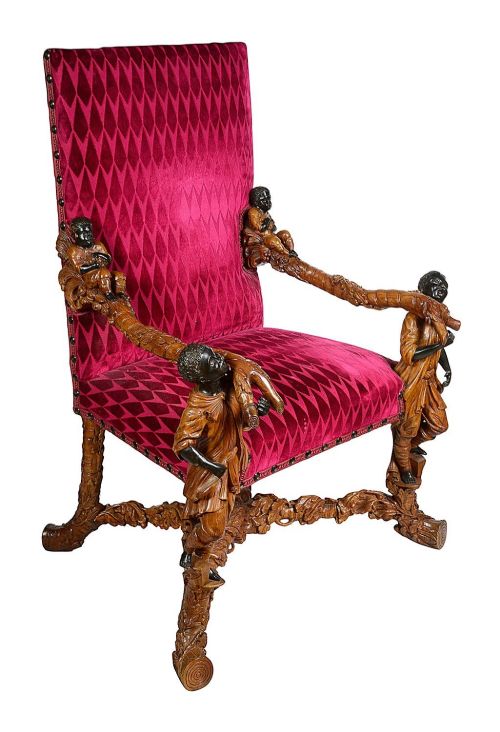
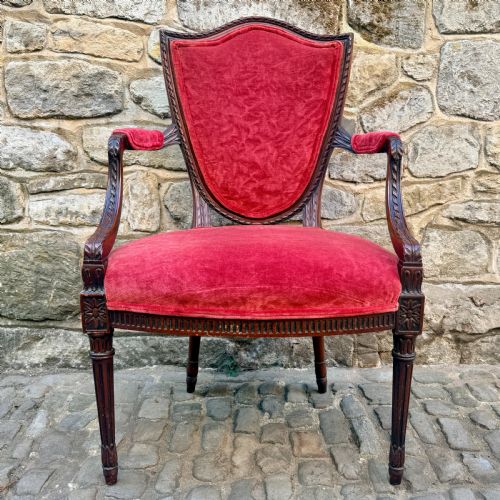
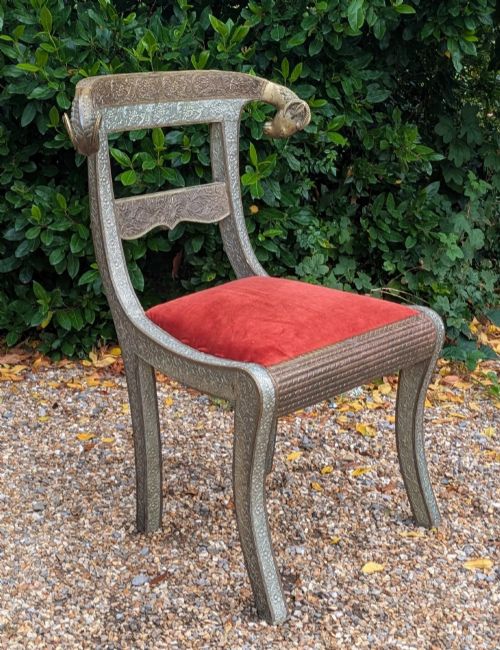
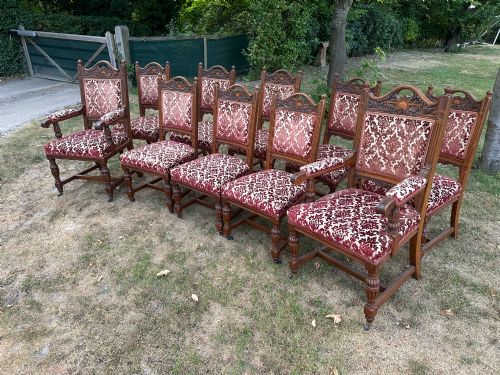
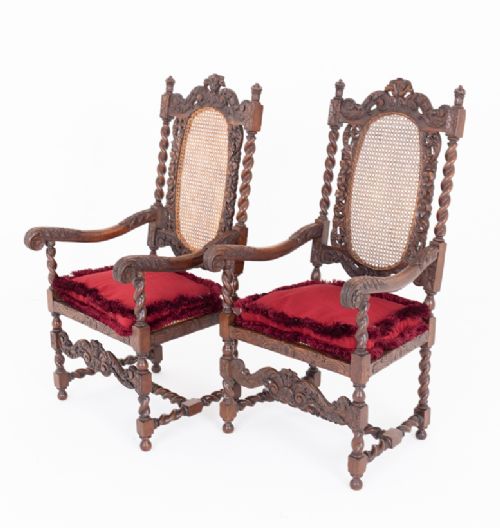
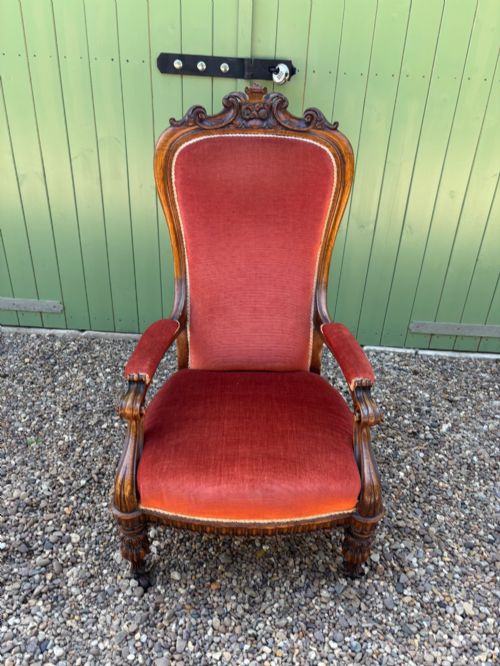
A red velvet carved armchair brings rich texture and elaborate woodwork together, offering a commanding focal point for any traditional interior.
Red Velvet Carved Armchair
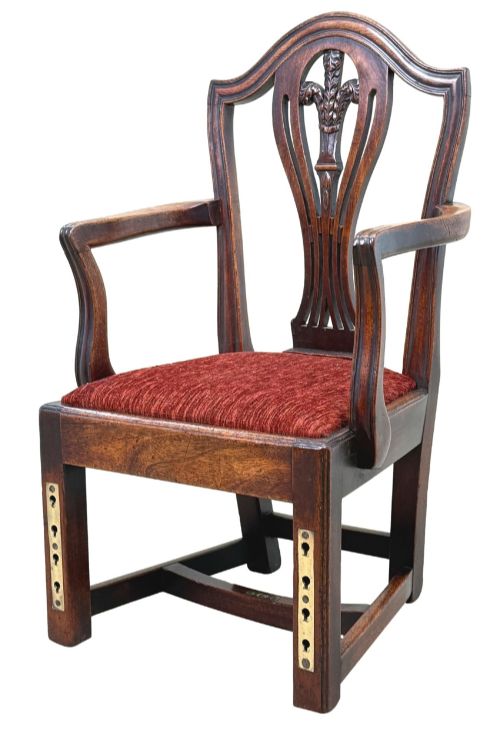
Many examples draw upon classical French and revival design vocabularies, featuring exposed wooden frames carved with floral motifs, scrolls, or structural moulding. These pieces range from decorative French giltwood seating to sturdy British oak and walnut reading chairs built for daily use.
Materials and construction methods
Makers constructed these frames using durable hardwoods such as mahogany, oak, walnut, and rosewood, ensuring structural integrity beneath heavy decorative carving. Gilding and polished timber finishes enhanced the natural grain or provided an opulent surface sheen suited to formal reception rooms.
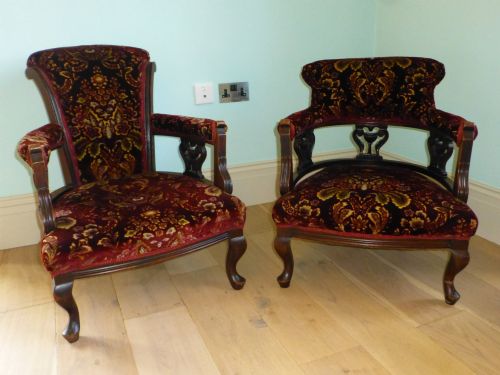
Upholstery relied on traditional stuffing methods secured beneath velvet textile layers, whilst open-arm variants utilised exposed timber joinery finished with hand-carved details. Structural stability came from mortise and tenon joints, augmented by turned or fluted legs characteristic of nineteenth-century cabinet making.
Red Velvet Carved Armchair Retail Price Guide 2026
Typical asking prices for red velvet carved armchair among the pieces listed under this phrase on Sellingantiques today, from the lower quarter to the upper quarter. They describe what is for sale here now, not the wider market.
Listings feature seating from the Victorian, Edwardian, and wider nineteenth-century periods, utilising mahogany, oak, walnut, giltwood, and velvet.
Distinguishing quality in carved seating
Quality rests primarily in the depth, crispness, and hand-carved execution of the wooden frame, where deep relief work indicates superior craftsmanship over shallow machine moulding. The choice of timber grain, the weight of the mahogany, oak, or walnut, and the integrity of the joinery dictate the longevity of the piece.
The sophistication of the silhouette, from restrained Regency lines to elaborate French Louis-style curves, separates standard utility furniture from high-status decorative seating. Furthermore, the harmonious proportion between the exposed carved woodwork and the upholstered velvet determines the overall visual balance.
The Red Velvet Carved Armchair Glossary
- Fauteuil
- An open-armed upholstered armchair with an exposed wooden frame originating in France. These seats typically feature padded armrests and a carved backrest.
- Giltwood
- Timber treated with gold leaf or metallic paint to create a brilliant decorative surface. This finish appears frequently on formal nineteenth-century revival chairs.
- Open armchair
- A seat featuring un-upholstered wooden armrests supported by structural uprights. This design showcases the carved timber grain alongside the cushioned seat.
- Wing back
- An upholstered armchair with side panels designed to shield the sitter from draughts. These pieces often feature deep padding and substantial wooden legs.
Red Velvet Carved Armchair: Frequently Asked Questions
How do I clean velvet upholstery?
Velvet requires gentle brushing with a soft-bristled tool to maintain the pile direction and remove surface dust without crushing the fabric.
Professional cleaning is recommended for deeper marks to preserve the texture of the textile.
Are these chairs suitable for daily use?
Many nineteenth-century and Victorian examples were built with robust hardwood frames designed for regular sitting in parlours and studies.
Checking the stability of the joints ensures the piece safely supports everyday domestic activities.
How do I identify a revival style?
Revival pieces incorporate decorative motifs and structural proportions borrowed from earlier periods like the Louis XVI or Jacobean eras.
Cabinet makers during the Victorian and Edwardian periods frequently reinterpreted these historical designs using contemporary workshop techniques.