


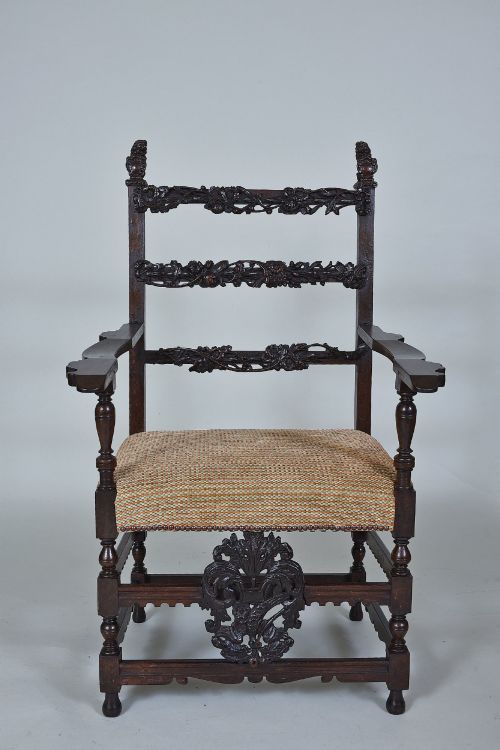


Italian Baroque Armchairs
Italian baroque armchairs bring monumental presence and rich carving into a room, offering tactile walnut frames and gilded surfaces.
Italian Baroque Armchairs
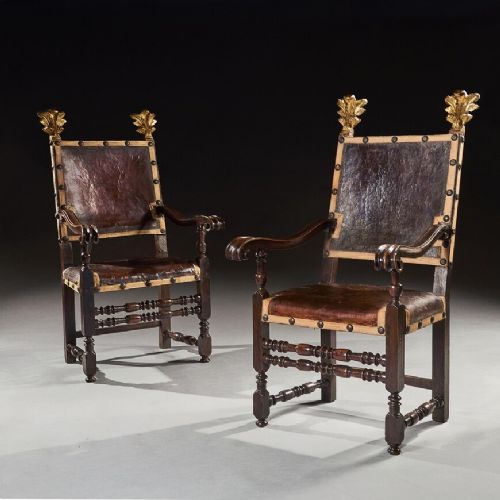
Italian baroque armchairs span several centuries, with pieces originating from the seventeenth and eighteenth centuries alongside later revival works from the nineteenth century. Buyers encounter robust walnut structures, often augmented by parcel-gilt details or full gilding over gesso.
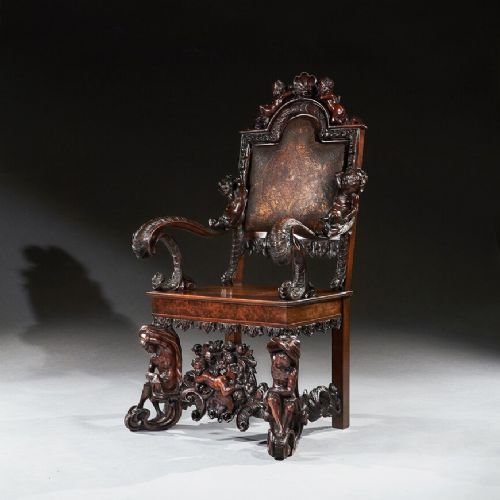
Forms include large scale pairs and singular seating examples, featuring carved head rails, open arms, and occasionally bobbin turned elements. Alongside strict baroque interpretations, related styles such as Italian Rococo, Renaissance Revival, and Venetian gondola chairs appear in the selection.
How they were made
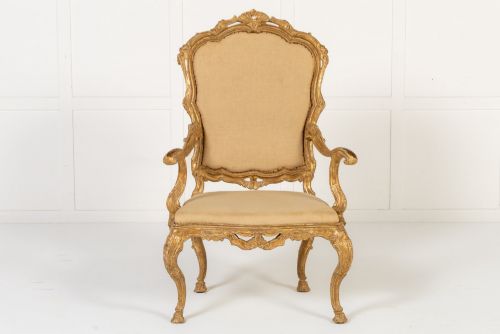
Carvers shaped solid walnut frames, utilising relief techniques to build complex ornamentation on head rails and arm supports. Giltwood and silver gilt examples received layers of gesso before application of gold or silver leaf, creating reflective surfaces that caught candlelight.
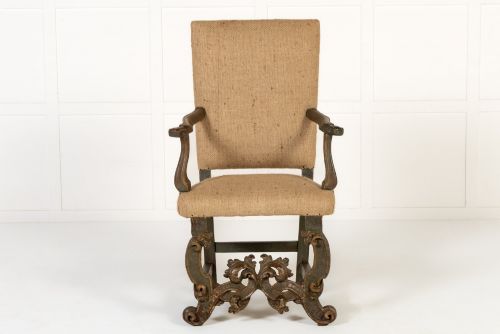
Upholstery relied on traditional textiles, leather, and hessian fixed directly to the timber frames. Joinery methods employed pegged mortise and tenon construction to support the heavy scale of these seating forms.
Listings feature walnut, giltwood, leather, and textiles across seventeenth, eighteenth, and nineteenth century Italian armchairs.
What varies in quality
Depth and crispness of the wood carving distinguish exceptional examples from standard production, particularly on prominent elements like head rails and arm terminals. The preservation of original gilding and the integrity of the underlying gesso layers heavily influence the character of gilded pieces.
Proportion and scale dictate the visual impact of the armchair, separating grand throne chairs and large scale pairs from more modest domestic seating. The choice of primary timber, especially dense and figured walnut, plays a defining role in structural refinement.
Andrea Brustolon
The Italian Baroque Armchairs Glossary
- Giltwood
- Wood coated with gold leaf over a prepared gesso ground. This finish provides a brilliant reflective surface characteristic of high status seating.
- Gesso
- A plaster mixture applied to wood frames to create a smooth surface for gilding. It holds fine detail for carved ornamentation.
- Parcel-gilt
- Partially gilded woodwork where specific carved details are highlighted in gold leaf against a contrasting stained or painted walnut ground.
- Bobbin turned
- Wood turned on a lathe to form a sequence of rounded spheres or discs resembling bobbins. This technique appears on structural stretchers and legs.
- Savonarola chair
- A folding chair constructed from multiple intersecting curved wooden slats forming a basket-like X frame. It derives from Renaissance Italian seating traditions.
Italian Baroque Armchairs: Frequently Asked Questions
What periods do these armchairs cover?
The pieces span authentic seventeenth and eighteenth century origins alongside nineteenth century revival iterations. Makers across these eras reinterpreted classical motifs using traditional timber and gilding methods.
Buyers find seventeenth century walnut constructions sitting alongside eighteenth century giltwood examples and later nineteenth century interpretations influenced by earlier master carvers.
How were these chairs used historically?
These imposing seats functioned as ceremonial throne chairs and prominent furnishings in grand palazzos and reception rooms. Their scale and rich ornamentation signalled status and authority within aristocratic interiors.
Unlike everyday seating, they anchored formal spaces where guests gathered, positioned to display elaborate carving and gilded surfaces to maximum effect.
How do I care for antique gilded wood?
Preserving giltwood surfaces requires gentle dusting with a soft, dry brush to prevent abrasion of the delicate gold leaf layer. Avoid liquid cleaners and moisture, which can destabilize the underlying gesso preparation.
Keeping the chairs away from direct sunlight and stable environmental conditions protects both the fragile metallic finishes and the aged walnut framing beneath.
How do I distinguish baroque from rococo pieces?
Baroque design emphasises symmetry, monumental scale, and heavy architectural carving intended to project power and solemnity. Walnut frames and gilt surfaces are punctuated by robust scrolling forms and dense foliage.
Italian Rococo introduces asymmetrical cartouches, lighter proportions, and playful C scrolls. The carving tends toward energetic, fluid movement rather than the rigid majesty typical of earlier baroque work.