
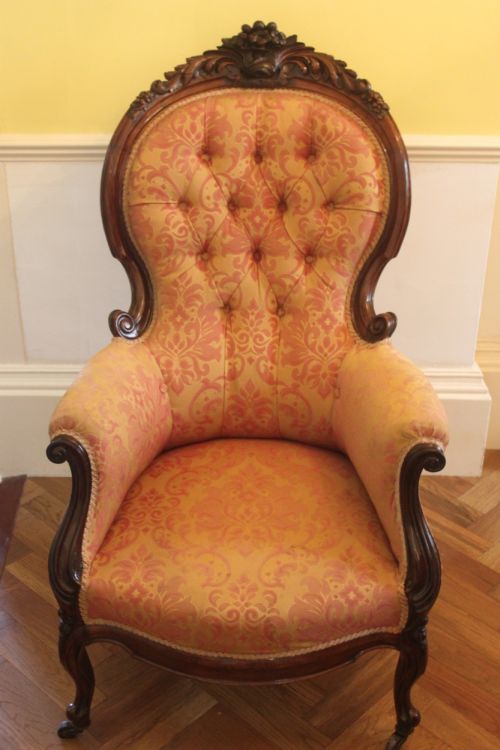
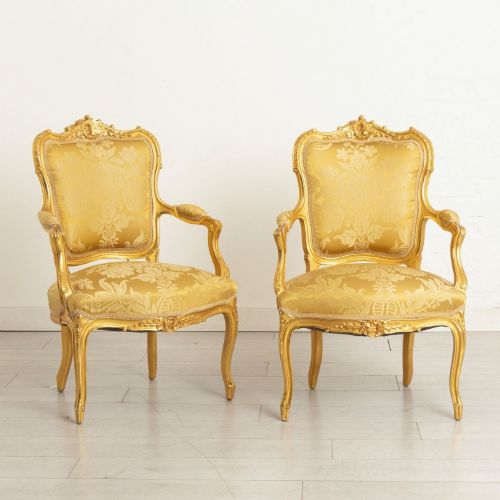


Rococo Damask Armchairs
Rococo damask armchairs combine sweeping carved walnut and giltwood frames with rich textile upholstery, bringing continental theatre into a Victorian parlour.
Rococo Damask Armchairs
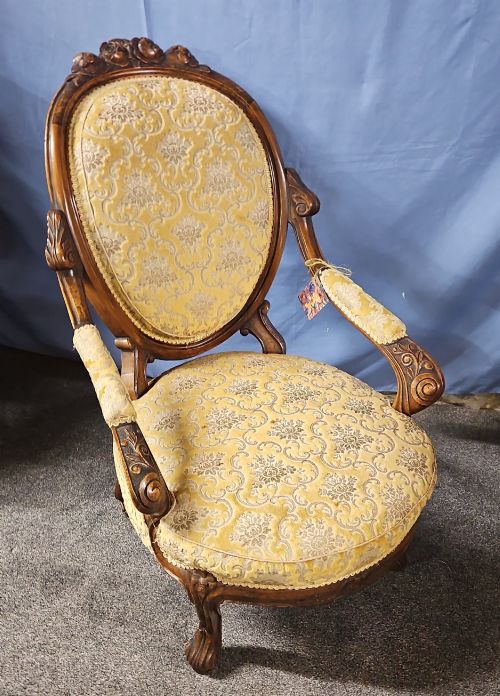
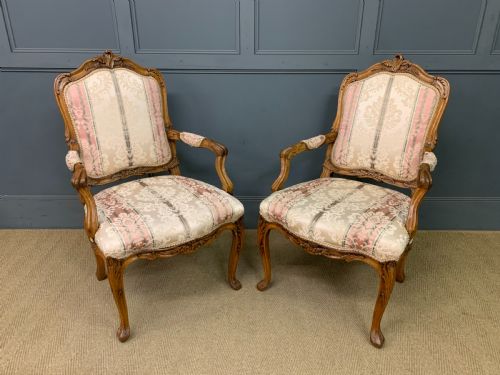
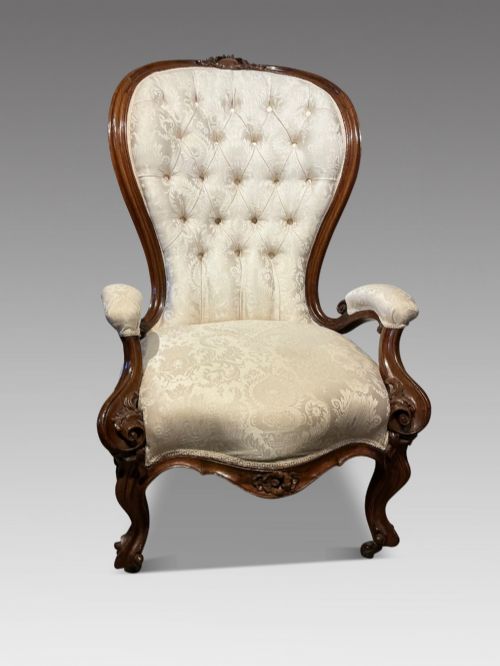
Rococo damask armchairs take many forms across this selection, from single gentleman's seats and nursing chairs to pairs of open armchairs and complete three-piece salon suites. These pieces emerge primarily from Victorian workshops and French revival studios, drawing on earlier Louis style traditions.
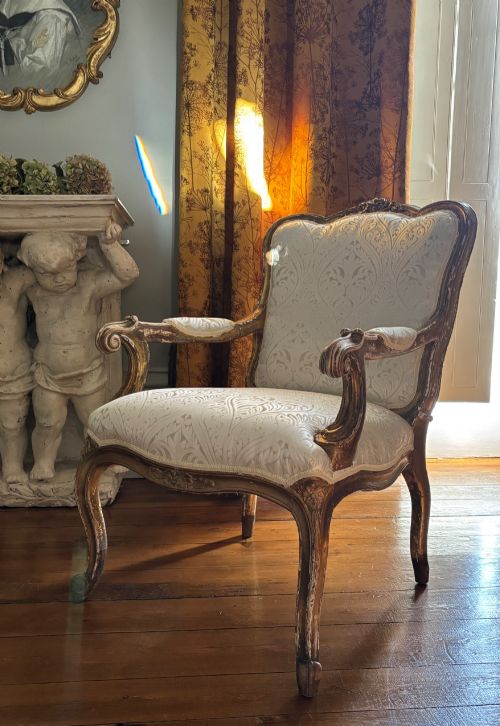
The prevailing profile relies on shaped wooden frames upholstered in damask fabric, silk, or complementary textile coverings. Walnut and giltwood form the structural backbone of these seats, supporting scrolled arms and cabriole legs.
Buyers frequently encounter nineteenth-century interpretations alongside eighteenth-century originals, including Dutch marquetry high backs and Italian walnut armchairs. The common thread uniting these objects is the interplay between carved woodwork and textured damask upholstery.
How they were made
Cabinetmakers shaped the structural frames from solid walnut, rosewood, or timber coated in giltwood, employing hand-carving techniques for the characteristic asymmetrical curves. Joinery relied on traditional mortise and tenon methods to bear the weight of the upholstered components.
Upholstery techniques combined traditional stuffing with damask fabric or silk texturing, secured directly to the wooden rails with brass tacks or webbing. Gilding involved applying thin metal leaf over a prepared base on selected frames to achieve a polished metallic finish.
Listings feature walnut, giltwood, and rosewood frames paired with damask fabric and silk textiles across eighteenth and nineteenth-century periods.
What varies in quality
The distinction between tiers rests upon the depth and crispness of the hand-carving on the walnut or giltwood frame. Superior examples display fluent, undercut foliage and scrolls executed directly in the timber without mechanical shortcuts.
Material selection dictates the upper range, particularly the choice of dense hardwoods and the quality of the damask upholstery textiles. Refinements in proportion and the harmony between the carved frame and the fabric define the most accomplished pieces.
Blaise Maucuy
The Rococo Damask Armchairs Glossary
- Fauteuil
- An open-framed armchair originating in France, characterised by upholstered armrests and exposed wooden structure. This form provides a lighter visual presence than fully upholstered versions.
- Bergere
- A closed armchair featuring upholstered sides enclosed by the wooden frame. These seats offer a solid enclosed shape.
- Damask
- A reversible figured fabric traditionally woven on a loom to create patterns through contrasting warp and weft threads. The textile provides the tactile surface texture seen on these chairs.
- Giltwood
- Timber coated with gold leaf or metallic powder applied over a prepared gesso ground. This treatment gives the carved frame a lustrous metallic sheen.
- Cabriole leg
- A furniture leg that curves out in a convex arc and tapers inward in a concave arc, ending in a pad or scroll foot. This shape defines the stance of many revival pieces.
Rococo Damask Armchairs: Frequently Asked Questions
How do I identify a revival piece?
Revival chairs from the nineteenth century often copy eighteenth-century French models, using machine-assisted joinery alongside hand-carving. Closer inspection of the timber ageing and tool marks reveals the period of manufacture.
Examine the upholstery webbing and internal padding materials, as nineteenth-century methods differ significantly from eighteenth-century workshop practices.
Are these chairs suitable for daily seating?
Most antique open armchairs and salon seats accommodate regular sitting, provided the internal webbing and joints remain stable. Some delicate giltwood or rosewood examples function better as occasional display pieces.
Consider having a professional conservator reinforce internal joints if you plan to use the seating frequently in a busy room.
What is the difference between a salon suite and an armchair?
A salon suite comprises a matching set of seating, typically including a small sofa alongside a pair of armchairs or side chairs. Single armchairs stand alone as individual statement pieces.
Suites offer a cohesive design scheme for a drawing room, whereas single chairs act as focal points within an existing arrangement.
How should I care for damask upholstery?
Protect damask fabric from direct sunlight to prevent the textile fibres from fading and degrading over time. Regular gentle vacuuming with a soft brush attachment removes surface dust safely.
Avoid harsh chemical cleaners on silk or woven textile covers, consulting a specialist textile conservator for professional cleaning.