



Red Turkmen Torba Rug
When searching for a red turkmen torba rug, collectors encounter tribal textile bags woven in Central Asia during the nineteenth and early twentieth centuries.
Red Turkmen Torba Rug
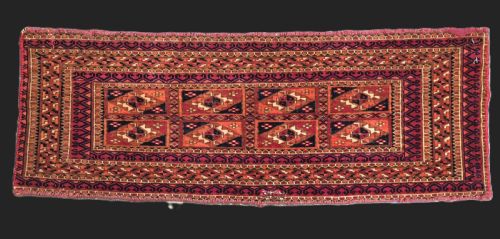
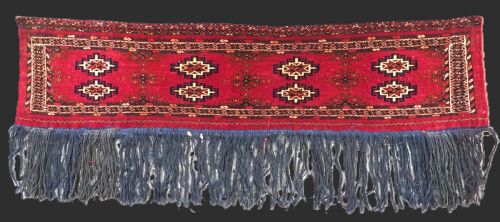
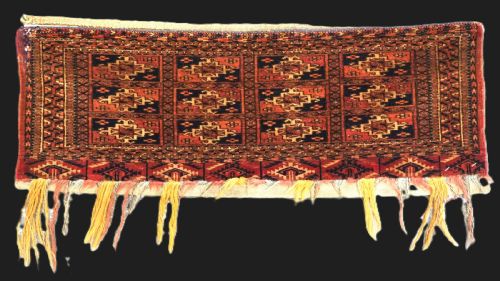
A red turkmen torba rug is a tribal storage bag or bag face originating from Central Asian nomadic groups such as the Tekke, Yomut, Saryk and Ersari tribes. These textiles were traditionally used within tents for household storage and dowry purposes, often featuring characteristic guls and geometric motifs.
Most examples found on this page date from the mid-nineteenth century to the early twentieth century, spanning periods from the 1850s to the 1920s. Buyers will find both complete pieces retaining their plain weave backs and tassels, and individual bag faces mounted or preserved as wall hangings.
How They Were Made
These textiles were constructed using wool, hand-spun wool, and cotton foundations, frequently embellished with natural dyes and occasional silk highlights. Artisans employed dense pile weaving techniques alongside flatweave and embroidered methods to produce durable household bags.
The construction often incorporates intricate detailing such as grouped guls, ivory grounds, and banded flatweave designs. Surviving specimens demonstrate a high level of tribal craftsmanship, utilising locally sourced materials suited to nomadic life.
Materials documented across the inventory include wool, hand-spun wool, cotton, natural dyes, and occasional silk highlights.
What Varies in Quality
Quality in these tribal weavings depends heavily on the fineness of the weave and the precision of the drawing. Finer knots and crisp execution of traditional motifs separate standard utility pieces from exceptional tribal artistry.
The vibrancy and depth of the natural dyes, alongside the survival of original structural elements like backs and tassels, heavily influence the character of the piece. The overall balance of the design and the clarity of specific gul arrangements determine the visual impact.
Tekke Tribes·Yomut Tribes·Saryk Tribes·Ersari Tribes
The Red Turkmen Torba Rug Glossary
- Torba
- A small Turkmen storage bag traditionally used for household goods inside a yurt. These pieces were often woven as part of a bride's dowry.
- Gul
- A repeating medallion or primary tribal motif used in Turkmen rug design. Different tribal groups utilised distinct gul patterns to signal their heritage.
- Mafrash
- A larger rectangular storage bag or storage chest face. These are closely related in structure and function to torbas.
- Asmalyk
- A pentagonal trapping used to decorate camel flanks during wedding processions. Elements of this style occasionally appear in related tribal bag designs.
- Kap
- A general term for a bag or container in tribal weaving. Such items served practical storage functions within nomadic settlements.
Red Turkmen Torba Rug: Frequently Asked Questions
What was a torba used for?
These bags served practical storage functions inside traditional nomadic tents, holding household items, bedding, or personal possessions. Many were also created as significant components of a bride's dowry.
Their sturdy construction accommodated the mobile lifestyle of Central Asian tribes, while their intricate designs displayed tribal identity and status within the community.
How do you distinguish between Tekke and Yomut torbas?
Distinctions rely primarily on the geometry of the primary guls and the surrounding minor motifs. Tekke examples frequently feature orderly rows of octagonal guls on a rich red ground.
Yomut pieces often display alternative motifs such as kepse or kepsut designs, alongside distinctive banded flatweave structures and varied border arrangements.
Are most listings complete bags or just faces?
The listings comprise a mixture of complete storage bags retaining their original plain weave backs and isolated bag faces. Many surviving examples were separated from their backs over time or adapted for display.
Pieces complete with backs, original bindings, and tassels are documented in nineteenth-century examples, offering a more complete picture of their original utility.
How should I display a textile bag at home?
These flat pieces adapt well to being hung on walls as textile art, provided they are supported evenly across the upper edge. Proper mounting protects the structure from undue tension and weight.
Keeping them away from direct sunlight preserves the natural dyes and wool fibres, ensuring the traditional colours remain stable over time.