

Red Silk Rug
A red silk rug brings together rich textiles and intricate embroideries from Central Asia and Persia, offering vibrant colour and historic craftsmanship.
Red Silk Rug
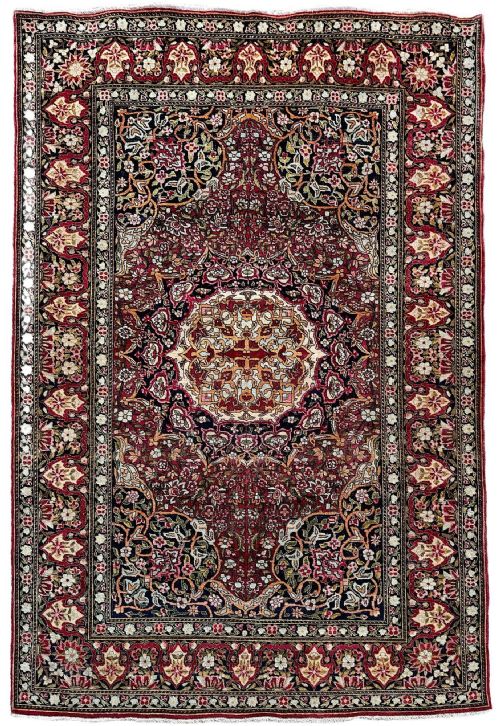
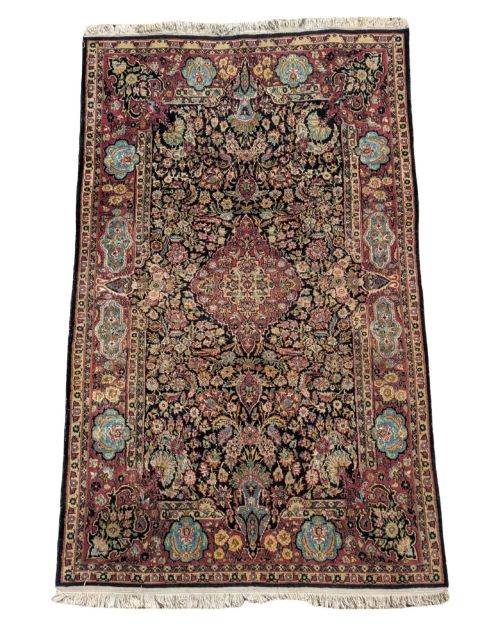
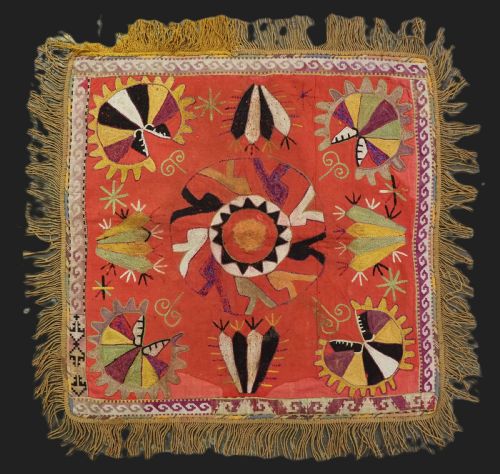
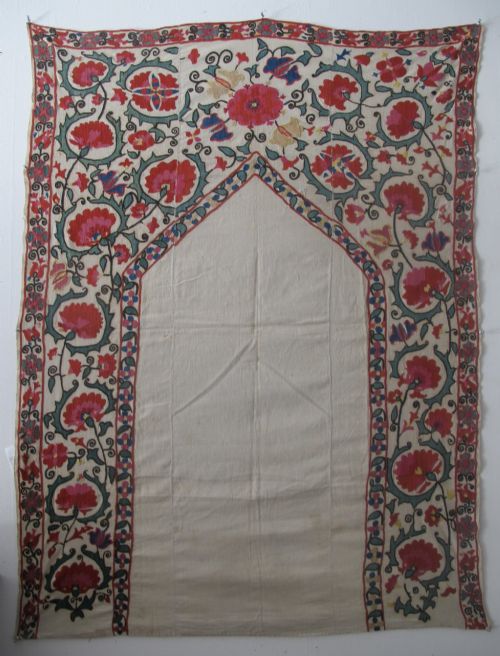
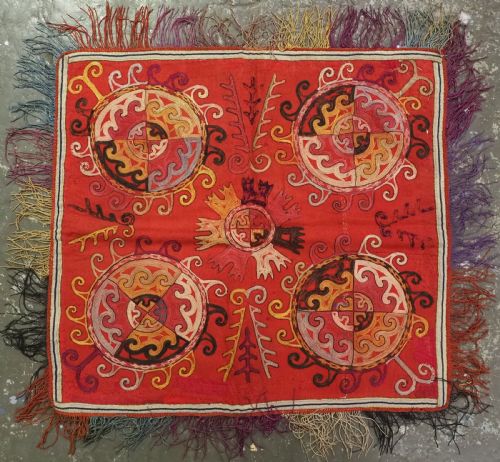
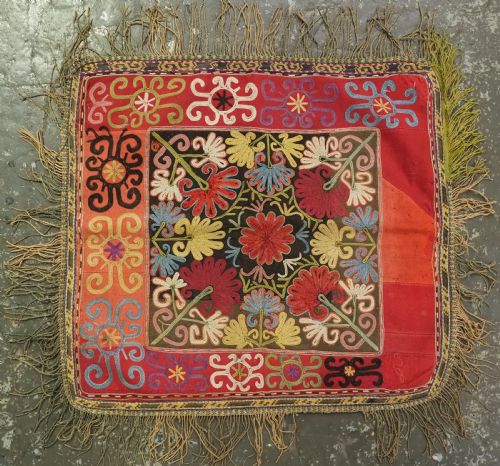
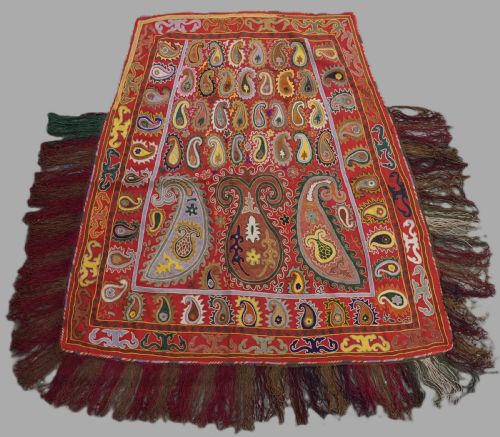
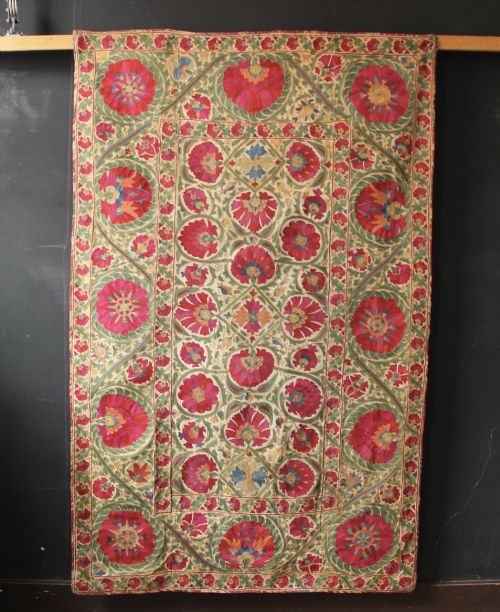
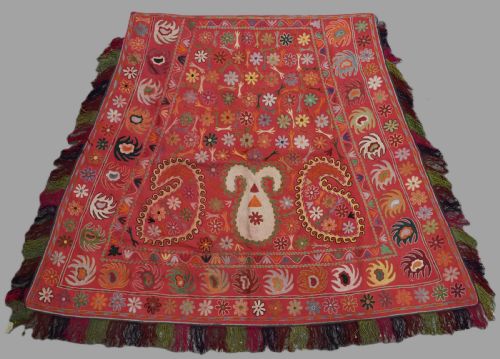
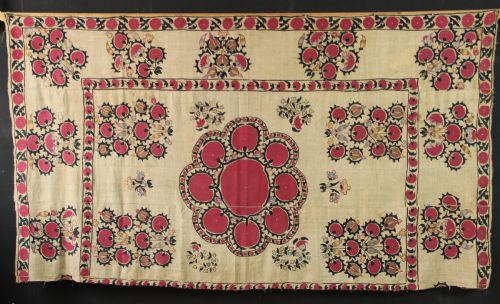
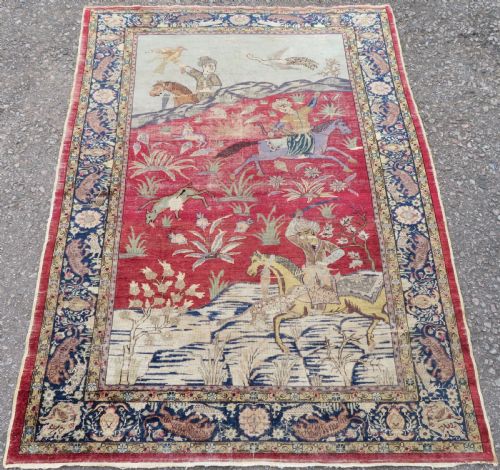
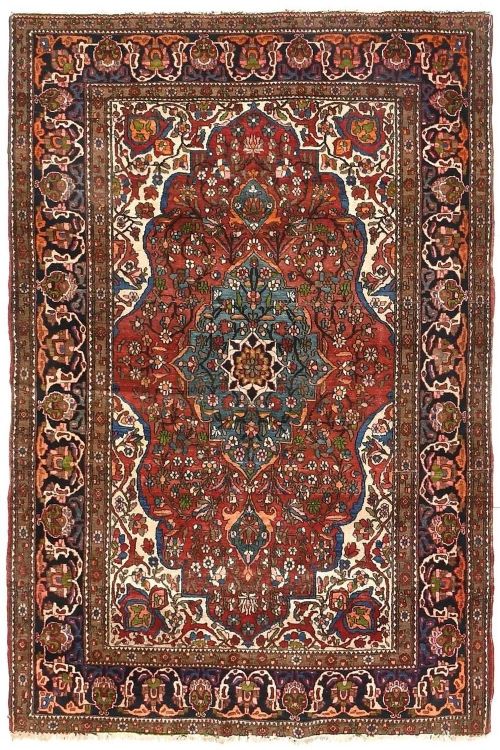
A red silk rug search brings up a diverse group of antique textiles, carpets, and wall hangings originating primarily from Central Asian and Persian workshops. Pieces range from nineteenth-century Uzbek dowry embroideries and saddle covers to Persian knotted pile rugs with silk highlights.
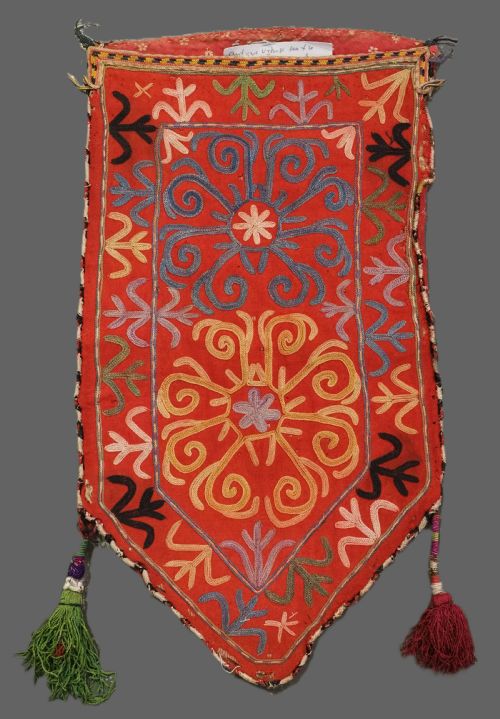
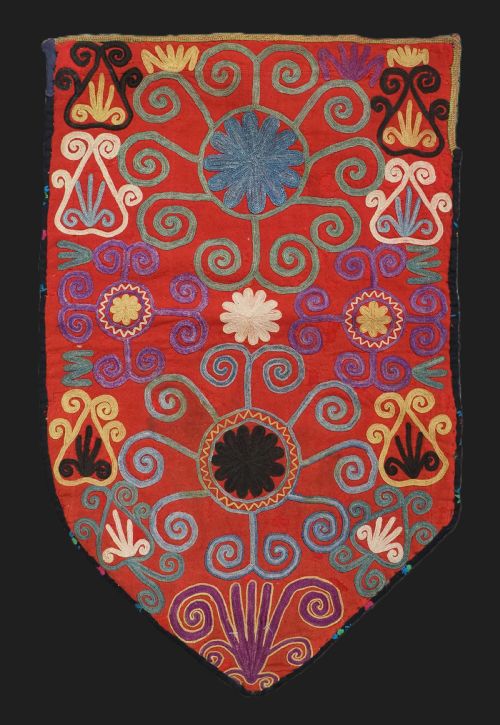
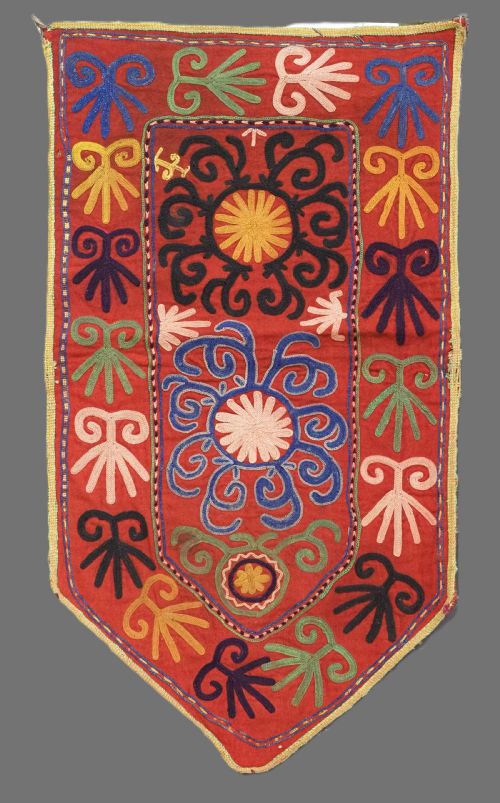
Buyers will frequently encounter Central Asian tribal pieces, such as Lakai ilgich hangings and Bokhara suzanis, alongside Persian city carpets from Isfahan, Qum, and Kashan. Many examples combine silk thread embroidery or pile upon wool, cotton, or felt grounds.
The assortment spans a chronological range from the mid-nineteenth century through to the early decades of the twentieth century. Forms vary from functional floor coverings to ceremonial horse covers and vertical wall hangings.
How they were made
Materials recorded in the evidence rely heavily on silk, wool, and cotton, often utilising metallic threads and felt grounds for added texture. Artisans employed hand-knotting for pile carpets and intricate needlework for embroidered panels and wall hangings.
Techniques range from classical Persian rug weaving with silk highlights to specialised applique work on red felt seen in Persian Rasht embroideries. Central Asian pieces frequently feature fine silk thread embroidery on wool or cotton foundations, executed by tribal makers.
Listings span the nineteenth and early twentieth centuries, featuring materials such as silk, wool, cotton, and felt.
What varies in quality
The upper tier of these textiles is distinguished by the fineness of the needlework, the complexity of the design, and the integrity of the materials. Dense silk embroidery and well-executed pictorial or geometric motifs elevate individual pieces.
Variations also stem from regional traditions, where master workshops in cities like Isfahan or Kashan produced tightly knotted structures, while tribal groups like the Lakai created expressive, richly textured embroideries.
The Red Silk Rug Glossary
- Suzani
- An embroidered tribal textile originating from Uzbekistan and surrounding regions, typically worked in silk on a cotton or wool ground. These large panels were traditionally made as part of a bride's dowry.
- Ilgich
- A Central Asian embroidered hanging, often produced by the Lakai tribe. They serve decorative and ceremonial functions.
- Torba
- A small storage bag or trapping produced by Turkmen and related tribal groups. They frequently feature detailed geometric patterns and fringe.
- Adras
- A traditional Central Asian fabric woven with a silk warp and a cotton weft. This semi-silk material provides a distinct ground for ikat patterning.
- Jajim
- A flat-woven textile produced in narrow strips and joined together. They are often utilised as covers or decorative floor coverings.
Red Silk Rug: Frequently Asked Questions
Where were these rugs and textiles made?
The pieces originate across Central Asia and Persia, with significant contributions from Uzbekistan, Turkey, and weaving centres such as Isfahan, Qum, and Kashan.
Craftsmanship reflects the distinct cultural traditions of tribal groups like the Lakai and urban Persian workshops active during the nineteenth and early twentieth centuries.
How are wall hangings displayed safely?
Hanging antique textiles requires distributing the weight evenly across the piece to prevent strain on the historical fabric and threads. Methods often involve professional mounting or stitching onto a supportive fabric sleeve.
Direct sunlight should be avoided to protect the natural dyes and delicate silk highlights from fading over time.
What is the difference between a suzan and a pile rug?
Suzanis are embroidered textiles created with needlework on a foundation fabric, whereas pile rugs are constructed by knotting yarn around warp threads on a loom.
While pile rugs are designed for floor use, many suzanis and embroideries were intended as wall hangings, dowry items, or ceremonial covers.
How can I identify tribal pieces?
Tribal works, such as those from the Lakai or Tekke tribes, typically feature bold geometric designs, asymmetry, and expressive needlework techniques. Their construction often incorporates local materials like felt grounds and varied silk highlights.
In contrast, city carpets from centres like Kashan or Isfahan display formal floral medallions and symmetrical, highly refined floral compositions.