


Vintage Senneh Rug
A vintage senneh rug brings genuine Persian artistry into a room, offering intricate geometric patterns and wonderful texture woven by skilled hands.
Vintage Senneh Rug
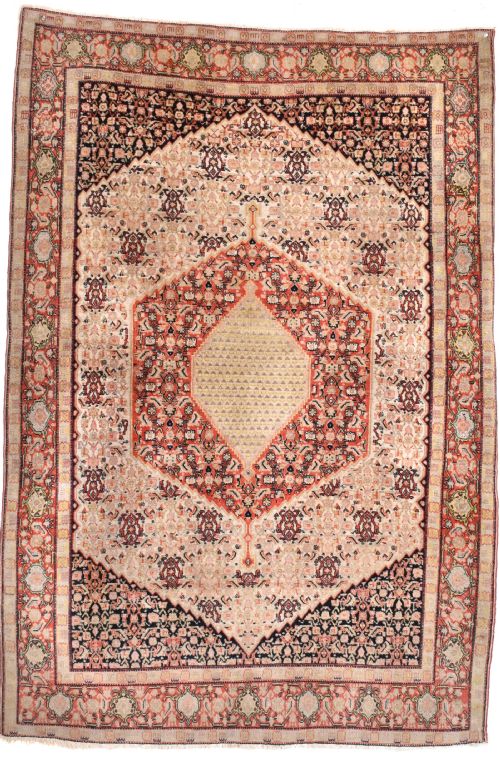
When you search for a vintage senneh rug, you are looking at woven textiles originating from West Persia, encompassing standard rugs, runner rugs, and area rugs. These pieces reflect traditional Persian and Persian tribal designs that have been passed down through generations.
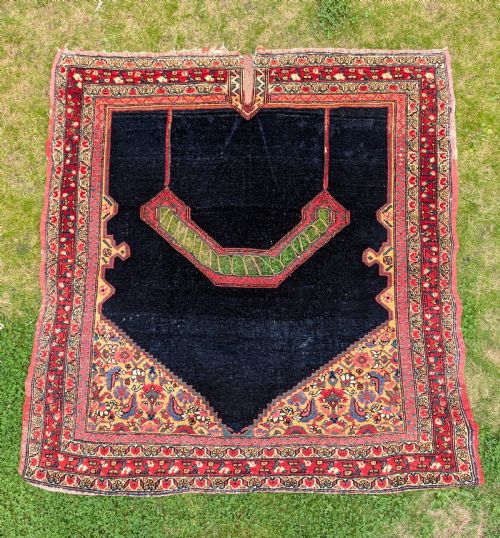
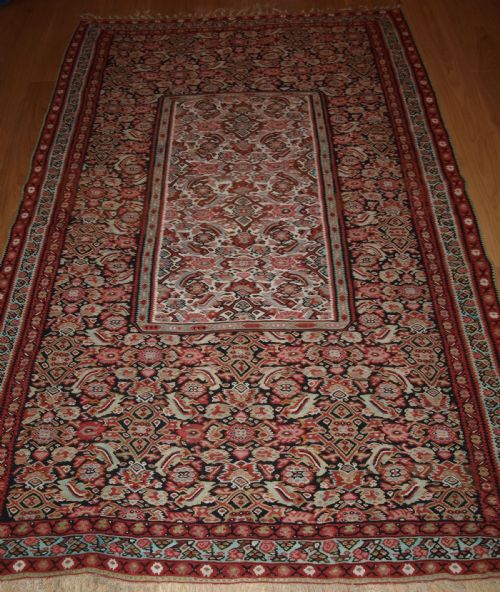
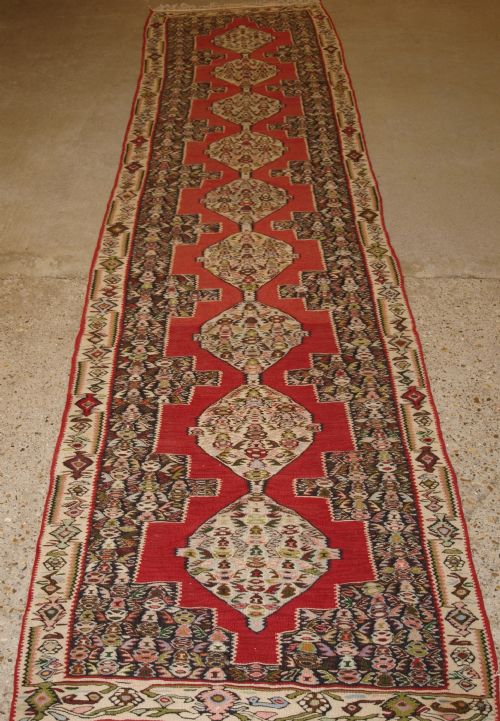
You are most likely to meet pieces dating from the nineteenth century up through the nineteen-thirties, including specific forms like kilims and saddle covers. The designs often feature characteristic motifs such as linked medallions.
The selection ranges from compact formats to larger formats like kelleh carpets and narrow runner rugs. Each piece carries the distinct cultural heritage of Kurdish and Qajar craftsmanship from the region.
How they were made
Weavers constructed these textiles using natural materials, predominantly wool and cotton, alongside hand-spun wool for the pile or flatweave structure. Certain finer examples utilised silk to achieve delicate detail and a distinct sheen.
The construction methods combine traditional knotting and flatweaving techniques typical of West Persian workshops and tribal groups. Artisans worked on vertical looms, carefully beating down the wool or silk tufts to create dense, durable surfaces.
The documented periods span from eighteen-fifty through to nineteen-thirty.
What varies in quality
The distinction between standard examples and finer pieces lies in the precision of the weave and the complexity of the design. Tighter knot counts and more intricate geometric layouts indicate superior skill during production.
Materials also dictate the tier of a piece, with finely spun wool and occasional use of silk representing a higher standard of craftsmanship. The clarity and preservation of the traditional design further separate ordinary weaves from exceptional items.
The Vintage Senneh Rug Glossary
- Kilim
- A flatwoven textile produced without a pile. These pieces rely entirely on the warp and weft threads to form crisp geometric patterns.
- Kelleh
- A large format rectangular carpet. This term describes room-size rugs that are substantially longer than they are wide.
- Kurdish
- Pertaining to the ethnic group inhabiting parts of West Persia. Kurdish weavers are renowned for robust construction and distinctive tribal motifs.
- Qajar
- Pertaining to the Persian dynasty ruling from the late eighteenth to the early twentieth century. This period produced specific artistic styles visible in textile ornamentation.
- Saddle cover
- A specialised smaller textile designed for equine use. These items feature specific shaping or sizing suited to animal transport.
Vintage Senneh Rug: Frequently Asked Questions
Where were vintage senneh rugs made?
These pieces originate from West Persia, specifically associated with Kurdish weaving traditions and the broader Qajar cultural sphere. The town of Senneh and its surrounding districts served as major centres for this production.
Local artisans developed distinct geometric and medallion vocabularies that set these textiles apart from other Persian regional outputs.
How do I clean a wool rug?
Gentle vacuuming without a rotating brush helps remove loose dirt from the wool fibres without damaging the foundation. Professional specialist cleaning is recommended for deeper maintenance.
Avoiding excessive moisture and direct sunlight preserves the natural dyes and integrity of the hand-spun materials.
Are these rugs suitable for hallways?
Runner rugs and narrow kilims from this tradition suit hallways and high-traffic areas due to their durable flatweave or dense pile construction. Their elongated proportions fit narrow spaces effectively.
Using an appropriate underlay helps keep the flatweave or runner stable on hard flooring.