



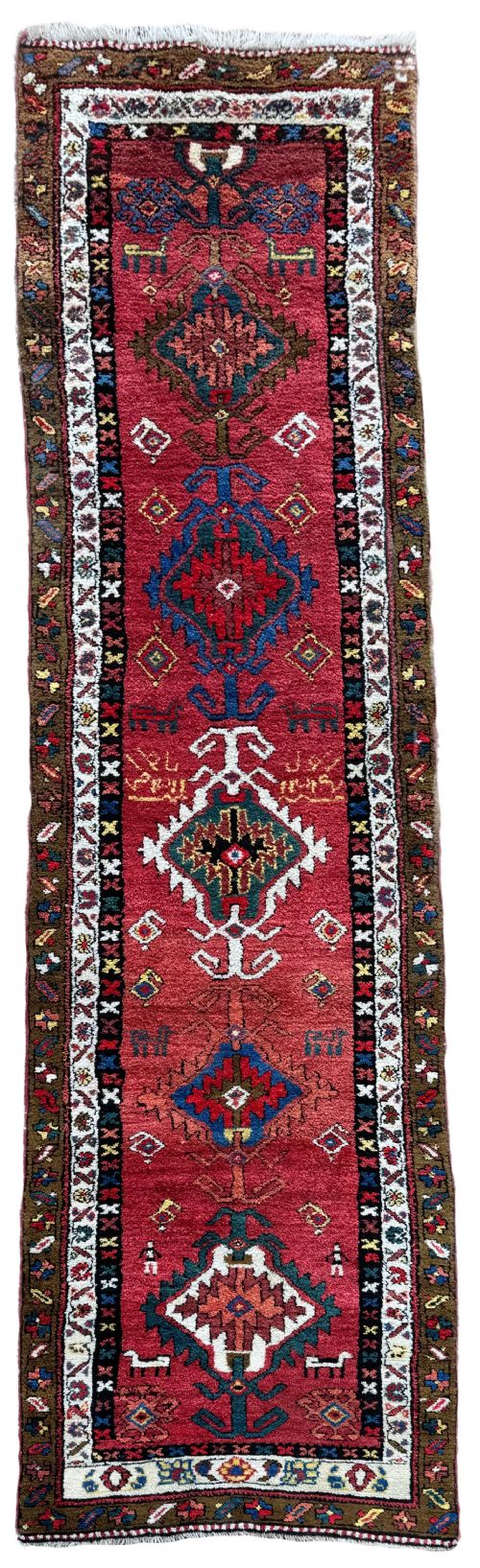
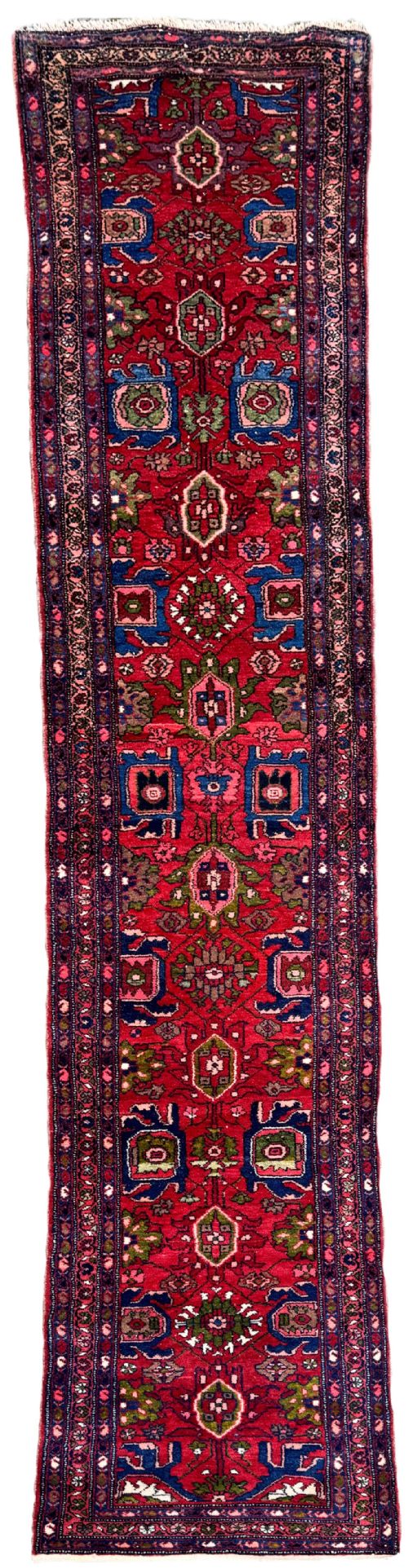

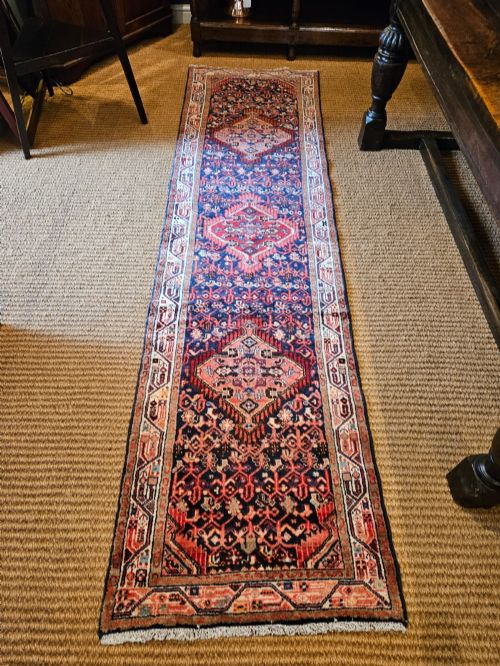
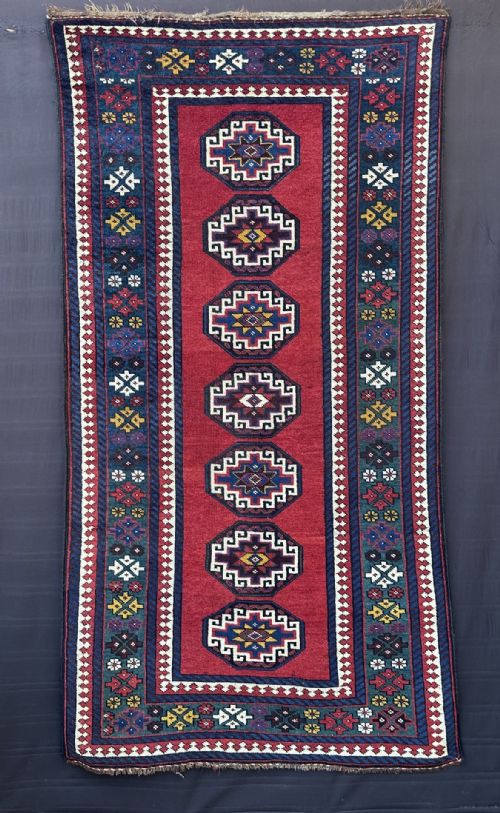

Red Persian Hallway Runner
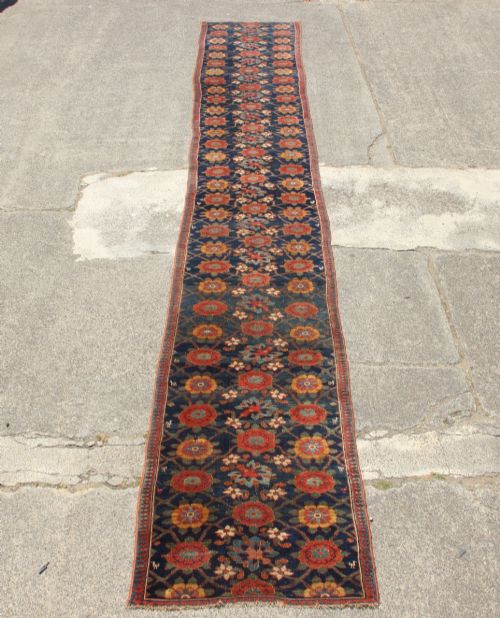
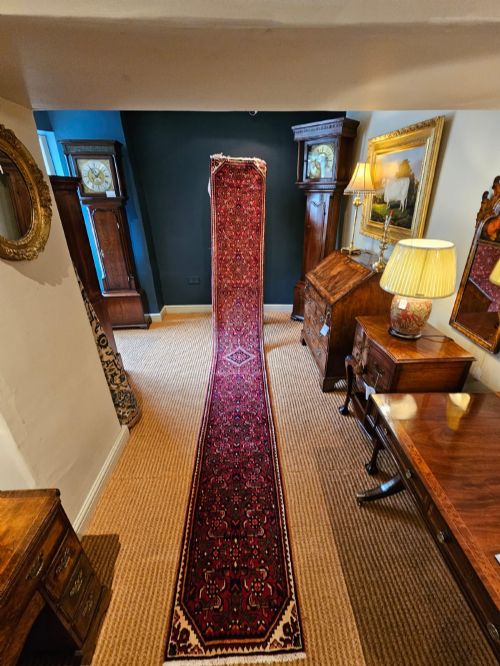
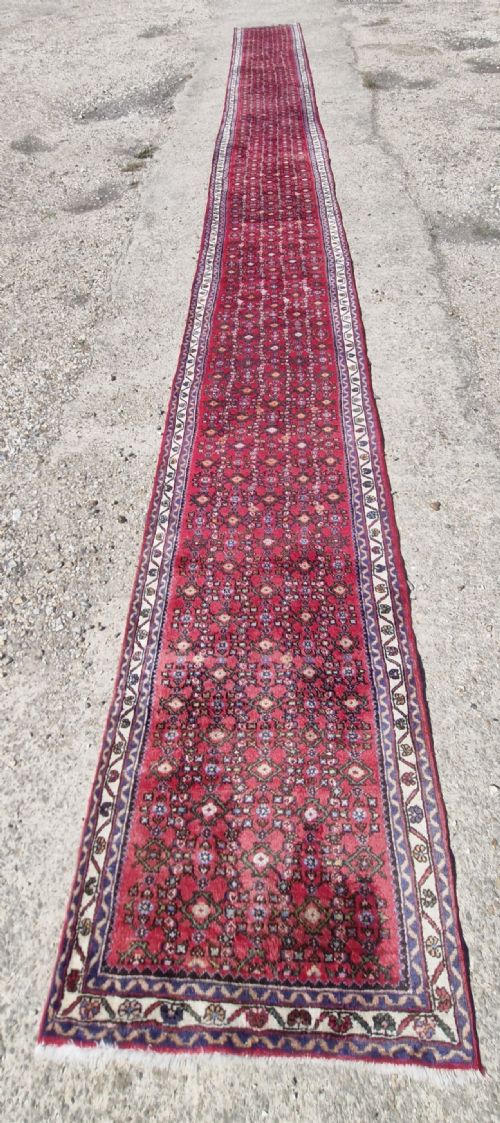
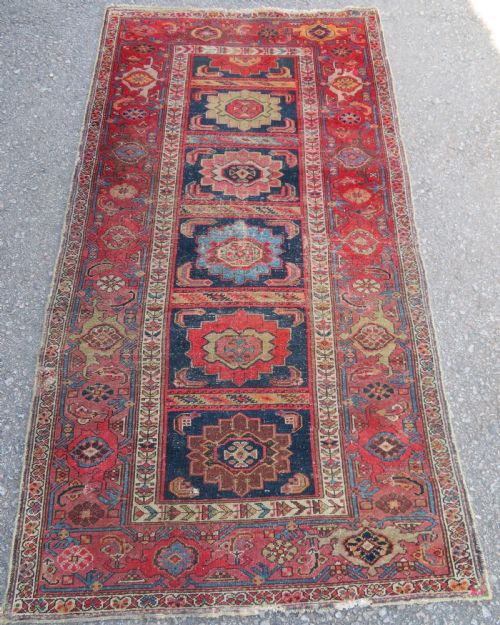
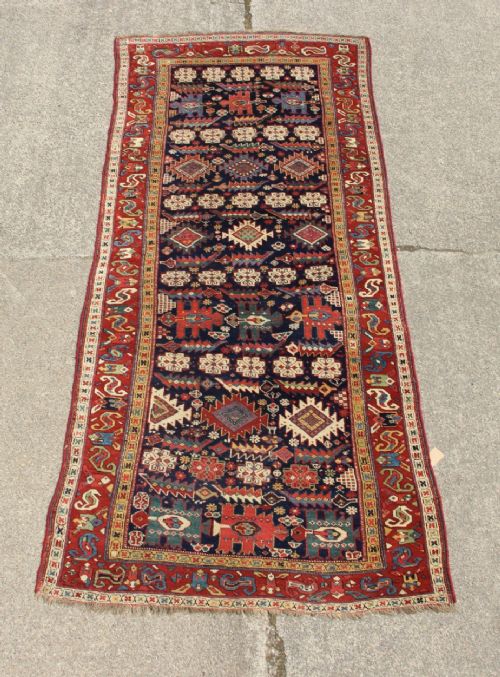
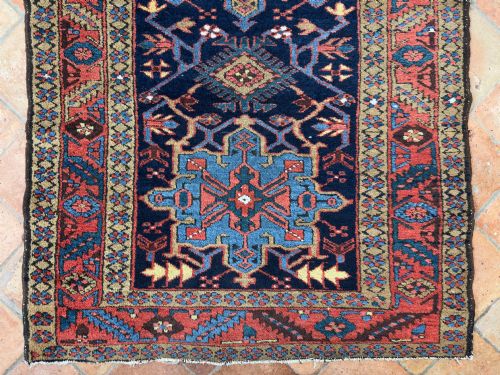
A red persian hallway runner brings deep madder tones and narrow geometry to a long floor.
Red Persian Hallway Runner
A red persian hallway runner provides a narrow, elongated format designed specifically for corridors and landings, anchoring long spaces with rich colouration. These textiles emerge from village and tribal weaving traditions across Persia, spanning the nineteenth and early twentieth centuries.
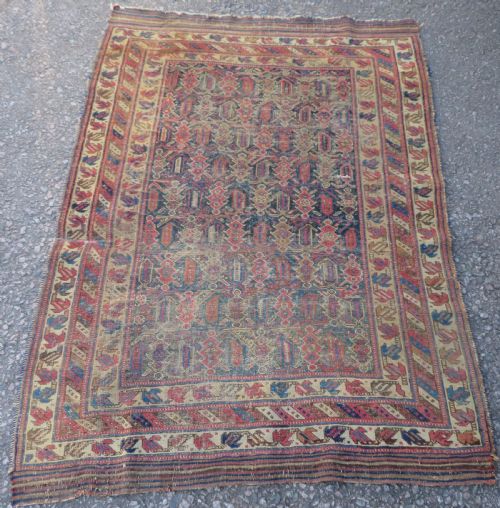
The pieces appearing on this page include specific regional identifications such as Heriz, Hamadan, Bakshaish, and Kurdish village works. Buyers meet everything from compact hallway lengths to expansive room-sized proportions tailored for extended floor spaces.
Materials and construction
Construction relies heavily on wool pile knotted onto cotton or wool foundations, utilising hand-spun wool fibres that absorb natural dye stuffs unevenly to create subtle abrash shading. Artisans tied dense knots by hand, producing durable pile fabrics capable of withstanding heavy domestic traffic over generations.
Weavers employed traditional upright looms to construct these narrow formats, utilising locally sourced materials and time-honoured knotting techniques characteristic of regional Persian workshops and nomadic camps.
The listings on this page span diverse nineteenth and twentieth-century periods, running from 1850 through to 1960.
Assessing quality and character
Quality rests upon the fineness of the knot count, the precision and clarity of the tribal geometric designs, and the depth of the natural red dyes. Pieces exhibiting higher knot density and sophisticated drawing display greater structural integrity and artistic merit.
The handle of the wool, the stability of the foundation, and the harmonious fading of vegetable pigments also separate standard village productions from exceptional collector-grade examples.
The Red Persian Hallway Runner Glossary
- Abrash
- Variations in colour shade across the field caused by distinct dye batches or changes in wool supply during weaving. This tonal shift is a hallmark of natural dying.
- Kelleh
- A specific rectangular rug format that is longer than a standard carpet but broader than a narrow runner. These pieces serve grand hallways and extended reception spaces.
- Madder
- A natural red dye derived from the roots of the Rubia plant, providing the characteristic crimson and terracotta hues seen throughout these woven textiles.
- Warp
- The vertical foundation threads stretched tightly on the loom before knotting begins. The fringe of a finished rug represents the exposed ends of these structural cords.
- Weft
- The horizontal threads passed between rows of knots to bind the structure together. This element contributes to the structural firmness of the finished textile.
Red Persian Hallway Runner: Frequently Asked Questions
How do I choose the right length?
Measure your hallway carefully, leaving a uniform margin of exposed floorboards around the perimeter of the rug. Ensure doors can swing freely over the pile thickness.
Selecting a runner that terminates before reaching doorways prevents bunching and maintains a balanced visual flow down the corridor.
Where should I place these runners?
These narrow floor coverings suit high-traffic thoroughfares such as corridors, entrance halls, and connecting landings. Their durable wool pile absorbs sound and cushions footsteps.
Avoid damp areas or spaces subject to continuous direct sunlight to preserve the integrity of the natural dyes and wool fibres.
How do I identify regional styles?
Study the geometry of the central medallions, the drawing of the corner spandrels, and the palette of the surrounding borders. Specific villages like Heriz or Hamadan employ distinct structural signatures.
Comparing knot density and foundation materials further clarifies whether a piece originated from a settled workshop or a nomadic tribal group.
Are these runners durable?
Hand-knotted wool construction creates an exceptionally resilient surface designed to endure decades of domestic foot traffic. Regular gentle sweeping prevents grit accumulation within the pile.
Using an appropriate underlay prevents slipping and cushions the foundation against premature wear on hard timber or stone floors.