


Red Kutani Ceramic Vases
These red kutani ceramic vases bring robust Meiji period colour and hand-painted detail straight to a room.
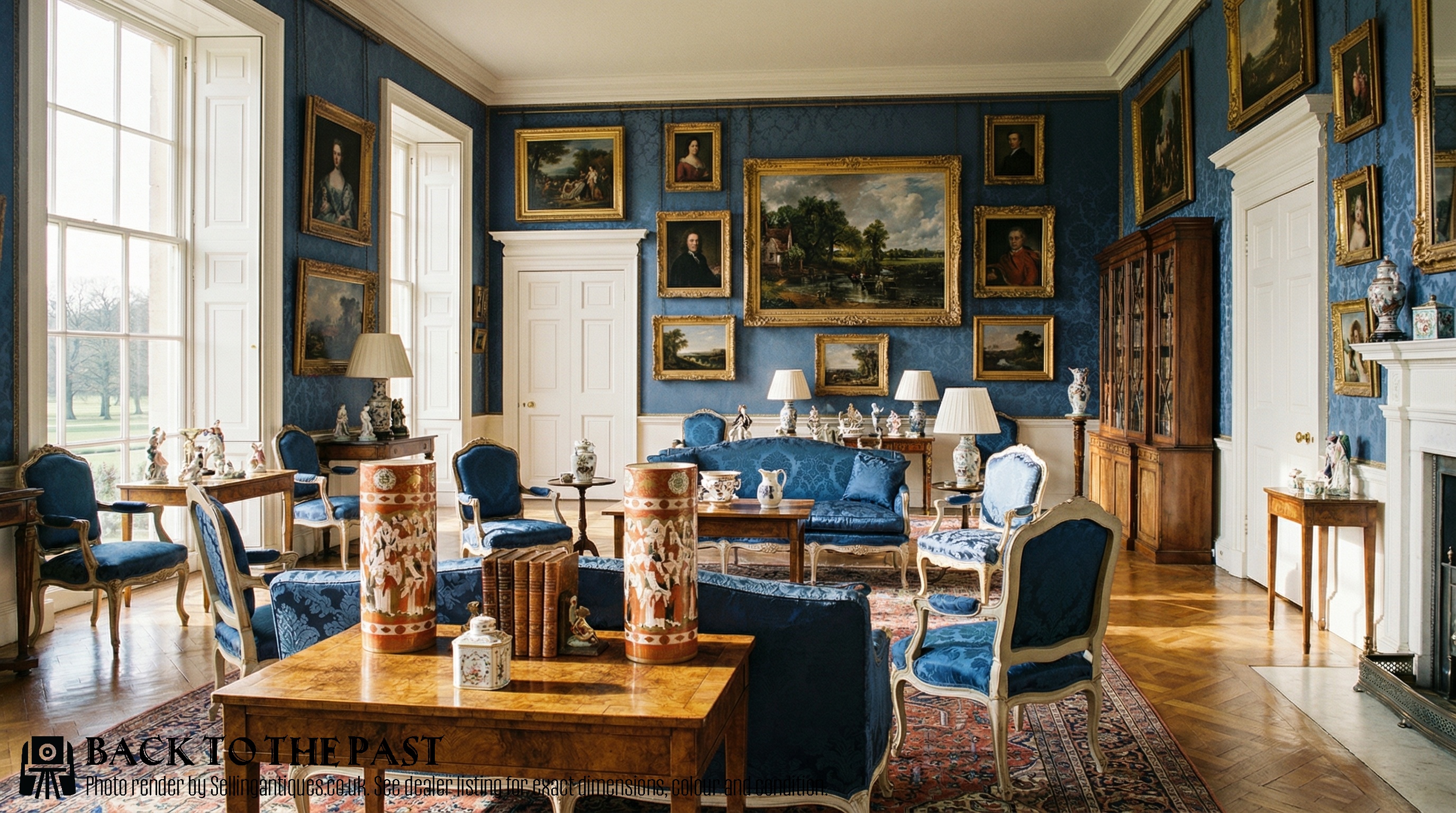
Red Kutani Ceramic Vases
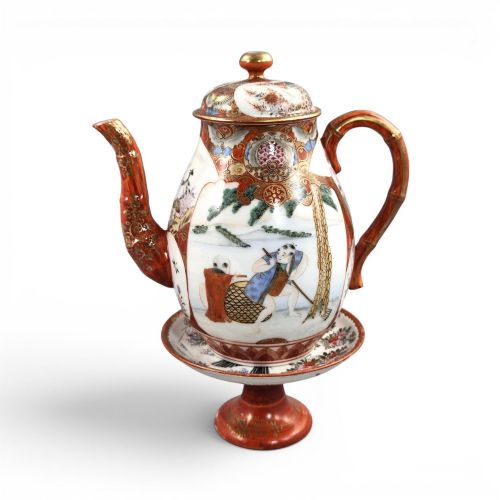
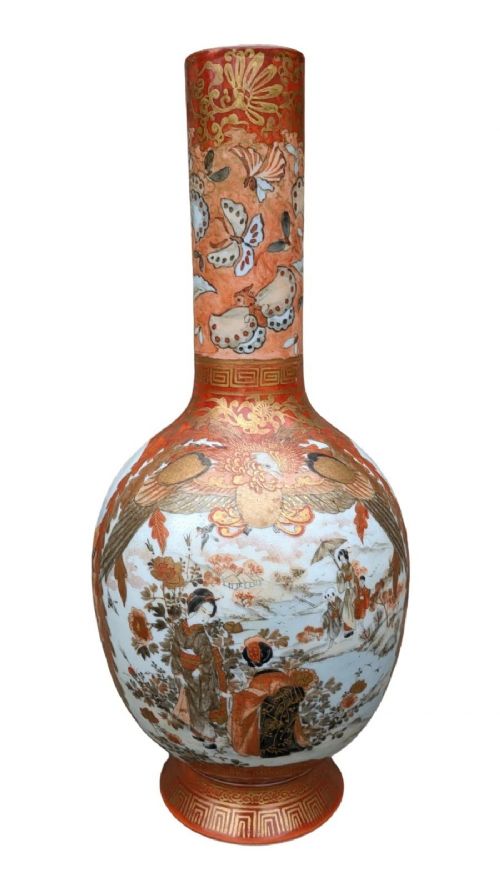
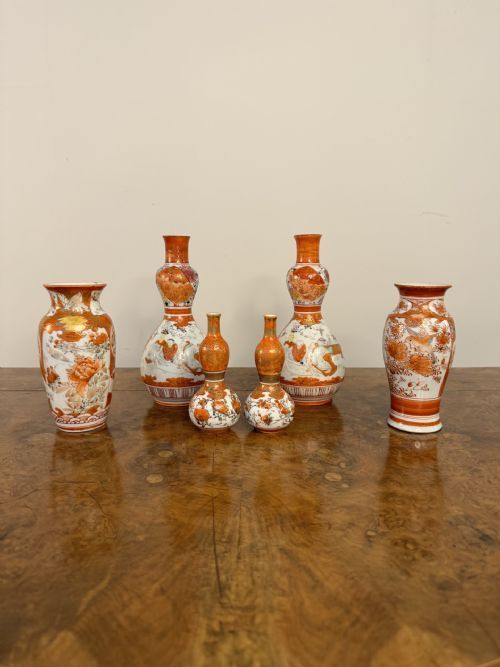
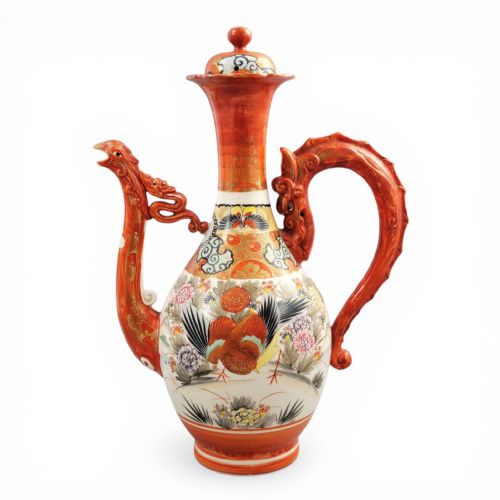
Red kutani ceramic vases are distinctive Japanese pieces originating primarily from the nineteenth century, most frequently appearing from the Meiji period and the decades around nineteen hundred. A buyer exploring this selection encounters various forms ranging from standard cylindrical vessels and flared neck shapes to large floor-standing pairs and smaller hand-painted table lamps. The inventory also includes related ceramic items such as teapots, decorative ewers, chargers, and complete vase stands that share the same distinctive decorative lineage.
Most examples date firmly between eighteen seventy and nineteen twenty, with nineteenth-century pieces forming the vast majority of the available objects. Makers utilised traditional Japanese ceramic shapes, often adapting them into pairs or larger decorative items suitable for nineteenth-century export markets. These objects bring strong traditional motifs into domestic settings, acting as focal points on tables, pedestals, or converted as lamp bases.
Materials and construction
The foundation of these pieces is white porcelain, shaped into robust vessels and fired before receiving extensive surface decoration. Artisans applied coloured enamel paints by hand, building up intricate patterns of figures, birds, and flora across the ceramic body.
Gold leaf and gilding were frequently introduced to highlight specific details, adding metallic lustre to the painted surfaces. Raised enamel techniques, known as moriage, also appear, creating tactile relief work that stands proud of the porcelain body.
Watch for ferocious lion handles keeping a stern, glazed watch over otherwise serene floral landscapes.
Assessing quality
Quality in these ceramics rests upon the precision and complexity of the hand-painted brushwork across the porcelain surface. Finer examples display disciplined control in the enamel application, where intricate motifs and figural scenes remain sharp and well-defined.
The integration of raised moriage details and the sparing, effective placement of gold leaf distinguish superior vessels from simpler commercial outputs. Scale and condition also dictate standing, with large matched pairs maintaining stronger visual presence than individual or altered pieces.
Kinrin Workshop
The Red Kutani Ceramic Vases Glossary
- Kutani
- A style of Japanese porcelain traditionally produced in Kaga province, known for its rich red and gold palette. It encompasses various export and domestic wares from the Meiji era and beyond.
- Meiji Period
- The era of Japanese history running from eighteen sixty-eight to nineteen twelve, marked by intense artistic production and export to Western markets. Pieces from this time often combine traditional motifs with grand scale.
- Moriage
- A ceramic technique where slip is piped onto the surface to create raised decorative patterns before firing and painting. This adds a distinct three-dimensional texture to the vessel body.
- Ewer
- A large jug with a wide spout and handle, used historically for pouring water or wine. In ceramic collections, decorative versions often feature mythical creatures like phoenixes on the spout.
- Charger
- A large decorative plate intended for display on a wall or stand rather than for dining use. These items showcase expansive painted scenes matching the style of the companion vases.
Red Kutani Ceramic Vases: Frequently Asked Questions
How are red kutani vases dated?
Dating relies on stylistic markers associated with the Meiji period and late nineteenth-century Japanese export production. Enamel colours, form proportions, and workshop signatures provide clear chronological clues.
Most pieces sit securely between eighteen seventy and nineteen twenty, reflecting the peak years of Kutani porcelain manufacture for international buyers.
Were these vases made for export?
Many large pairs and decorative vessels from this period were specifically produced for Western markets during the late nineteenth century. Japanese potteries tailored their output to satisfy European and American demand for ornate Asian art.
This export trade accounts for the durable condition and varied decorative forms found in Western collections today.
How should I display a large kutani vase?
Large nineteenth-century examples demand space to showcase their intricate hand-painted enamel and gilt surfaces fully. Placing them on sturdy tables, wooden stands, or low pedestals allows the detailed motifs to be appreciated at eye level.
Some pieces are also found adapted as table lamps, combining ambient lighting with traditional ceramic art.
What is the difference between moriage and standard paint?
Standard enamel painting lies flat against the glazed porcelain body, creating smooth pictorial scenes. Moriage involves piped slip that dries in raised relief, adding physical texture beneath the paint.
This raised technique gives certain vases a more tactile and ornate surface finish.