


Red Cotton Suzani Textile
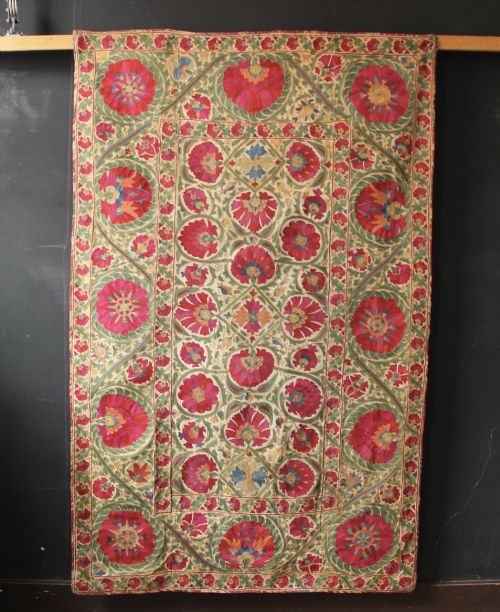
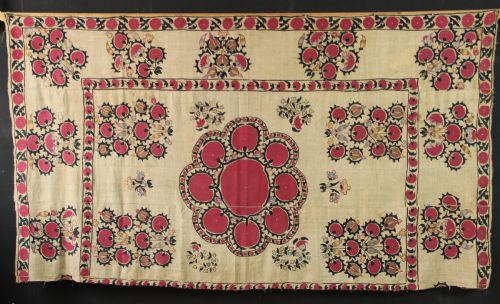
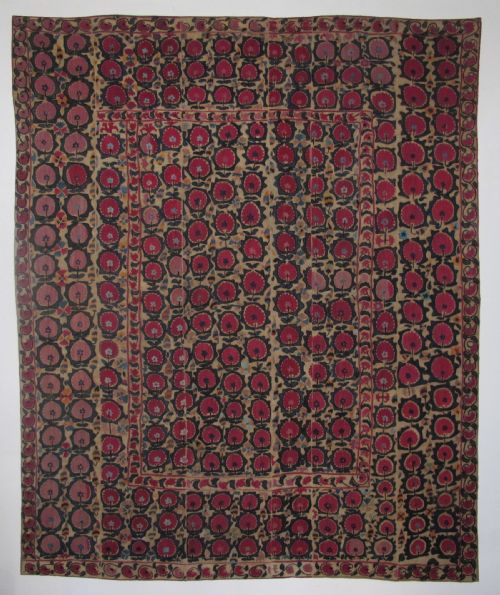
These red cotton suzani textile pieces are vibrant Central Asian wall hangings and embroidered covers that bring bold floral artistry into modern interiors.
Red Cotton Suzani Textile
A red cotton suzani textile represents traditional Central Asian needlework, originating primarily from regions such as Bukhara, Tashkent, and Shakhrisabz. These decorative wall hangings and embroidered covers showcase the rich cultural heritage of Uzbek and related tribal makers.
The format of these textiles varies from full work pieces completely covered in embroidery to nim suzanis, which are smaller half scale formats. Regional styles include specific designs from Ura Tube and Nurata, reflecting distinct local traditions.
Assessing Quality and Execution
The distinction between standard examples and the finest work lies in the density of the embroidery and the complexity of the design. Full work suzanis demand considerably more labour than pieces with open fields, resulting in a richer visual impact.
Colour saturation and the precision of the silk threadwork dictate the overall success of the piece. Superior examples maintain vibrant tones on the ground fabric and exhibit accomplished needle control across large floral or star motifs.
The listings show pieces dated from the mid nineteenth century up to the 1930s, utilising cotton, linen, and adras grounds.
The Red Cotton Suzani Textile Glossary
- Suzani
- An embroidered tribal hanging from Central Asia, traditionally made as part of a bride's dowry. The word derives from the Persian term for needle.
- Adras
- A traditional Central Asian fabric woven with a warp of silk and a weft of cotton. It provides a slightly textured ground for heavy embroidery.
- Nim Suzani
- A half size or smaller format embroidered cover. These pieces offer a manageable scale for interior display compared to full sized wall hangings.
- Palak
- A specific type of suzani featuring heavy, fully embroidered work dominated by a central star motif. They represent some of the most ambitious needlework from Tashkent.
- Full Work
- An embroidery style where the silk thread completely covers the foundation fabric. This technique requires extensive time and materials.
Red Cotton Suzani Textile: Frequently Asked Questions
How do I hang a suzani?
These textiles require careful mounting to distribute their weight evenly across the fabric without causing strain.
Professional framing behind UV protective glass or attaching a fabric sleeve for a rod ensures safe display on interior walls.
What is a nim suzani?
A nim suzani is a smaller version of the standard embroidered hanging, translating to half suzani in Persian.
These compact formats work well in smaller spaces while retaining the intricate silk embroidery and regional designs of larger pieces.
Where were suzanis made?
These embroidered textiles originate from historical Central Asian craft centres including Bukhara, Tashkent, Nurata, and Shakhrisabz in modern Uzbekistan.
Different towns and tribal groups developed distinct floral motifs and colour palettes that help identify their geographic origins.
How do I care for antique textiles?
Antique embroideries require protection from direct sunlight to prevent the silk threads and red ground fabrics from fading over time.
Keep them in stable environments away from high humidity and avoid aggressive cleaning methods to preserve the delicate natural fibres.