
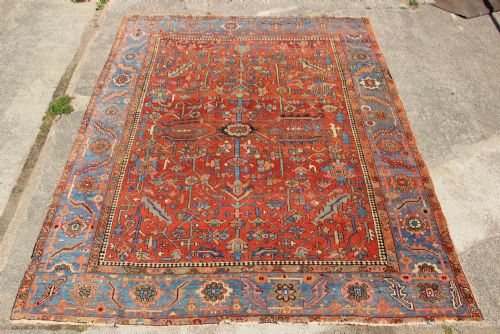
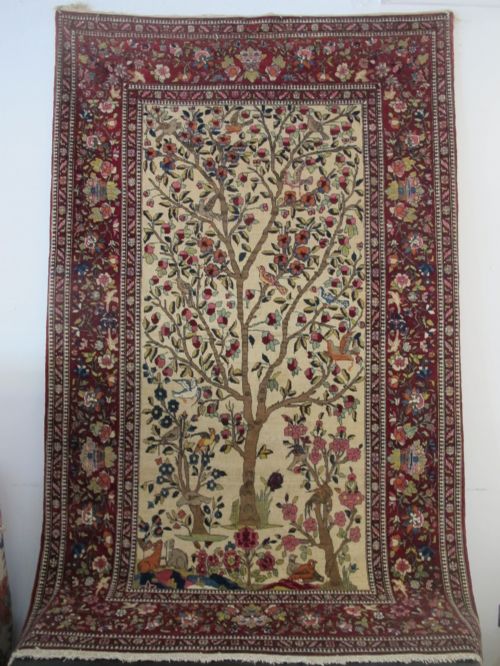


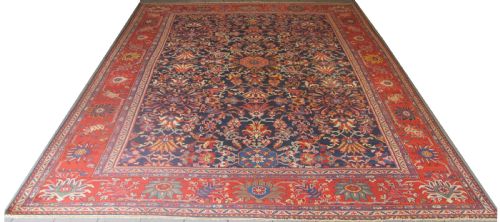
Red Border Persia Carpet
These red border persia carpet examples bring dense knotting and bold regional patterns into a room, offering genuine historical depth for a floor.
Red Border Persia Carpet
When you search for a red border persia carpet, you encounter room-size floors and smaller formats woven across Persian workshops and tribal regions. The pieces listed on this page span from the mid-nineteenth century up to the early twentieth century, capturing distinct weaving traditions.
You are most likely to meet large carpets from Fereghan, Isfahan, and Sultanabad, alongside tribal kellys and long rugs from Zanjan and Senneh. These creations carry varied field designs framed by characteristic red borders that anchor the composition.
The origins stretch across central, northwest, and tribal Persia, reflecting diverse village and city workshops. Each piece demonstrates the specific regional palette and knotting density of its provenance.
What varies in quality
Knot density and precision of line separate the refined city workshop productions from coarser tribal weaving. Finer knotting allows for sharper curves in floral medallions and crisper details within the border systems.
The handling of the wool fleece dictates the tactile quality and resilience under foot. Superior materials retain supple lanolin, giving the pile depth and durability.
Some nineteenth-century weavers hid tiny woven hand motifs or stray knots in the borders to ward off the evil eye.
Ahmadi Isfahan·Ziegler
The Red Border Persia Carpet Glossary
- Kelleh
- A long, narrow carpet format traditionally used in Persian domestic interiors. It offers an elongated proportion well suited for corridors or specific room layouts.
- Warp
- The stationary vertical threads stretched on the loom that carry the structural tension. The weft threads are interwoven across these warps to secure the knots.
- Field
- The central background area of the rug enclosed by the border. This space often displays medallions, all-over trellis patterns, or plain fields.
- Pile
- The vertical tufts of wool that form the soft upper surface of the carpet. Its height and density determine how the pattern reads from different angles.
- Medallion
- A symmetrical central ornament placed in the middle of the field. It serves as the primary focal point of the woven design.
Red Border Persia Carpet: Frequently Asked Questions
How do I clean an antique Persian carpet?
Surface dust should be removed gently using a suction vacuum without a beating bar. Professional textile conservators should handle wet washing to protect the natural wool and dyes.
Avoid household detergents and excessive moisture, which can weaken the cotton foundation threads and alter the pile.
Where were these carpets originally placed?
City workshop carpets adorned formal reception rooms in urban mansions and palaces. Smaller tribal rugs served functional daily roles in village homes and nomadic tents.
Today, these formats adapt easily to contemporary living rooms, studies, and dining spaces as durable floor coverings.
How can I tell a city rug from a tribal rug?
City productions like Isfahan feature curvilinear floral designs executed with high knot density on fine cotton foundations. They reflect formal court aesthetics and planned workshop cartoons.
Tribal pieces from Zanjan or Senneh lean towards geometric motifs, asymmetrical quirks, and looser handling that reveal the weaver's direct expression.
Why do antique carpets show areas of low pile?
Decades of walking and natural wear reduce the height of the wool pile over time. This gentle thinning is a normal characteristic of genuine age and historical use.
As long as the cotton foundation remains secure, low pile areas do not detract from the structural integrity of the piece.