
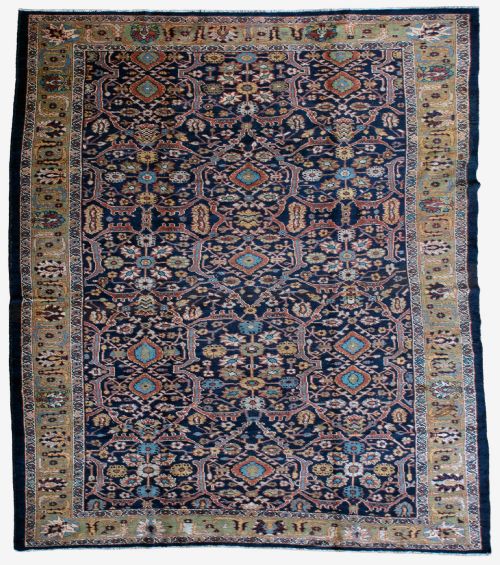
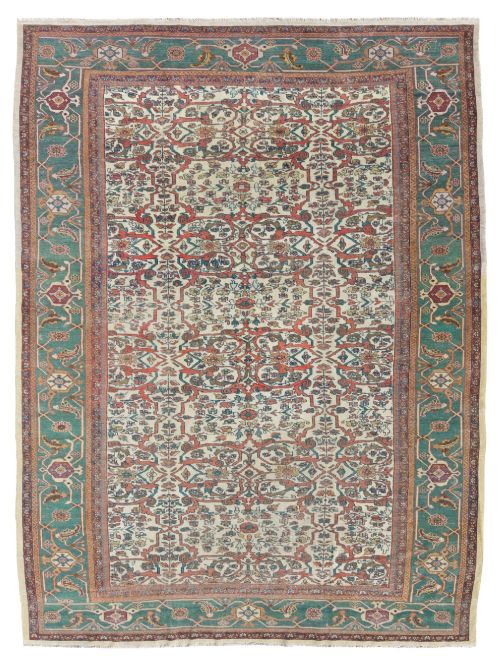
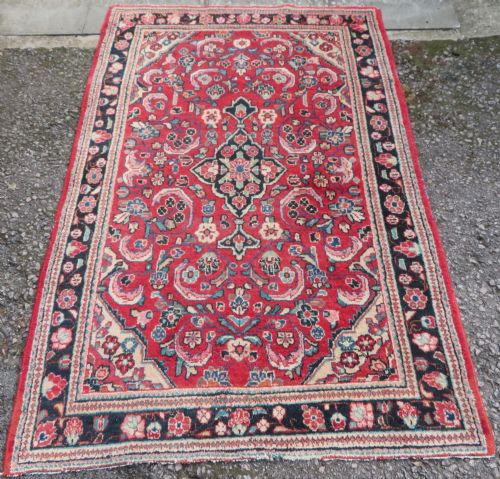
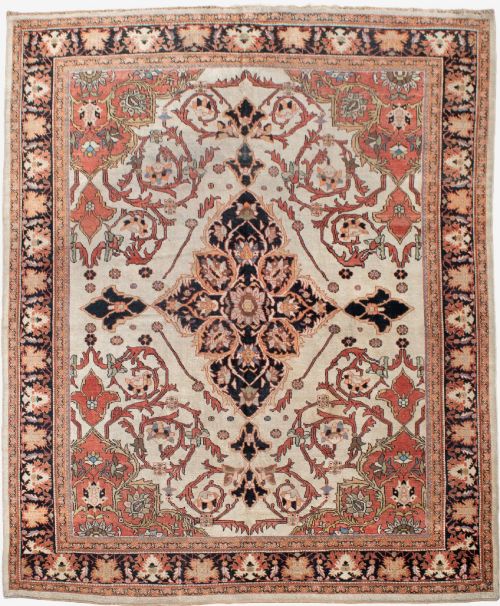


Persian Sultanabad Carpet
A persian sultanabad carpet brings grand West Persian design into a room, offering large-scale floral patterns suited to formal and modern spaces alike.
Persian Sultanabad Carpet
A persian sultanabad carpet originates from the West Persia region and dates predominantly from the late nineteenth century into the early twentieth century. These pieces appear in roomsize formats as well as smaller area rugs.
Makers and workshops in the Sultanabad region produced these floor coverings to satisfy both local tastes and Western demand. The resulting carpets combine traditional Persian artistry with generous proportions.
What varies in quality
Knot density and wool quality dictate the durability and definition of the design across different examples. Finer weaving allows for crisper outlines within the large-scale floral patterns.
The harmony of the palette and the preservation of the original pile depth separate standard roomsize pieces from exceptional specimens. Subtle variations in dye saturation impart distinct character to each carpet.
Persian Sultanabad Carpet Retail Price Guide 2026
Typical asking prices for persian sultanabad carpet among the pieces listed under this phrase on Sellingantiques today, from the lower quarter to the upper quarter. They describe what is for sale here now, not the wider market.
Some nineteenth century workshop records reveal that the grandest carpets were sometimes rolled out only when important guests visited.
Ziegler And Co
The Persian Sultanabad Carpet Glossary
- Sultanabad
- A West Persian style and region known for producing large-scale decorative carpets in the nineteenth and early twentieth centuries. These pieces typically feature spacious floral layouts.
- Mahal
- A related West Persian weaving tradition originating from the same region as Sultanabad carpets. Mahal rugs often display slightly more rustic or relaxed interpretations of traditional designs.
- Ziegler
- A designation often applied to commercial carpets produced or commissioned by foreign firms in Persia. These pieces generally feature softened palettes and expansive field designs tailored for Western interiors.
- Pile
- The upright yarn surface of the carpet formed by individual knots. The height and density of the pile determine the texture and longevity of the rug.
- Foundation
- The underlying structure of cotton warp and weft threads that supports the wool knots. A sound foundation ensures the carpet maintains its shape over decades of use.
Persian Sultanabad Carpet: Frequently Asked Questions
How do I style a large carpet?
A large carpet anchors a primary living space or dining room by defining the seating area. Allow a border of exposed flooring around the edges to frame the piece.
Keep surrounding furniture simple to let the expansive floral patterns remain the visual focal point of the room.
Where were these carpets made?
These pieces originate from West Persia, specifically centered around the Sultanabad region. This area became a major hub for carpet production during the nineteenth century.
Local workshops produced rugs and roomsize carpets for both domestic use and export to Western markets.
How do I care for antique wool?
Vacuum the carpet gently using suction only without a rotating brush bar to protect the wool pile. Rotate the piece periodically to ensure even wear from foot traffic and sunlight.
Professional cleaning should be undertaken by specialists experienced in antique Persian textiles.
What is a Mahal rug?
A Mahal is a regional style closely associated with Sultanabad production in West Persia. These rugs often feature slightly more open designs and varied colour proportions.
Collectors value them for their decorative versatility and historic connection to the primary weaving centres.