





19th Century Ziegler Rug
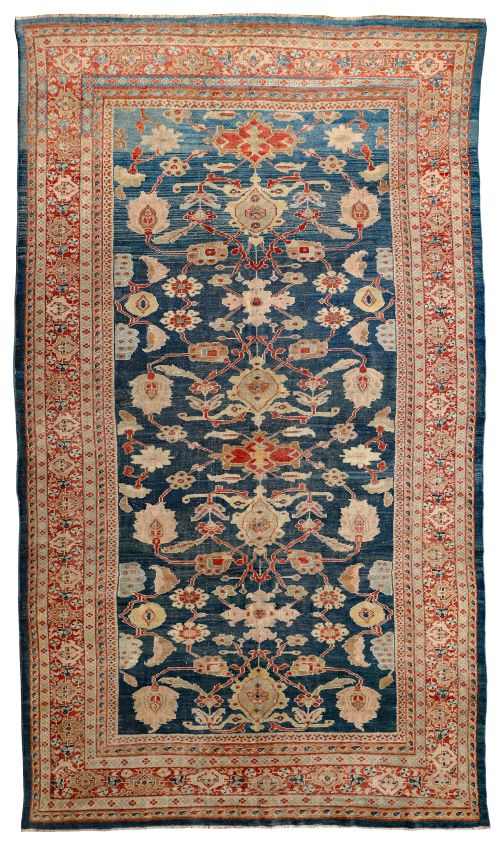
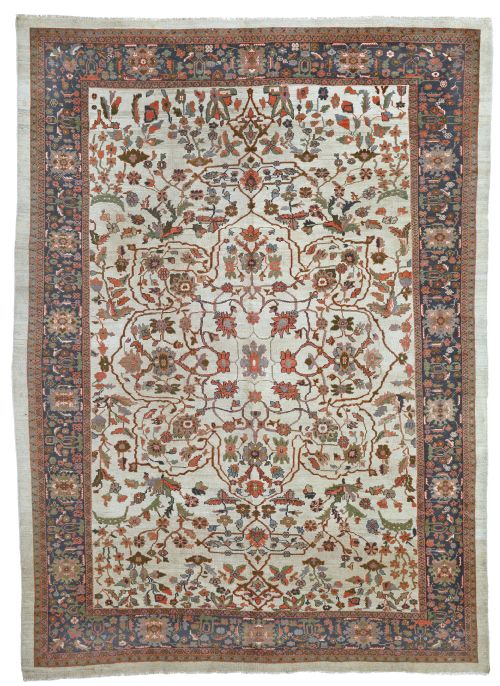
A 19th century ziegler rug brings expansive floral patterns and muted palettes into a room, offering durability for high-traffic floors.
19th Century Ziegler Rug
When you search for a 19th century ziegler rug, you encounter floor coverings originating from Persia during the late Victorian era, spanning the periods around 1880, 1890, and 1900. These floor coverings are predominantly categorised as Persian Ziegler, Persian Sultanabad, or Fereghan Ziegler carpets and rugs.
The pieces listed on this page range from smaller area rugs measuring 1.75m by 1.21m up to large carpets exceeding four metres in length. Most examples connect to the Sultanabad region of West Persia and the commercial enterprise of Ziegler and Co.
Buyers looking at these items find room-sized carpets and smaller rugs designed with room-anchoring scales in mind. The forms include rugs, carpets, and area rugs created for Western export tastes of the late nineteenth century.
How they were made
Every 19th century ziegler rug relies on a foundation of cotton for its warp and weft threads, providing structural stability to the heavy textile. Hand-knotted wool pile forms the surface design, creating the soft texture expected from Persian weaving of this period.
Weavers utilised hand-knotting techniques across large looms to produce expansive formats like the 410cm by 487cm Ziegler and Co carpet. The material combination of wool and cotton allowed workshops to export durable floor coverings tailored for Western drawing rooms.
Nineteenth-century British drawing rooms welcomed these expansive Persian carpets so warmly that Victorian feet spent decades walking on botanical masterpieces.
What varies in quality
The calibre of a 19th century ziegler rug depends on the density of the wool pile and the precision of the botanical drawing across the field. Finer knots per square inch allow for crisper outlines in the large-scale Sultanabad floral motifs.
Proportion and scale also separate standard commercial carpets from exceptional workshop productions bearing the Ziegler and Co attribution. The subtlety of the natural dye palette dictates how gracefully the rug absorbs light across the room.
Ziegler and Co
The 19th Century Ziegler Rug Glossary
- Sultanabad
- A design and production district in West Persia known for large-scale floral patterns and muted or soft colour palettes. Carpets from this region heavily influenced Western interior design during the late nineteenth century.
- Ziegler and Co
- A major Manchester-based firm with operations in Persia that commissioned and exported carpets tailored to European tastes. Their productions are celebrated for softer dyes and open floral fields.
- Fereghan
- A specific Persian weaving sub-region associated with finely knotted rugs and carpets. Pieces carrying this attribution often display intricate overall patterns on wool and cotton foundations.
- Warp
- The vertical threads stretched tightly on the loom that form the structural skeleton of the carpet. Cotton serves as the standard warp material for these Persian weaves.
- Weft
- The horizontal threads passed through the warp to lock the rows of knots into place. Together with the warp, it creates the cotton foundation visible on the reverse of the rug.
19th Century Ziegler Rug: Frequently Asked Questions
Where were these rugs made?
These textiles were produced in Persia, specifically within regions such as Sultanabad and Fereghan, during the late nineteenth century.
European firms like Ziegler and Co established operations there to adapt traditional patterns for export to Western homes.
What materials make up these carpets?
The structure relies on a sturdy cotton foundation formed by warp and weft threads.
Hand-knotted wool pile creates the thick, durable surface texture designed to withstand heavy floor use.
How do I choose the right size?
Measurements range from compact area rugs measuring under two metres up to expansive carpets exceeding four metres in length.
Consider the scale of your room to ensure the grand floral borders do not overwhelm the furniture arrangement.
How do I date these carpets?
Dating relies on stylistic markers, structure, and historical production periods spanning the years between 1880 and 1900.
Examinations of the cotton foundation and the specific Sultanabad or Fereghan weave provide further clues to the exact era.