



Red Blue Persian Bag
A red blue persian bag brings tactile tribal craftsmanship into a room, offering genuine nomadic utility through woven wool and structured design.
Red Blue Persian Bag
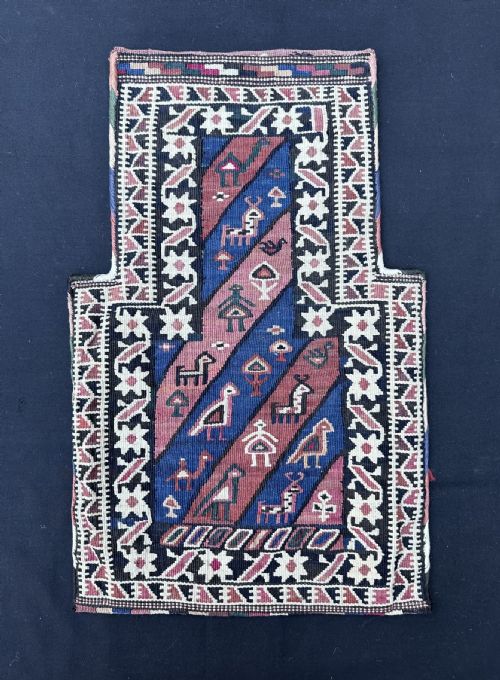
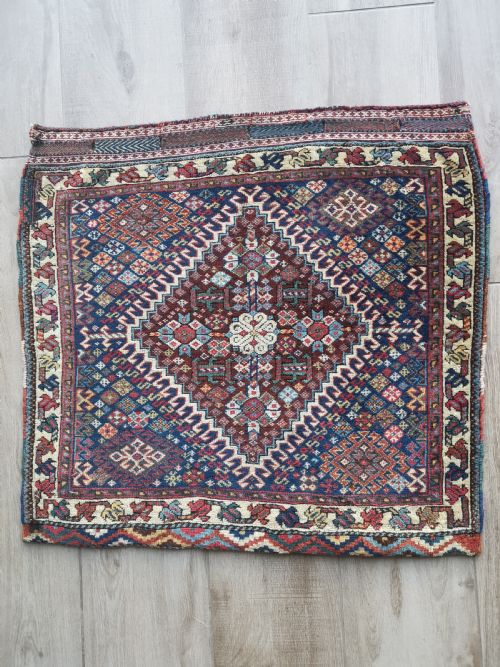
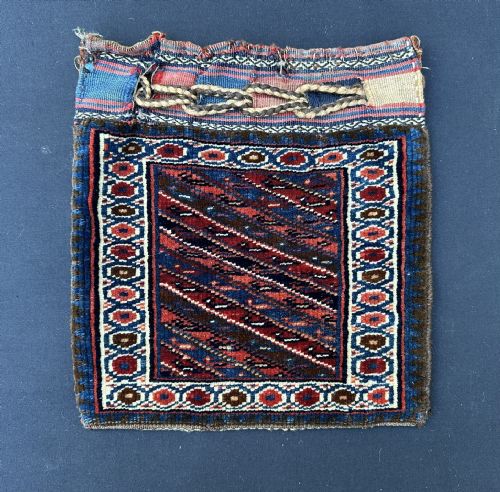
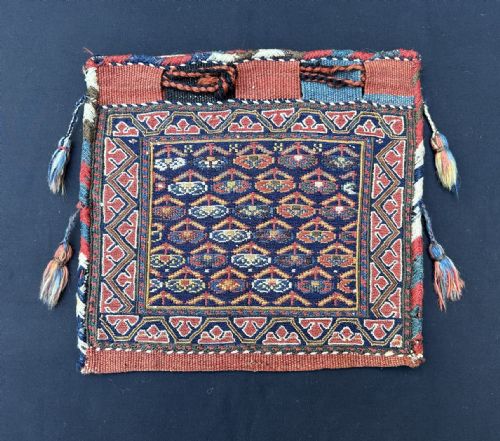
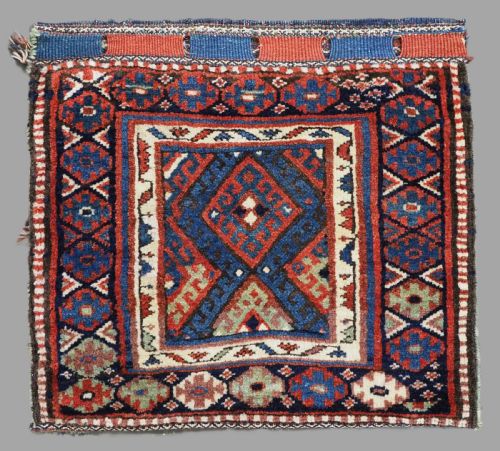
A red blue persian bag represents functional nomadic weaving created across various regions of Persia during the nineteenth and early twentieth centuries. These pieces typically take the form of saddlebag faces, salt bags, vanity bags, and complete khorjins produced by tribal groups.
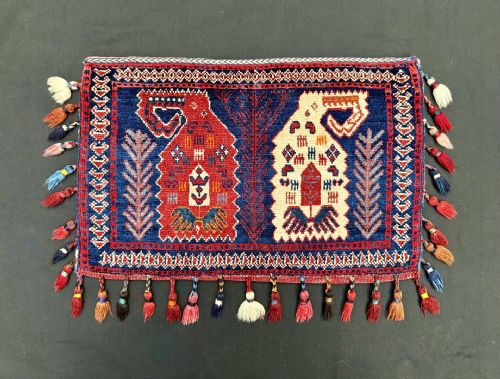
The most common examples on this page are bag faces and half-khorjins originating from tribal confederations such as the Qashqai, Afshar, Shahsavan, and Bakhtiari. Each piece serves as a durable household or travel container transformed into an expressive textile.
Buyers examine these textiles for their authentic structural forms, which range from flat-woven soumak panels to pile-woven surfaces. Every item reflects the specific utilitarian traditions of the nomads who wove them.
Materials and Construction
Weavers constructed a red blue persian bag using hand-spun wool for the pile and cotton or wool for the foundational warps and wefts. Goat hair frequently appears in the structures to provide edge reinforcement and added durability.
Natural dyes and vegetable colours yield the characteristic palette found across these nomadic textiles. Artisans employed specialised techniques including soumak wrapping and pile knotting to achieve structured geometric and zoomorphic designs.
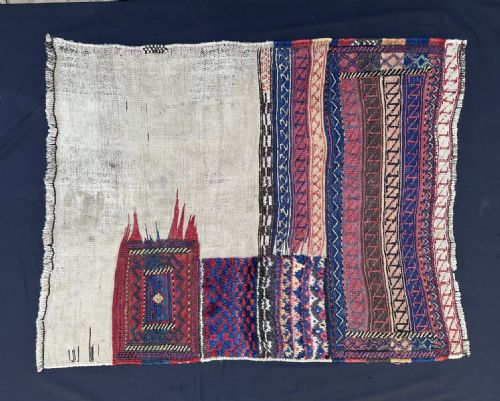
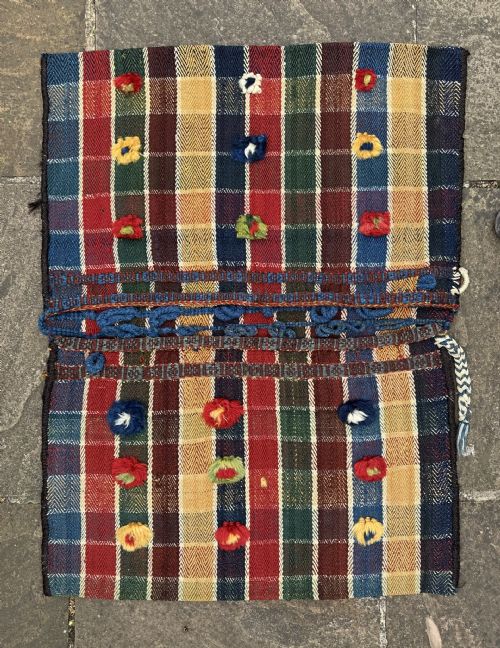
Several nomadic bags include hidden plain-weave backs intended to endure the dusty friction of a travelling pack mule.
Evaluating Quality and Execution
Quality in a red blue persian bag depends on the handle and density of the wool, alongside the precision of the tribal motifs. Lustrous, luminous wool combined with tightly beaten foundations denotes superior nomadic execution.
The clarity of natural dyes and the crispness of structural weaving elevate certain tribal pieces above standard examples. Intricate details such as bird and dragon iconography demonstrate advanced technical skill.
The Red Blue Persian Bag Glossary
- Khorjin
- A traditional double-sided saddlebag used by nomads for transport and storage. Complete examples retain both pouches and connecting bridges.
- Soumak
- A flat-weave technique where coloured weft threads wrap over and under warp threads in a herringbone pattern. This method creates a sturdy face without a knotted pile.
- Bag Face
- The decorative front panel of a tribal bag that survived after the plain weave back deteriorated or was separated. These panels function independently as small decorative textiles.
- Boteh
- A traditional almond-shaped motif with a curved upper tip. This ancient Persian design symbolises life and eternity.
- Warps
- The vertical strings stretched tightly on a loom that form the structural skeleton of the textile. All knots and wefts build upon these foundational threads.
Red Blue Persian Bag: Frequently Asked Questions
What is a red blue persian bag?
A red blue persian bag is a woven nomadic textile designed for carrying possessions, salt, or personal items. These pieces originate from nineteenth and early twentieth-century tribal groups.
Nomads utilised these containers in daily camp life and travel. Today, collectors preserve them as examples of tribal weaving art.
How were these bags used?
Tribespeople mounted these containers on animals as saddlebags or hung them inside tents for storage. Smaller pouches held salt, personal vanity items, or wheat.
Their sturdy construction suited the demanding lifestyle of nomadic groups. The back panels provided plain reinforcement while the faces displayed tribal identity.
How do I display a bag face?
Bag faces mount easily onto walls using custom display mounts or subtle textile hanging methods. Their compact dimensions suit smaller wall spaces or study interiors.
Placing them away from direct sunlight protects the natural dyes. Allowing the wool to breathe prevents moisture accumulation in the textile.
How do I identify tribal origins?
Tribal origins reveal themselves through specific colour palettes, structural weaves, and motif repertoires. Groups like the Afshar and Shahsavan maintained distinct design traditions.
Comparing edge finishes, goat hair usage, and wool quality aids in distinguishing between regional weavers. Each tribal group imparted unique characteristics onto their textiles.