







Red Blue Japanese Bowl
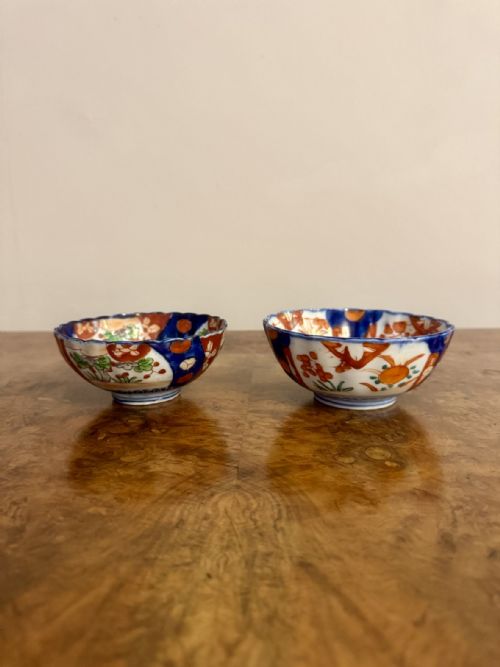
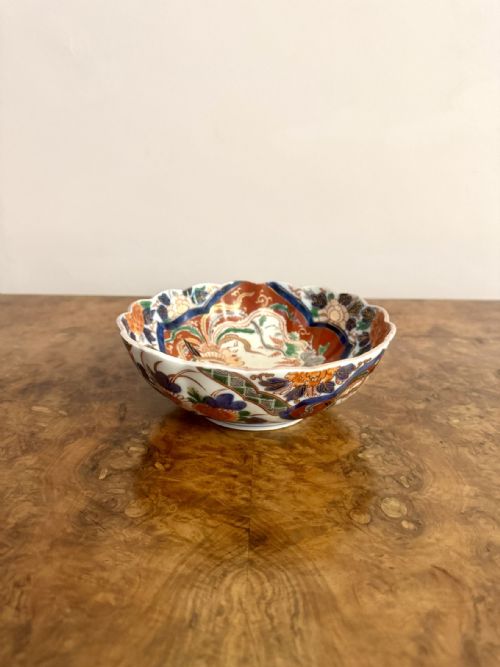
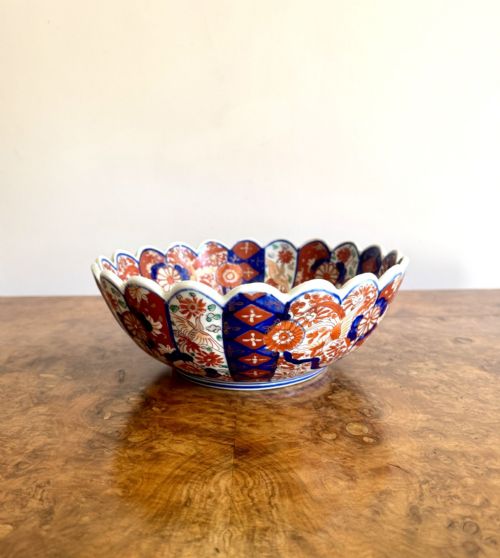
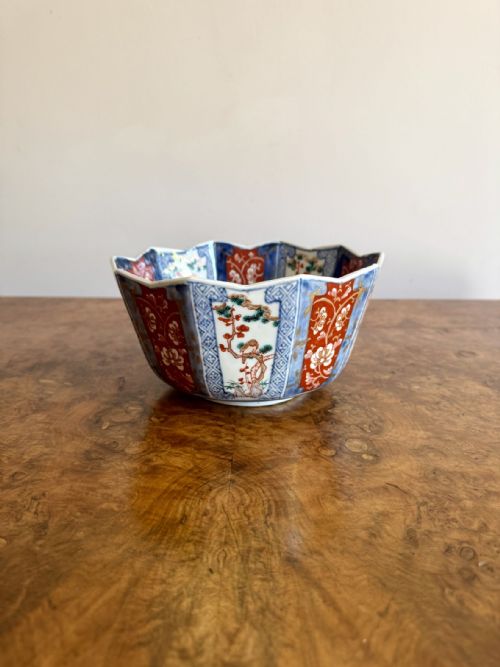
A red blue japanese bowl brings rich iron-red, cobalt blue, and gold leaf highlights together in durable porcelain.
Red Blue Japanese Bowl
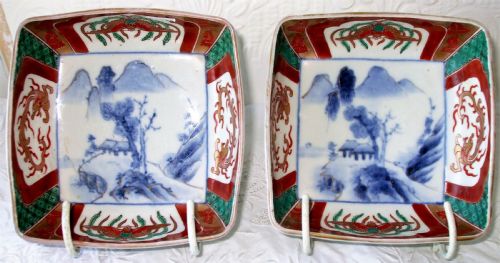
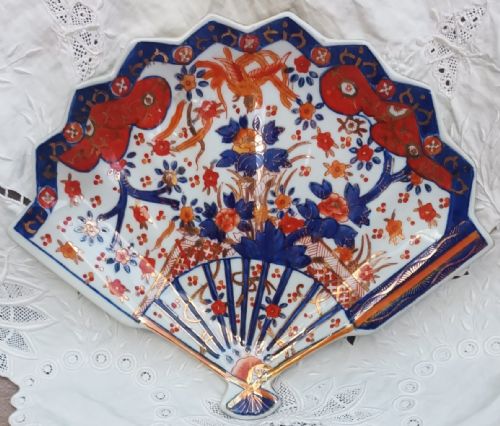
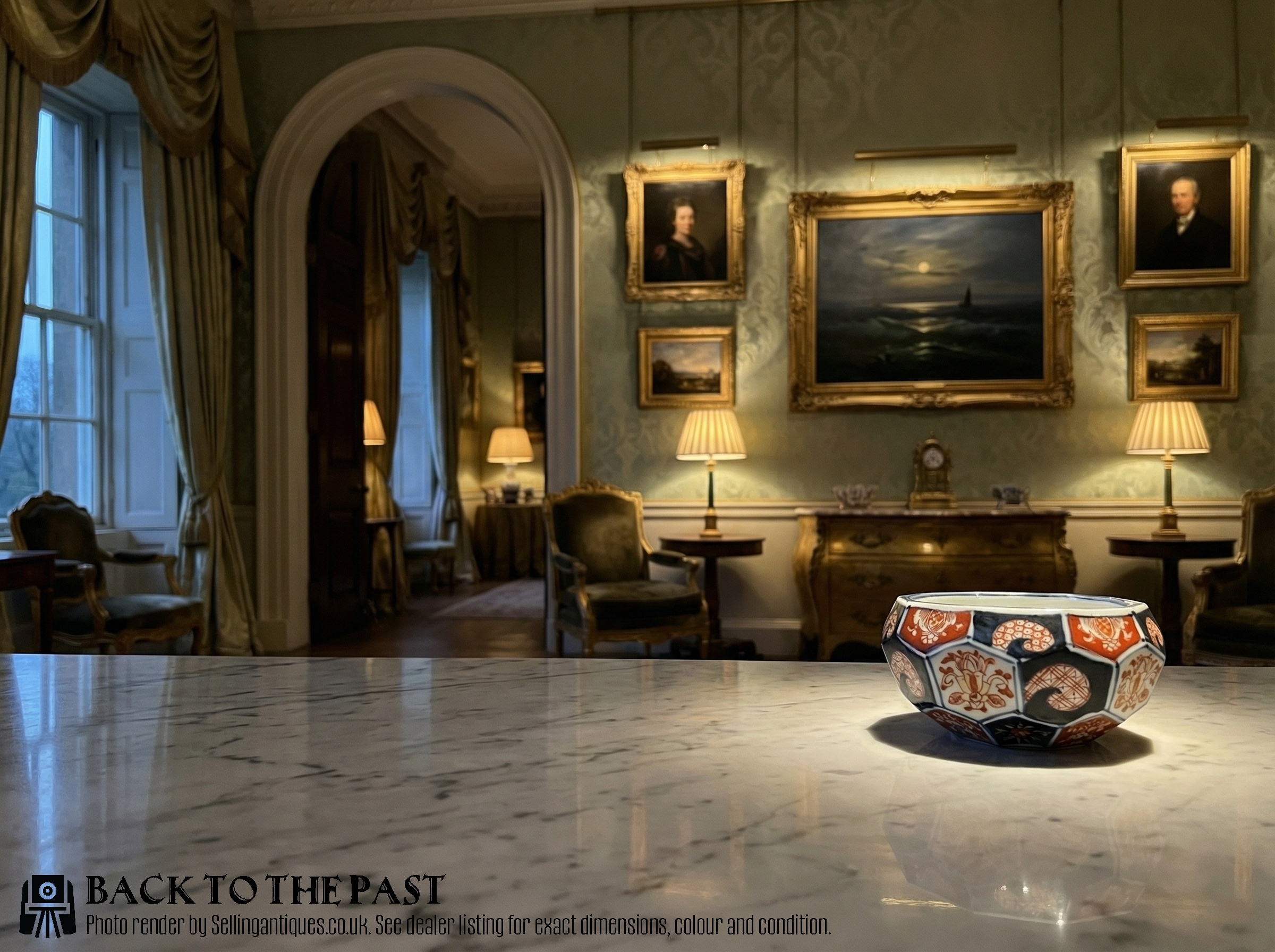
A red blue japanese bowl encompasses decorative vessels made primarily in the Imari and Arita traditions from the seventeenth century through to the Edwardian era. These items arrive in forms such as scalloped edge bowls, fluted vessels, hexagonal shapes, and tripod bowls.
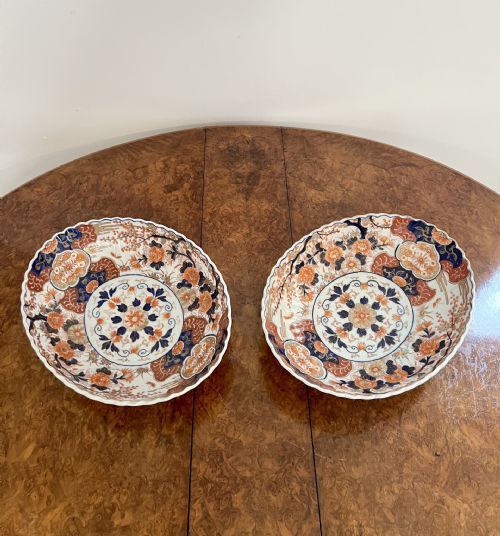
The pieces appearing most frequently on this page originate from the nineteenth century and the around nineteen hundred period, reflecting Japanese export production and Meiji period craftsmanship. Alongside standard bowls, buyers encounter related display dishes, lidded jars, and jardiniere pieces.
Early examples date back to the seventeenth century and the Edo and Genroku periods, offering deeper historical context for collectors seeking older ceramics. Most surviving items demonstrate functional decorative designs suited for display or tabletop use.
Materials and technique
Makers shaped these items from ceramic and porcelain, applying rich glaze layers to create durable surfaces. Cobalt blue pigment provided the deep underglaze tones characteristic of the style.
Workshops layered iron-red enamel and gold leaf or gilding over the fired glaze to build complex colour contrasts. Painters executed intricate patterns by hand directly onto the porcelain body before final firing.
Some nineteenth-century plates carry the intriguing name Black Ship Imari, recalling the historic arrival of foreign vessels in Japan.
What varies in quality
Detail and precision in hand painting separate standard production items from finer works. Crisply delineated motifs in cobalt blue and vibrant red enamel indicate superior brushwork.
The application of gold leaf and the crispness of moulded edges, such as scalloped or hexagonal forms, define the upper tier of the range. Heavier porcelain bodies and well-balanced forms also distinguish better examples.
The Red Blue Japanese Bowl Glossary
- Imari
- A style of Japanese porcelain decorated in underglaze blue, iron-red, and gold. This aesthetic originated in the town of Arita and shipped through the port of Imari.
- Arita
- The Japanese town where porcelain production flourished from the early seventeenth century onwards. Kilns in this region produced the foundational wares for export markets.
- Meiji Period
- The era in Japanese history lasting from eighteen sixty-eight to nineteen twelve, marked by extensive international trade and export art. Pieces from this time often feature elaborate hand-painted details.
- Edo Period
- The period of Japanese history spanning from sixteen hundred and three to eighteen sixty-eight. Early ceramic wares from this timeframe represent foundational techniques.
- Scallop Edge
- A decorative curved border resembling the edge of a scallop shell, commonly found on bowls and dishes in this selection. This shaping required careful manual trimming before firing.
Red Blue Japanese Bowl: Frequently Asked Questions
What is a red blue japanese bowl?
These items are porcelain vessels decorated in traditional Imari palettes featuring cobalt blue, iron-red, and gold leaf highlights. They were produced in Japan primarily for export from the seventeenth century onwards.
Surviving examples include round bowls, fluted vessels, and hexagonal shapes with hand-painted floral or geometric motifs.
How were these bowls used?
Historic households utilised these ceramic pieces for decorative display and serving purposes rather than heavy daily dining. Their vibrant colours made them popular centrepieces in European and domestic interiors.
Collectors today continue to display them on tables, cabinets, or walls to showcase the contrasting red and blue tones.
How do I date a red blue japanese bowl?
Dating relies on examining the porcelain body, the depth of the cobalt blue underglaze, and the style of the hand-painted enamel. Seventeenth-century pieces often show heavier potting and distinct Arita characteristics.
Nineteenth-century and Meiji period items typically display brighter enamel colours and crisper gilding, while Edwardian pieces reflect later trade patterns.
Are these bowls dishwasher safe?
These antique porcelain vessels require gentle hand washing with mild soap and lukewarm water. Harsh detergents and modern dishwashers will damage the delicate overglaze red enamel and gold leaf highlights.
Careful handling preserves the historic surfaces and prevents scratching on the fired glaze.