




Red and Gold Glass
Red and gold glass brings together rich ruby hues and metallic gilding, offering striking decorative presence for any room.
Red and Gold Glass
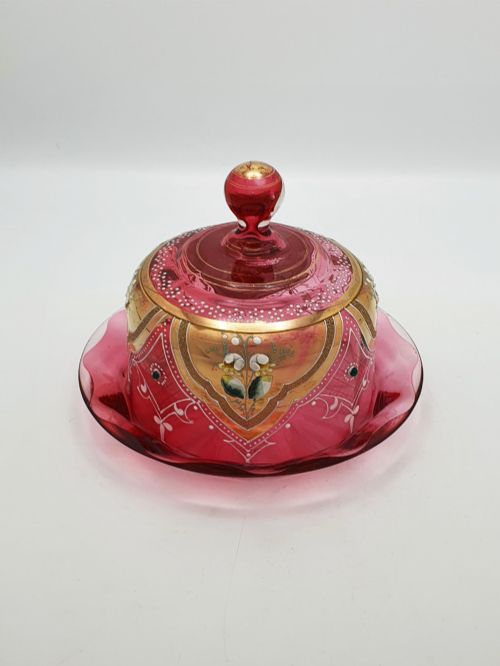
When you search for red and gold glass, you encounter pieces that span centuries of decorative design, ranging from Victorian tablewares to Art Nouveau vessels. These objects combine deep red glass with gilded details, creating a distinct visual warmth that draws the eye across a room.
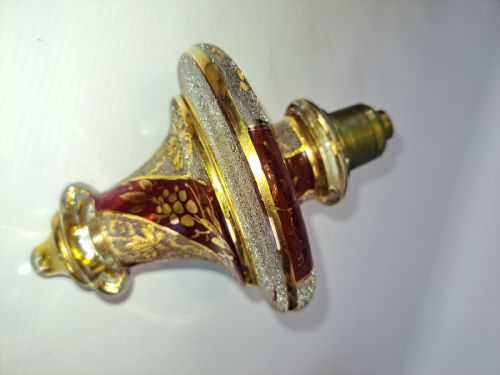
You are most likely to meet Bohemian ruby glass items and French or English vases, lustres, and chandeliers on this page. Makers applied gold leaf, enamel, and etching directly onto the red ground to achieve contrasting patterns and textures.
The selection includes practical tableware alongside decorative mantel pieces and lighting components. Each form demonstrates how artisans utilised rich colour combinations to catch candlelight and daylight alike.
How red and gold glass was made
Glassmakers created the characteristic red body by adding gold or copper compounds to the molten batch during production. This ruby glass was then shaped by blowing or moulding into vessels, bowls, and decorative elements.
Craftsmen applied gold leaf, liquid gold paint, or enamel decoration to the cooled glass surface by hand. Many pieces underwent a secondary firing process to fuse the metallic details and enamel pigments securely onto the exterior.
Additional surface texture was often achieved through wheel-cutting, etching, or acid-treatment before or after the gilding process was completed.
Some nineteenth-century Bohemian glass bells were designed specifically to summon servants while doubling as mantelpiece ornaments.
What varies in quality in red and gold glass
The depth and consistency of the ruby colour within the glass body set superior examples apart from simpler items. High quality pieces display an even saturation without murky patches or uneven thickness.
The precision and durability of the gilding and enamel work reveal the maker's skill. Finer items feature hand-painted or deeply etched gold detailing that remains crisp and firmly adhered to the glass surface.
Overall form and proportion distinguish finer productions from standard wares, particularly in moulded chandeliers, lustres, and vases where sharp lines and balanced weight matter.
Orivit·Legras
The Red and Gold Glass Glossary
- Ruby glass
- A deep red glass created by introducing gold or copper oxide into the molten mixture. This material forms the primary body for many decorative items and tableware.
- Gilding
- The application of gold leaf or gold paint to the surface of an object. In glass production, this decorative layer is typically fired to bond it permanently with the material underneath.
- Lustre
- A decorative glass vase or candlestick hung with cut crystal drops. These pieces were designed to catch and refract light from candles or gas lamps.
- Enamel
- Opaque or translucent glass paste applied to the surface of an object for decoration. Artisans painted floral or geometric motifs using enamel before firing the piece a second time.
- Verre eglomise
- A process of applying gold or silver leaf to glass alongside reverse painting. This historic technique creates a mirrored, decorative panel with deep reflectivity.
Red and Gold Glass: Frequently Asked Questions
What is red and gold glass?
Red and gold glass encompasses decorative objects, vases, and tableware made from ruby-coloured glass enhanced with gilded details. These pieces combine rich red tones with metallic gold leaf or enamel ornamentation.
Items range from nineteenth-century Bohemian mantle ornaments to Art Nouveau vessels. They were produced primarily for display and decorative illumination in period interiors.
How do I care for red and gold glass?
Clean red and gold glass gently using a soft, dry cloth to remove dust. Avoid harsh chemical cleaners or abrasive scouring pads, which can scratch the glass and wear away the delicate surface gilding.
Keep pieces out of direct, strong sunlight for extended periods to protect the colours. Handle items by their main body rather than protruding gilt parts or hanging crystal elements.
Where were these pieces used originally?
Red and gold glass items served as decorative centrepieces in Victorian and Edwardian drawing rooms, dining tables, and parlours. Chandeliers and lustres hung from ceilings to reflect and amplify interior lighting.
Smaller vessels and tableware added rich colour to mantelpieces and cabinets. Their vibrant appearance made them popular gifts and display objects in affluent homes.