



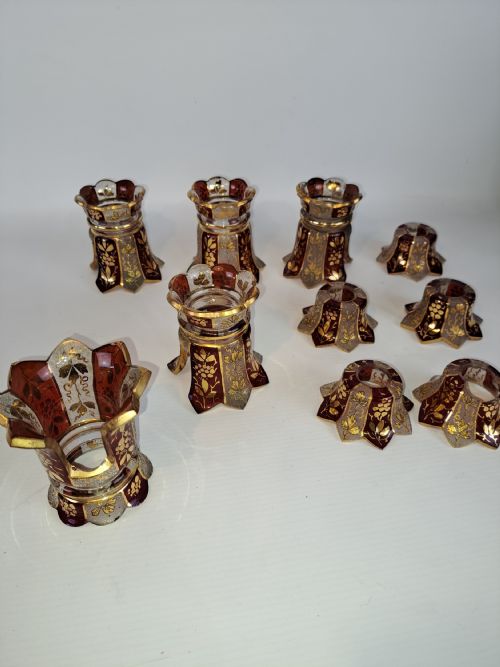


Gilt Ruby Glass
Gilt ruby glass pieces bring together rich red hues and precious metallic highlights across nineteenth century tablewares, scent bottles, and decorative vessels.
Gilt Ruby Glass
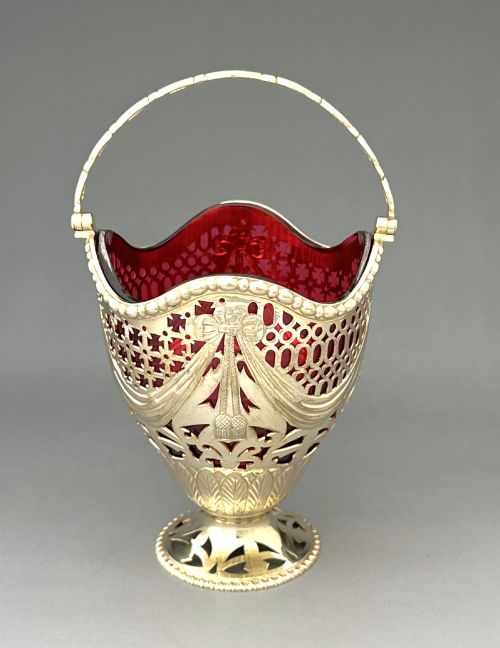
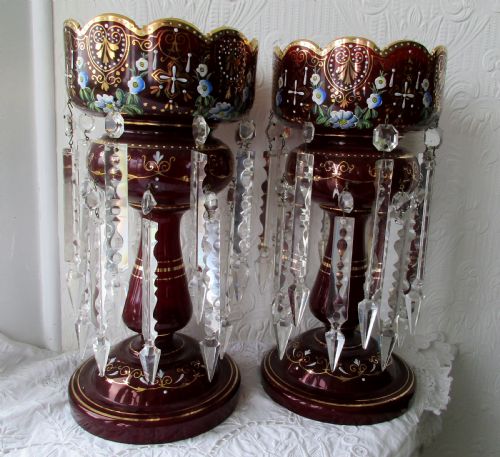
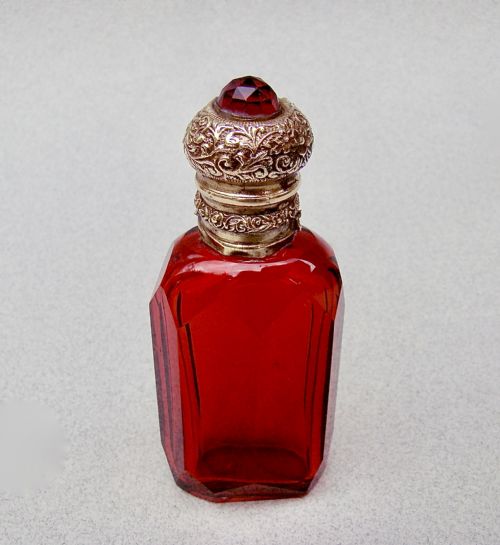
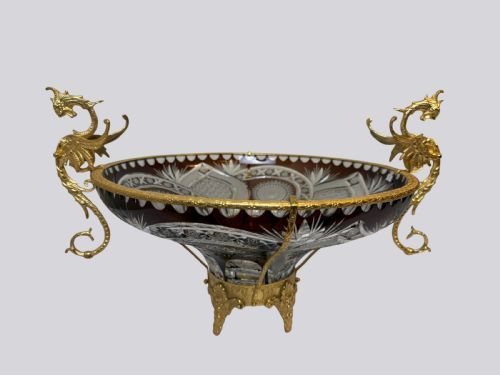
When you search for gilt ruby glass, you encounter a selection of nineteenth century decorative objects that combine deep red glass bodies with applied gold leaf, ormolu mounts, or silver gilt fittings. The items span various forms, including mantle lustres, vases, scent bottles, and sugar baskets originating from English, French, and Bohemian workshops.
Vessels on this page often date from the Victorian and Edwardian eras, featuring periods such as eighteen sixty and eighteen eighty alongside early twentieth century examples. You frequently meet smaller personal accessories like double-ended scent bottles alongside substantial display items like centrepiece bowls and mantel lustres.
The styles range from French rococo revival and belle epoque to Bohemian overlaid glass and English Victorian designs. These pieces served decorative and functional roles in period interiors, utilising coloured glass to catch and reflect light.
Assessing quality
Quality in these objects rests upon the crispness of the gilding and the depth of the red glass coloration. Hand-etched or gilded details that retain their full metallic lustre indicate superior craftsmanship compared to rubbed or worn surface decoration.
The integration of the metal mounts, such as ormolu frames on caskets or silver gilt caps on scent bottles, dictates the overall refinement of the piece. Fine examples demonstrate precise fitting between the glass body and the metal components, alongside sophisticated cutting or overlay techniques.
Listings feature items from the nineteenth century, Edwardian era, and nineteen twenty, spanning English, French, and Bohemian origins.
George Fox·Sampson Mordan·George Brace
The Gilt Ruby Glass Glossary
- Ruby glass
- A deep red glass created by adding gold chloride or copper to the molten batch. This intense coloration forms the primary body of many Victorian scent bottles and mantle lustres.
- Cranberry glass
- A lighter, transparent pinkish-red glass often utilised for liners in silver gilt sugar baskets and glassware. The shade derives from gold oxide added during the glassmaking process.
- Mantle lustre
- A decorative Victorian tabletop ornament hung with cut crystal teardrops designed to reflect candlelight. These pieces frequently combine ruby glass bodies with gilt highlights.
- Ormolu
- Gilded bronze mounts and decorative hardware applied to nineteenth century French caskets, scent bottles, and decorative vessels. The technique provides a bright golden contrast to the dark red glass.
- Silver gilt
- Sterling silver that has been coated with a thin layer of gold. It appears frequently on the caps, collars, and chatelaines of pocket scent bottles.
Gilt Ruby Glass: Frequently Asked Questions
What is gilt ruby glass?
Gilt ruby glass describes nineteenth century decorative objects made from red glass and embellished with gold leaf, ormolu mounts, or silver gilt fittings. These items include scent bottles, vases, and mantel lustres produced across England, France, and Bohemia.
The red colour comes from metallic additives in the glass formula, while the gilding provides contrasting metallic surface decoration. Collectors value the interplay between the deep red glass and the bright gold elements.
How were scent bottles used?
Victorian scent bottles held liquid perfume and smelling salts for personal refreshment in daily social life. Many feature double-ended designs with two separate compartments for different scents.
Fitted with silver gilt caps or housed in protective cases, these portable accessories hung from chatelaines or sat on dressing tables. Their intricate metalwork and coloured glass made them fashionable personal possessions.
How do I date these pieces?
Dating relies on stylistic clues, manufacturing techniques, and occasional hallmarks stamped on silver gilt mounts. Victorian and Edwardian examples often display characteristic period revival motifs and specific mount constructions.
French pieces from the mid nineteenth century frequently incorporate ormolu mounts and Palais Royal styling. Comparing the glass cutting styles and metal closure mechanisms helps narrow down the production era.
How do I care for gilt ruby glass?
Display these items away from direct sunlight to preserve the richness of the red glass and prevent any degradation of adhesives used in early repairs. Dust the surfaces gently with a soft, dry cloth.
Avoid submerging pieces with metal mounts or gold leaf in water, as moisture can damage the gilt surfaces. Handle scent bottle caps and hinged mounts with care to avoid stressing the antique metal connections.