





Red and Blue Imari
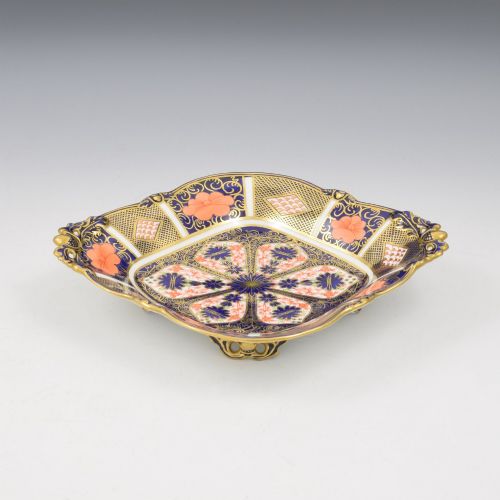
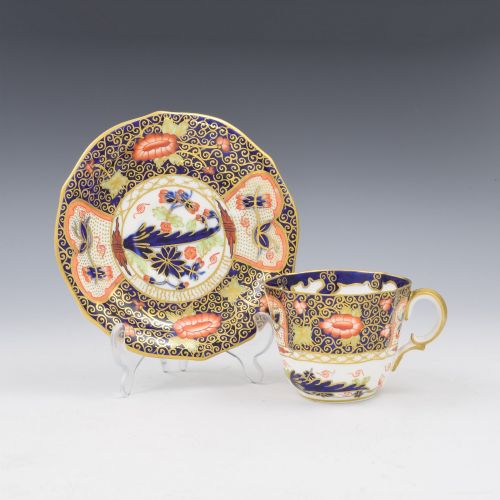
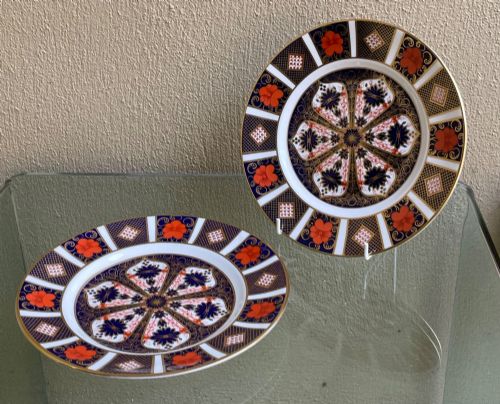
Red and blue imari pieces bring rich cobalt decoration, iron red enamel and gold leaf together on porcelain, earthenware and bone china for display and dining.
Red and Blue Imari
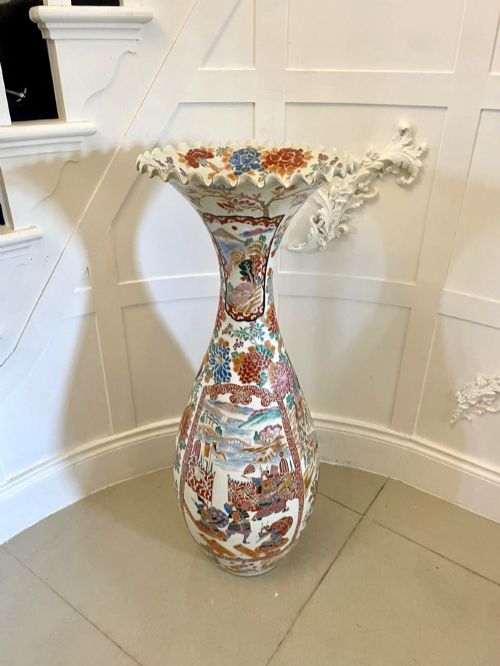
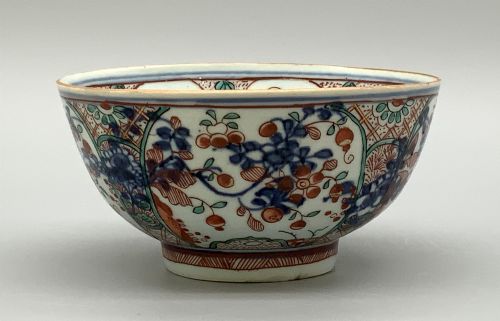
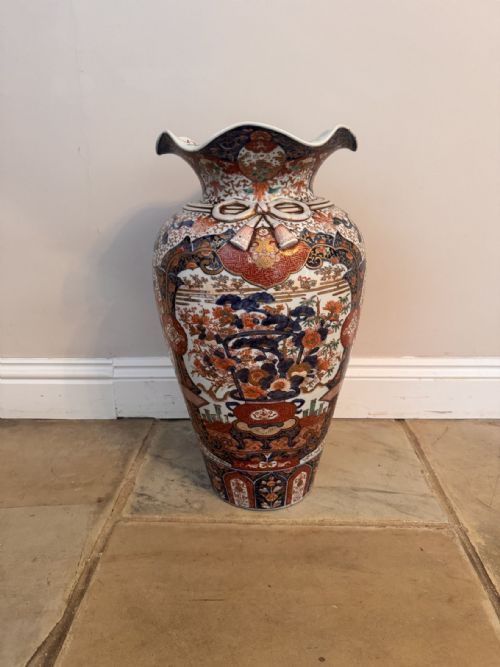
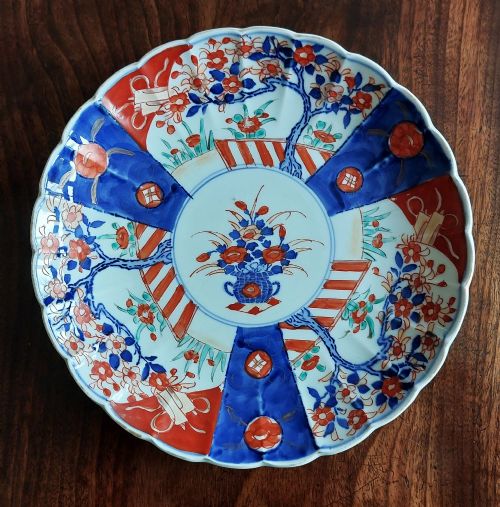
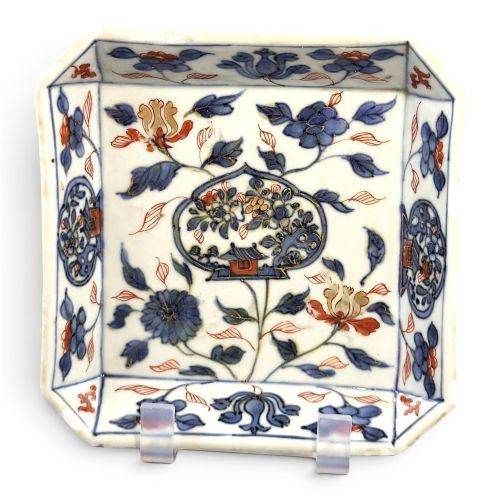
When you search for red and blue imari, you encounter ceramics created across various centuries, from eighteenth-century examples to later nineteenth-century Japanese Meiji period items and twentieth-century British interpretations. The selection spans decorative plates, chargers, bowls, vases, and teacups alongside occasional jars, commports, and cabaret trays.
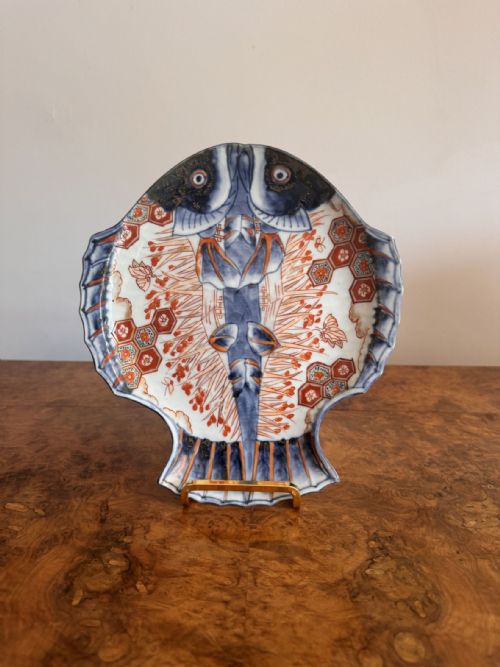
Japanese export items from the Meiji period and eighteenth-century Chinese pieces appear frequently alongside English earthenware and bone china from makers adopting the palette. Forms range from standard circular dishes and floor-standing vases to scallop-edged bowls, hexagonal plates, and objects shaped like fish.
Materials and technique
Makers utilised porcelain, bone china, and earthenware as the physical body for these items, applying underglaze cobalt blue pigment alongside overglaze iron red enamel and gold leaf details. Gilding and enamel work sat on top of the glaze, requiring secondary firing in a muffle kiln to fix the metallic and coloured elements.
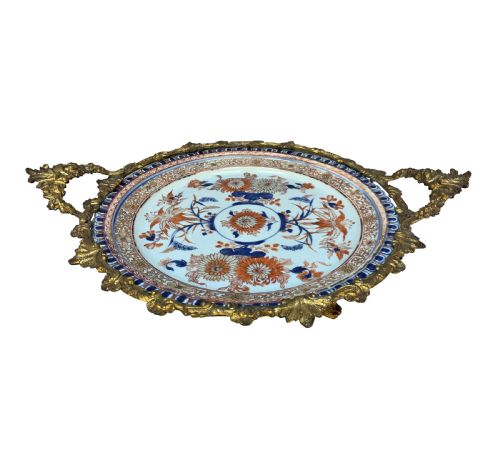
Ormolu mounts occasionally appeared on Chinese and Japanese porcelain plates, adding cast bronze frames to the ceramic bodies. Ironstone china and standard pottery also served as substitutes for porcelain when British factories produced items in the Imari style.
One plate in the records takes the literal form of a fish, bringing marine life directly into the Imari palette.
Variations in quality
The precision of the hand-painted cobalt blue underglaze and the crispness of the iron red enamel separate finer examples from standard production. Superior pieces display complex motifs with carefully controlled gilding that adheres cleanly to the porcelain or bone china surface.
The weight and balance of larger forms, such as floor-standing vases and heavy chargers, indicate the stability and skill of the original kiln work. Finer potting results in thinner, more resonant porcelain bodies with smooth glaze surfaces free from excessive pooling or distortion.
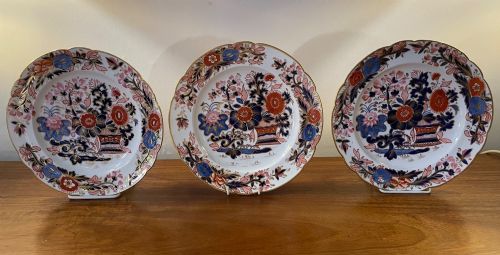
Royal Crown Derby·Davenport·Wedgwood
The Red and Blue Imari Glossary
- Imari style
- A decorative scheme originating in Japan and subsequently copied in Europe, combining underglaze blue, iron red, and gold.
- Meiji period
- The era of Japanese history lasting from 1868 to 1912, associated with extensive export of decorated porcelain.
- Comport
- A footed dish or bowl raised above the table surface, used for serving fruit or sweetmeats.
- Charger
- A large decorative plate intended for display on a wall or sideboard rather than for dining use.
- Muffle kiln
- A closed oven used to fire overglaze enamels and gilding onto ceramics without exposing them to direct flame.
Red and Blue Imari: Frequently Asked Questions
How do I identify Japanese Imari?
Japanese Imari pieces typically show dense cobalt blue and iron red designs enhanced with gold leaf on a hard porcelain body. They often date from the Meiji period or earlier centuries.
Look at the underside and the potting style, as Japanese export porcelain frequently displays characteristic spur marks or brushwork distinct from European copies.
Are English Imari pieces porcelain?
English versions of the style appear on various ceramic bodies, including bone china, ironstone, and earthenware. Factories like Royal Crown Derby utilised bone china.
Examine the weight and translucency of the piece to determine whether it is true porcelain, bone china, or heavier ironstone.
How were chargers used?
Chargers are large decorative plates that were primarily intended for display on walls, sideboards, or tables rather than for holding food during a meal.
Their substantial size allowed artisans to paint detailed radial patterns using the characteristic red, blue, and gilt palette.
Can I use these ceramics daily?
Many plates, bowls, and teacups remain structurally sound for gentle use, though pieces with extensive gold leaf and overglaze enamel benefit from careful hand washing.
Older porcelain and earthenware with delicate gilding are generally preserved for display or light service to protect the surface decoration.