
Queen Anne Walnut Side Table
A queen anne walnut side table brings the warmth of figured timber and graceful cabriole shaping into a room.
Queen Anne Walnut Side Table
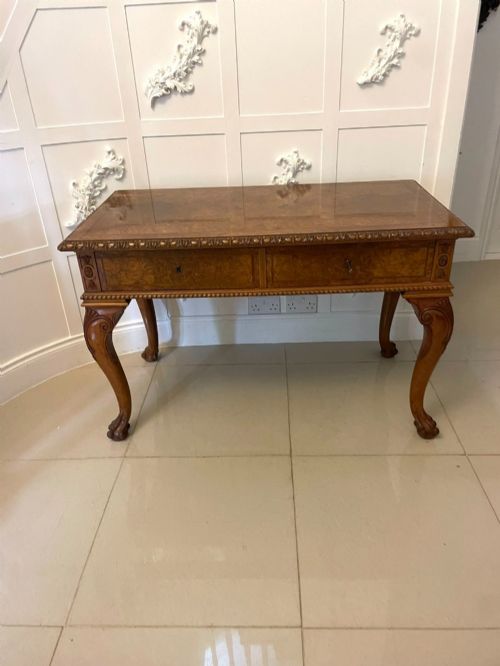
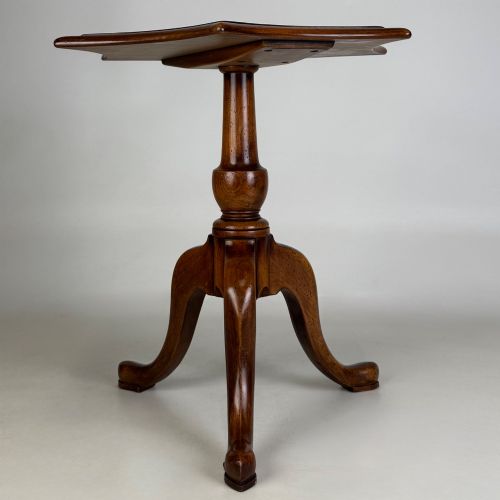
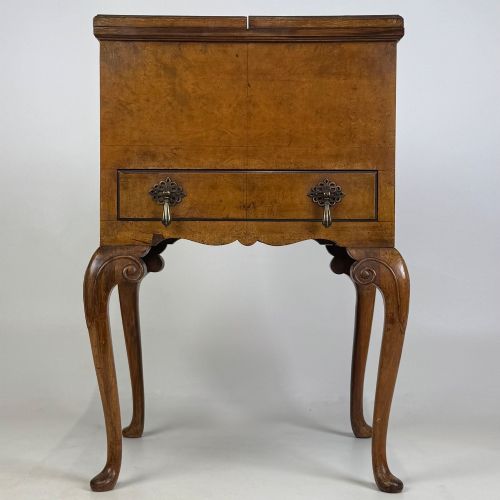
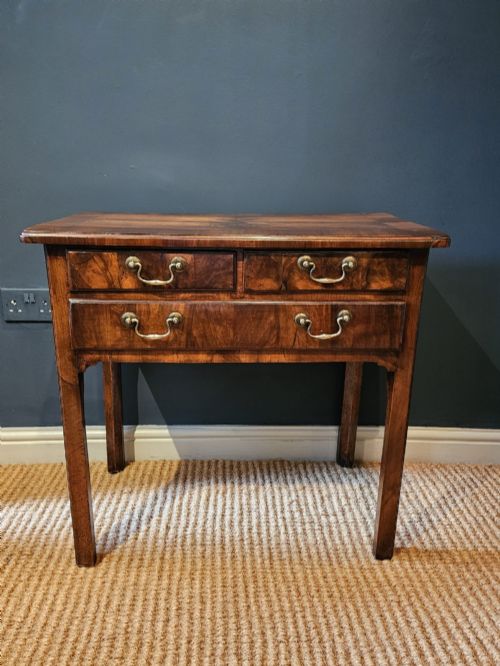
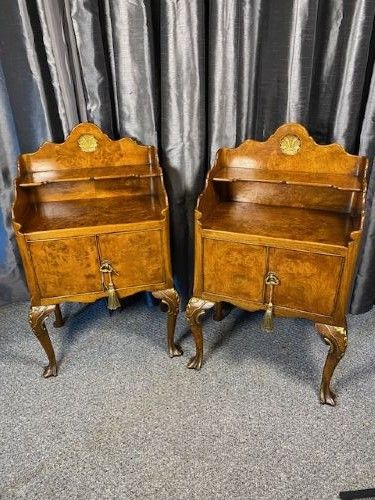
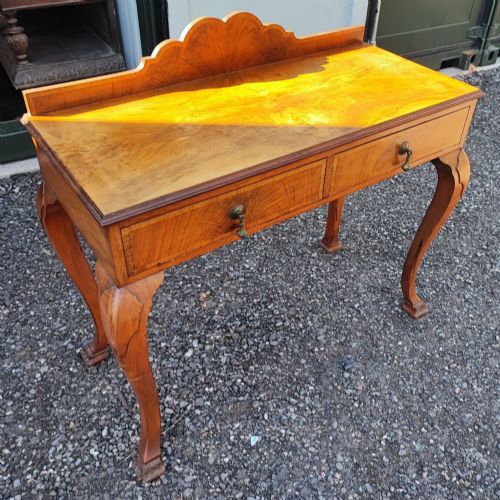
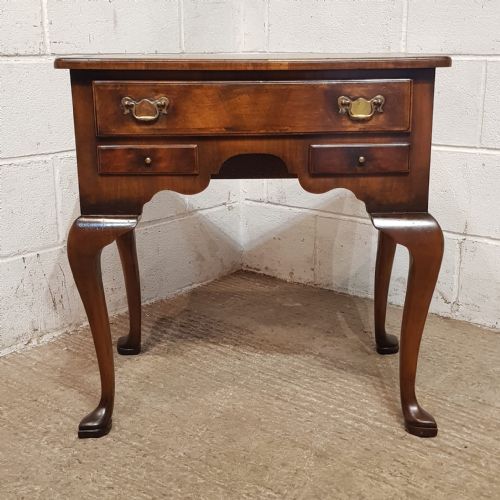
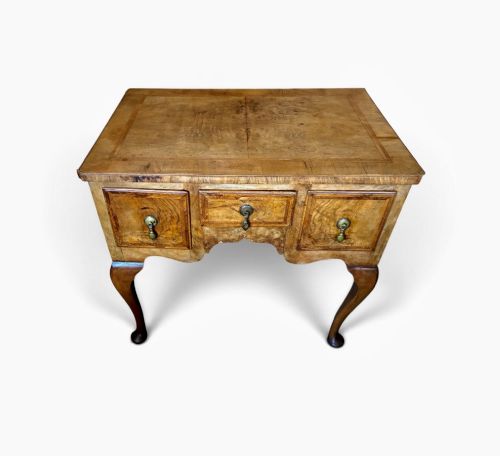
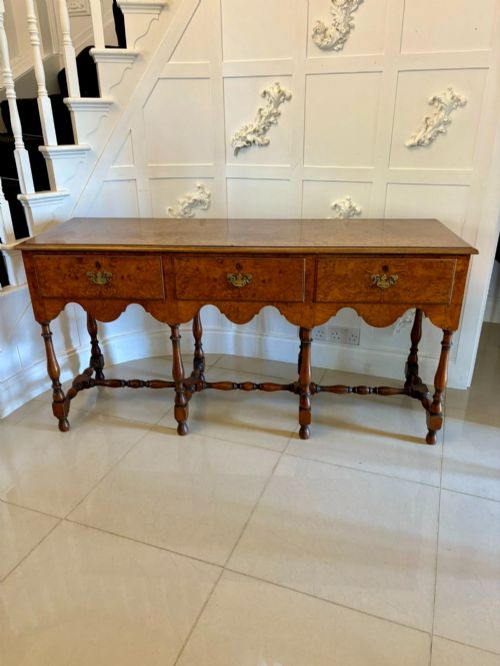
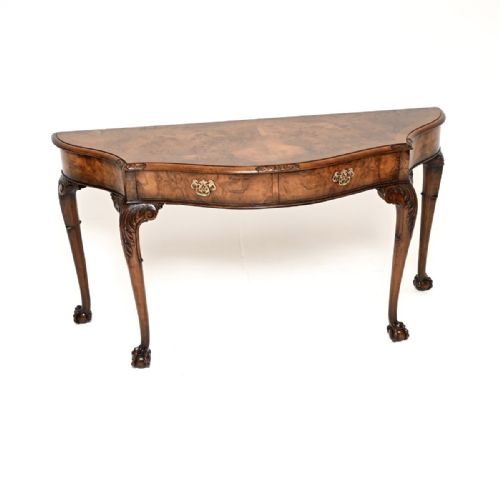
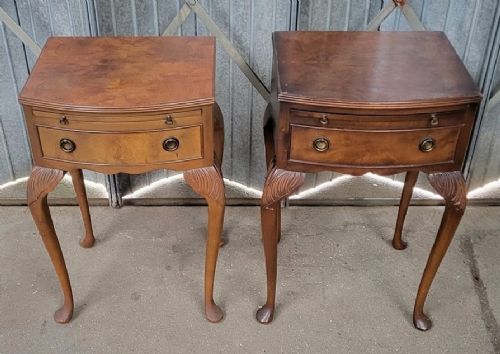
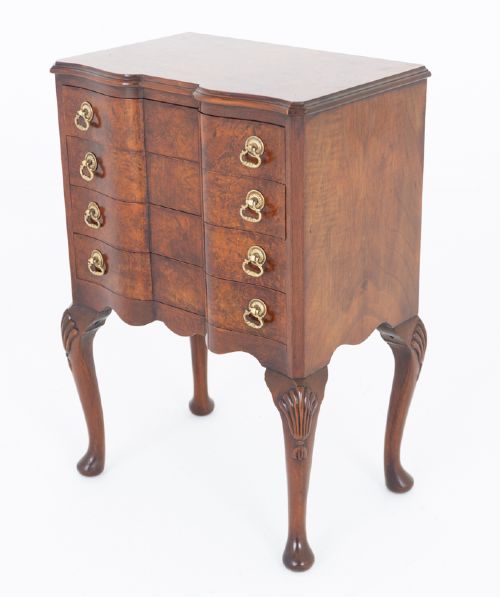
Buyers frequently encounter revival iterations featuring distinctive burr walnut veneers, shaped serpentine fronts, and pad feet. These later interpretations successfully capture the elegant proportions of the original Georgian aesthetic while serving modern interior requirements as lamp or hall tables.
Materials and construction
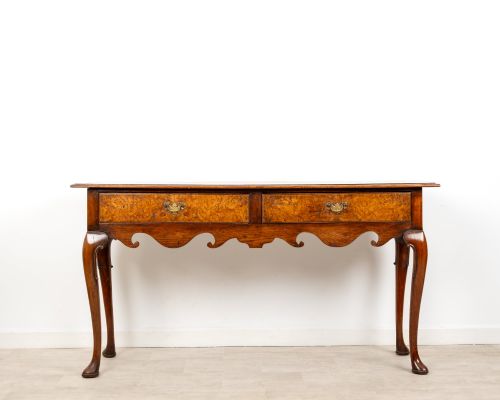
Cabinet makers utilised solid walnut and secondary hardwoods such as oak or fruitwood as a stable carcass foundation for delicate surface treatments. Highly prized burr and figured walnut veneers were carefully sawn and laid in symmetrical patterns across table tops and drawer fronts to maximise the natural grain figure.
Joinery methods relied on traditional techniques, including dovetail construction for drawer boxes and tenon joints for frames. Surfaces were typically finished with traditional polishes that highlighted the deep warm tones of the timber without obscuring the natural figuring.
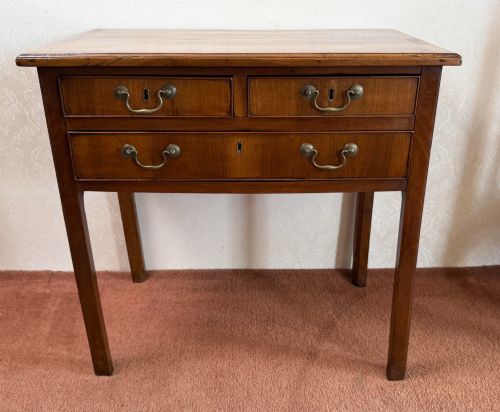
Surviving examples demonstrate a variety of surface treatments, utilising both plain walnut and highly figured burr veneer.
Assessing craftsmanship
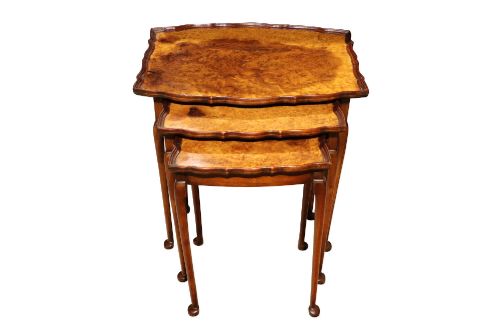
Quality rests principally in the selection of the timber veneer and the precision of its layout. Superior pieces display book-matched burr walnut with uninterrupted flow across the top and drawers, whereas lesser examples show abrupt grain transitions or heavy staining.
The sophistication of the carving upon the knees and the grace of the cabriole leg distinguish finer output from utilitarian production. Hand-shaped elements demonstrate a fluid line that adds presence to the silhouette.
Maple and Co
The Queen Anne Walnut Side Table Glossary
- Lowboy
- A small table with one or more drawers, typically standing on four tall legs. This form gained popularity during the early 18th century as a dressing or side table.
- Cabriole leg
- A furniture leg that curves out in a convex shape and then tapers inward in a concave shape, finishing in a foot. It evokes the graceful motion of an animal leg.
- Burr walnut
- Wood taken from a tree growth or knot where the grain has swirled and tumbled into intricate patterns. It produces highly decorative veneer surfaces.
- Pad foot
- A simple, rounded foot shape that sits flat on the floor at the base of a cabriole leg. It represents a classic feature of early 18th-century design.
- Serpentine front
- A front edge that curves outward in the centre and inward at the sides. This contour adds visual movement to case furniture and side tables.
Queen Anne Walnut Side Table: Frequently Asked Questions
How do I date a walnut side table?
Dating relies on examining the secondary timbers used inside the drawers, the method of joint construction, and the overall thickness of the veneers. Eighteenth-century pieces exhibit hand-cut dovetails and solid timber construction methods specific to that era.
Twentieth-century revival items often display uniform machining, modern adhesives, and distinct finishing techniques characteristic of the Edwardian period or the 1920s. Comparing the hardware and internal carcass woods helps clarify the period of manufacture.
Where should I place a lowboy?
A lowboy functions effectively as a hall console, a bedside surface, or a compact writing desk within a study. Its shallow depth allows it to sit comfortably against walls in narrow corridors or smaller reception rooms without dominating the floor space.
The finished rear on freestanding examples also permits placement away from walls as an occasional centre table. This versatility makes the form useful across various domestic interiors.
How do I care for walnut veneer?
Walnut veneer requires protection from direct sunlight and excessive heat sources to prevent the timber from drying out and the glue from failing. Maintaining stable indoor humidity levels preserves the integrity of the delicate surface.
Occasional dusting with a soft, dry cloth is sufficient for routine maintenance. Avoid silicone-based polishes, opting instead for traditional quality beeswax applied sparingly to nourish the wood.
What defines the Queen Anne style?
The Queen Anne style emerged at the turn of the 18th century, favouring curved lines, comfort, and domestic scale over heavy ornamentation. Key characteristics include cabriole legs, pad feet, and arched aprons on tables and seating.
The aesthetic relies heavily on the natural beauty of figured walnut grain rather than elaborate carving or marquetry. This emphasis on line and material purity created an enduring design language.