
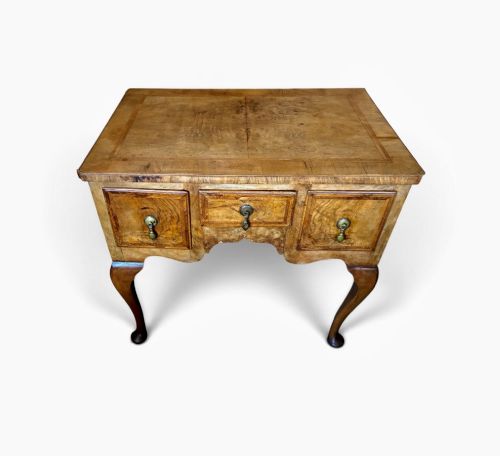
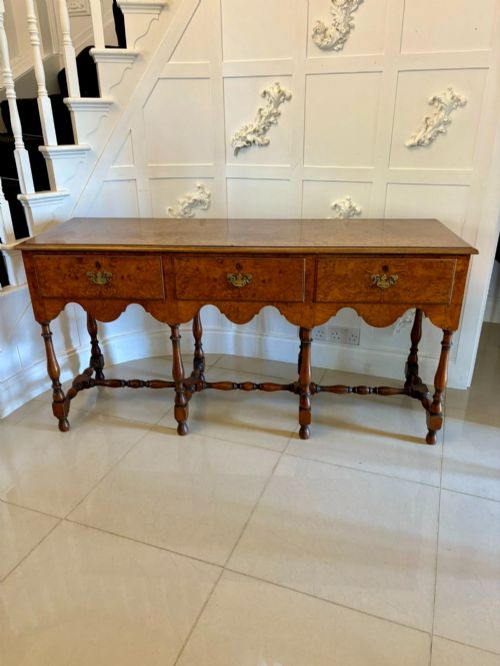
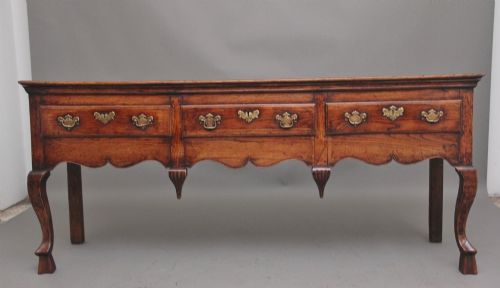
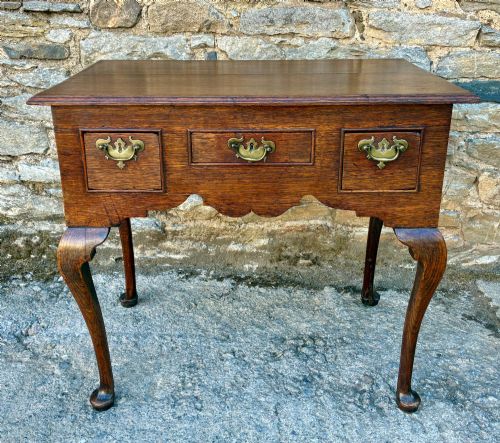
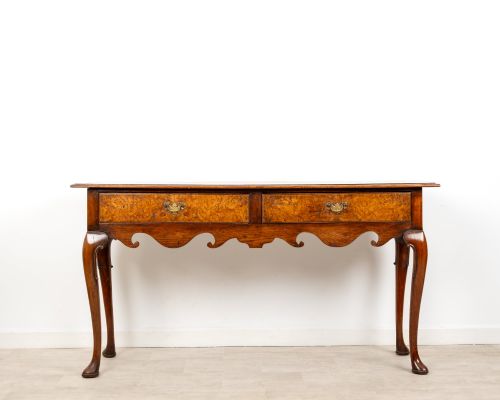
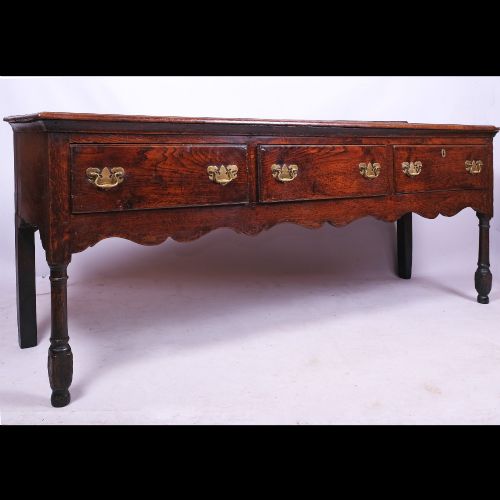
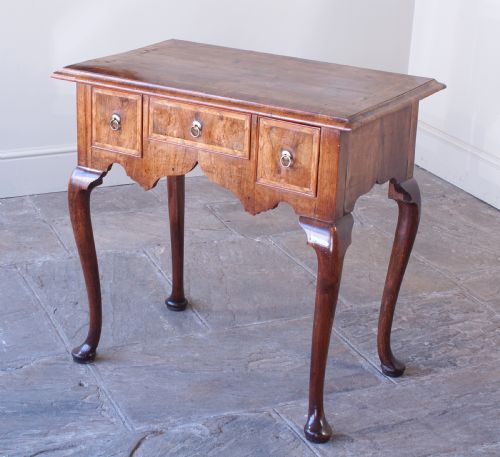
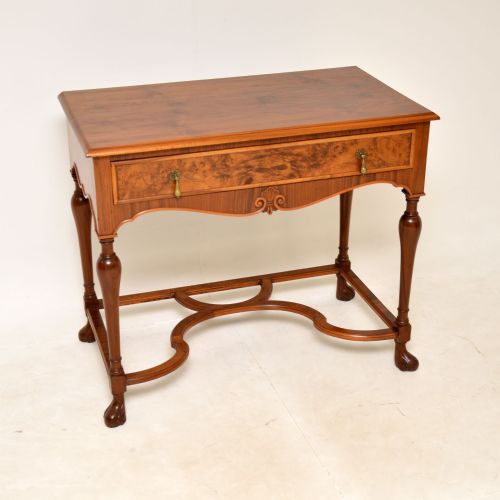
Queen Anne Server
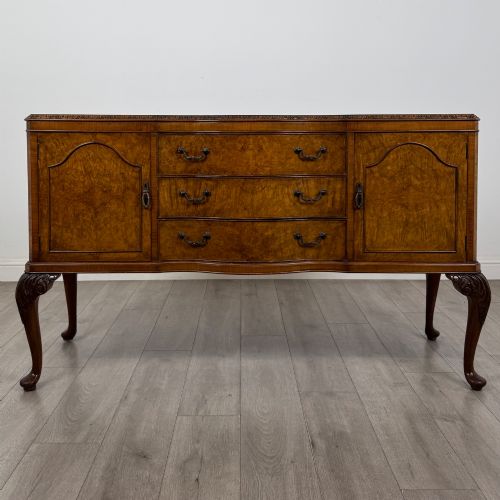
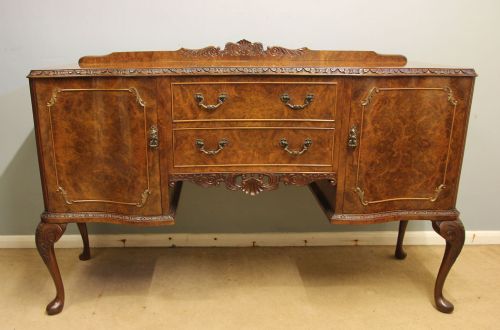
These pieces known as a queen anne server provide a formal surface for dining service and display.
Queen Anne Server
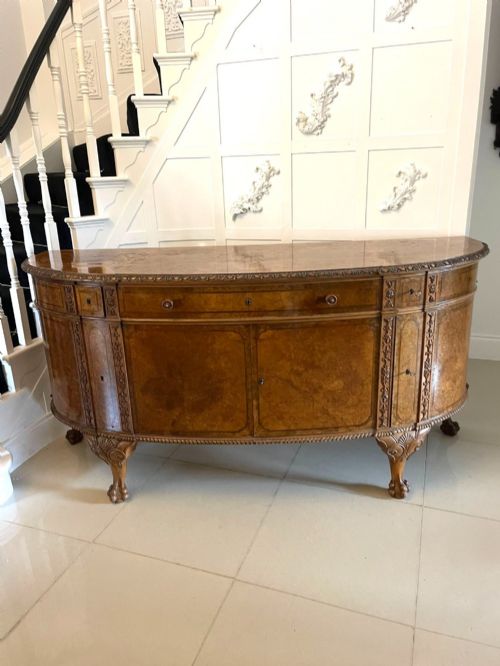
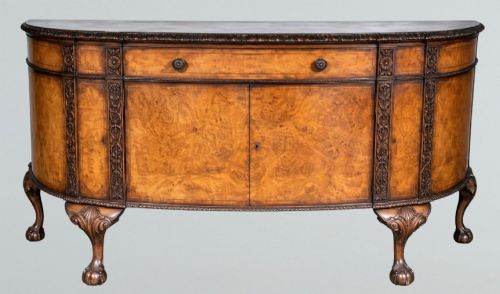
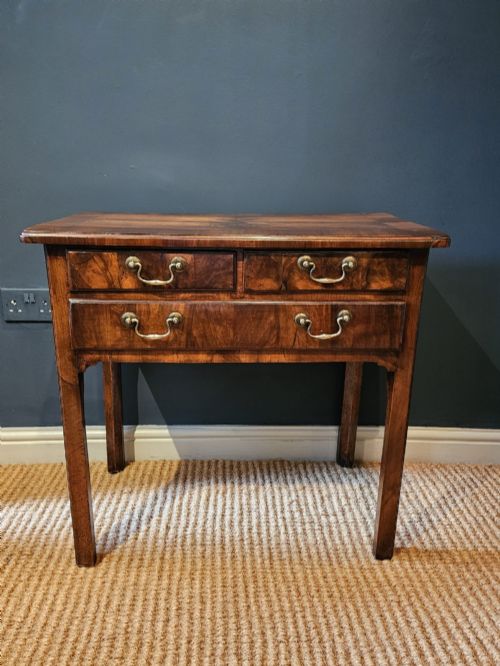
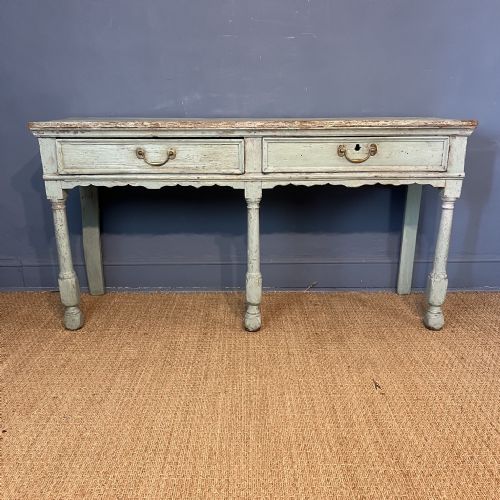
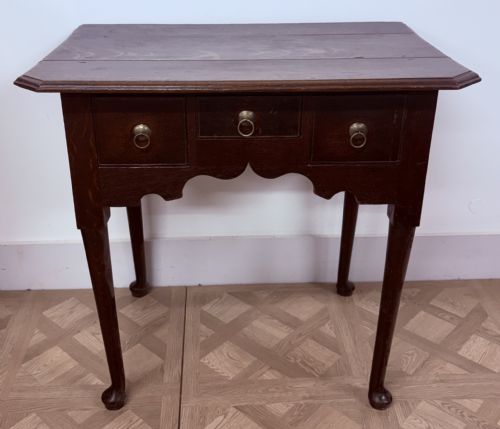
When you search for a queen anne server, you encounter forms that function for serving and storage in dining spaces. The pieces range from lowboys and side tables to larger sideboards and dresser bases.
The material record spans early eighteenth-century oak and walnut examples alongside twentieth-century revival pieces. You will meet console tables, cocktail cabinets, and serpentine fronted servers bearing traditional stylistic traits.
How they were made
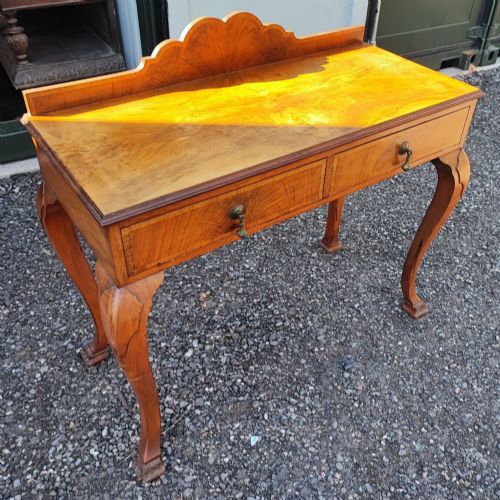
Cabinetmakers constructed these servers using solid timbers such as oak, mahogany, and walnut, often applying burr walnut veneer to prominent surfaces. Marquetry inlay and crossbanding appear on selected examples to create decorative contrast.
Structural elements include dovetailed drawer construction and turned or cabriole legs. Brass hardware, such as drop handles and backplates, secures the drawer fronts.
One twenty-century walnut server arrives equipped with its own twelve-piece cutlery set, ready for immediate dinner service.
What varies in quality
The selection of timber grain defines the visual impact of the piece, particularly where burr walnut veneer is laid across the top and drawer fronts. Matching and symmetry in the veneer work separate standard production from finer execution.
Proportion and carving detail on the cabriole legs reveal the hand of the maker. Crisp shaping around the apron and drawer edges distinguishes the better examples in the range.
Hille of London·Epstein
The Queen Anne Server Glossary
- Cabriole leg
- A furniture leg that curves outward at the knee and tapers inward to an ankle, finishing in a pad or foot. This form derives from classical furniture design and defines the silhouette of the style.
- Lowboy
- A small dressing table or side table featuring one or more rows of drawers beneath a flat top. They stand on relatively tall legs and often serve as compact servers.
- Dresser base
- A low wooden sideboard fitted with drawers, historically used in the kitchen or dining room for food preparation and storage. Surviving examples date from the eighteenth century onward in oak and pine.
- Crossbanding
- A decorative border technique where thin strips of veneer are laid so the grain runs perpendicular to the main surface. This frames the top or drawer front of the piece.
- Marquetry
- The art of applying pieces of veneer to a structure to form decorative patterns and pictures. Craftsmen utilise various wood types to achieve tonal variation.
Queen Anne Server: Frequently Asked Questions
What is a queen anne server used for?
These pieces serve as functional furniture for holding dishes, silverware, and serving platters during meals. They provide surface area for food presentation and storage within dining rooms.
Beyond dining use, the tables and lowboys function as display surfaces in hallways and living spaces. The drawers accommodate household items while keeping the room orderly.
How do I date a server?
Dating relies on examining the timber species, construction methods, and hardware choices visible on the piece. Eighteenth-century examples typically feature solid oak or walnut with hand-cut joinery.
Twentieth-century revival pieces often utilise modern adhesives, plywood secondary woods, and standardised screw fixings alongside burr walnut veneers. Comparing the carcass construction to known period examples clarifies the age.
Are these servers made of solid walnut?
Many servers combine solid timber frames with decorative veneers applied to the primary surfaces. Burr walnut requires careful slicing into thin sheets, which makers lay over a stable secondary wood.
Solid timbers appear frequently in earlier oak and mahogany iterations. Walnut veneer represents the standard method for achieving highly figured patterns on revival and period servers.
How do I style a server in a modern home?
You can place a server against a dining room wall to anchor artwork or mirrors hung above it. The surface accommodates table lamps, candlesticks, and decorative bowls.
In living areas or hallways, a console or lowboy version functions as a focal point for displaying ceramics. The drawers provide practical storage for keys, linens, or correspondence.